Living room speakers that disappear into the architecture.
A living room is the hardest brief in residential audio because it is never used for one thing. The same system carries background music while people talk, a film at volume in the evening, and music for entertaining — across a floor plan where nobody sits in a single fixed listening seat.
What makes a living room different
Coverage beats imaging
Unlike a cinema, there is no single critical seat. People move between sofas, a bar, a dining edge. The design goal shifts from precise stereo imaging at one chair to even, consistent tonal balance across the whole floor — which usually means favouring wider dispersion and more sensitivity over a narrowly focused speaker.
Hard surfaces are the norm
Luxury living rooms are finished in marble, glass, stone and polished wood, all of which reflect rather than absorb. That raises reverberation time and makes a system pushed near its limit sound strained and bright well before a system with headroom does. Sensitivity and clean headroom matter more here than in a soft, furnished room.
The room is the design
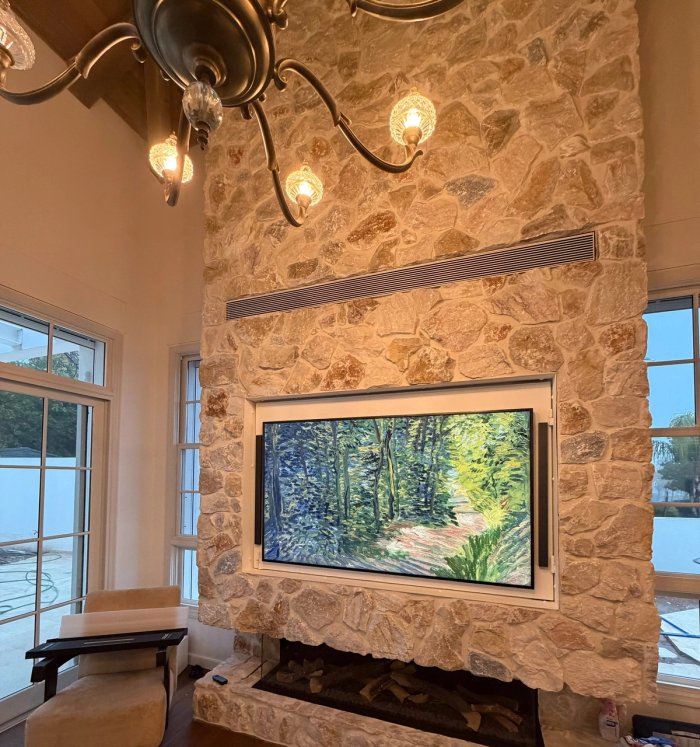
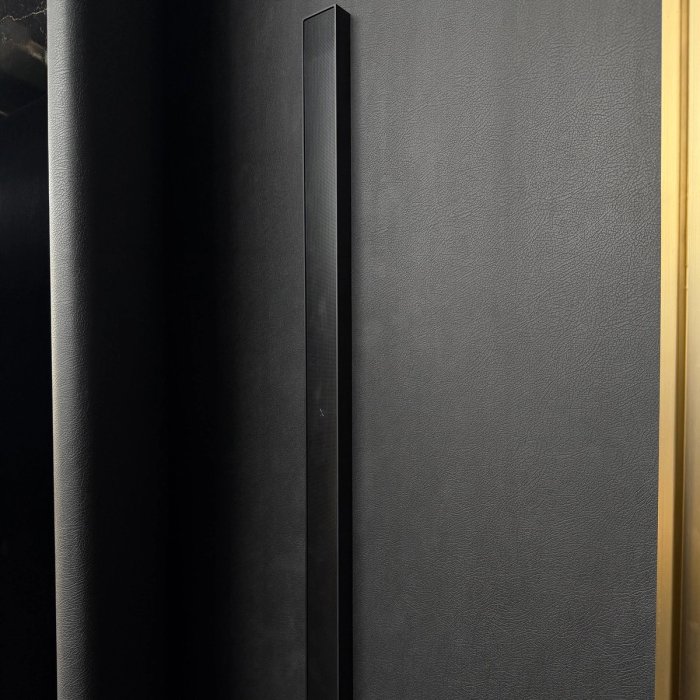
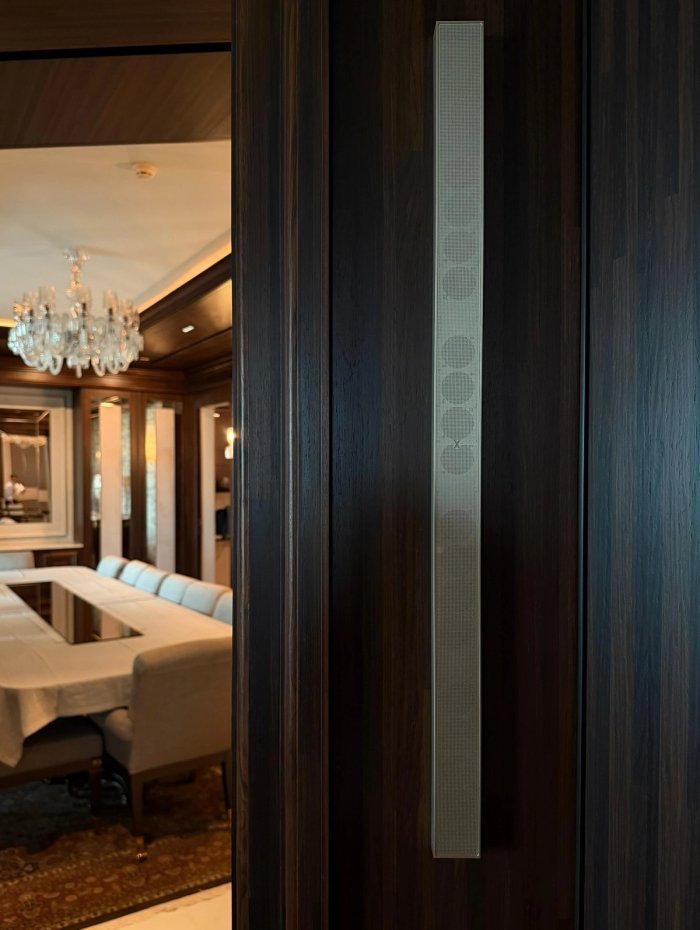
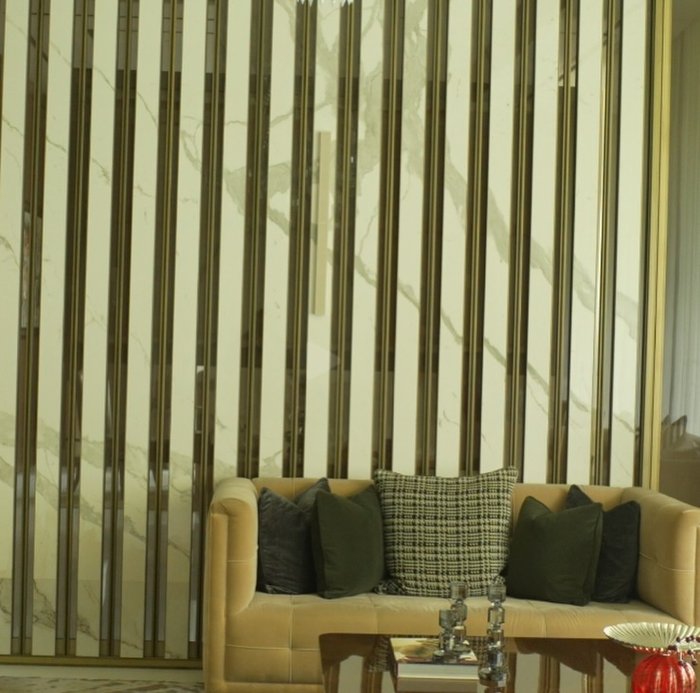
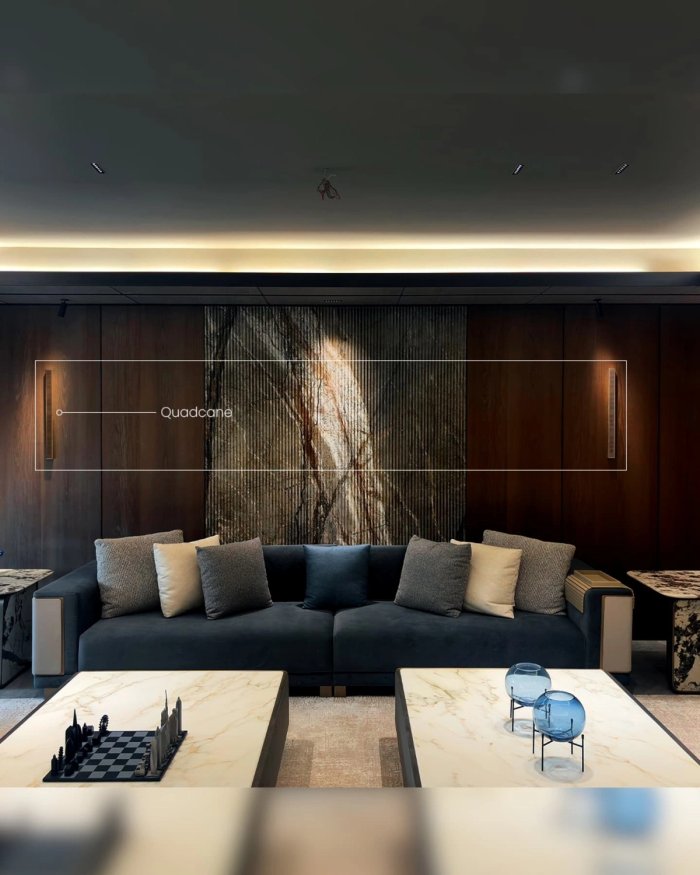
Feature walls — bookmatched marble, fluted timber, brass inlay — are usually the reason the room exists. Speakers should follow an existing architectural line rather than create a new focal point, and finish should match the immediate mounting surface, not the room's overall palette.
What we’d specify here.
QuadCane
21mm deep with a 4-driver array delivering 100W RMS and 95dB sensitivity. The wider horizontal dispersion of a multi-driver array suits rooms where listeners are spread across a floor rather than seated in one place.
View QuadCane →Cane
23mm deep, 50W RMS at 92dB. Comfortable room-filling level draws only a fraction of its rating, leaving clean headroom for louder evenings — and its IP66 rating lets the same model continue onto an adjoining terrace.
View Cane →Cedar
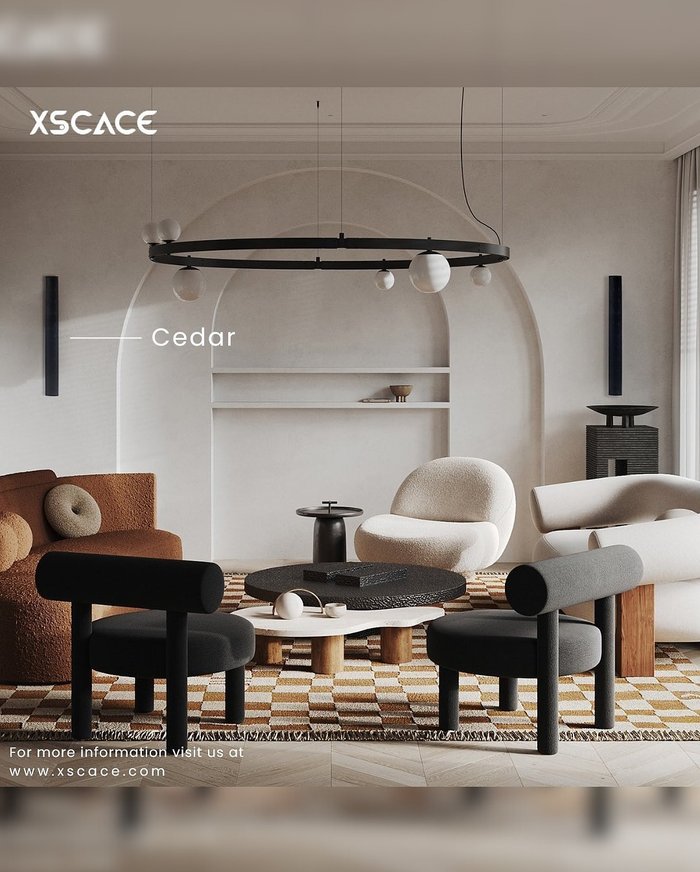
When a room is large or unusually reflective, 74.9mm of depth buys 100W RMS at 96dB — roughly a ten-fold power advantage over an 86dB speaker for the same level. Runs at 4Ω, so the amplifier must be rated for it.
View Cedar →Ghost 2.0
Where walls are fully committed to glazing or stone, Ghost 2.0 moves coverage to the ceiling — 80W RMS, 92dB, 80Hz–20kHz, and the usual choice for Atmos height channels in the same room.
View Ghost 2.0 →Real living room installations.
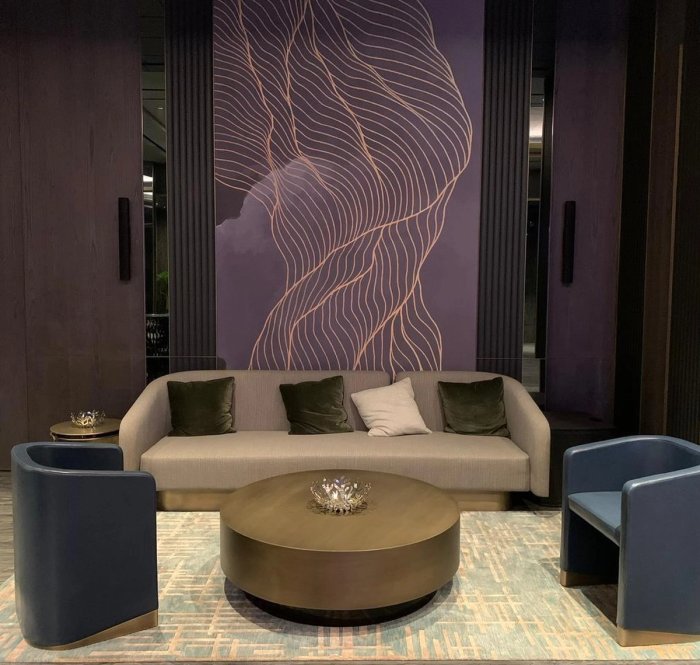
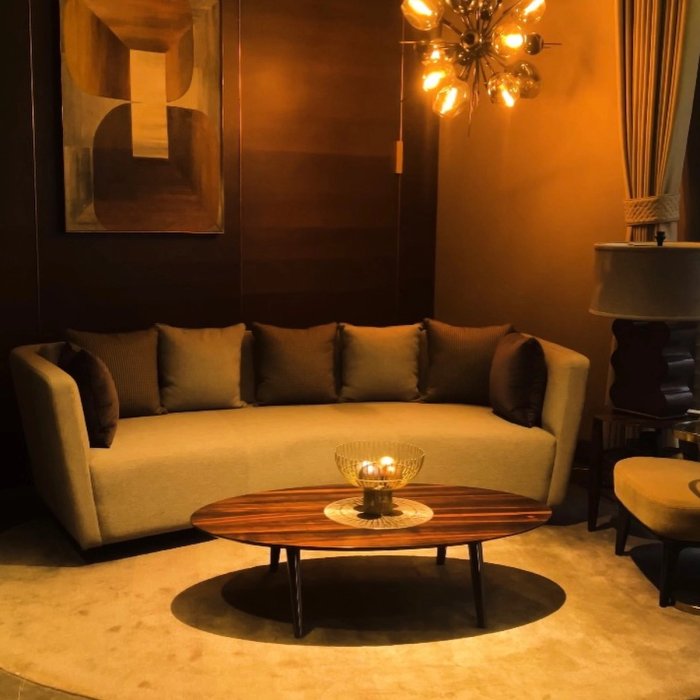
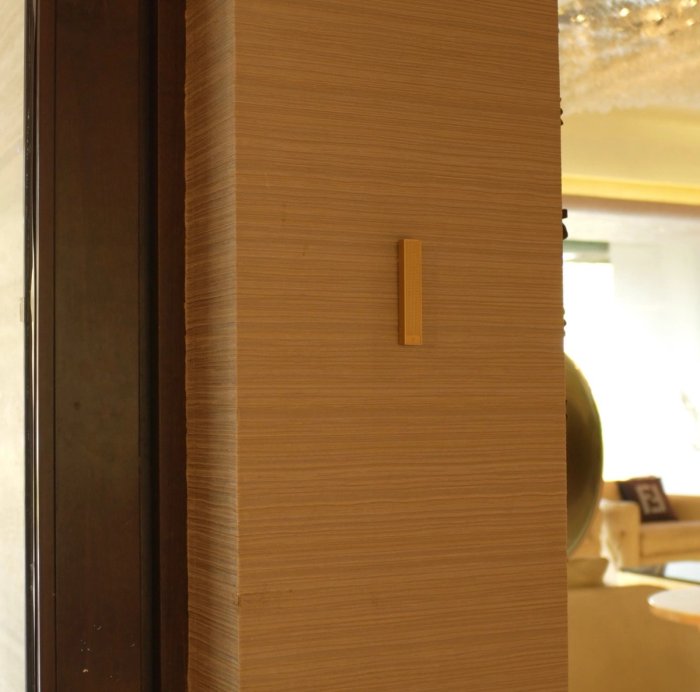
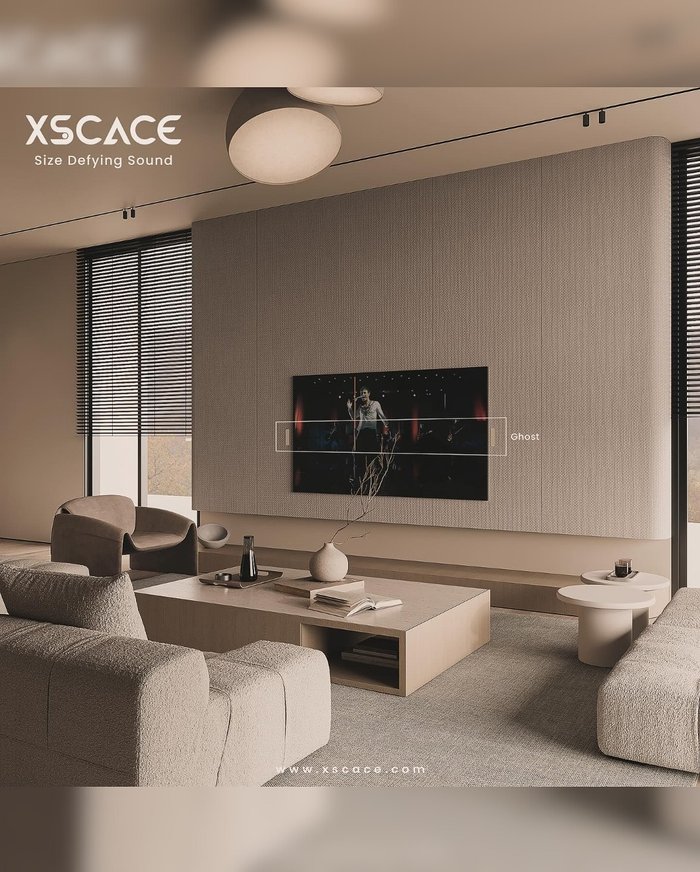
Living Room questions.
Frequently asked questions4 answers
What size speaker do I need for a living room?
Depth is decided by your available cavity, not by room size. For output, sensitivity is the better guide than wattage: a 95dB speaker such as the QuadCane reaches the same level as an 86dB speaker on roughly one-eighth of the amplifier power, which matters in larger or harder-surfaced rooms.
Do living room speakers need a subwoofer?
If the speakers are slim-array models, yes. Cane and QuadCane reproduce down to 150Hz and hand everything below that to a subwoofer — an Acacia 10 (35–300Hz) or Juniper (25–200Hz) depending on room size.
Should living room speakers be in-wall or in-ceiling?
In-wall or on-wall at ear height gives a more convincing soundstage for music and film, because sound arrives from in front of you. In-ceiling gives more even background coverage and is the right answer when walls are glazed or finished in feature stone.
How many speakers does a living room need?
A stereo pair plus a subwoofer covers most rooms. Open-plan spaces over roughly 30ft in the longest dimension usually need a second pair or a distributed layout to keep level consistent from one end to the other.