Home bar sound with nothing on show.
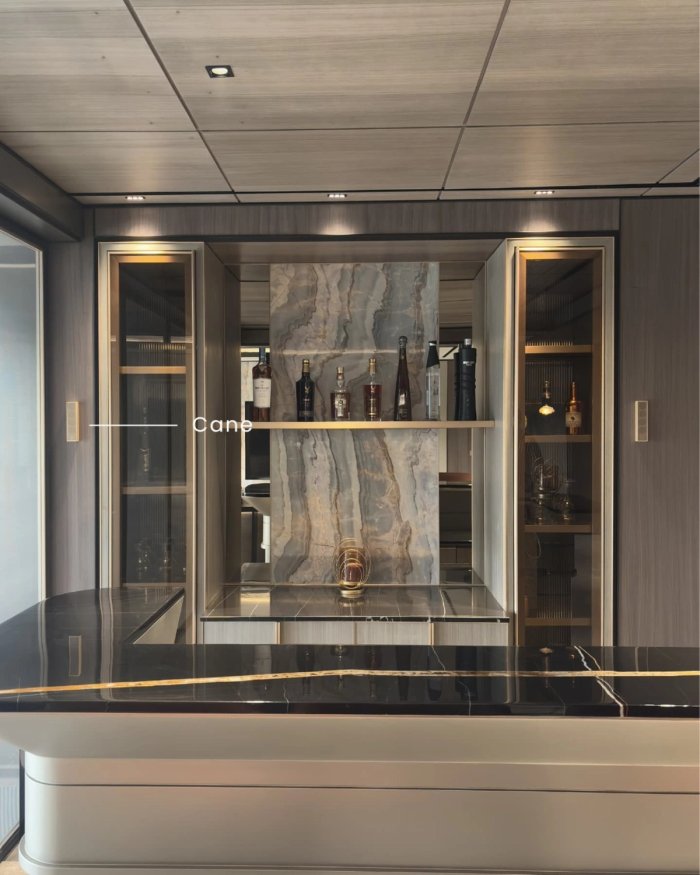
A home bar is the one residential room designed to be loud. It is also, almost always, finished in the most reflective materials in the house — stone, mirror, glass and bottle display.
What makes a bar different
Everything in the room reflects
Bottles, mirrored back bars, stone counters and glass all return sound rather than absorb it. Reverberation is high, and a system driven near its ceiling turns bright and harsh quickly. The answer is reserve capacity — a speaker comfortably within its limits at party level, rather than one being pushed to reach it.
Nobody is sitting still
Guests circulate between the bar, seating and adjoining rooms, so the target is even coverage across the whole floor rather than accuracy at one position. Several speakers at moderate level beat one pair working hard.
Wall space is already spoken for
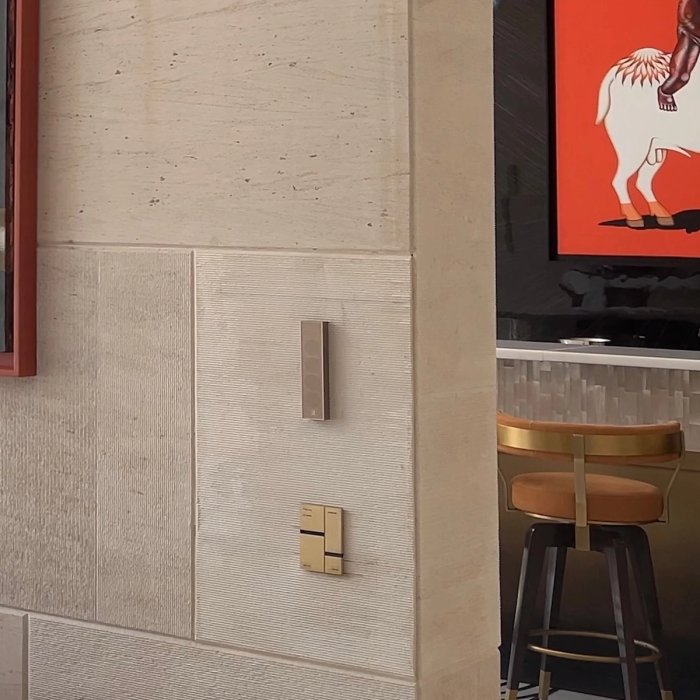
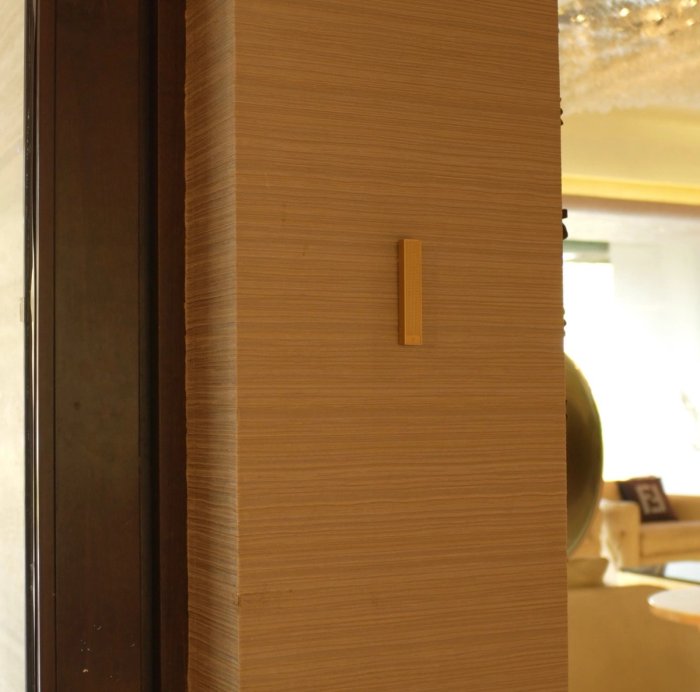
Shelving, displays and glazing usually consume the available walls. Successful bar installs frequently mount into stone wainscoting, timber cladding, or — where walls are genuinely full — the ceiling, angled down toward the counter.
What we’d specify here.
Cedar
The output choice: 100W RMS at 96dB in 74.9mm. Where a bar is genuinely used at party level, that sensitivity keeps the system well inside its limits instead of straining. 4Ω — size the amplifier accordingly.
View Cedar →QuadCane
100W RMS at 95dB in only 21mm, with the wide dispersion of a 4-driver array — strong where depth is limited but coverage still needs to reach across a room.
View QuadCane →Cane
23mm and IP66, so it works equally on interior stone wainscoting and on an adjoining outdoor terrace or facade — common in bars that open onto a garden.
View Cane →Acacia 10 Powered
250W RMS, 35–300Hz, 88dB. Supplies the low end that slim-array speakers hand off below 150Hz, which is most of what makes a bar system feel substantial.
View Acacia 10 Powered →Real home bar & entertaining installations.
Home Bar & Entertaining questions.
Frequently asked questions4 answers
What speakers work best in a home bar?
Higher-sensitivity models, because bars are reflective and used at volume. Cedar at 96dB or QuadCane at 95dB stay comfortably within their limits at entertaining level, where a lower-sensitivity speaker would be working hard enough to sound strained.
Can speakers be mounted into stone or travertine?
Yes. XSCACE mounting hardware works with travertine, limestone and marble wainscoting, and stone is a common mounting surface in bar installations. Where a slab is bookmatched or a feature, mount on adjacent panelling instead so the stone stays uncut.
Can speakers be ceiling-mounted above a bar?
Yes, and it is often the right call when walls are fully committed to shelving and display. A downward-aimed ceiling speaker disperses across a wider horizontal area below it, which suits guests standing in multiple directions around a counter.
How loud can architectural speakers actually go?
Enough for entertaining, if specified properly. The relevant figure is sensitivity: each 3dB is equivalent to doubling amplifier power, so a 96dB Cedar reaches the same level as an 86dB speaker on about one tenth of the power — with far more headroom in reserve.