Contents6 sections
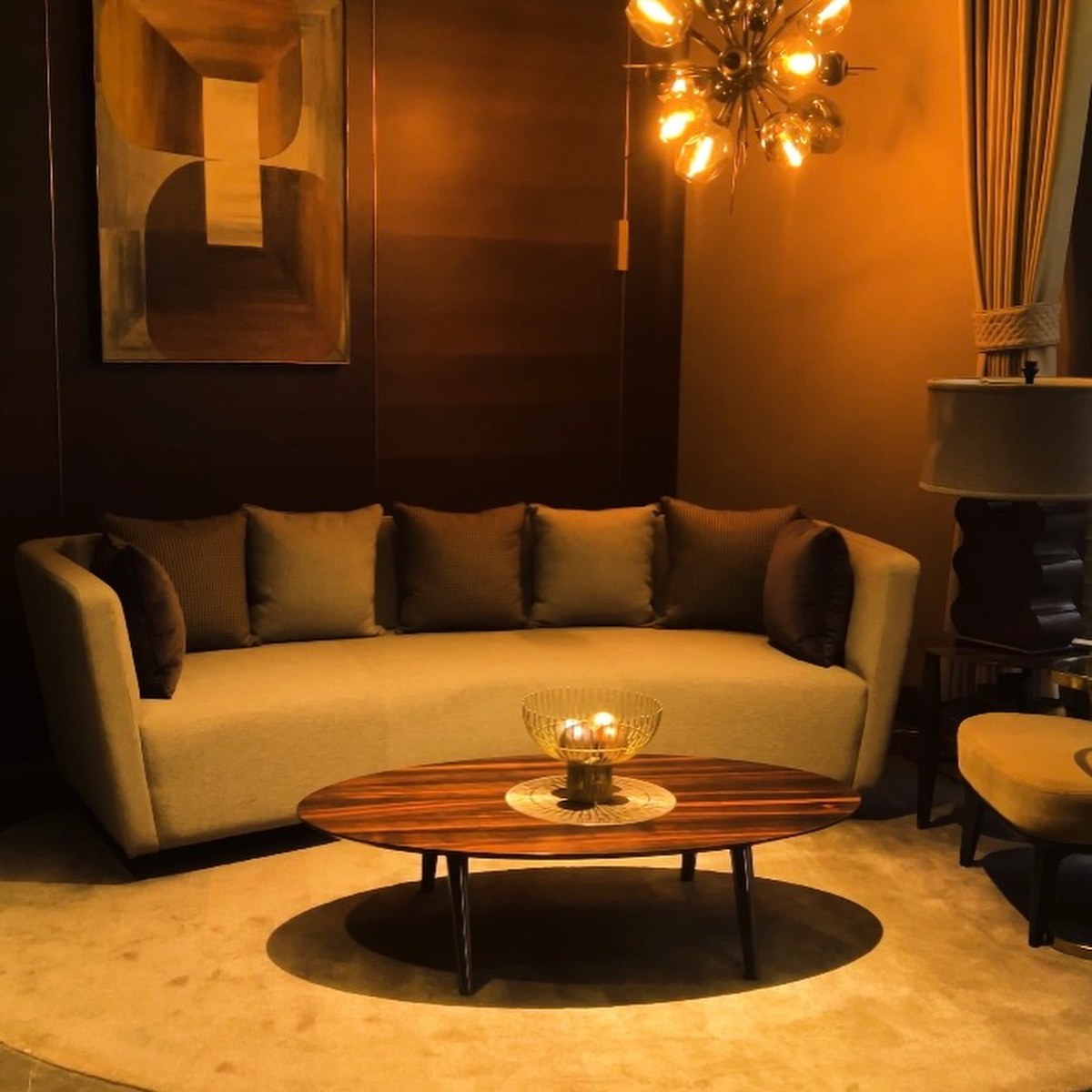
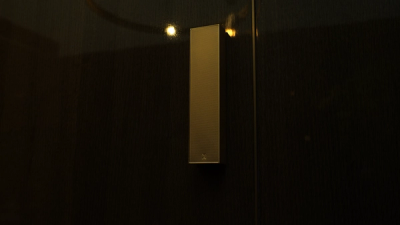
A formal sitting room with a curved bouclé sofa in warm taupe, a Sputnik-style brass-and-glass chandelier, and a dark wood-panelled wall with an abstract painting is built for evening ambiance — low, warm lighting and a considered material palette. Cane was specified in black finish, mounted on a dark charcoal stone accent wall, chosen to sit within the room's darker tonal register rather than stand out against it.
Case Study at a Glance
- Room: formal evening sitting room
- Product: Cane (23mm slim-array)
- Mounting surface: dark charcoal stone accent wall
- Finish: black aluminium
- Goal: sound that sits within the room's darker tonal register, beneath a chandelier
Matching finish to the specific wall, not the whole room
This room's overall palette runs warm — taupe bouclé, brass, mustard velvet — but the one wall Cane was mounted to is dark charcoal stone, and the finish decision followed that specific surface rather than the room's dominant colour story. It's a distinction worth making explicitly: finish should follow what the speaker will be seen against, which is the mounting wall, not necessarily the room as a whole.

Black finish in a warm-toned room
Even in a room with mostly warm brass and wood tones, the accent wall itself was dark charcoal stone — Cane's black finish was matched to that specific wall rather than the room's overall palette, a reminder that finish selection should follow the immediate mounting surface, not just the room's general mood.
Evening-appropriate output
A formal sitting room used primarily in the evening for conversation and quiet music doesn't need loud output — Cane's 92dB sensitivity means comfortable evening listening volume draws only a small fraction of its 50W RMS ceiling, leaving substantial headroom in reserve.
The system
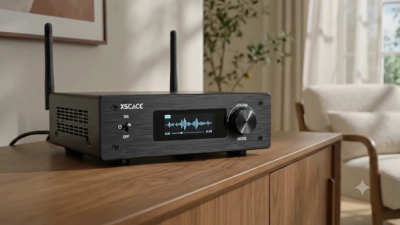
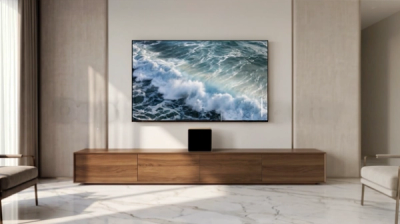
An Air Amp drives the room's Cane speakers, with an Acacia 10 Powered subwoofer providing low-end warmth appropriate to the room's overall tone.
Planned, controlled and calibrated
Every XSCACE installation follows the same three stages: planned in the simulator, controlled from the app that matches the hardware, and calibrated with measurement. A living room has one or two seats that matter and a great many surfaces that do not cooperate.
Planned
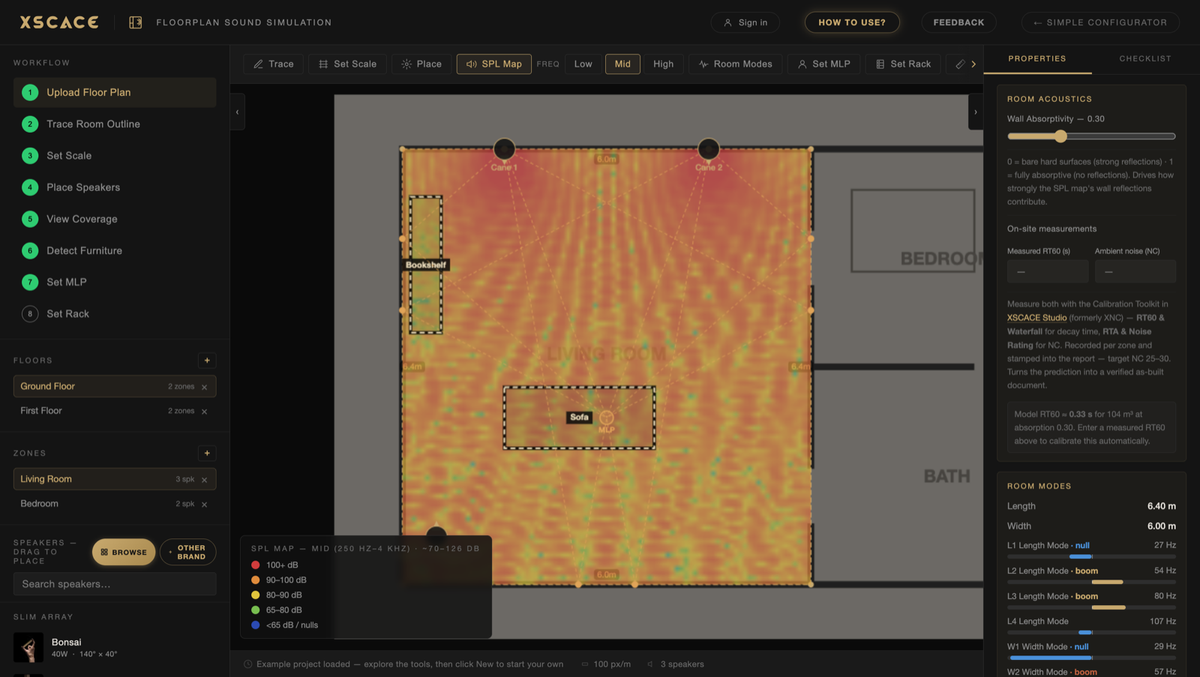
XSCACE Floorplan Sound Simulation takes a plan from trace to bill of quantities in the browser. For a room like this the outputs that matter are:
Coverage at the seating position rather than the room centre
First-reflection points flagged, which decides placement more often than taste does
Room modes located, so uneven bass is designed out rather than equalised later
Controlled
Day-to-day control is XSCACE Controller on iOS and Android. It handles volume, EQ and grouping, and the streaming amplifiers also appear natively as AirPlay 2 and Spotify Connect targets, so the app is for control rather than for getting audio into the room.
Calibrated
The calibration toolkit inside XSCACE Studio measures what the room actually does — eleven instruments covering SPL, delay, levels, polarity, frequency response, THD, sub alignment, transfer function, RT60, RTA and export, free on macOS. Here the ones that earn their place are:
Delay and polarity from a single sweep per channel
Sub Align, which integrates the subwoofer then re-measures to prove the correction
Frequency response at the listening position, not at the speaker
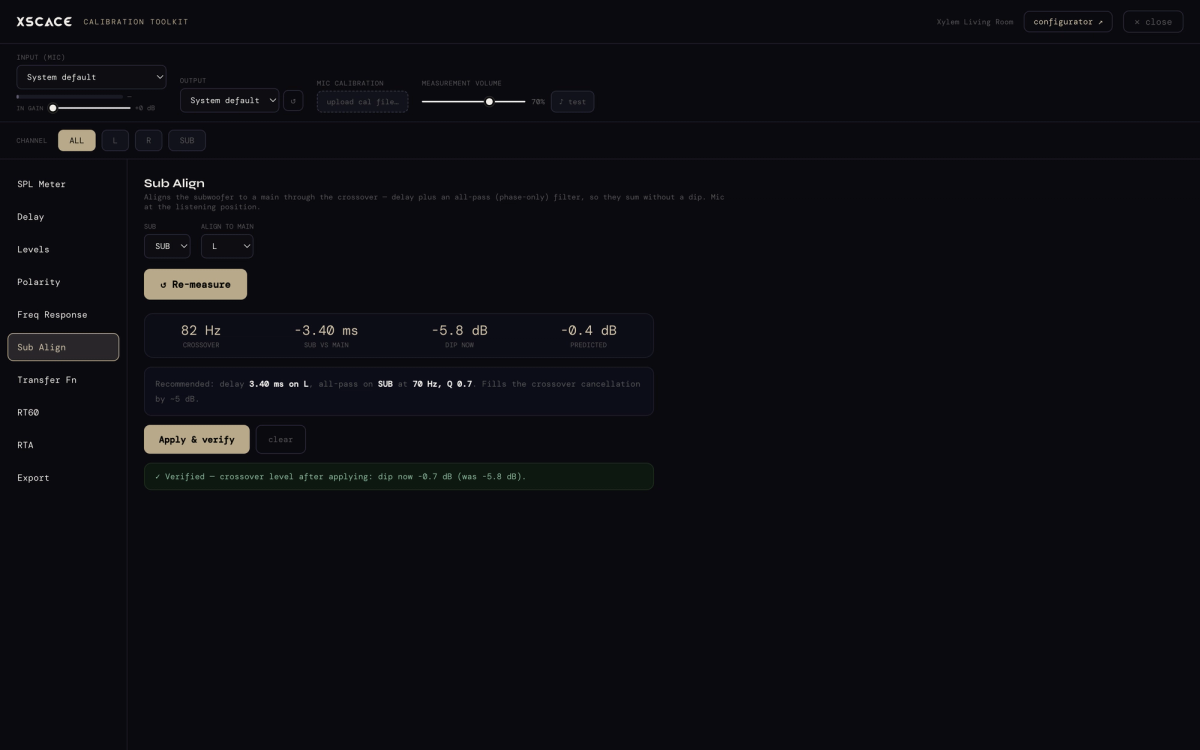
Cane runs down to 150Hz against Acacia 10 Powered's 35Hz, and the two records recommend different crossover points (200Hz and 300Hz). Which suits the room is a measurement, not a preference.