Bathroom speakers rated for the conditions.
A bathroom is acoustically the most extreme room in a house — every surface is hard, the volume is small, and the air is wet. It is also the room where an unrated speaker fails first.
What makes a bathroom different
Humidity is constant, not occasional
A bathroom cycles between dry and near-saturated several times a day, every day. That is a harsher duty than a covered terrace, and it is why an IP rating belongs in the specification rather than a general assurance that a speaker is suitable for damp rooms.
Reverberation is extreme
Tile, glass, stone and mirror reflect almost everything. Reverberation time is high and the room is small, so reflections arrive quickly and densely. Modest, evenly distributed output sounds dramatically better here than a single speaker driven hard.
There is nowhere to put it
Tiled walls, glazing and mirror leave almost no mountable surface with real depth. The successful positions are usually the joinery — vanity panelling, the face beside a mirror, or the ceiling — which is exactly where ultra-shallow depth stops being a luxury.
What we’d specify here.
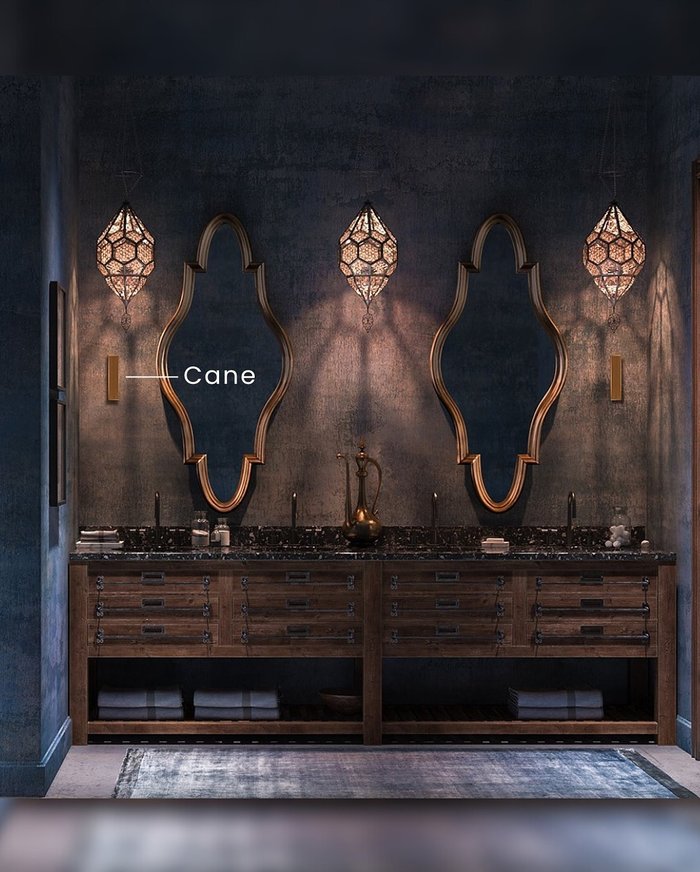
Cane
The primary answer: IP66 and marine-treatable at 23mm deep, 50W RMS, 92dB. Rated for the humidity cycle and shallow enough for vanity joinery beside a mirror.
View Cane →Bonsai
For powder rooms and vanities with almost no depth at all — 12mm, marine-treatable, and narrow enough to sit within panel detailing.
View Bonsai →Camphor 6
Where a wet room or spa is genuinely exposed to spray, an IP66 outdoor model is the conservative specification — 70W RMS, 87dB, 37Hz–22kHz.
View Camphor 6 →Acacia 6 Powered
Sited outside the wet area in an adjacent cupboard, adding the low end the slim speakers hand off, without putting an enclosure in the humid room.
View Acacia 6 Powered →Real bathroom & wet areas installations.
Bathroom & Wet Areas questions.
Frequently asked questions4 answers
Can you put speakers in a bathroom?
Yes, provided they carry a genuine ingress rating. A bathroom cycles between dry and near-saturated daily, which is harsher duty than a covered terrace. XSCACE Cane is IP66 and marine-treatable at 23mm deep, making it suitable for vanity and wet-area installation.
What IP rating do bathroom speakers need?
IP66 removes any judgement call — dust-tight and protected against powerful water jets from any direction. Lower ratings can be acceptable away from direct spray, but a specific IP figure should always be stated; "suitable for damp areas" is not a verifiable claim.
Why do bathrooms sound so reverberant?
Tile, glass, stone and mirror reflect nearly all the sound that reaches them, and the room is small, so reflections return quickly and densely. Modest, well-distributed output sounds considerably better than one speaker driven hard.
Where should bathroom speakers be mounted?
Usually in the joinery rather than the tiled surfaces — vanity panelling, the face beside a mirror, or the ceiling. These are the positions with usable depth, which is why 12–23mm mounting depth is what makes the installation feasible.