Contents6 sections
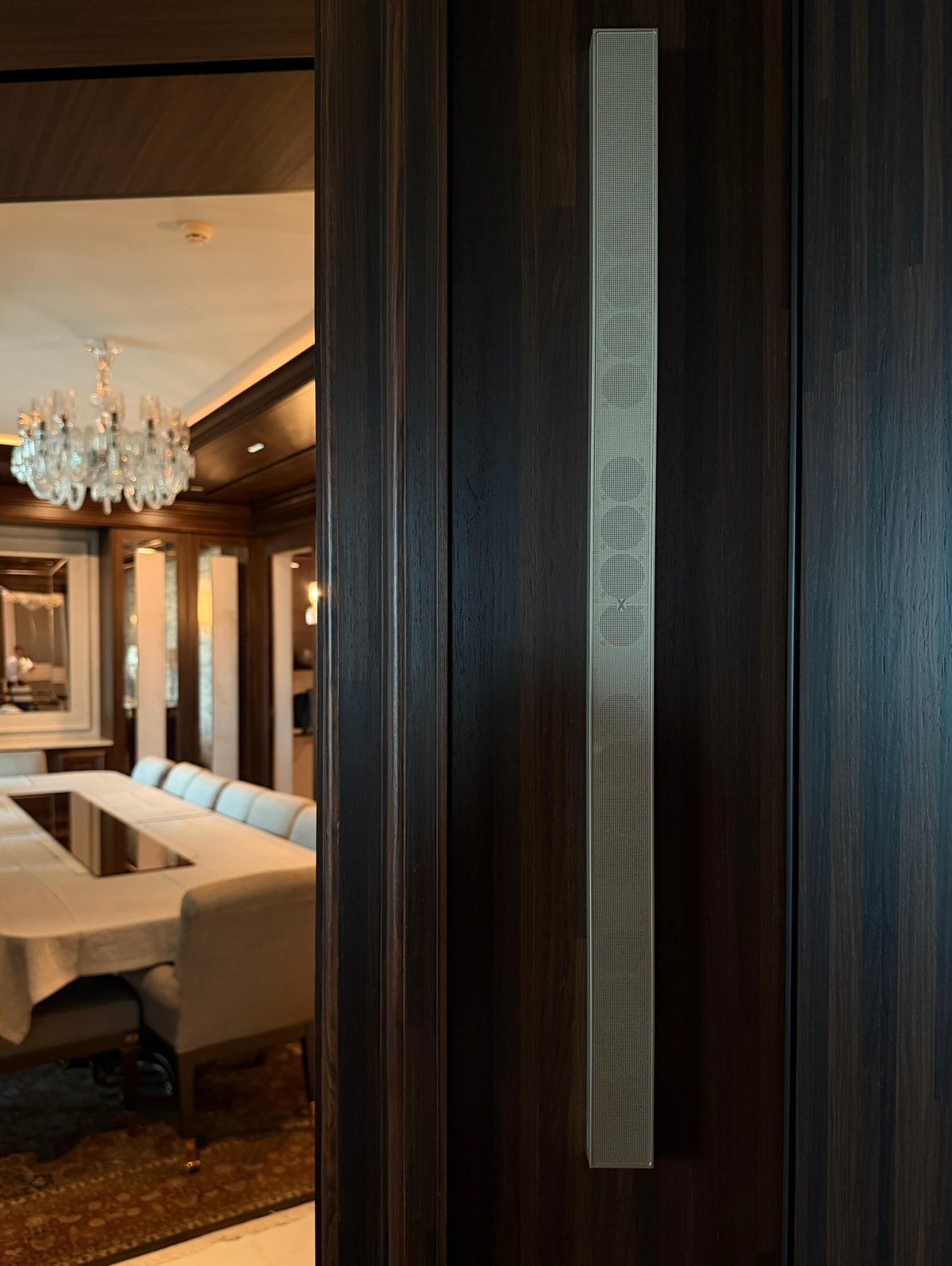
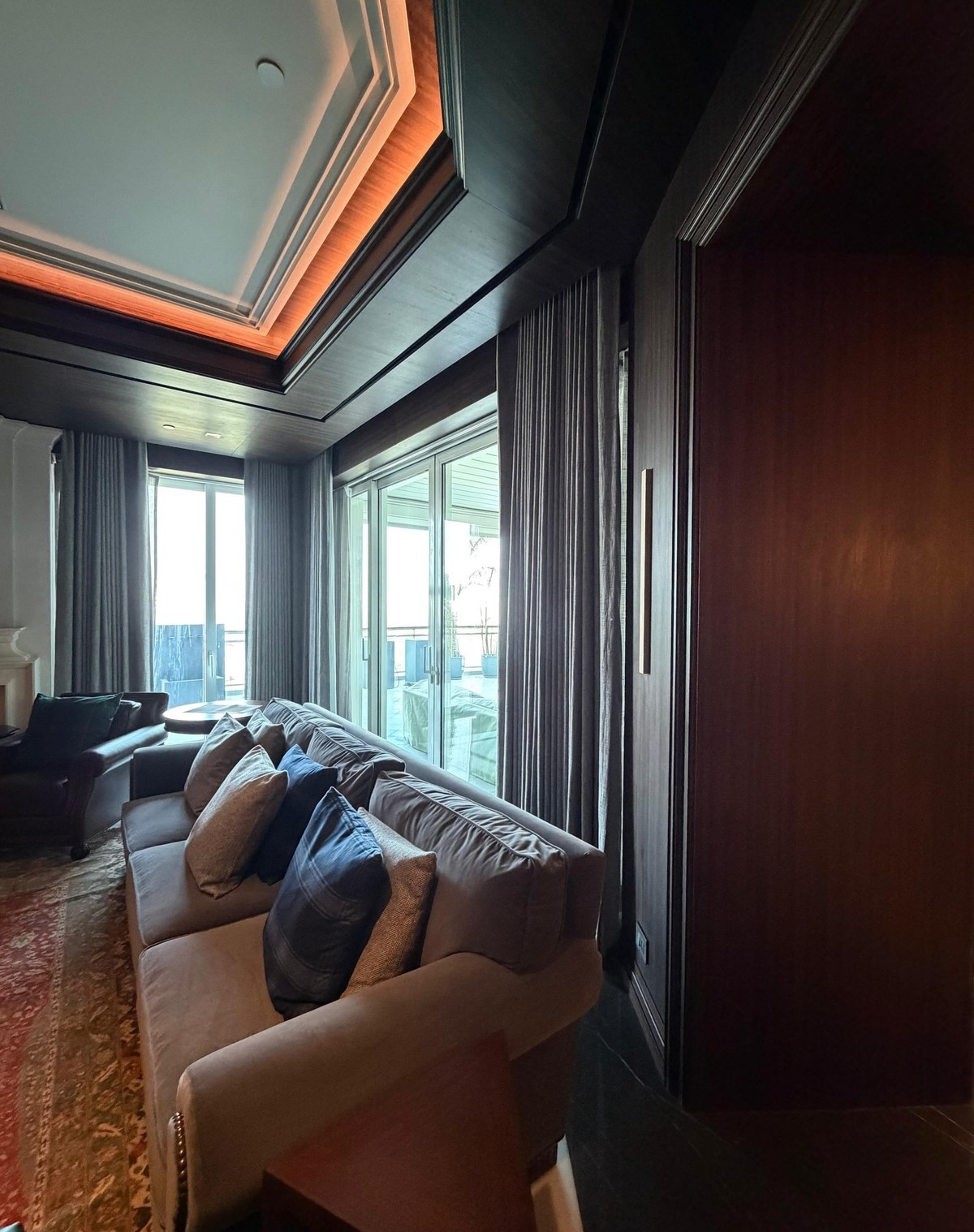
A large, multi-room luxury residence — a formal dining room with a crystal chandelier and dark wood panelling, a mirrored corridor, a den with a navy tufted leather sofa, and a living room with a pale gold silk wall panel — ran white-finish QuadCane consistently through rich mahogany and walnut panelling across every room, treating the whole property as a single coordinated audio system rather than room-by-room decisions.
Case Study at a Glance
- Property: large multi-room residence — dining room, corridor, den, living room
- Product: QuadCane (21mm, 16-driver, 100W RMS, 95dB)
- Mounting surface: rich mahogany and walnut panelling throughout
- Finish: white aluminium
- Goal: a single coordinated spec across an entire property
Amplifier channel planning for a whole-home project
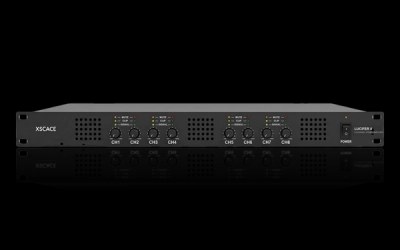
A project spanning this many rooms needs channel planning done at design stage, not room by room after the fact — an 8-channel amplifier like the Lucifer 8 gives four stereo pairs' worth of dedicated channels, which has to be mapped against the actual room count and zoning requirements before the cable runs are pulled. Getting this wrong means either under-provisioning channels (rooms sharing a zone that should be independent) or over-provisioning (paying for amplifier capacity that never gets used).
One speaker spec, whole-home consistency
Specifying a single speaker model across an entire multi-room residence simplifies both the visual language (the same grille and finish reads consistently room to room) and the system design — the same amplifier channel spec, the same crossover settings, and the same install detail apply throughout, rather than re-solving the brief separately for each room.
Why QuadCane for a whole-home spec
QuadCane's 100W RMS and 95dB sensitivity give it enough range to suit both a smaller den and a larger, more acoustically demanding formal dining room without needing a second, higher-power model layered in for the bigger spaces — a practical advantage for whole-home consistency.
The system
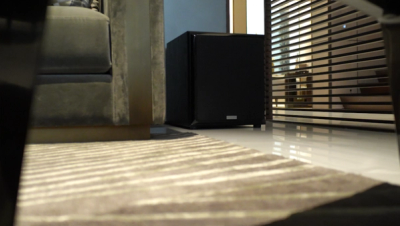
A Lucifer 8 eight-channel amplifier (250W RMS/channel, 2000W total) drives the QuadCane array across the property's multiple rooms, with a Juniper subwoofer providing low-end support in the primary living and dining zones.
Planned, controlled and calibrated
Every XSCACE installation follows the same three stages: planned in the simulator, controlled from the app that matches the hardware, and calibrated with measurement. A living room has one or two seats that matter and a great many surfaces that do not cooperate.
Planned
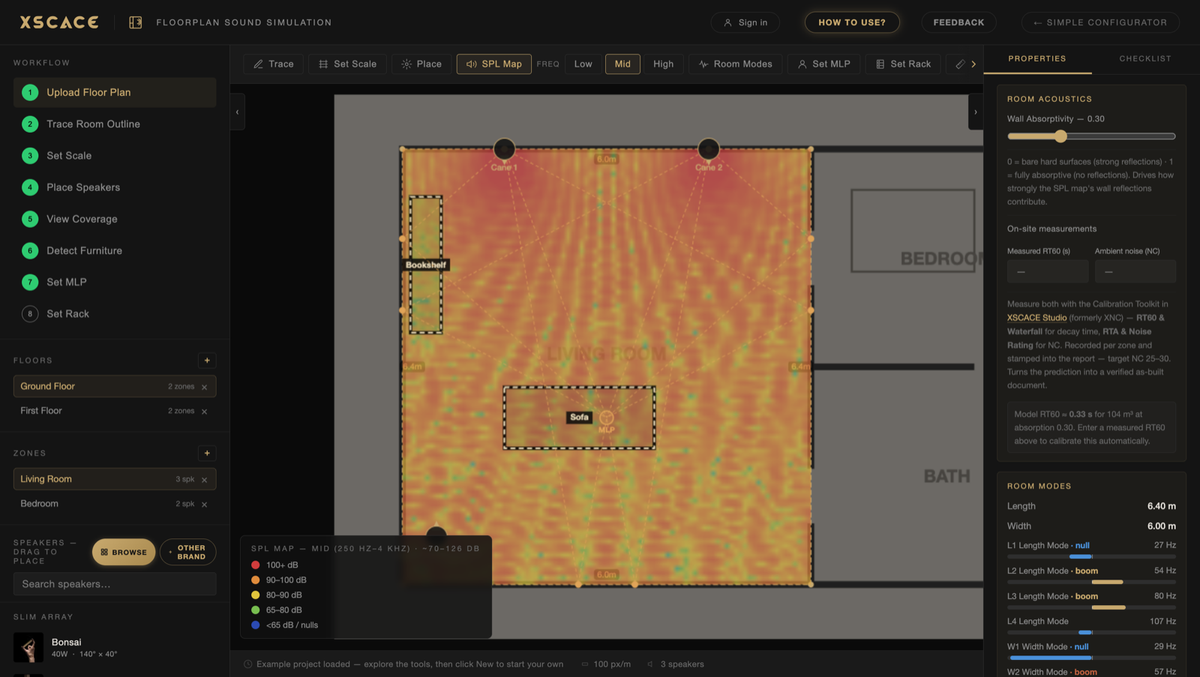
XSCACE Floorplan Sound Simulation takes a plan from trace to bill of quantities in the browser. For a room like this the outputs that matter are:
Coverage at the seating position rather than the room centre
First-reflection points flagged, which decides placement more often than taste does
Room modes located, so uneven bass is designed out rather than equalised later
Controlled
The amplifier is configured and controlled from XSCACE Studio on macOS — routing matrix, per-channel gain and delay, parametric EQ, crossovers and limiting, with network-wide discovery rather than one amplifier at a time.
Calibrated
The calibration toolkit inside XSCACE Studio measures what the room actually does — eleven instruments covering SPL, delay, levels, polarity, frequency response, THD, sub alignment, transfer function, RT60, RTA and export, free on macOS. Here the ones that earn their place are:
Delay and polarity from a single sweep per channel
Sub Align, which integrates the subwoofer then re-measures to prove the correction
Frequency response at the listening position, not at the speaker
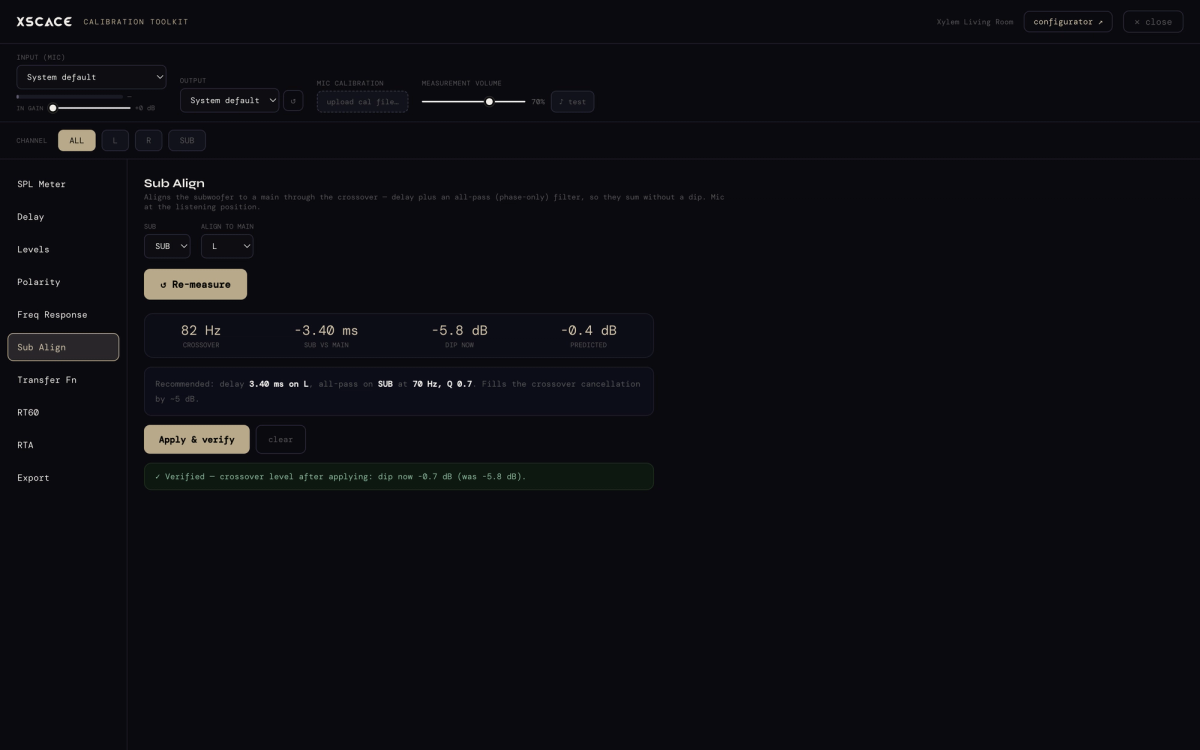
QuadCane runs down to 150Hz and Juniper reaches 25Hz, meeting at the 200Hz crossover both records specify — a number to verify by measurement rather than assume.