Dining room sound that stays under the conversation.
A dining room is the one room in a house where people sit still for hours, close together, and mostly talk. Music is there to carry the room, not to be listened to — which makes it a harder brief than it sounds, because anything uneven is noticed by someone who cannot move away from it.
What makes a dining room different
Nobody can move away from a bad seat
In a living room somebody who finds it too loud shifts along the sofa. At a dining table the seating is fixed for the length of the meal, so a hotspot under one speaker is a guest sitting in it all evening. Even coverage matters more here than in any other domestic room, and it is the argument for more speakers at lower level rather than fewer working harder.
The surfaces are the hardest in the house
A glass or stone table, a hard floor, glazing down one side and often a mirrored or panelled wall. Reverberation is high and speech already competes with itself, so music sitting in the same band as conversation makes the room tiring rather than warm.
There is rarely a wall to use
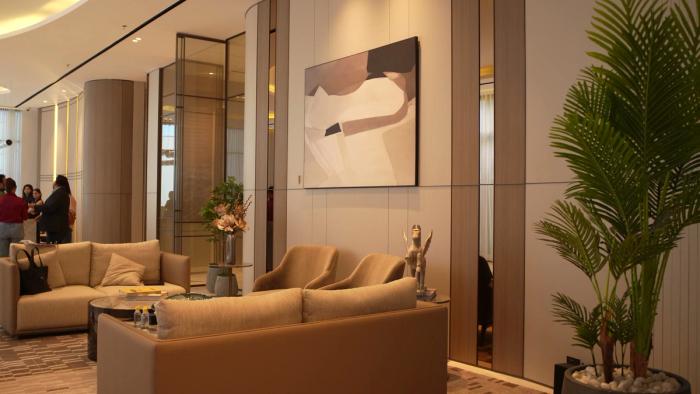
Dining rooms tend to be glazed on one side, joinery on another and art on the rest. That pushes the system to the ceiling more often than not — which is straightforward, provided the coverage angle and the ceiling height are worked out against the table position rather than the room centre.
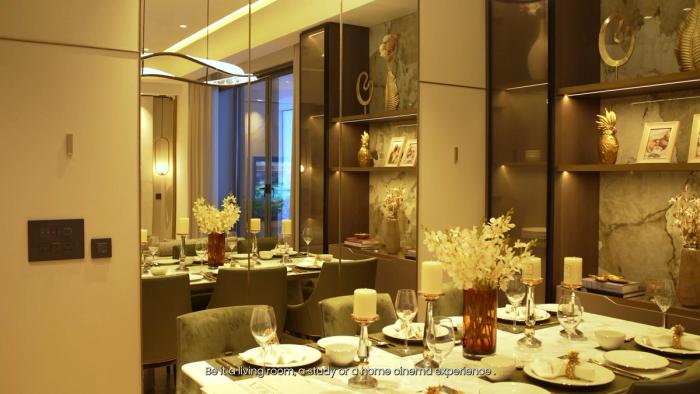
The dining room, as built.
What this room needs.
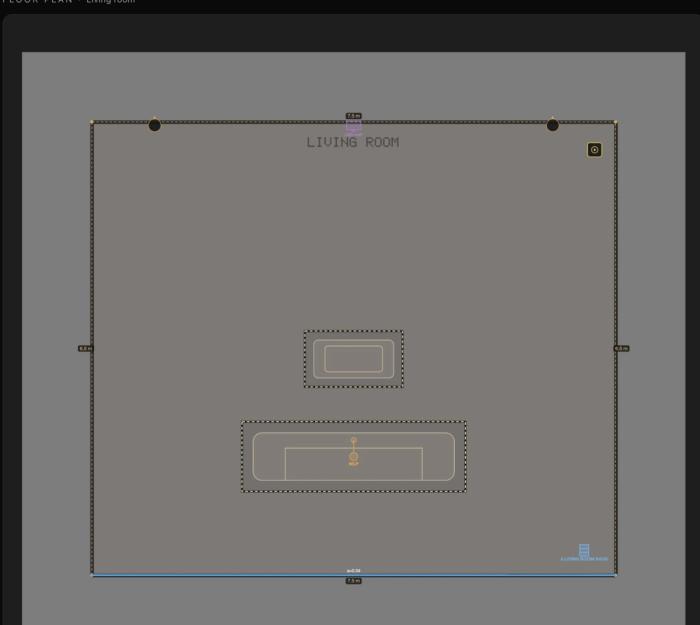
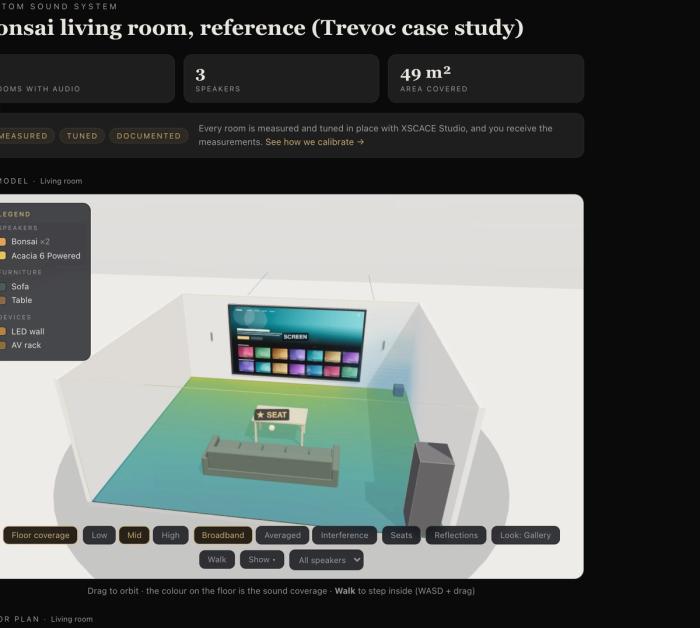
A typical specification for a room of this kind, as drawn in the villa. Trace your own room in the Floorplan Sound Simulation to get the exact count, the coverage prediction and a priced bill of quantities.
What we’d specify here.
Aspen 6
The straightforward answer where the ceiling is available: 100W RMS at 87dB, reaching 50Hz in 107.95mm of cavity. Low enough in the bass to run without a subwoofer in a room that is never played loudly.
View Aspen 6 →Aspen 8
Where the room is large or the ceiling high, 120.9mm buys 120W RMS at 89dB and extension to 40Hz — enough that a dining space adjoining a kitchen or lounge stays consistent across the whole floor.
View Aspen 8 →Bonsai
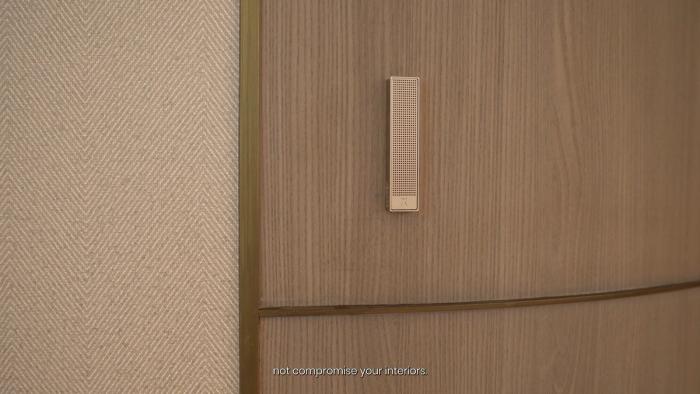
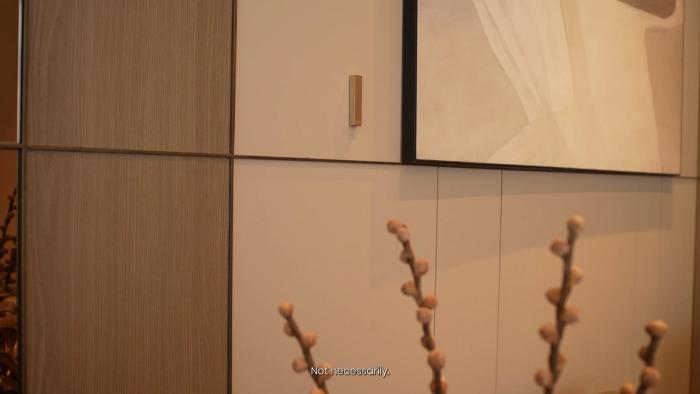
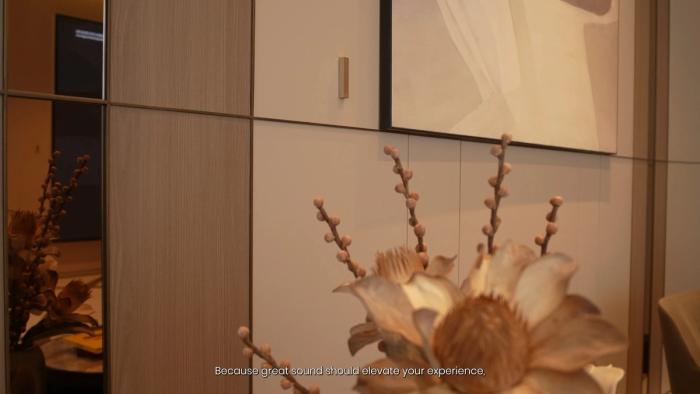
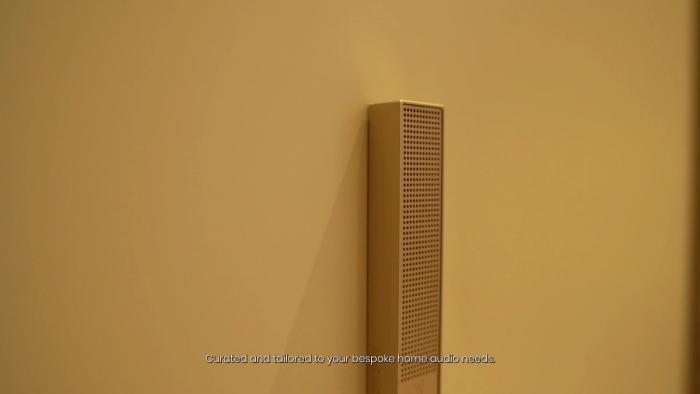
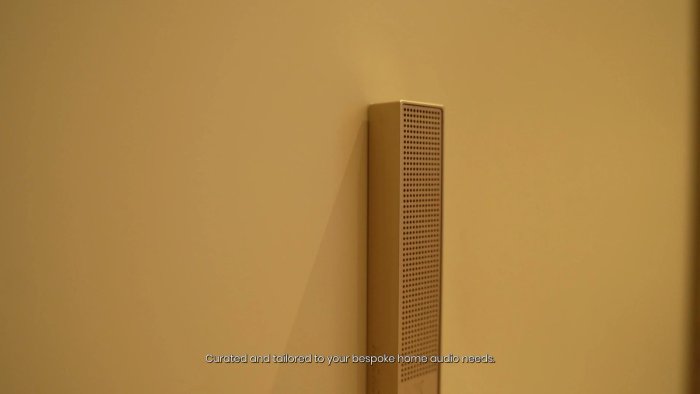
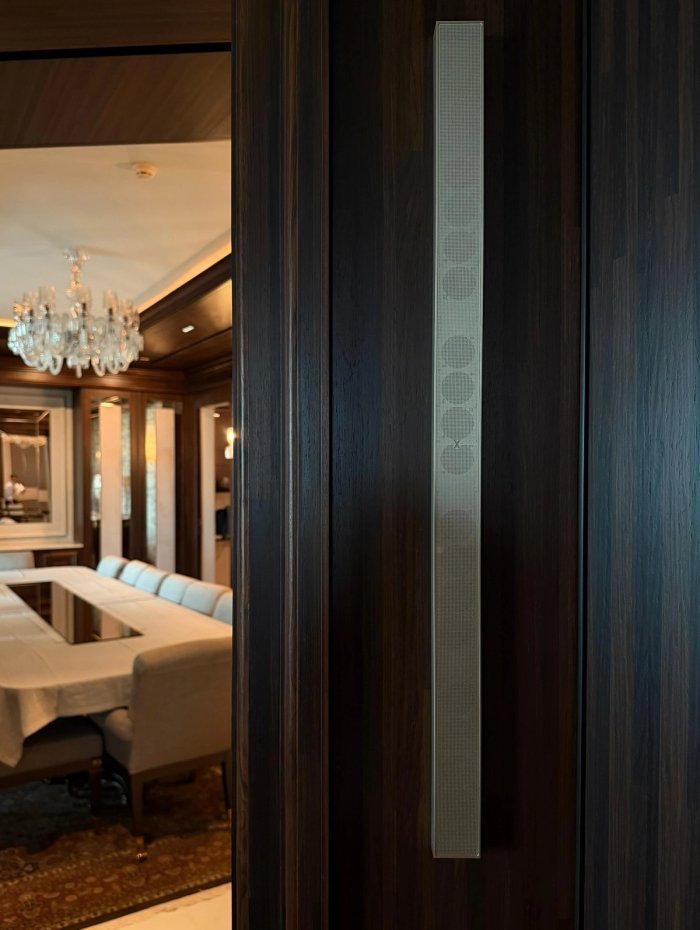
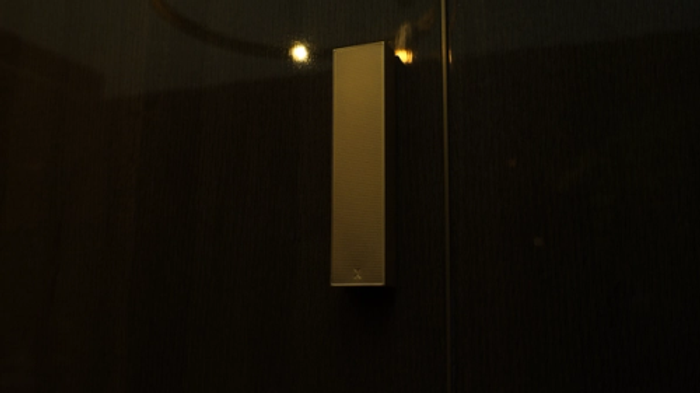
12mm deep, so it fits joinery, a panelled wall or a single flute of a reeded panel where no ceiling void exists. 300Hz–18kHz, which means it needs a subwoofer to sound complete rather than thin.
View Bonsai →Acacia 6 Powered
200W RMS from 35Hz, and it can sit in adjacent joinery rather than in the dining room itself. Pairs with Bonsai, which hands over everything below 300Hz.
View Acacia 6 Powered →Real dining room installations.
Dining Room questions.
Frequently asked questions4 answers
How many speakers does a dining room need?
Enough that no seat sits directly under one. For a typical table a pair either side of the table axis is the minimum, and four at lower level is usually better than two working harder. Coverage is set by the ceiling height and the speaker dispersion angle, not by room area alone.
Should dining room speakers go in the ceiling or the wall?
The ceiling, in most cases. Dining rooms are usually glazed on one side and finished in joinery or art elsewhere, leaving no useful wall, and downward dispersion from above gives more even level across a fixed seating plan than a pair firing along the table.
Does a dining room need a subwoofer?
It depends on the speaker. Aspen 6 reaches 50Hz and Aspen 8 reaches 40Hz, which is enough for background listening without one. A slim-array model such as Bonsai stops at 300Hz and hands everything below that to a subwoofer, so in that case yes.
How loud should dining room music be?
Below conversation, and even across the table. That is a coverage problem rather than a volume one: several speakers at modest level keep the whole table in the same acoustic, where one pair driven harder produces a loud end and a quiet end.