Contents7 sections
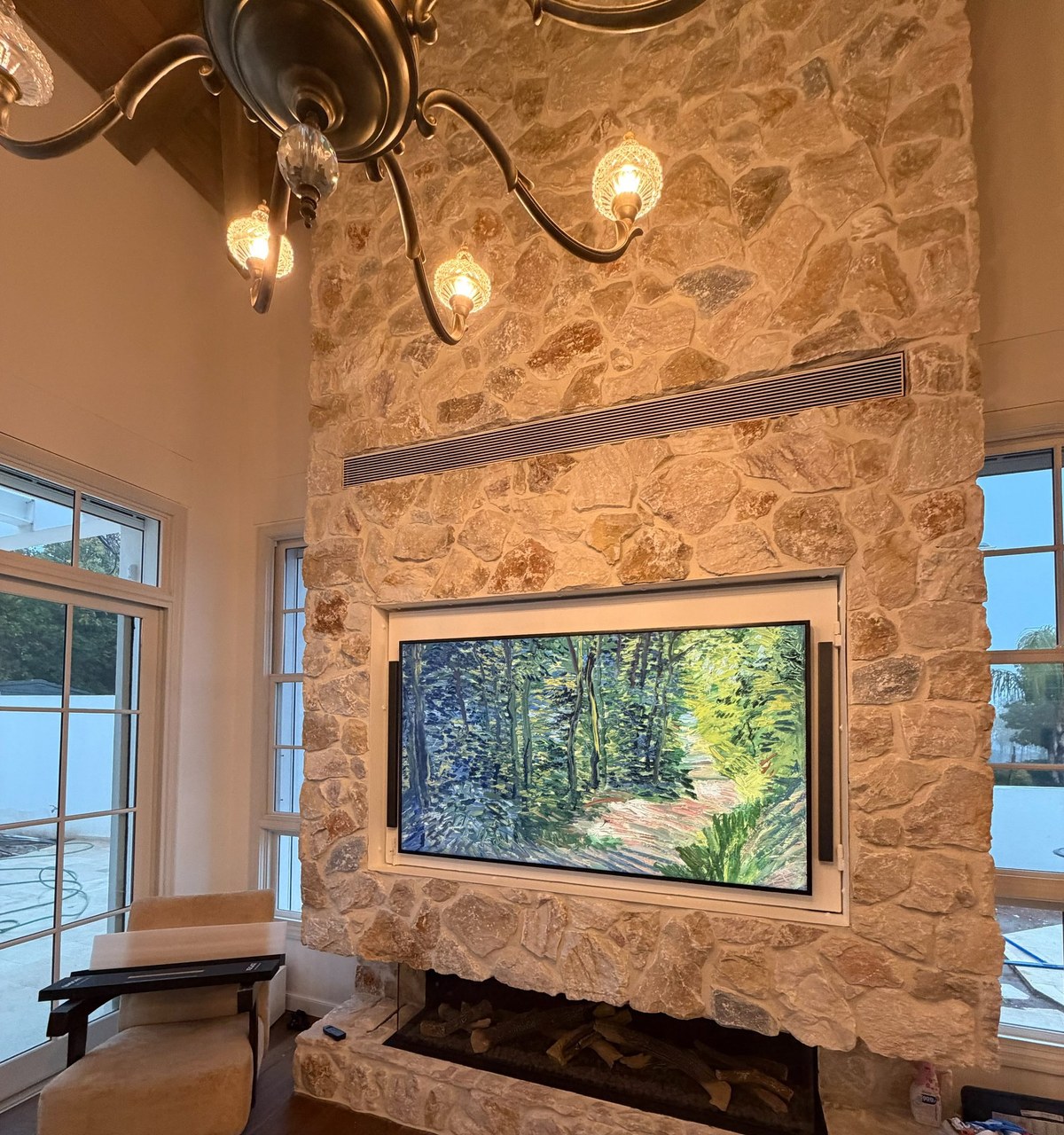
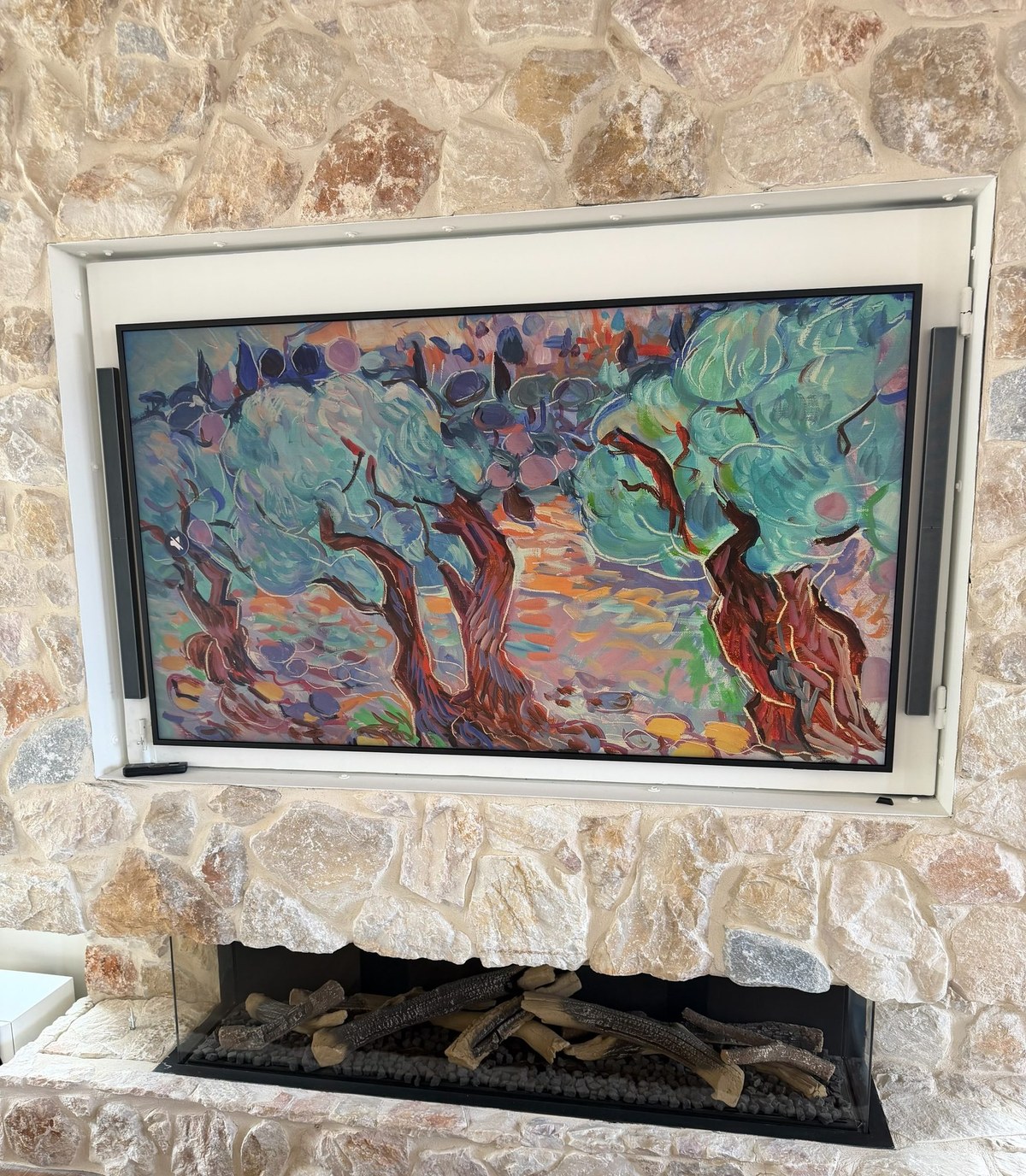
A private house outside Tel Aviv, and a wall that offered nowhere to put a speaker. The chimney breast is rough limestone from hearth to a double-height ceiling, with a linear gas fire at the bottom and a recessed display above it that shows paintings when nobody is watching anything. Cutting into the stone was not on the table. Standing anything on the floor would have been visible from the whole open plan. The brief was two channels and a subwoofer, and the sound had to come from the wall the room already looks at.
The Room: Rough Stone, and Nothing Flat to Fix To
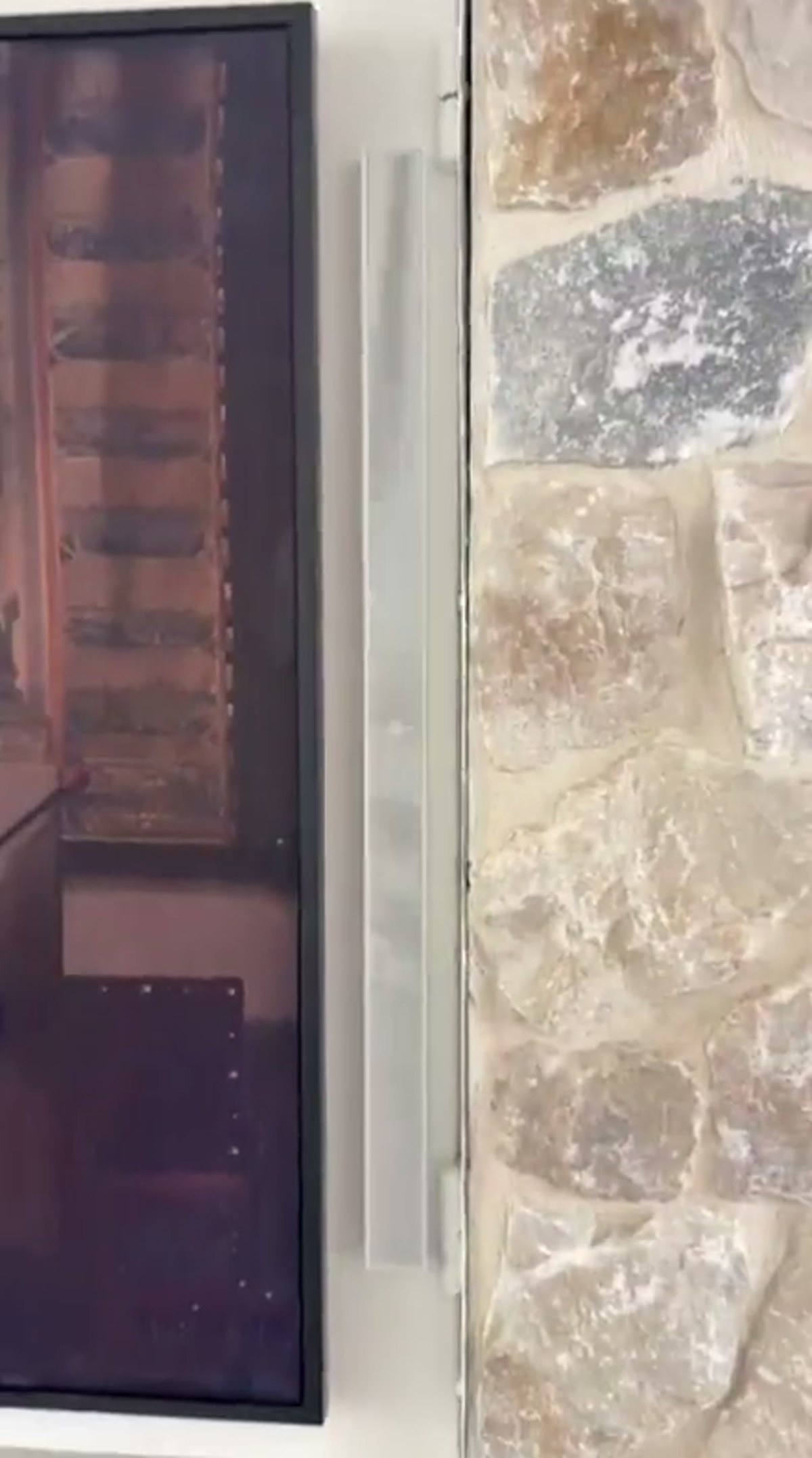
Masonry is the hardest surface an architectural speaker meets. An in-wall speaker needs a cavity, and there is none — behind that limestone is structure. An on-wall speaker needs a flat plane to sit against, and rough-cut stone gives you nothing of the sort: every face sits at a slightly different depth, so a conventional cabinet either rocks on its high points or needs a packer behind it that becomes visible from the side.
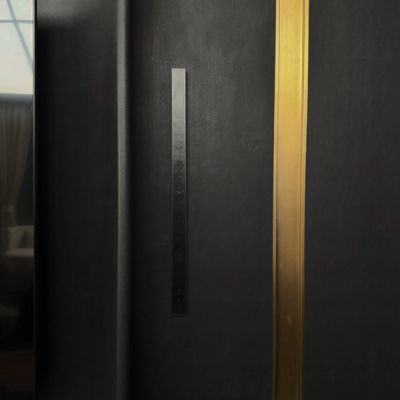
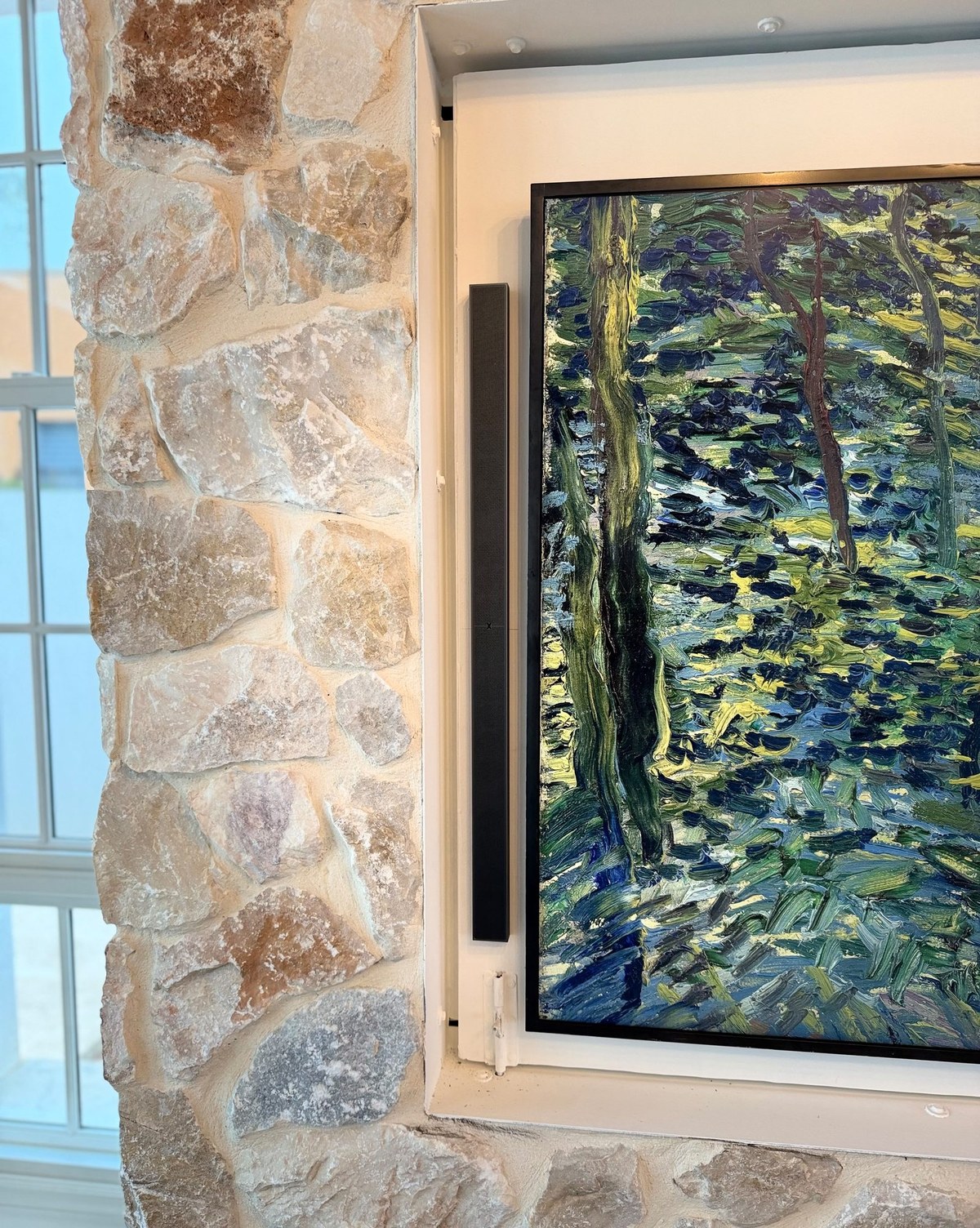
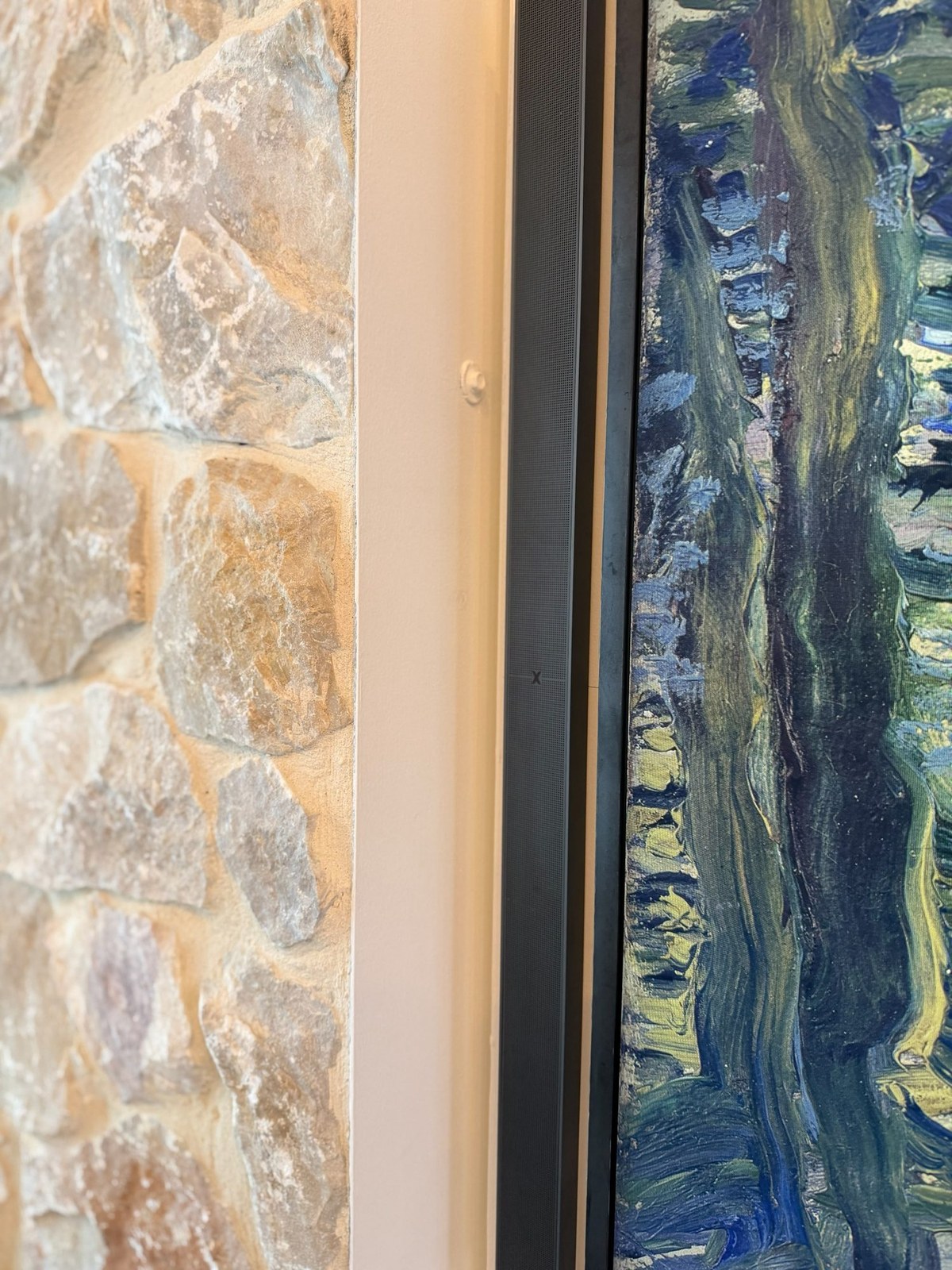
The recess built for the display solved it. Its reveals are flat, painted and square, and they run the full height of the opening — a straight, true surface on an otherwise irregular wall. Each QuadCane fixes there on its keyhole mount, 43mm wide against a reveal several times that, so the speaker reads as part of the joinery rather than as an object hung on the stone.
Why the Speakers Went Beside the Screen
Flanking the display was not a compromise position. It is the correct one. A stereo pair either side of the screen puts the image where the picture is, at roughly ear height when seated, and gives a subtended angle across the seating that lands inside the 45–60° window a stereo image needs. Above the display would have fired over the listeners' heads and pulled the image up off the screen; below it, the hearth and the fire were in the way.
The vertical orientation matters more than it looks. A QuadCane is 763mm of line source — sixteen woofers in a column — so it stays directional in the horizontal plane and spreads vertically. Turned upright beside a screen in a room with a ceiling this high, that is the right way round: the energy goes across the seating rather than up into a void that returns nothing but reverberation.
The System: Two QuadCane and Someone Else's Subwoofer
Two QuadCane in black, and a Dynaudio Sub 3 already in the room. This is the first installation we have published where the low end is not ours, and it is worth being straightforward about why that works: the QuadCane is specified from 150 Hz, with a recommended crossover at 200 Hz. It is not a full-range speaker and does not pretend to be.
That single number is what makes the pairing honest rather than lucky. A speaker with a published low limit and a published crossover point can be handed to any competent subwoofer, because the handover is defined rather than hoped for. Set the sub's low-pass at 200 Hz, match levels at the seat, and the join is where the specification says it is. There is nothing proprietary about the crossover and nothing that requires the subwoofer to carry the same badge.
| Element | Detail |
|---|---|
| Speakers | 2 × XSCACE QuadCane, black |
| Subwoofer | Dynaudio Sub 3 (client's existing unit) |
| Configuration | 2.1 stereo |
| Speaker dimensions | 763 × 43 × 21 mm, 0.8 kg each |
| Drivers | 16 × PowerDense woofers per speaker |
| Frequency range | 150 Hz – 20 kHz |
| Sensitivity | 95 dB |
| Maximum SPL | 116 dB |
| Crossover to subwoofer | 200 Hz |
| Mounting | Keyhole fixing to the display reveal |
What Changes When the Screen Is Also a Painting
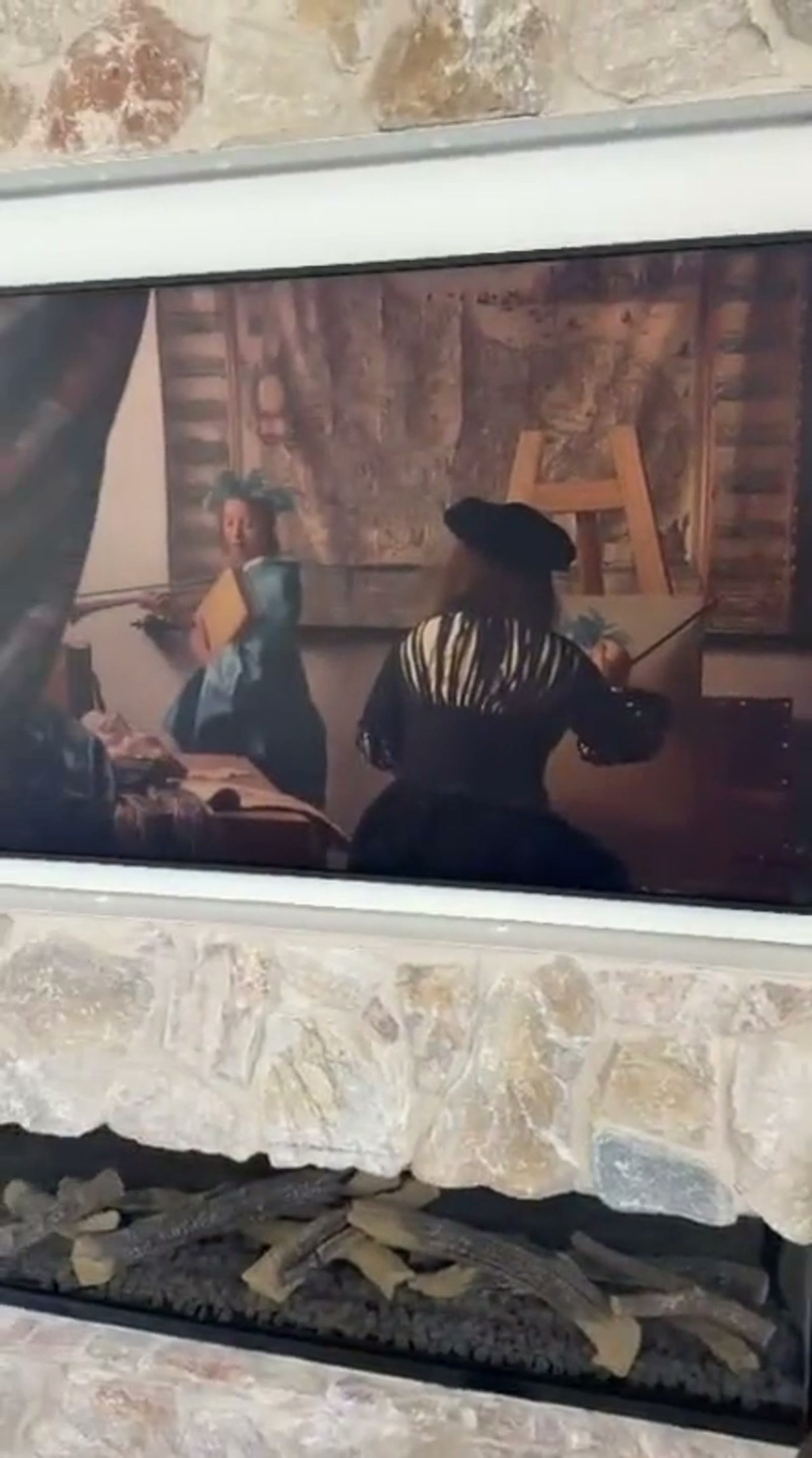
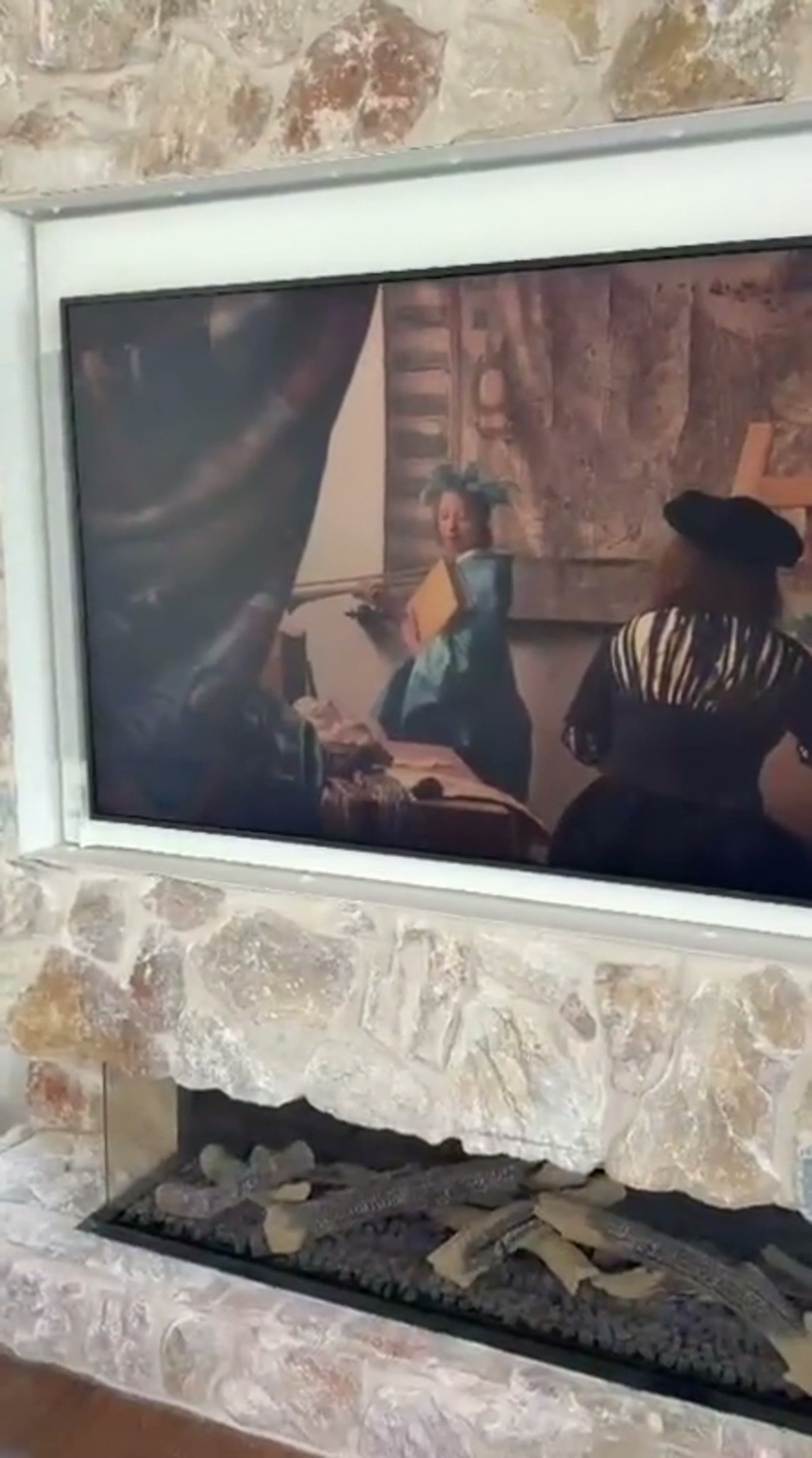
An art-mode display is a harder neighbour than a television. A television is off most of the time and nobody looks at the wall; a display showing a Van Gogh is looked at constantly, and anything beside it is judged as if it were hung in a gallery. A 43mm black column reads as a frame element at that width. A conventional bookshelf speaker on a bracket would have read as equipment.
The client's own test was simply whether guests asked where the sound came from. They did — which for a room like this is the outcome the money is spent on.
What a 2.1 System Can and Cannot Do Here
Two channels and a subwoofer is the right answer for a room used for music, conversation and the occasional film — and it is not a home cinema. There is no centre channel, so dialogue sits in a phantom image between the pair, which holds well across the seating in this room because the speakers are correctly spaced either side of the screen and the listening area is roughly on axis. A room used primarily for films would want a centre and surrounds; this one is not.
Nor is the ceiling free. A double-height volume with hard stone across an entire wall is reverberant by construction, and no speaker choice removes that. What it argues for is directivity — energy aimed across the seating rather than sprayed at the stone — which is the case for a vertical line source in this room rather than a wide-dispersion box.
Case Study at a Glance
| Location | Private residence, Israel |
|---|---|
| Room | Double-height living room, open plan |
| Wall | Rough limestone chimney breast, recessed art-mode display, gas fire |
| System | 2.1 — two XSCACE QuadCane and a Dynaudio Sub 3 |
| Speaker depth | 21 mm |
| Mounting | Keyhole fixing to the flat reveal of the display recess |
| Why it works | Published 150 Hz limit and 200 Hz crossover make a third-party subwoofer a specification exercise, not a gamble |
Planned, controlled and calibrated
Every XSCACE installation follows the same three stages: planned in the simulator, controlled from the app that matches the hardware, and calibrated with measurement. A living room has one or two seats that matter and a great many surfaces that do not cooperate.
Planned
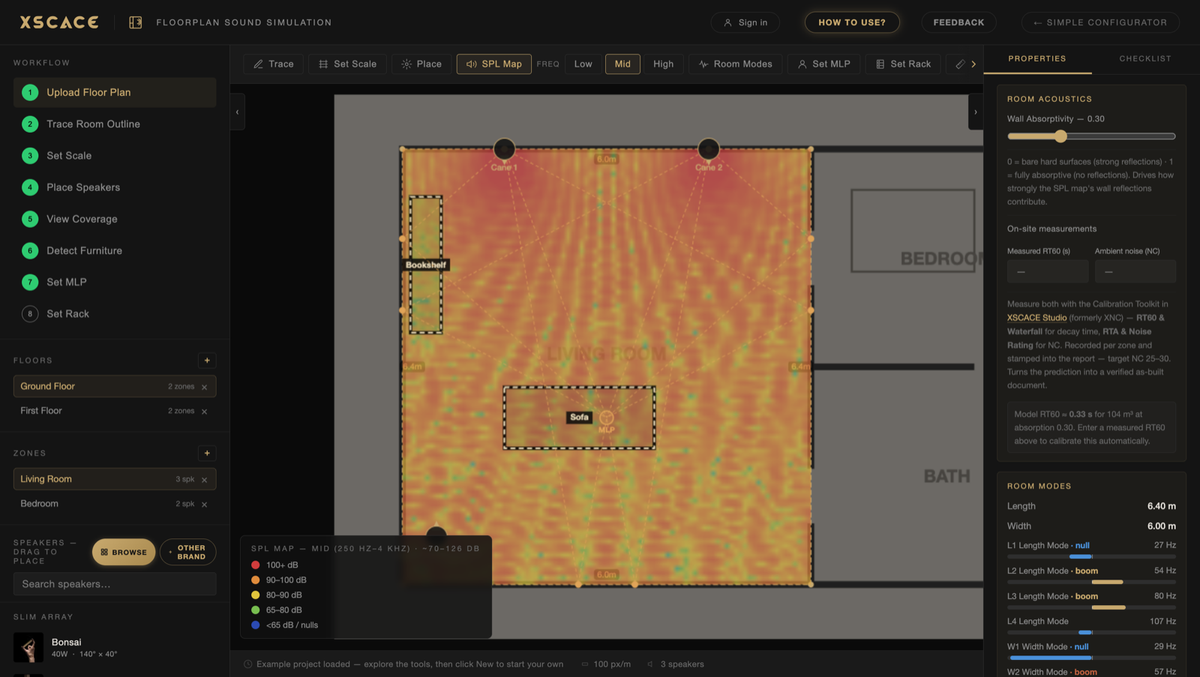
XSCACE Floorplan Sound Simulation takes a plan from trace to bill of quantities in the browser. For a room like this the outputs that matter are:
Coverage at the seating position rather than the room centre
First-reflection points flagged, which decides placement more often than taste does
Room modes located, so uneven bass is designed out rather than equalised later
Controlled
Which control app applies depends on the amplifier the speakers are driven from: XSCACE Controller for the Air streaming amplifiers, and XSCACE Studio for the Xylem, Root and Lucifer DSP amplifiers.
Calibrated
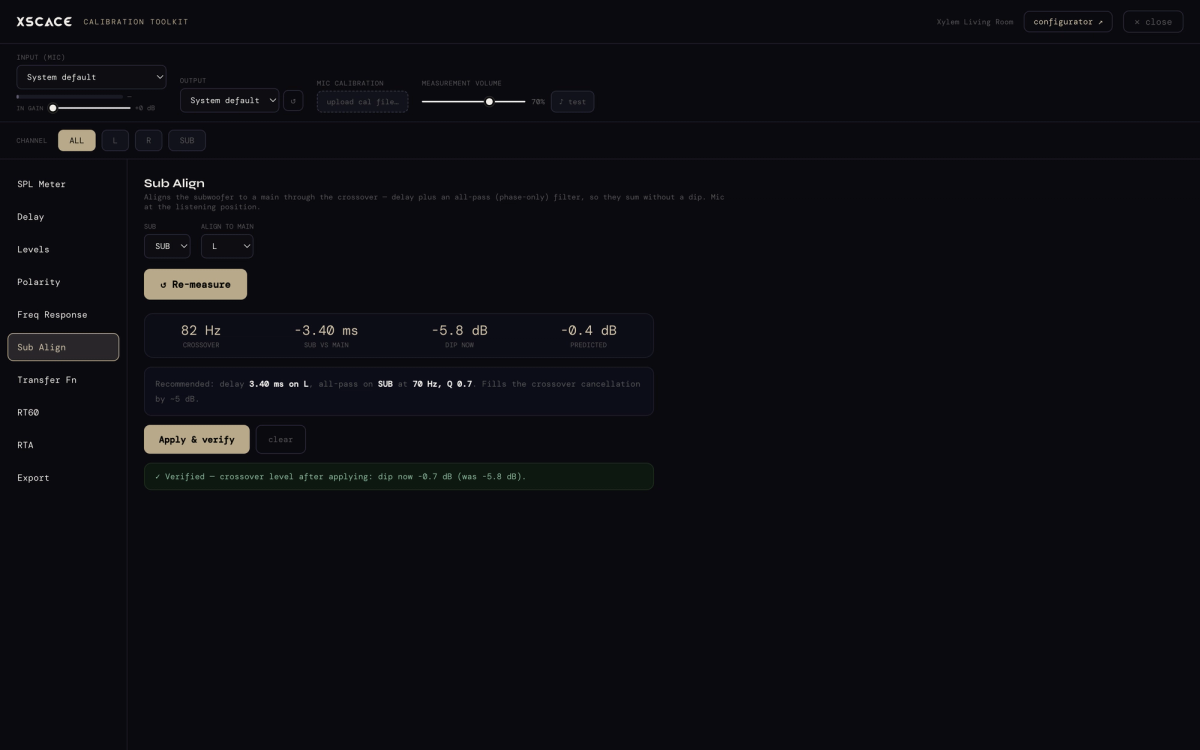
The calibration toolkit inside XSCACE Studio measures what the room actually does — eleven instruments covering SPL, delay, levels, polarity, frequency response, THD, sub alignment, transfer function, RT60, RTA and export, free on macOS. Here the ones that earn their place are:
Delay and polarity from a single sweep per channel
Sub Align, which integrates the subwoofer then re-measures to prove the correction
Frequency response at the listening position, not at the speaker
QuadCane publishes 95dB sensitivity and a 116dB maximum SPL — the figures the coverage prediction works from, and the ones the finished room should measure.