Contents6 sections
A premium living lounge has a harder brief than it looks: the system has to work as quiet background music during the day, then scale up to genuinely cinematic entertainment at night, and it has to do both for every seat in the room — not just the one facing the TV. And it has to do all of that without a visible speaker cabinet interrupting a clean architectural aesthetic. This case study walks through the system XSCACE specified for exactly that brief.
The System
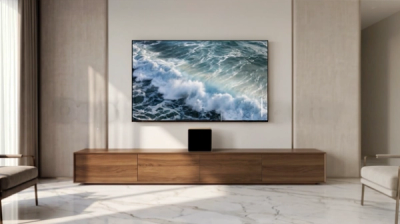
- A pair of XSCACE Cane slim array speakers, integrated seamlessly into the room's feature wall
- One XSCACE Acacia 10 Powered subwoofer for low-frequency extension
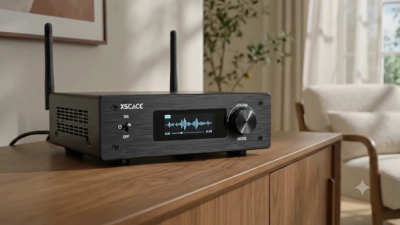
- One XSCACE Air Amp driving the 2.1 stereo signal chain
"Every Seat" Is a Dispersion Problem, Not a Volume Problem
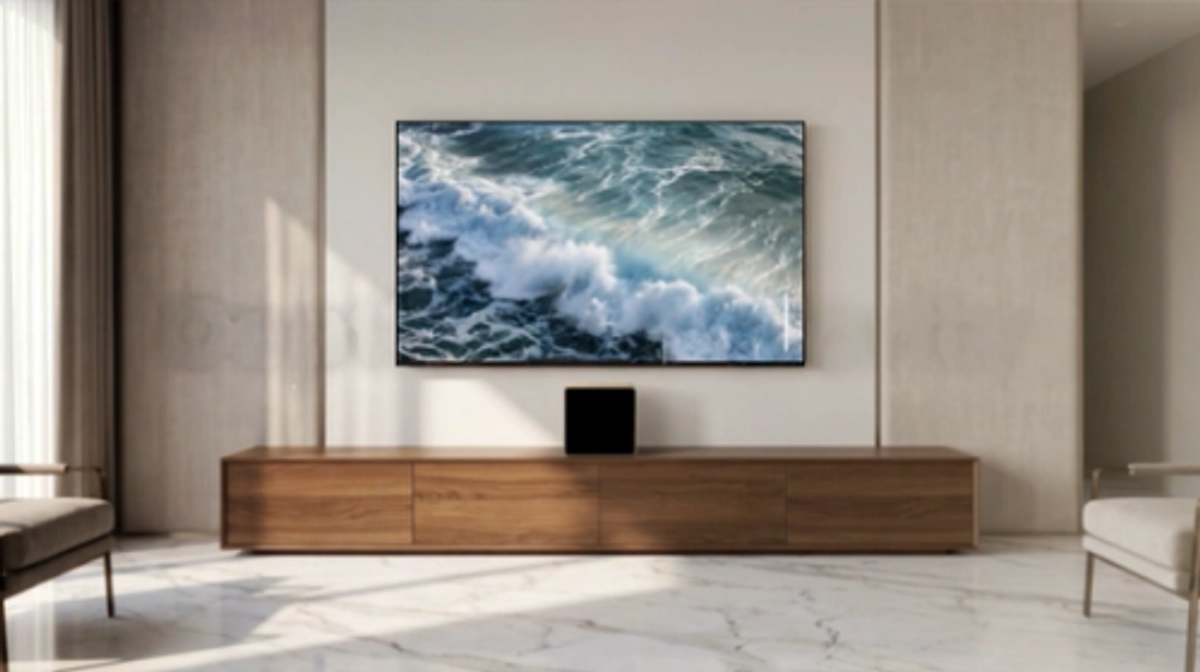
The brief specifically called for balanced sound at every seat, not just the one aimed at the screen. That's a placement and dispersion question more than a loudness one — a narrow-dispersion speaker pointed at a single sofa will always sound better from that seat and thinner everywhere else, no matter how much power is behind it. Integrating the Cane pair into the central feature wall, rather than pushing them to the room's corners, keeps both channels roughly equidistant from every seating position instead of favouring one side of the room.
Built for Both Ends of the Brief
"Casual background music to cinematic entertainment" is two different jobs. Background listening asks for even, low-fatigue output at modest levels — which Cane's 92dB sensitivity delivers well within its 50W RMS rating. Cinematic entertainment asks for low-frequency impact a 150Hz-and-up slim array physically can't produce on its own, which is exactly what the Acacia 10 Powered (rated 35–300Hz, 200W RMS) is there for. Specifying both from the start, rather than adding a subwoofer later as an afterthought, is what makes one system credible at both ends of that brief instead of compromised at either.
What "Seamlessly Integrated" Actually Requires
A 23mm-deep enclosure is what makes wall integration a real option rather than a compromise. Cane is engineered as a slim array from the driver up — four custom woofers in a purpose-built thin enclosure — rather than a conventional bookshelf speaker's driver crammed into a shallower box, which is usually where wall-mounted conversions lose bass response and midrange clarity. The result reads as a shadow line on the feature wall rather than a fixture, which is the whole point of specifying a slim array for a room built around clean architecture in the first place.
Case Study at a Glance
- Room: Premium living lounge
- Use case: Premium home entertainment and ambient music, every seat
- System: 2.1 stereo — 2× XSCACE Cane, 1× Acacia 10 Powered, 1× Air Amp
- Placement: Integrated seamlessly into the feature wall
- Goal: Immersive, room-filling sound while preserving the clean, luxurious aesthetic of the space
Compare this to the luxury dining room case study, which uses the same core system for a different brief, or plan your own room with the free Floorplan Sound Simulation tool.
Planned, controlled and calibrated
Every XSCACE installation follows the same three stages: planned in the simulator, controlled from the app that matches the hardware, and calibrated with measurement. A living room has one or two seats that matter and a great many surfaces that do not cooperate.
Planned
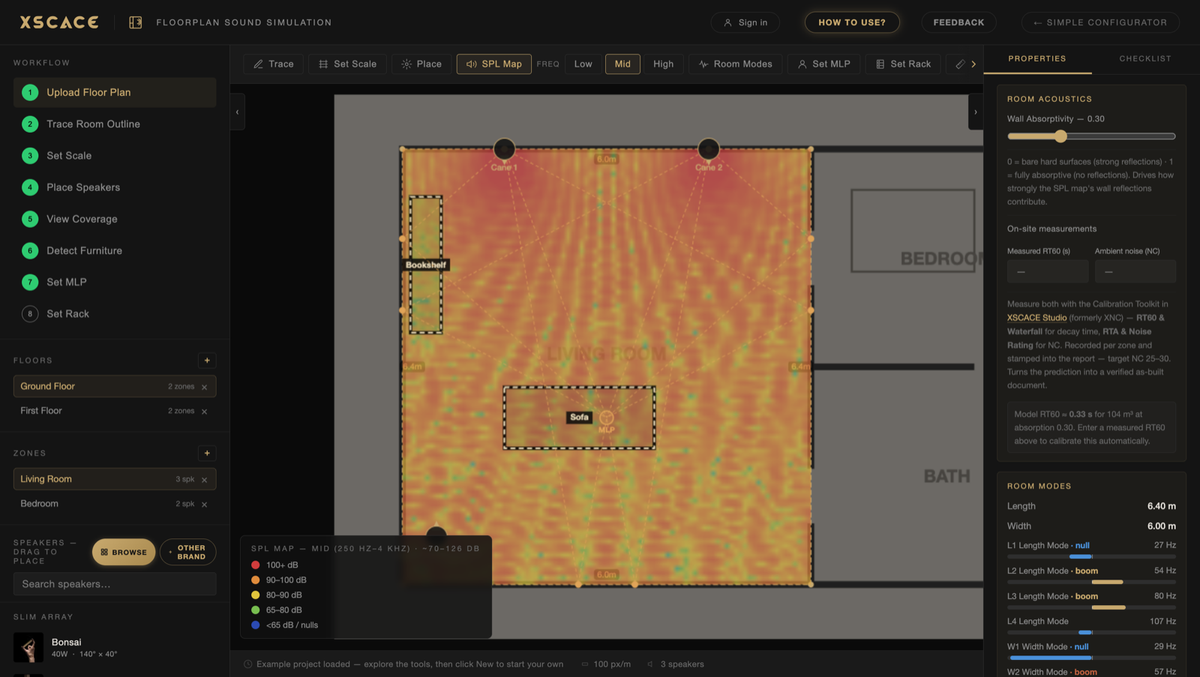
XSCACE Floorplan Sound Simulation takes a plan from trace to bill of quantities in the browser. For a room like this the outputs that matter are:
Coverage at the seating position rather than the room centre
First-reflection points flagged, which decides placement more often than taste does
Room modes located, so uneven bass is designed out rather than equalised later
Controlled
Day-to-day control is XSCACE Controller on iOS and Android. It handles volume, EQ and grouping, and the streaming amplifiers also appear natively as AirPlay 2 and Spotify Connect targets, so the app is for control rather than for getting audio into the room.
Calibrated
The calibration toolkit inside XSCACE Studio measures what the room actually does — eleven instruments covering SPL, delay, levels, polarity, frequency response, THD, sub alignment, transfer function, RT60, RTA and export, free on macOS. Here the ones that earn their place are:
Delay and polarity from a single sweep per channel
Sub Align, which integrates the subwoofer then re-measures to prove the correction
Frequency response at the listening position, not at the speaker
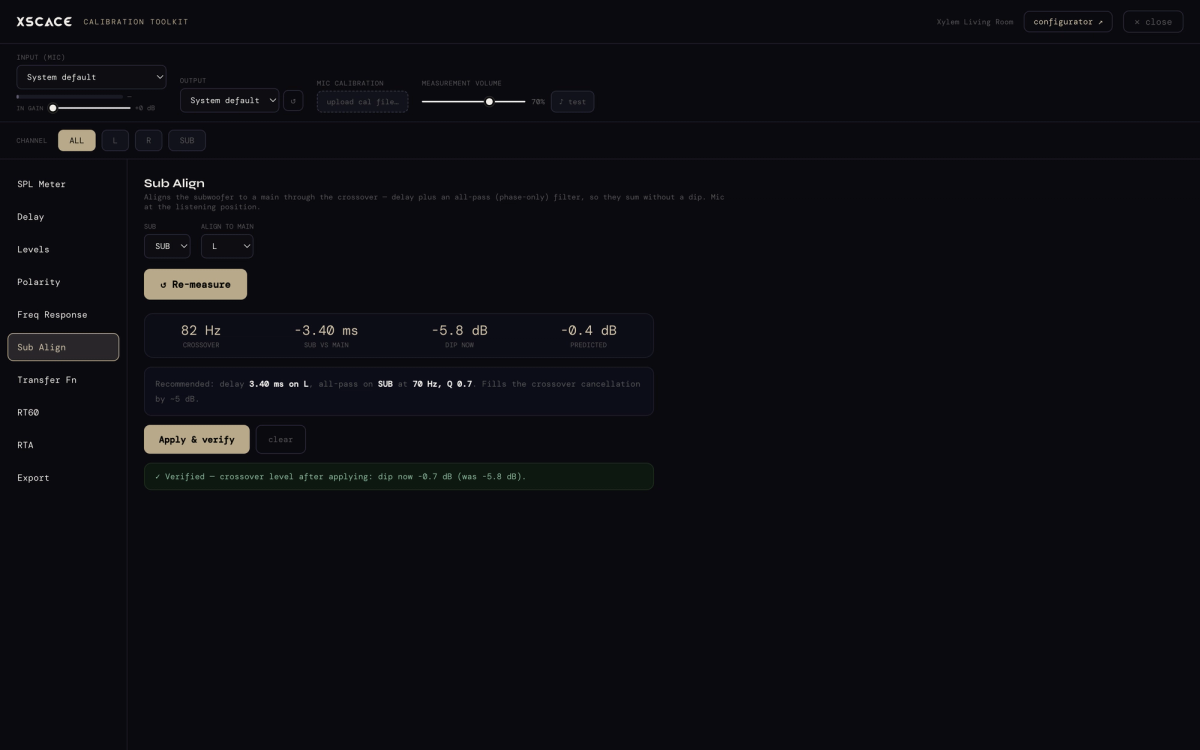
Cane runs down to 150Hz against Acacia 10 Powered's 35Hz, and the two records recommend different crossover points (200Hz and 300Hz). Which suits the room is a measurement, not a preference.