Contents6 sections
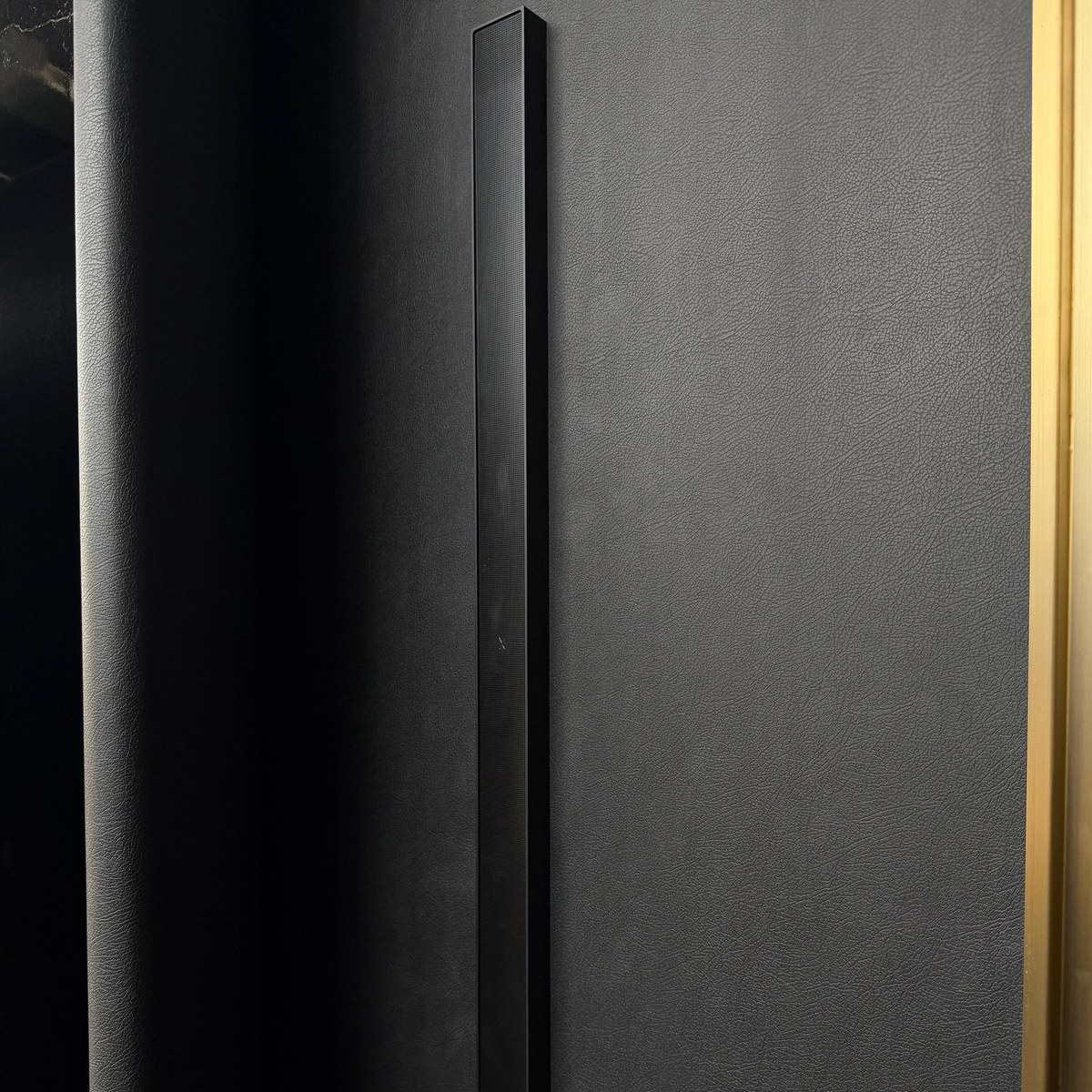
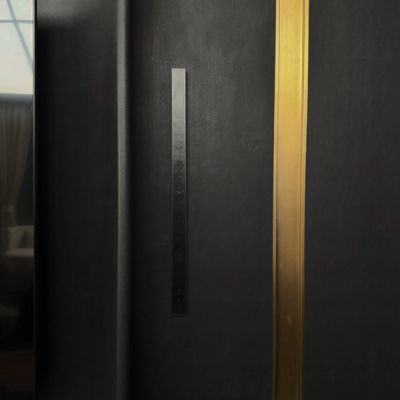
A lounge with a dramatic barrel-vaulted, ribbed ceiling and floor-to-ceiling black leather wall panelling, trimmed with a vertical brushed-brass inlay strip, is architecture built to draw the eye upward and along its lines — a speaker needed to sit within that composition rather than break it. Champagne-finish QuadCane was mounted flush on the black leather panel, positioned directly beside the brass inlay line.
Case Study at a Glance
- Room: barrel-vaulted lounge, high-rise residence
- Product: QuadCane (21mm, 16-driver, 100W RMS, 95dB)
- Mounting surface: black leather wall panelling beside a brass inlay strip
- Finish: champagne aluminium
- Goal: sound placement that follows the room's existing architectural sightline
Reflective ceiling geometry and speaker placement
A barrel-vaulted, ribbed ceiling reflects sound differently than a flat ceiling — the curved surface can focus or scatter reflections depending on speaker position relative to the vault's curve. Positioning QuadCane along the room's vertical brass sightline, rather than centred purely for coverage, still worked acoustically here because the room's leather wall panelling absorbs much of the direct reflection that a harder wall surface would otherwise send back off the vaulted ceiling.
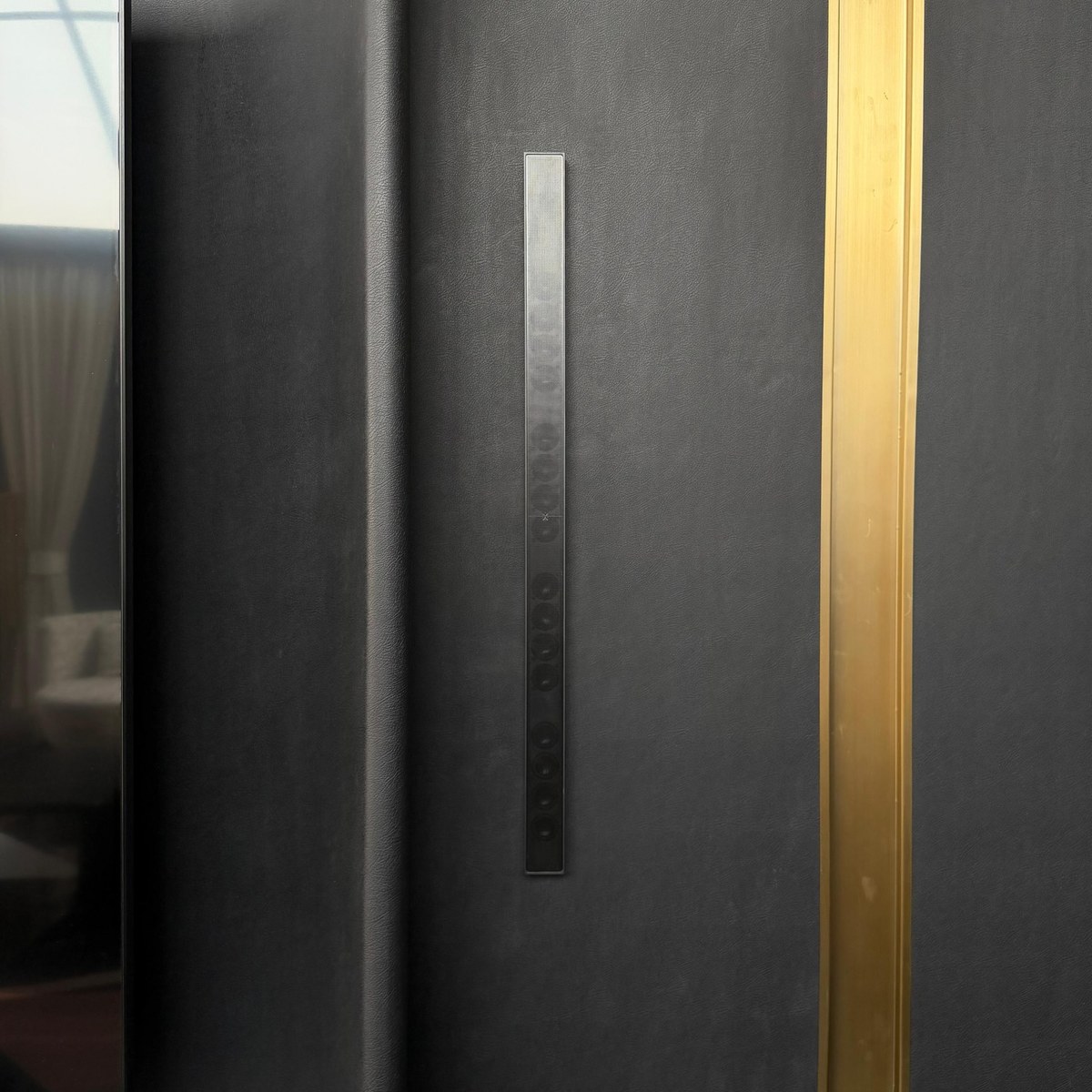
Positioning against a strong architectural line
Rather than centring the speaker on the leather panel, it was aligned with the vertical brass strip already running through the room — a placement choice that lets the speaker borrow an existing sightline instead of creating a new, competing one.
A room designed for architectural presence
With a glass balustrade and sheer curtain visible at the room's edge, this reads as a high-rise or architecturally significant residence — the kind of space where the ceiling and wall treatment are doing most of the design work, and the audio system needs to support that rather than announce itself.
The system
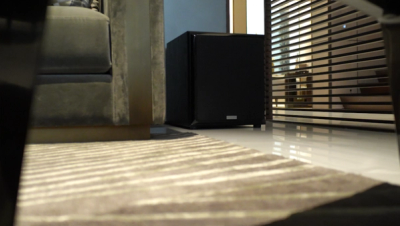
A Juniper subwoofer (350W RMS, 25Hz–200Hz) extends the room's low end, driven alongside the QuadCane array to give the lounge full-range sound suited to both music and film.
Planned, controlled and calibrated
Every XSCACE installation follows the same three stages: planned in the simulator, controlled from the app that matches the hardware, and calibrated with measurement. A living room has one or two seats that matter and a great many surfaces that do not cooperate.
Planned
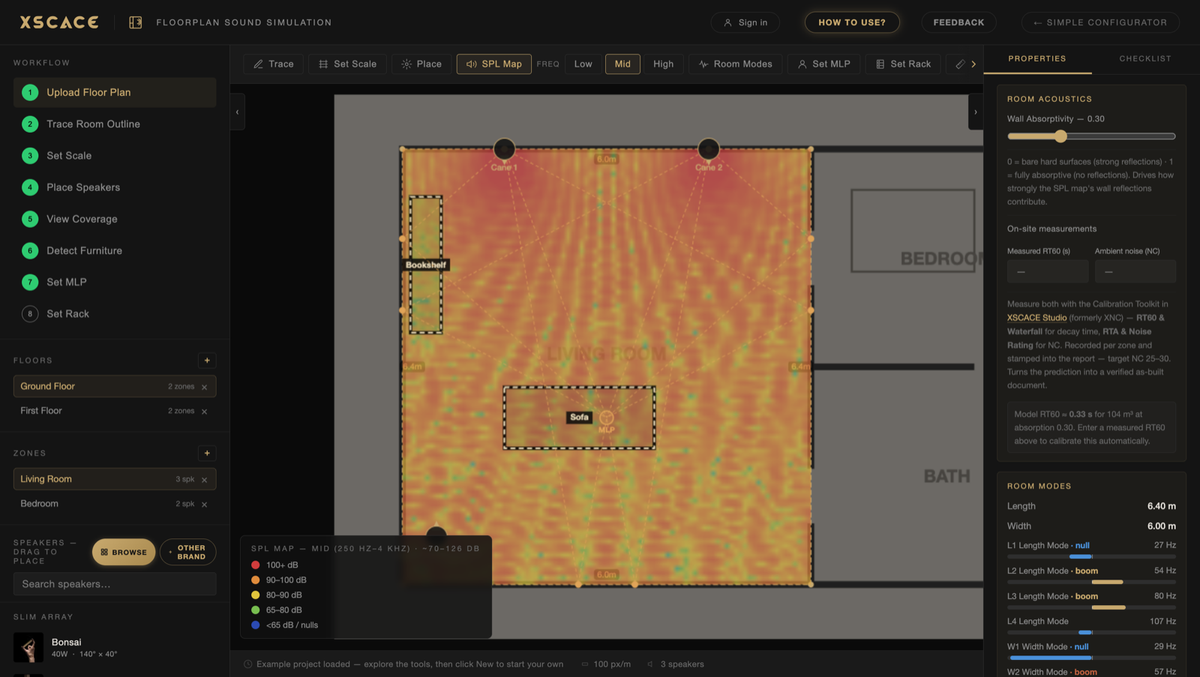
XSCACE Floorplan Sound Simulation takes a plan from trace to bill of quantities in the browser. For a room like this the outputs that matter are:
Coverage at the seating position rather than the room centre
First-reflection points flagged, which decides placement more often than taste does
Room modes located, so uneven bass is designed out rather than equalised later
Controlled
Which control app applies depends on the amplifier the speakers are driven from: XSCACE Controller for the Air streaming amplifiers, and XSCACE Studio for the Xylem, Root and Lucifer DSP amplifiers.
Calibrated
The calibration toolkit inside XSCACE Studio measures what the room actually does — eleven instruments covering SPL, delay, levels, polarity, frequency response, THD, sub alignment, transfer function, RT60, RTA and export, free on macOS. Here the ones that earn their place are:
Delay and polarity from a single sweep per channel
Sub Align, which integrates the subwoofer then re-measures to prove the correction
Frequency response at the listening position, not at the speaker
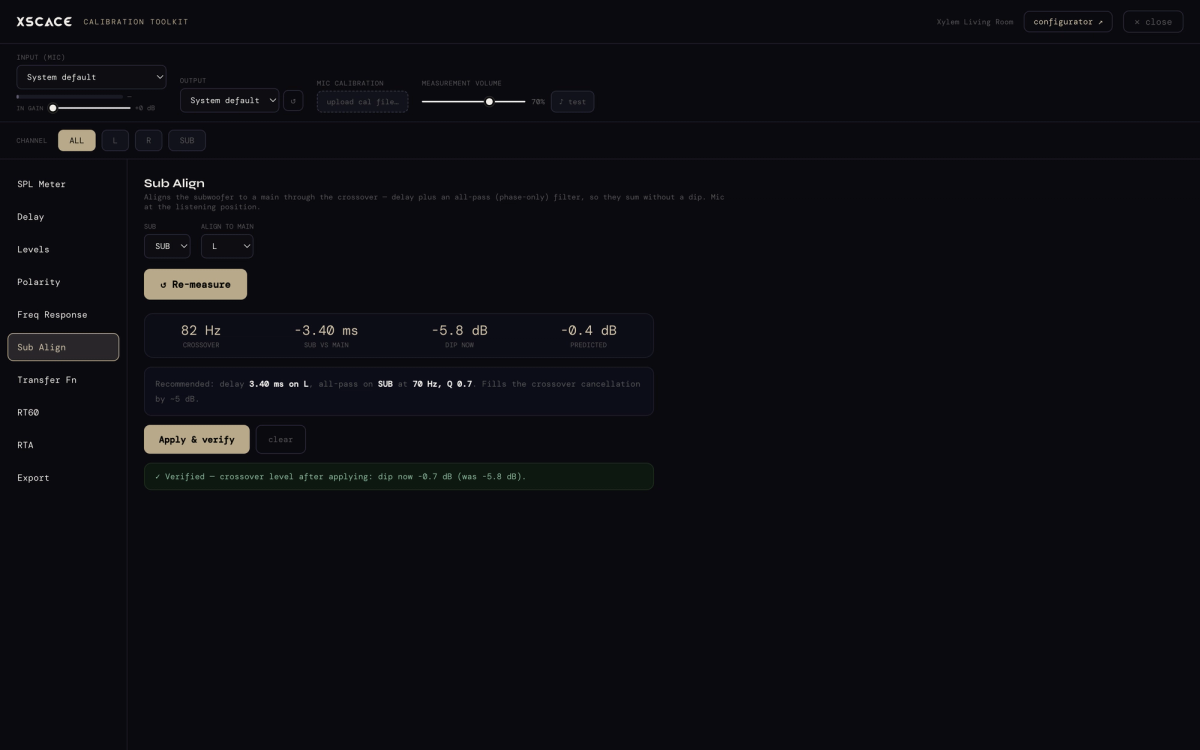
QuadCane runs down to 150Hz and Juniper reaches 25Hz, meeting at the 200Hz crossover both records specify — a number to verify by measurement rather than assume.