Contents4 sections
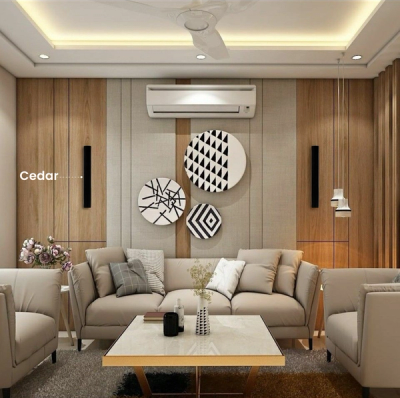
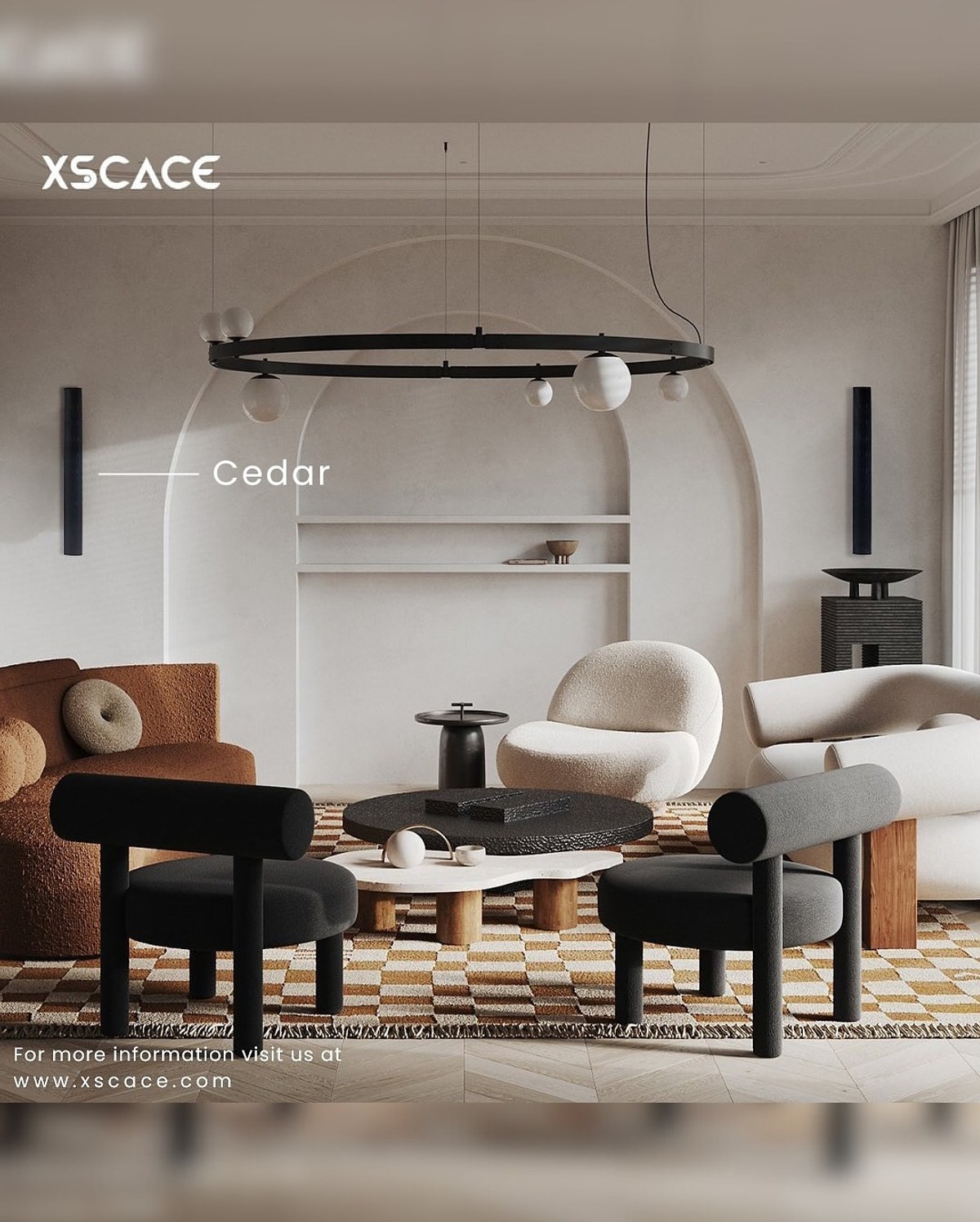
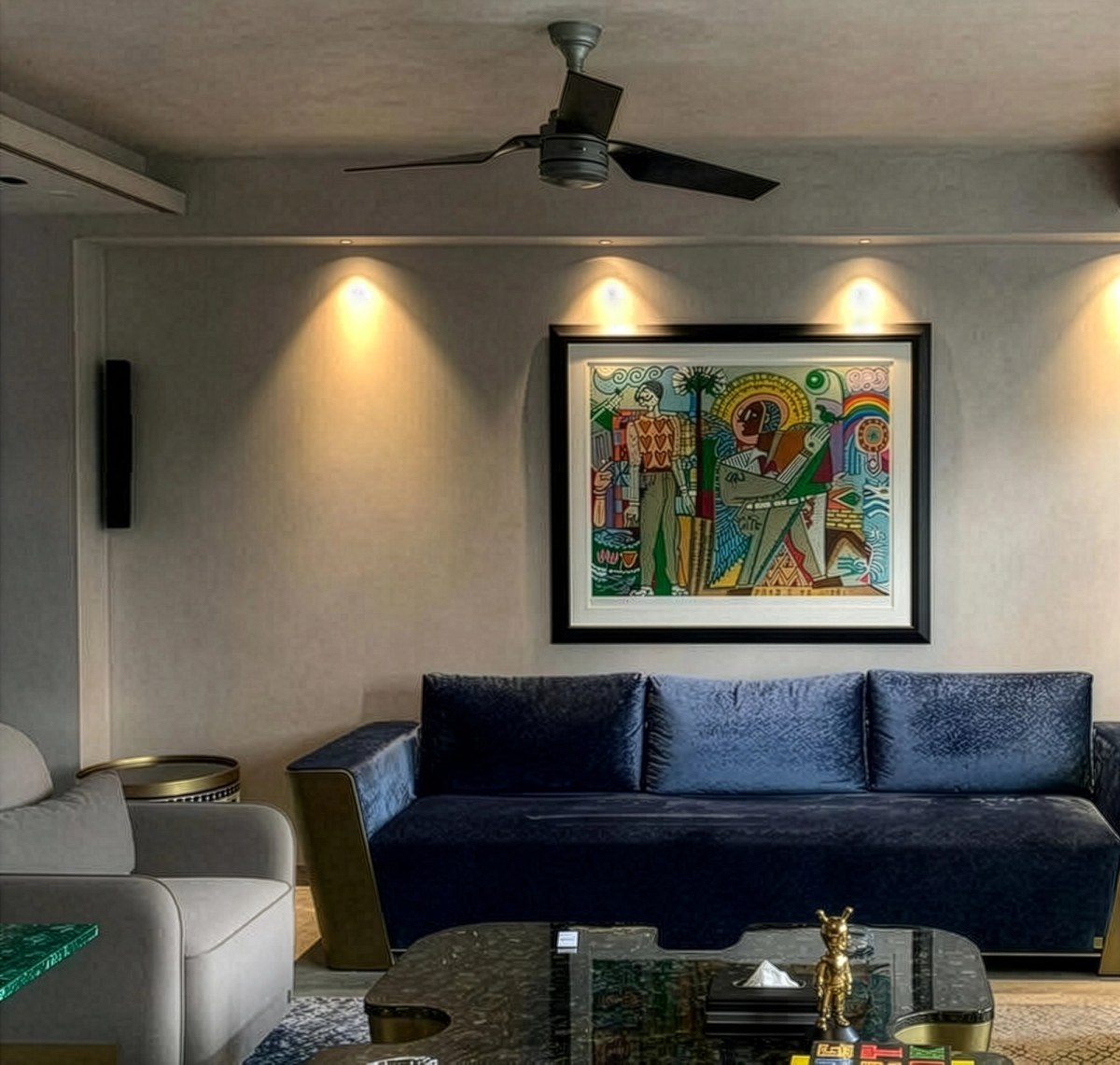
Most XSCACE case studies are specified for ambient or background listening. This 25×15ft design studio, built around a plaster archway and a curated furniture collection, had a different brief entirely: party-level, immersive audio — loud enough to entertain, without touching the room's careful visual balance.
The System
- A pair of XSCACE Cedar speakers, discreetly wall-mounted on both sides of the arched niche
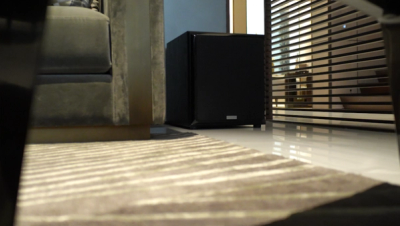
- One XSCACE Juniper subwoofer
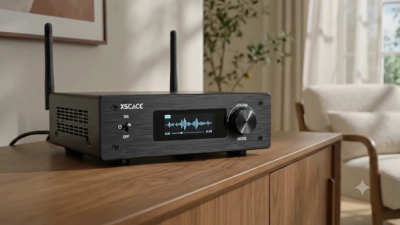
- One XSCACE Air Amp
A Different Tier for a Different Brief
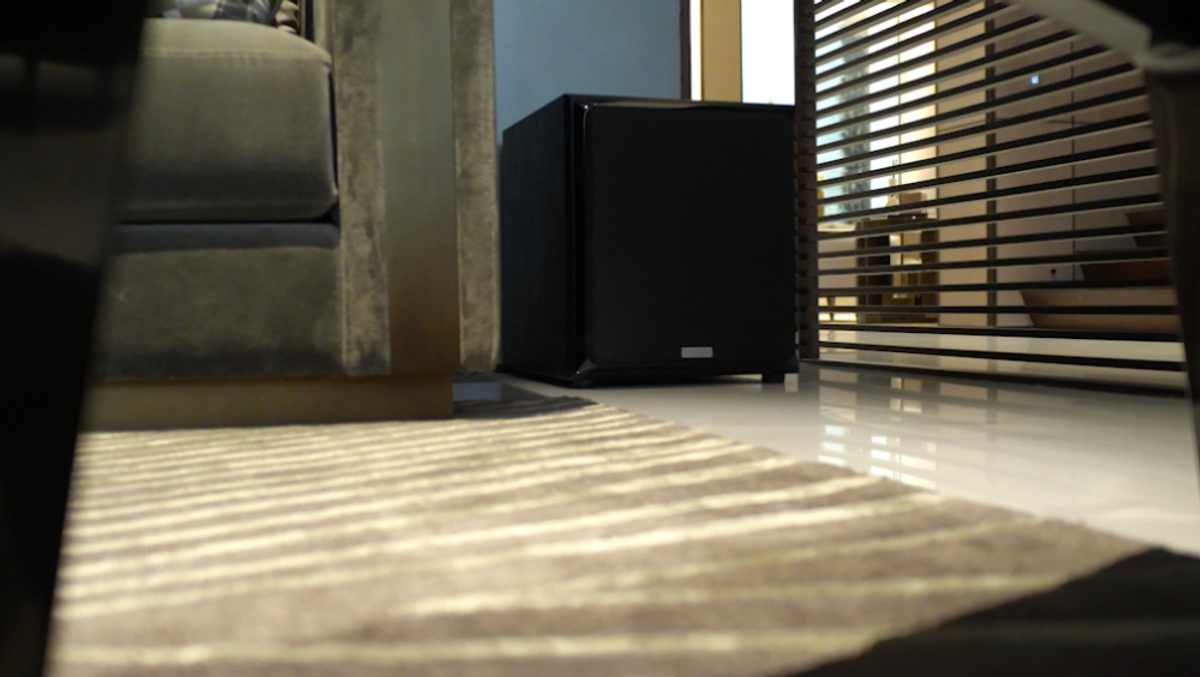
Cedar is rated 100W RMS at 96dB sensitivity — meaningfully more headroom and efficiency than Cane's 50W/92dB — and it's paired here with Juniper, a 350W subwoofer extending to 25Hz rather than the 200W, 35Hz-rated Acacia models used in most of XSCACE's ambient-listening case studies. The upgrade isn't arbitrary: "parties as well as ambient music" is explicitly a louder, more sustained brief than background listening, and specifying for that ceiling from the start avoids a system straining at the one moment it actually needs to perform.
Case Study at a Glance
- Room: Design studio, 25×15ft
- Use case: Party-level, immersive audio
- System: 2× XSCACE Cedar, Juniper subwoofer, Air Amp
- Placement: Discreetly wall-mounted on both sides of the arched niche
- Goal: A seamless auditory experience that blends technology into design without overt presence
See the full spec sheet for XSCACE Cedar, or read the lounge case study for another entertaining-focused brief.
Planned, controlled and calibrated
Every XSCACE installation follows the same three stages: planned in the simulator, controlled from the app that matches the hardware, and calibrated with measurement. A living room has one or two seats that matter and a great many surfaces that do not cooperate.
Planned
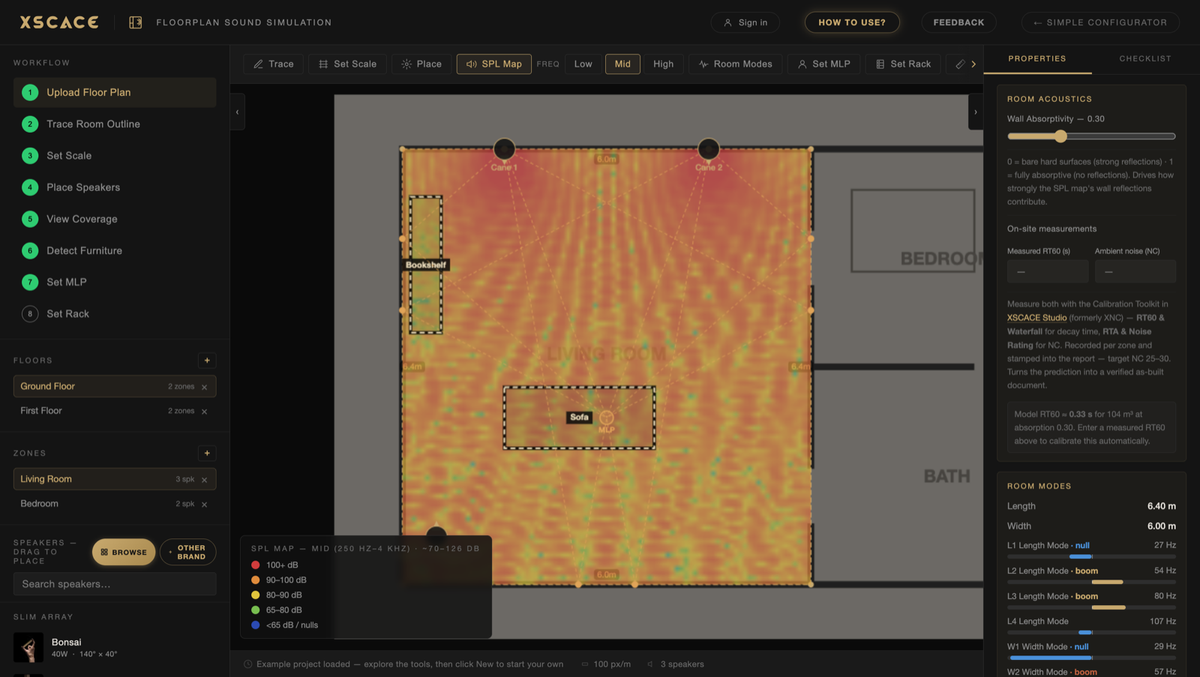
XSCACE Floorplan Sound Simulation takes a plan from trace to bill of quantities in the browser. For a room like this the outputs that matter are:
Coverage at the seating position rather than the room centre
First-reflection points flagged, which decides placement more often than taste does
Room modes located, so uneven bass is designed out rather than equalised later
Controlled
Day-to-day control is XSCACE Controller on iOS and Android. It handles volume, EQ and grouping, and the streaming amplifiers also appear natively as AirPlay 2 and Spotify Connect targets, so the app is for control rather than for getting audio into the room.
Calibrated
The calibration toolkit inside XSCACE Studio measures what the room actually does — eleven instruments covering SPL, delay, levels, polarity, frequency response, THD, sub alignment, transfer function, RT60, RTA and export, free on macOS. Here the ones that earn their place are:
Delay and polarity from a single sweep per channel
Sub Align, which integrates the subwoofer then re-measures to prove the correction
Frequency response at the listening position, not at the speaker
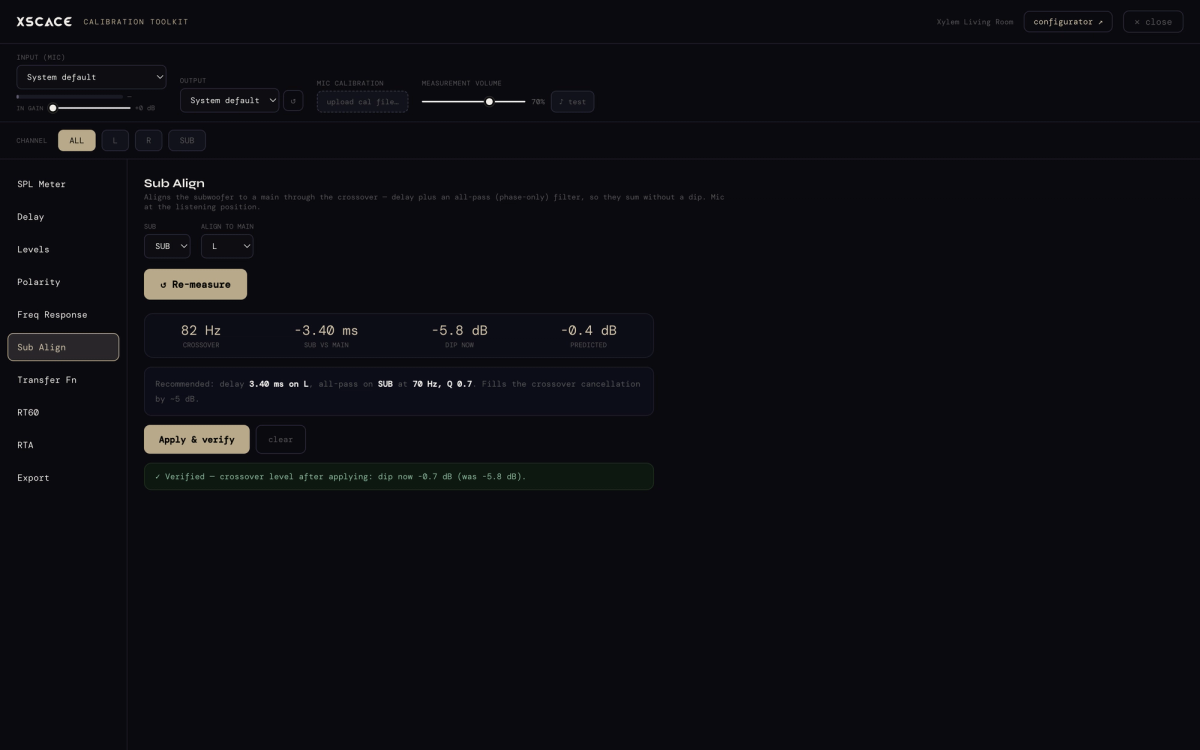
Cedar runs down to 100Hz against Juniper's 25Hz, and the two records recommend different crossover points (100Hz and 200Hz). Which suits the room is a measurement, not a preference.