Contents4 sections
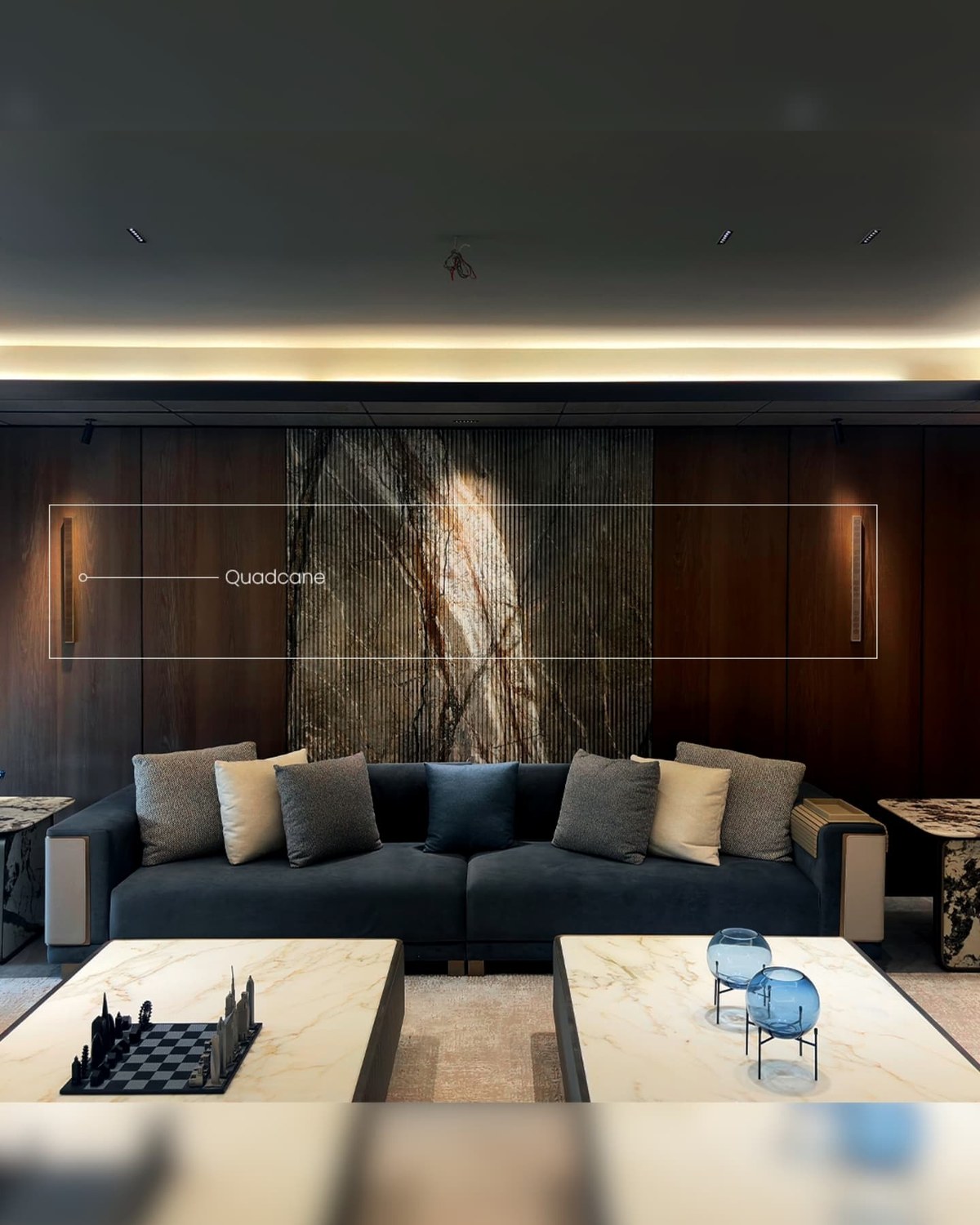
A 20×35ft lounge — long, dark-panelled, built around a marble feature wall and a low sectional sofa — is genuinely too large for a single stereo pair to cover evenly. This case study was specified for hosting and party entertainment across the full length of the room, which changed both the product tier and the placement strategy.
The System
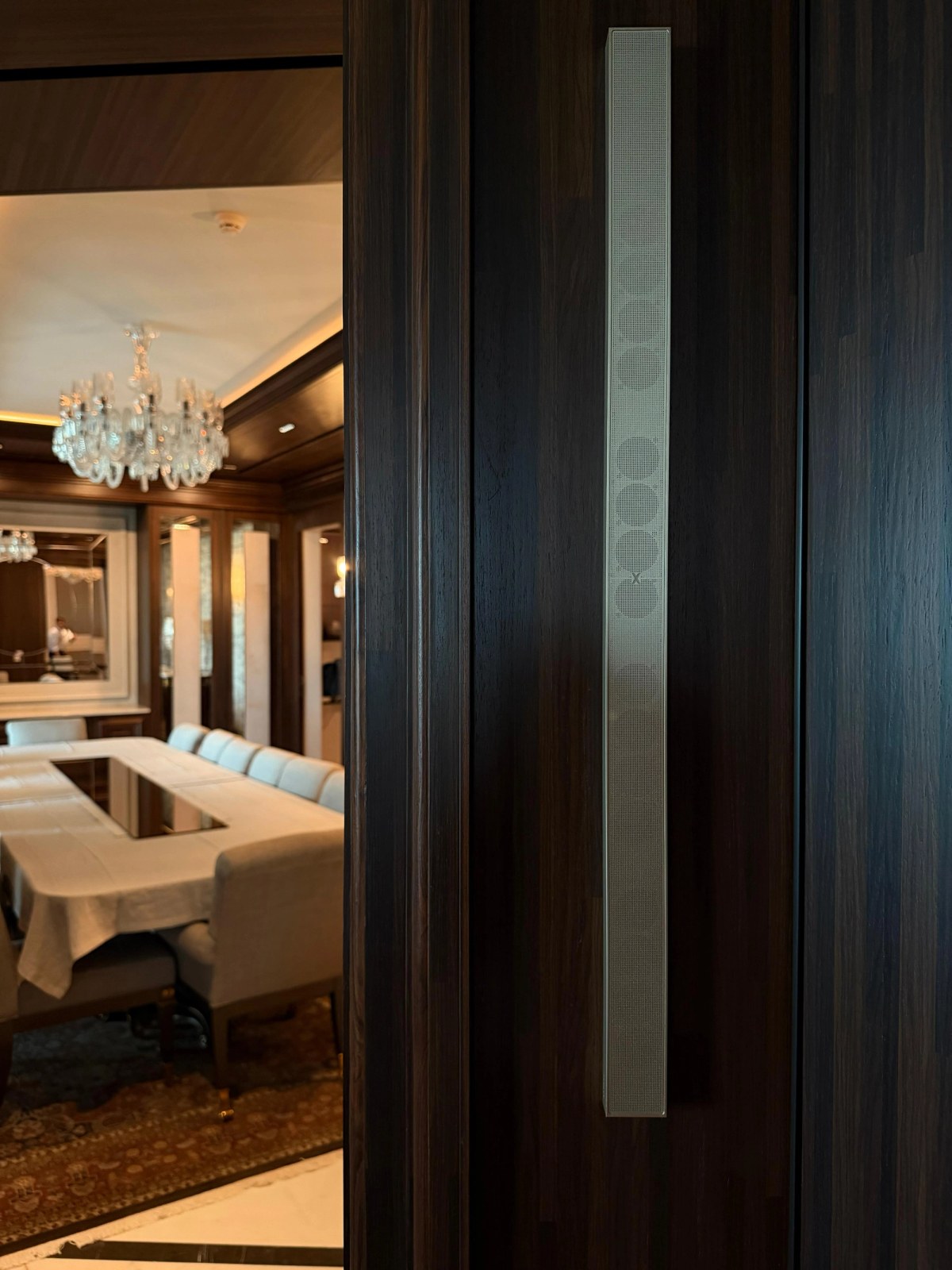
- Multiple XSCACE Quadcane speakers, spread wide along the main lounge wall
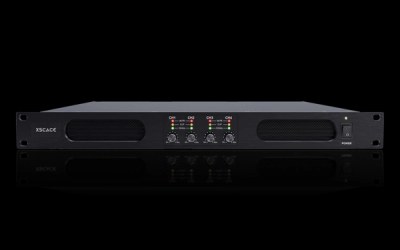
- An XSCACE Lucifer amplifier
- 2.1 stereo music configuration
Spread, Not Just Power
Quadcane's 100W RMS and 95dB sensitivity give it real reach, but the more important decision here is placement: a wide spread of speakers along the main wall rather than one pair concentrated at a single point. In a room this long, even a very loud stereo pair leaves the far end of the space under-served — spreading the array is what actually solves “energetic soundscape for large gatherings” across 700 square feet, not raw output alone.
Case Study at a Glance

- Room: Lounge, 20×35ft
- Use case: Hosting and party entertainment
- System: XSCACE Quadcane (wide spread), Lucifer amplifier, 2.1 stereo
- Placement: Wide stereo spread along the main lounge wall
- Goal: An energetic, full-range soundscape for large gatherings
See the full spec sheet for XSCACE Quadcane, or read the media lounge case study for the same speaker in a smaller room.
Planned, controlled and calibrated
Every XSCACE installation follows the same three stages: planned in the simulator, controlled from the app that matches the hardware, and calibrated with measurement. A living room has one or two seats that matter and a great many surfaces that do not cooperate.
Planned
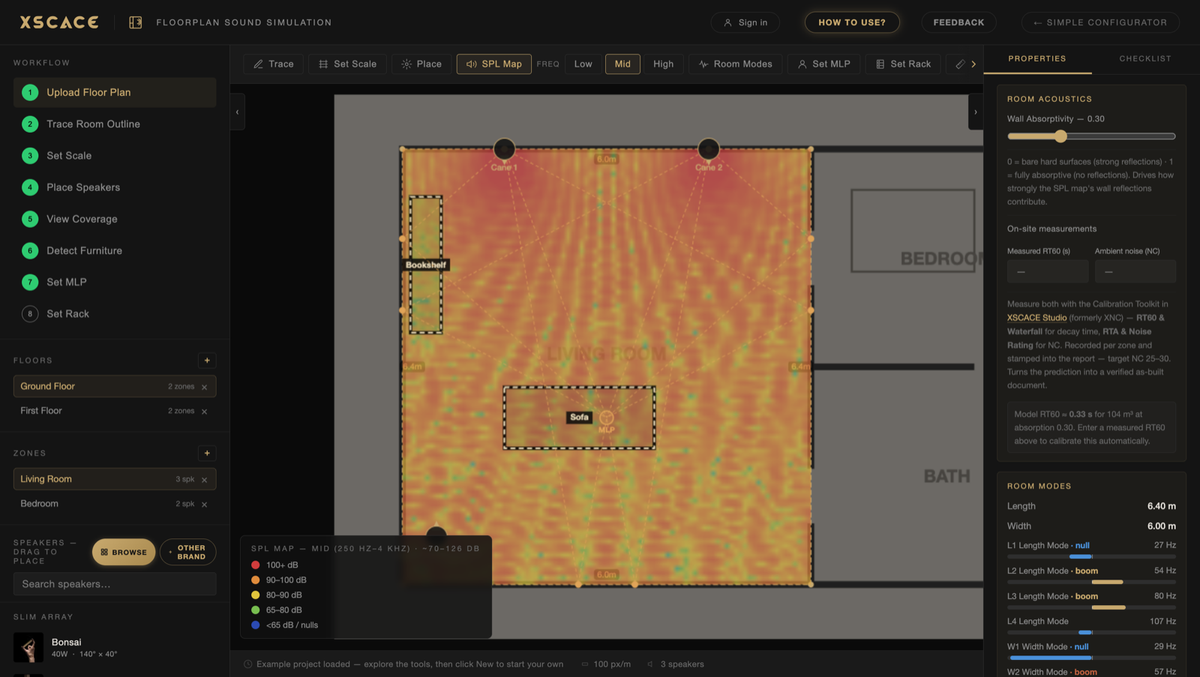
XSCACE Floorplan Sound Simulation takes a plan from trace to bill of quantities in the browser. For a room like this the outputs that matter are:
Coverage at the seating position rather than the room centre
First-reflection points flagged, which decides placement more often than taste does
Room modes located, so uneven bass is designed out rather than equalised later
Controlled
The amplifier is configured and controlled from XSCACE Studio on macOS — routing matrix, per-channel gain and delay, parametric EQ, crossovers and limiting, with network-wide discovery rather than one amplifier at a time.
Calibrated
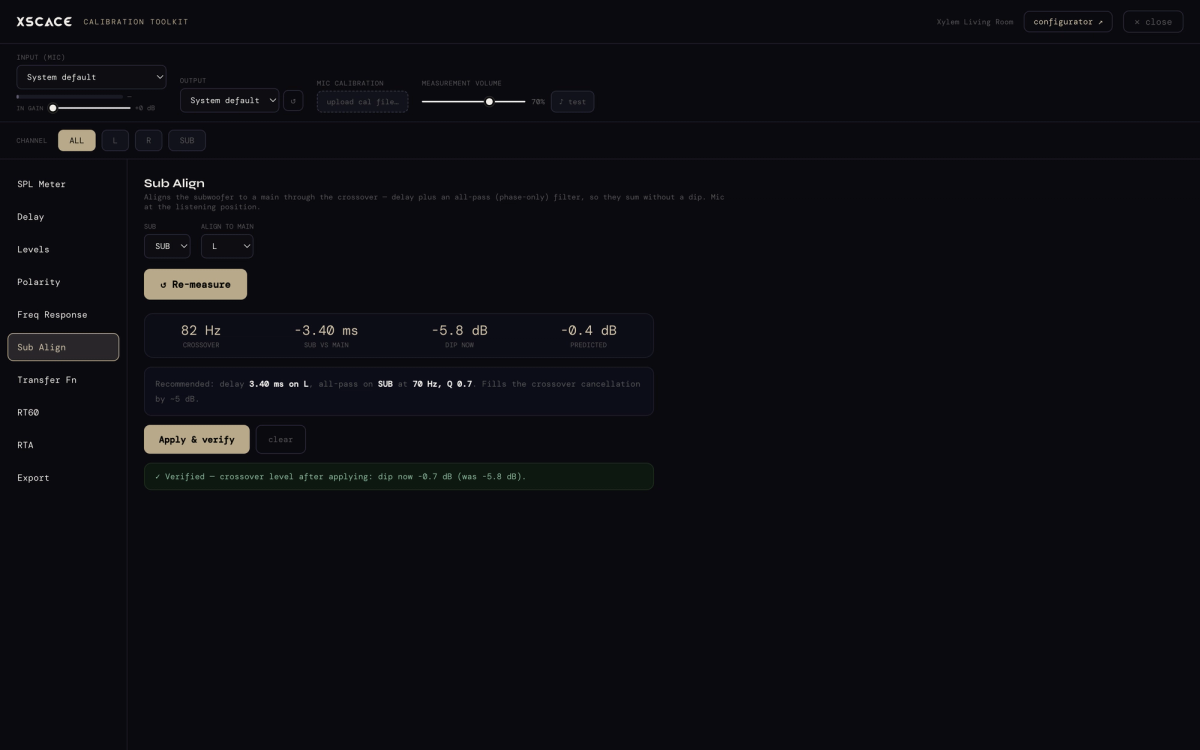
The calibration toolkit inside XSCACE Studio measures what the room actually does — eleven instruments covering SPL, delay, levels, polarity, frequency response, THD, sub alignment, transfer function, RT60, RTA and export, free on macOS. Here the ones that earn their place are:
Delay and polarity from a single sweep per channel
Sub Align, which integrates the subwoofer then re-measures to prove the correction
Frequency response at the listening position, not at the speaker
QuadCane publishes 95dB sensitivity and a 116dB maximum SPL — the figures the coverage prediction works from, and the ones the finished room should measure.