Cinema sound in a room that is not only a cinema.
A media room is a cinema that has to be something else for most of the week. It carries a television rather than a screen, furniture arranged for conversation rather than sightlines, and a ceiling that was never planned around a height layer — and it still has to hold a surround layout together.
What makes a media room different from a cinema
The layout is negotiated, not designed
A dedicated cinema puts the seats where the geometry wants them. A media room puts them where the room works socially, and the speakers follow. That usually means surrounds land closer to the seating than the reference angle would like, which is a level and delay problem at calibration rather than a reason to abandon the layout.
The ceiling is a normal ceiling
Height channels need cavity depth that a plasterboard ceiling with services above it may not have. Depth is the first thing to check, not the last — the layout that fits is decided by the shallowest point on the intended run, and 187.96mm for Ghost 2.0 is a real constraint in a retrofit.
It is used at low level far more than at reference
Most of the hours are television, gaming and music at conversational level. Sensitivity matters here for the opposite reason to a bar: a system with headroom sounds unstrained at low level too, and it is the low-level listening the room is actually judged on.
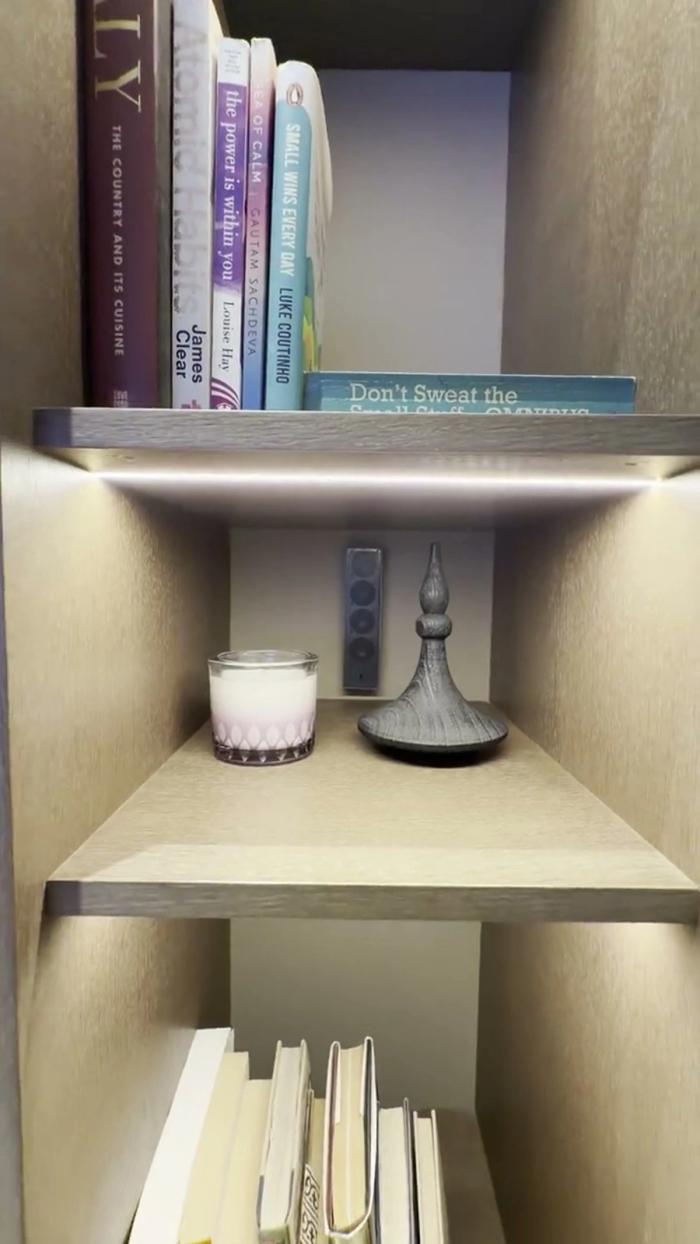
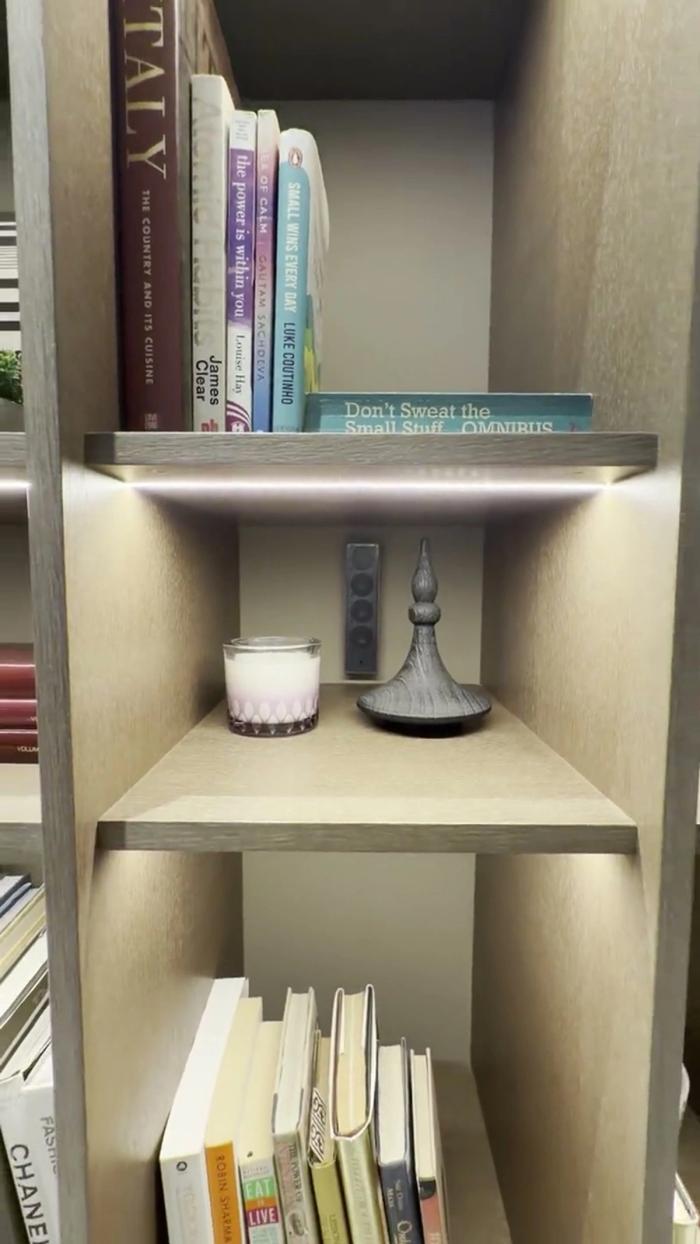
The media & games room, as built.
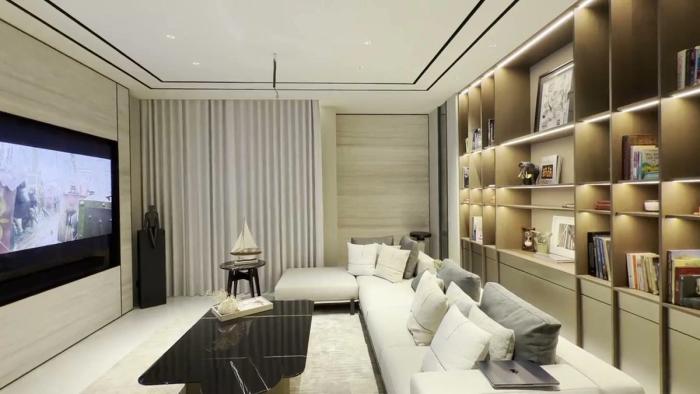
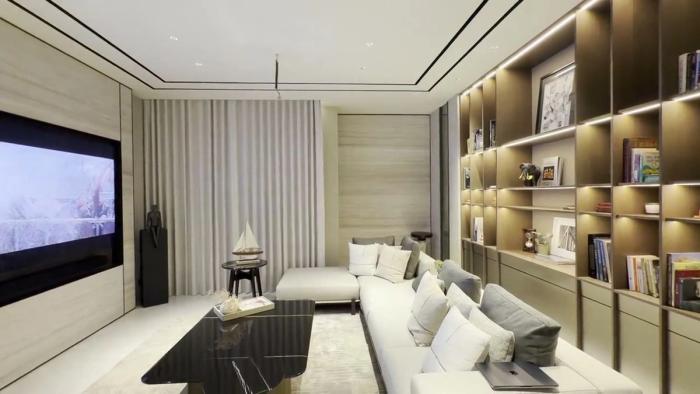
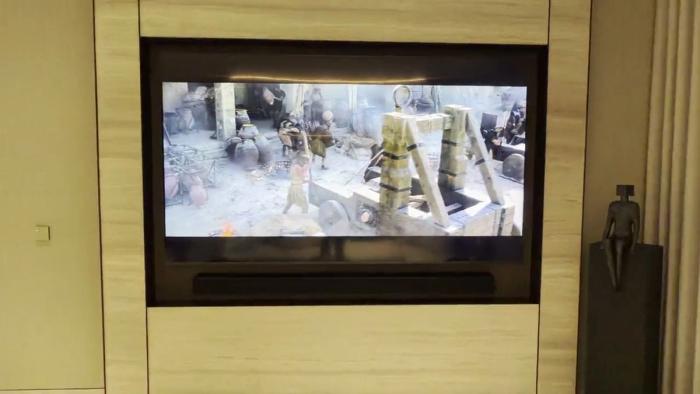
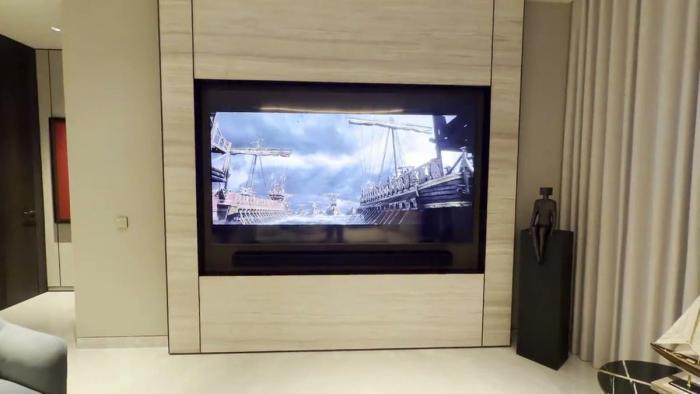
What this room needs.
A typical specification for a room of this kind, as drawn in the villa. Trace your own room in the Floorplan Sound Simulation to get the exact count, the coverage prediction and a priced bill of quantities.
What we’d specify here.
QuadCane
The front three: 100W RMS at 95dB in 21mm of depth, with the wider horizontal dispersion of a 4-driver array. Sensitivity buys headroom the room rarely uses and always benefits from.
View QuadCane →Cane
Surround duty at 23mm and 92dB, tonally matched to QuadCane so a pan from screen to side wall stays coherent. 150Hz–20kHz, handing the bottom to the subwoofer.
View Cane →Ghost 2.0
Height channels — 80W RMS, 92dB, 80Hz–20kHz. Needs 187.96mm of ceiling cavity, which is the figure that decides whether an Atmos layer is possible in a retrofit at all.
View Ghost 2.0 →Juniper
12-inch powered subwoofer reaching 25Hz at 350W RMS. In a multi-use room it carries both the film effects and the bottom two octaves the slim-array speakers do not attempt.
View Juniper →Real media & games room installations.
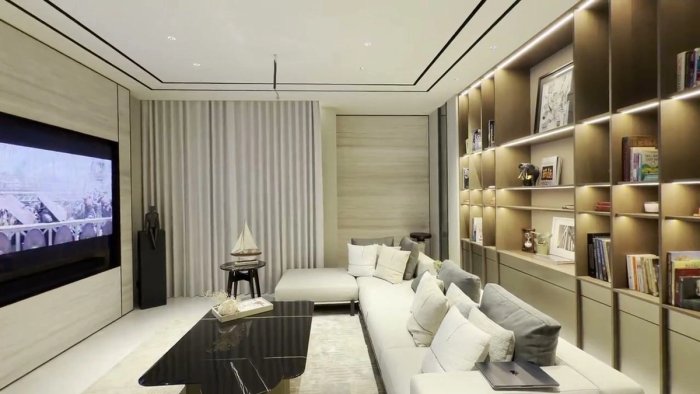
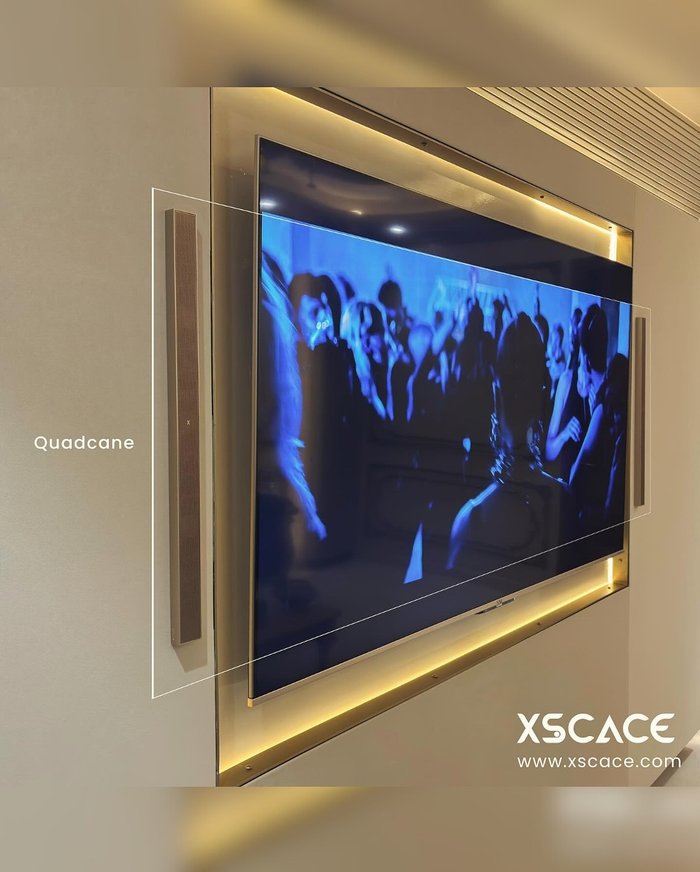
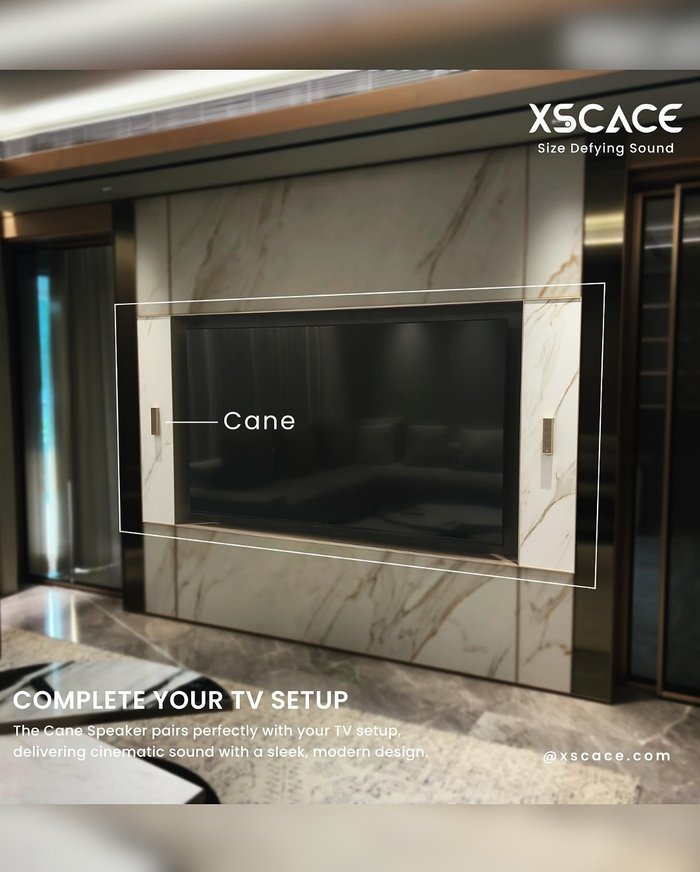
Media & Games Room questions.
Frequently asked questions4 answers
What is the difference between a media room and a home cinema?
A home cinema is built around the screen and the seating geometry, usually with light control and acoustic treatment. A media room serves several uses, so the layout is a compromise with the furniture and the surrounds sit where the room allows. The speaker specification is similar; the placement tolerance is not.
Can you do Dolby Atmos in a normal media room?
Yes, if the ceiling has the cavity depth. Ghost 2.0 needs 187.96mm, and the constraint is the shallowest point on the run rather than the average. Where that depth is not available, a 5.1 or 7.1 layout at ear level is a better system than a compromised height layer.
How many speakers does a media room need?
Five ear-level channels plus a subwoofer is the practical minimum for surround. Adding two height channels gets to 5.1.2, which is where most multi-use rooms land. Floor area drives the count more than budget does — beyond roughly 40m² a second subwoofer does more for consistency across seats than more ear-level channels.
Do surrounds need to be the same model as the front speakers?
They need to be tonally matched, which in practice means the same series. Cane and QuadCane share driver design and voicing, so a sound panning from the screen to a side wall does not change character as it moves.