Contents5 sections
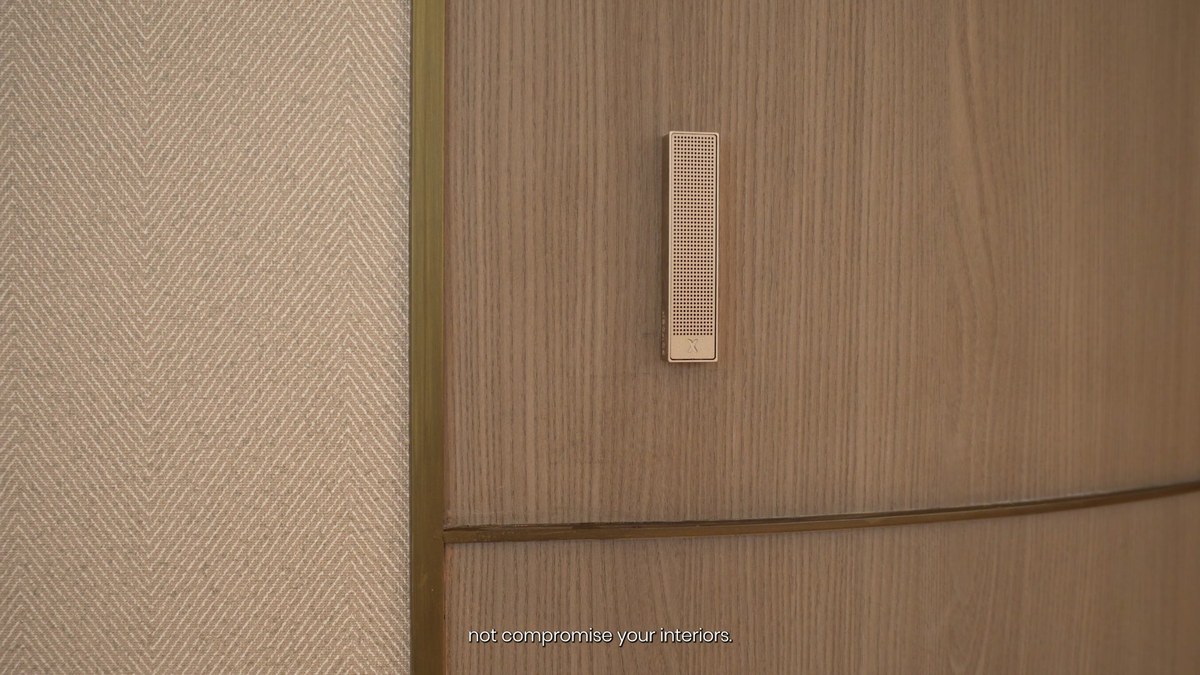
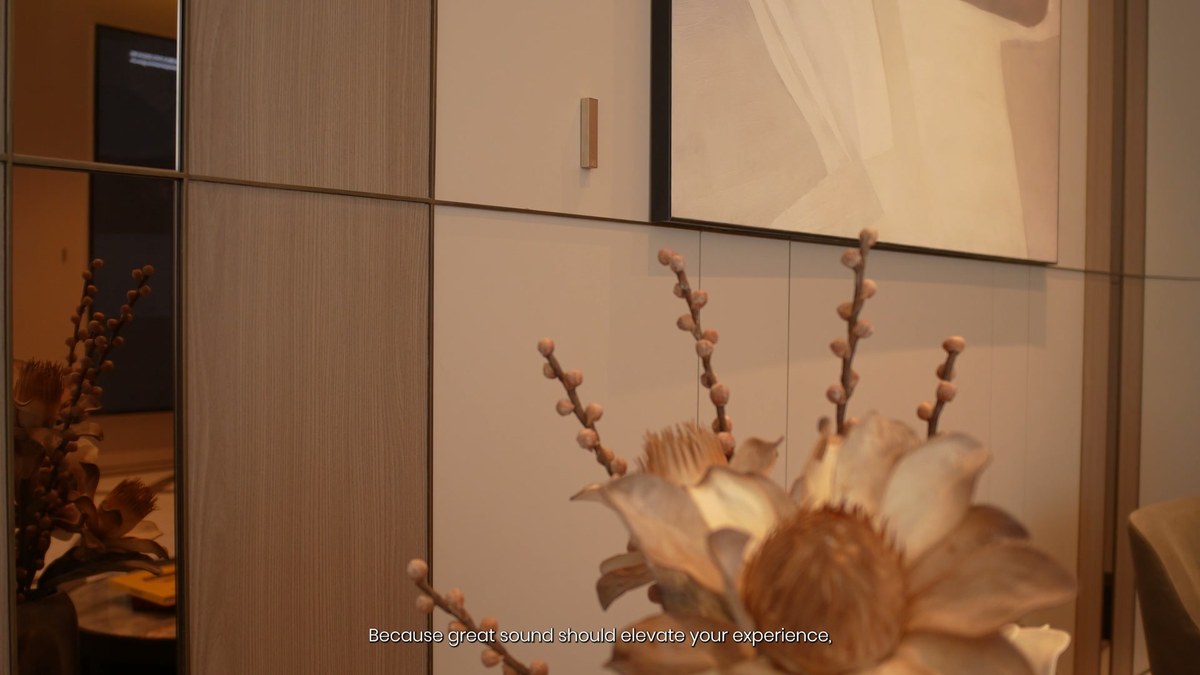
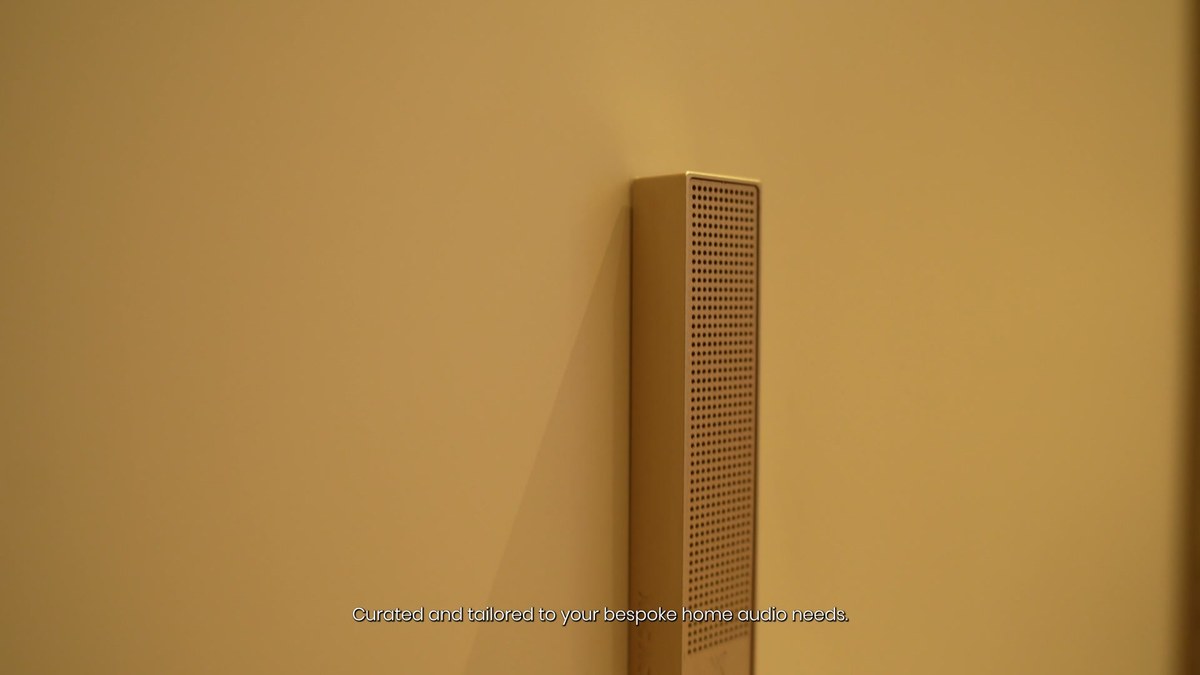
Slim wall speakers for a luxury apartment have one job that is harder than it sounds: to be there in every room and seen in none of them. At Trevoc Royal Residences, the residence in this film puts XSCACE Bonsai on the wall panels of the living room, the lounge, the dining room and the bedroom, and the architecture carries on as if nothing had been added. Bonsai is 12 mm thin, 90 mm tall and 22 mm wide, and it weighs 100 grams. On a fluted timber veneer or a painted panel it reads as a strip of trim.
A twenty-foot screen, and the sound it does not need
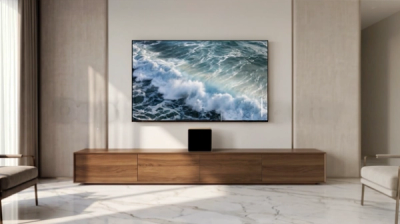
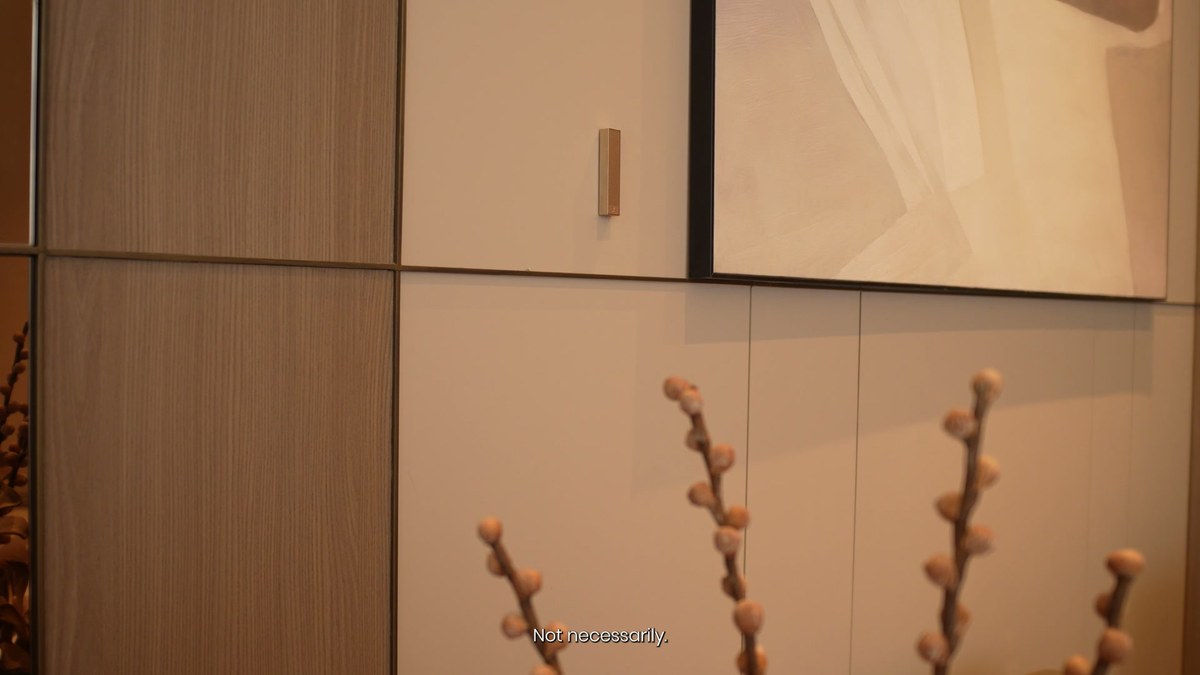
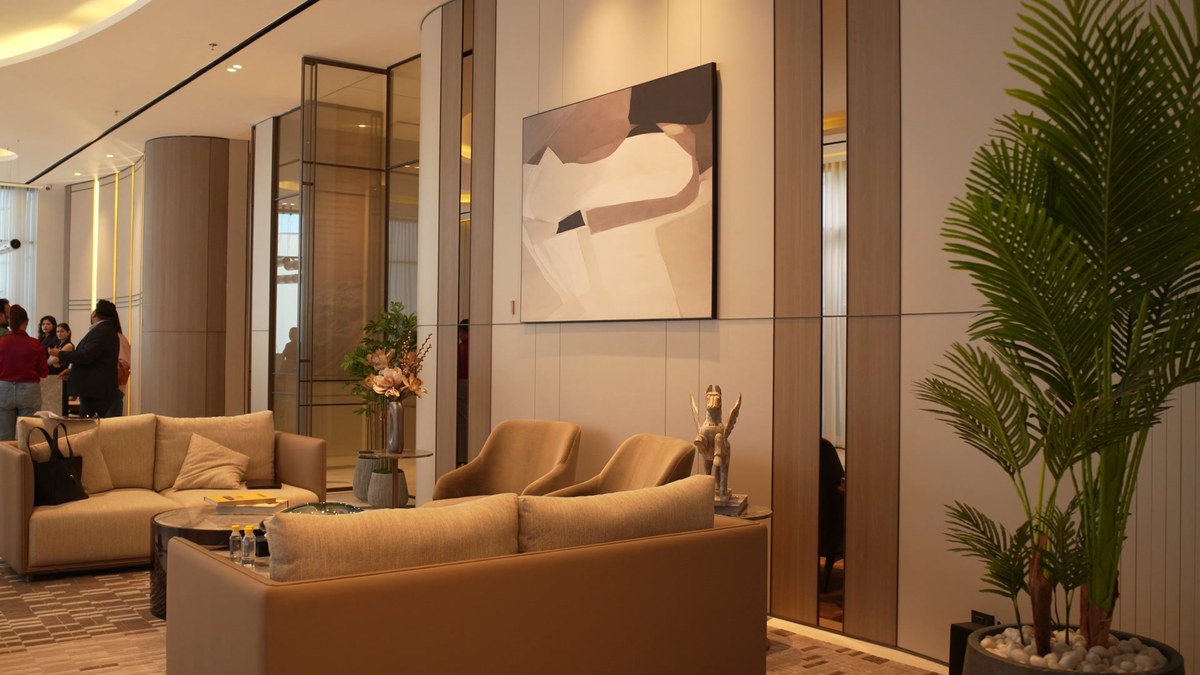
The film opens on the living room's screen wall, close to twenty feet across, and asks the question most people ask: does a screen that size not deserve some serious sound? The answer the room gives is not necessarily. Serious sound in an apartment living room is not a question of cabinet volume. It is a question of where the sound comes from, how evenly it reaches the seats, and whether the room's own reverberation lets dialogue stay clear. A pair of slim arrays either side of the screen, placed on the same wall plane as the picture, puts the stereo image where the eye already is.
Bonsai manages this with four half-inch power-dense drivers in an aerospace aluminium chassis, a built-in passive crossover, and a dispersion of 140 degrees horizontally by 40 degrees vertically. That wide, shallow pattern is the point: it spreads sound across a row of seats without throwing it at the ceiling and floor, which is what keeps a hard-finished apartment room from sounding like a corridor.
Where the speakers went, room by room
Every placement in the film follows the same rule: the speaker sits on a surface the interior designer had already decided on, and it takes that surface's colour. Three finishes are standard, matte champagne, black and white, and a custom RAL is available for a panel that matches none of them.
- Living room: Bonsai either side of the screen wall, mounted at seated ear height on the panelling, so the stereo pair and the picture share one plane.
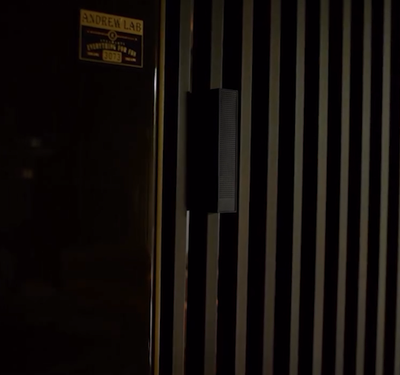
- Lounge: Bonsai on the fluted timber-veneer panels behind the seating, in matte champagne to sit with the brass trim lines that run through the joinery.
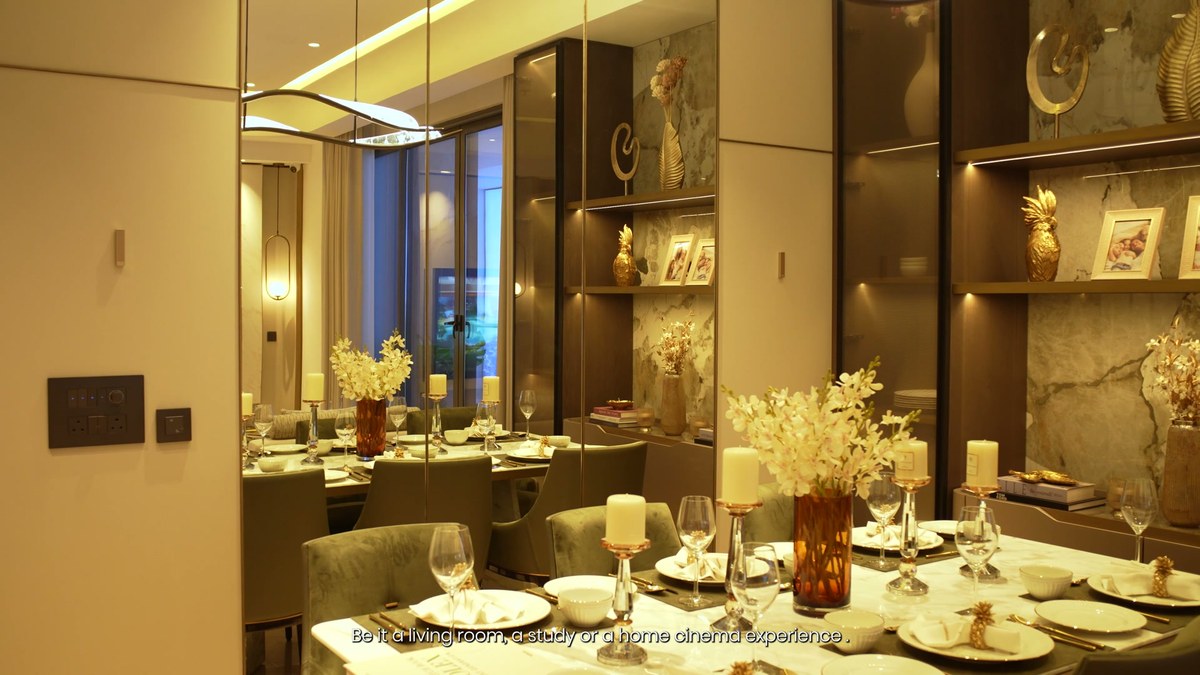
- Dining room: white Bonsai on the pale wall panels above the sideboard, where a conventional speaker would have had nowhere to go without a shelf.
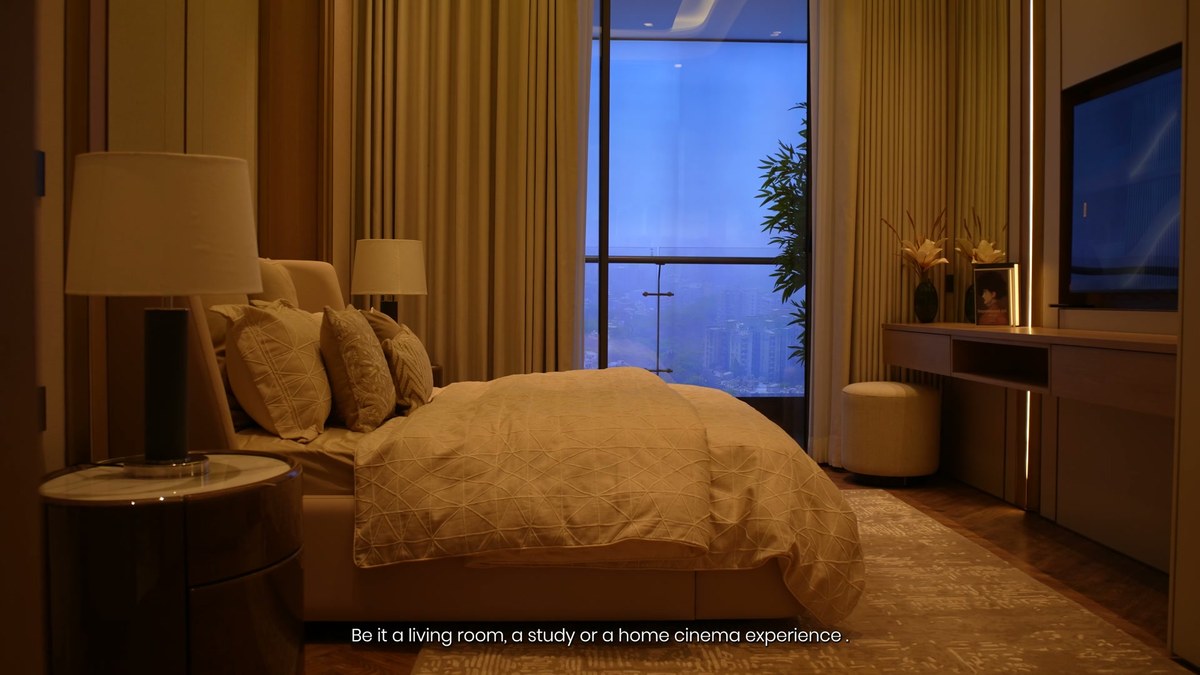
- Bedroom: a pair on the panelled wall opposite the bed, for television and music at low level, with the curtain wall left clear.
Bonsai, the numbers behind the size
A speaker this small is only worth specifying if its figures hold up, so here they are, from the published specification. Bonsai is lab verified at 40 watts RMS and 50 watts peak into 8 ohms, with a sensitivity of 86 dB and a maximum SPL of 103 dB. Its response runs from 300 Hz to 18 kHz at the minus 6 dB points, which is why every Bonsai system is designed with a subwoofer and a 300 Hz crossover rather than asked to make bass it is not built for. The recommended pairing is the Air Amp streaming amplifier and the Acacia 6 Powered subwoofer, and the recommended room is up to about 15 by 15 feet per pair.
- Size: 90 mm tall, 22 mm wide, 12 mm deep. Weight 100 g.
- Drivers: 4 × 0.5-inch power-dense custom woofers, neodymium, rubber edge. Built-in passive crossover.
- Power: 40 W RMS, 50 W peak, 8 ohms. Sensitivity 86 dB. Max SPL 103 dB.
- Frequency response: 300 Hz to 18 kHz (−6 dB). Recommended crossover 300 Hz to a subwoofer.
- Dispersion: 140° horizontal × 40° vertical. Mount: keyhole wall mount, no bracket, template and screws in the box.
- Finishes: matte champagne, black, white. Custom RAL on request. Marine treatment available.
How this room was planned, controlled and calibrated
Every XSCACE installation follows the same three stages: planned in the simulator, controlled from the app that matches the hardware, and calibrated with measurement. For an apartment that is finished to this standard, the point of the process is that the speakers are placed once, on the panels the designer chose, and never moved.
Planned
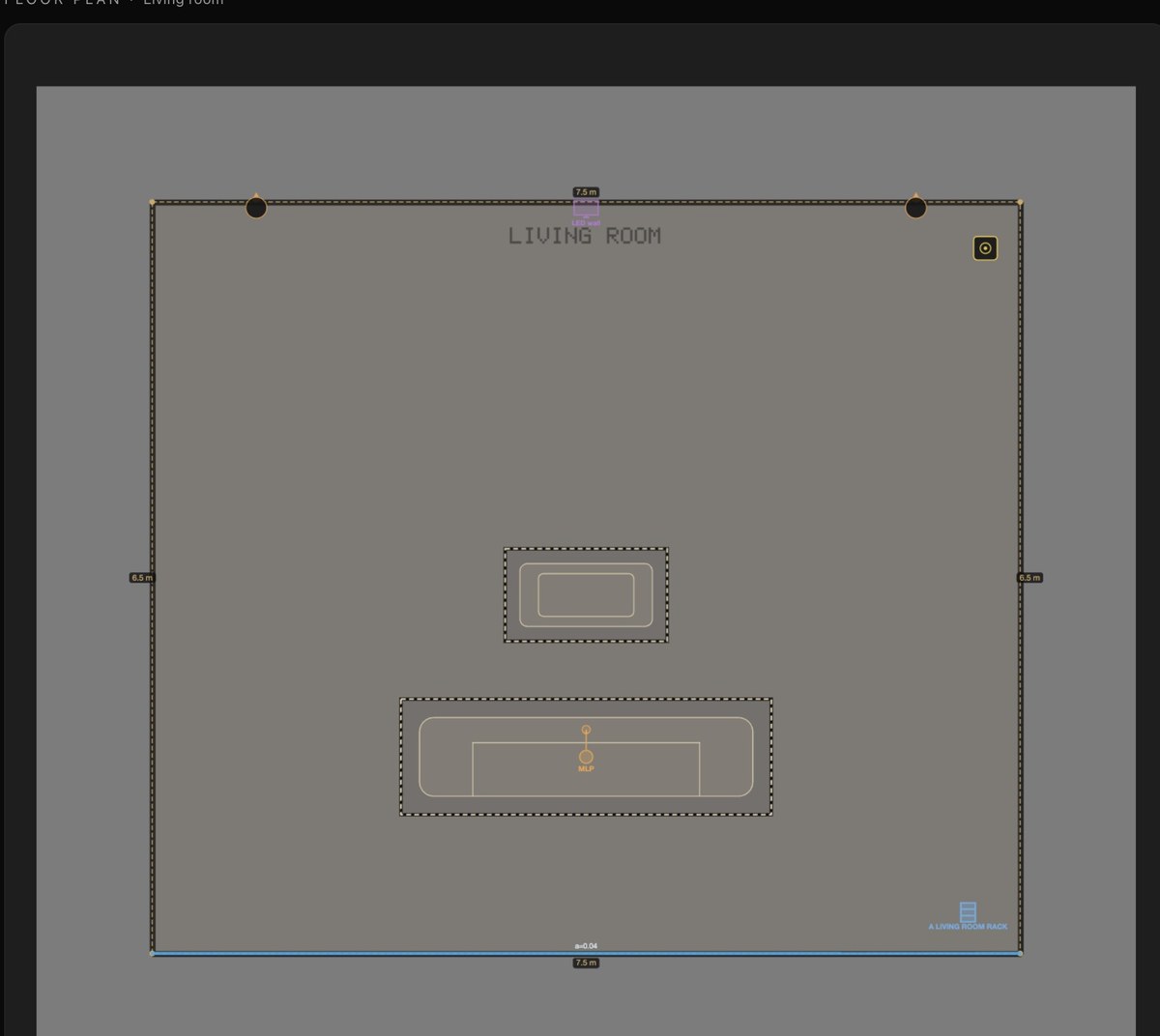
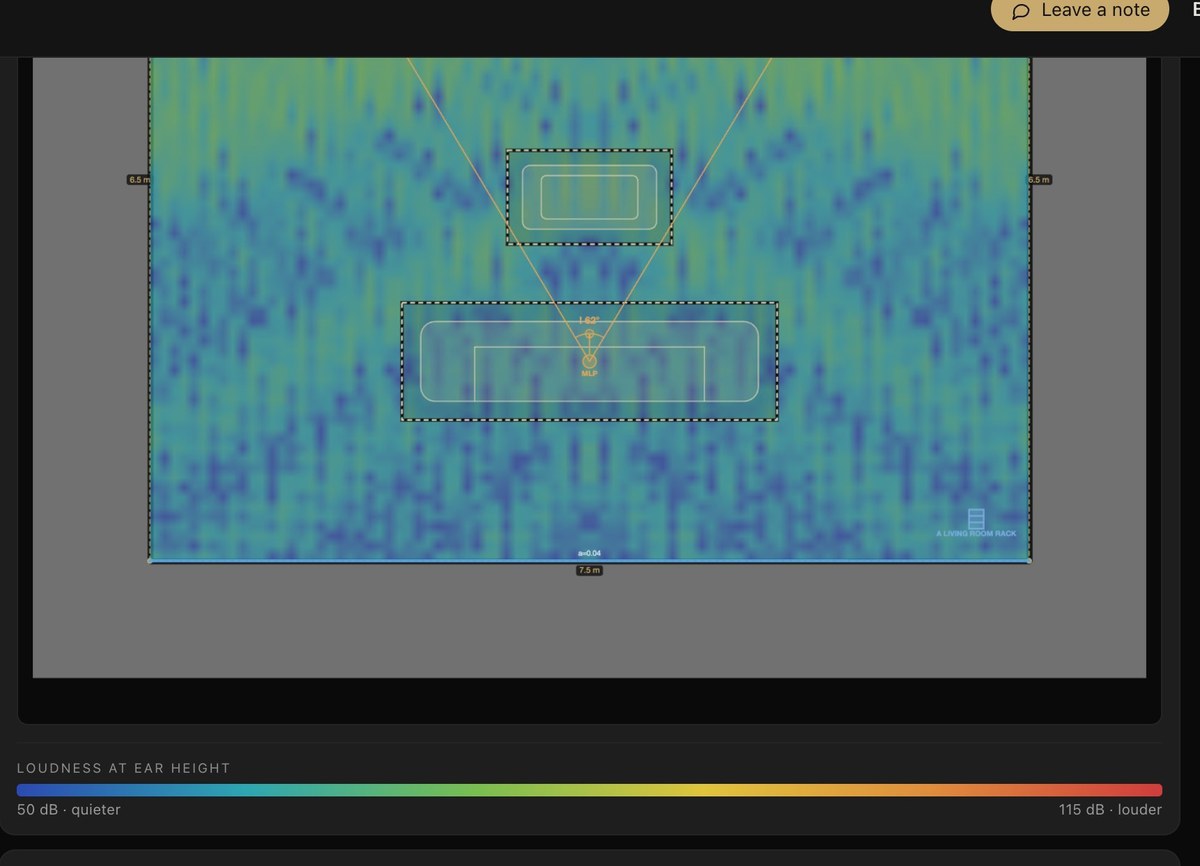
Floorplan Sound Simulation takes a plan from trace to bill of quantities in the browser. To show what it says about a room like the living room in the film, we drew a reference room to the screen's width: 7.5 by 6.5 metres with a 3 metre ceiling, furnished, with a glazed rear wall, a 200-inch screen on the front wall, two Bonsai either side of it at 1.6 metres, an Acacia 6 Powered subwoofer and an Air Mini as the source. The main seat is 4.8 metres back. The room is a stand-in, not a survey of the apartment, and the numbers below belong to it.
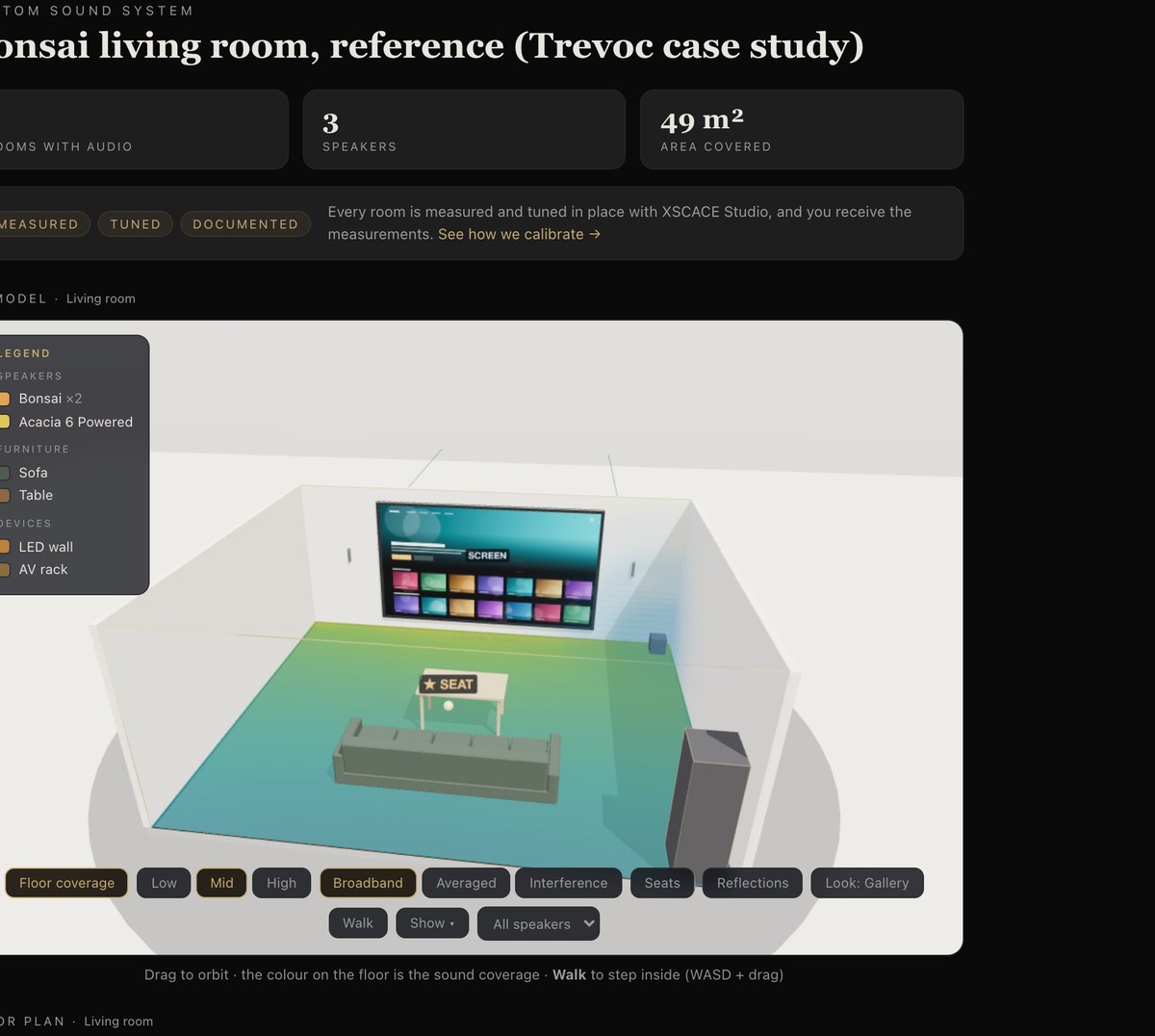
- Coverage: a mean of 70 dB across the seating at ear height, with a uniformity of ±8 dB from the quietest to the loudest spot. That spread is the honest result of a single pair in a room 7.5 metres wide; a second pair, or ceiling fill, is what the planner points at when the brief is even sound at every seat rather than a stereo pair at the screen.
- Headroom: the loudest Bonsai reaches 87 dB at the main seat 5.5 metres away, 2 dB over the 85 dB reference. Enough for television and music at the level a living room is used at; not a cinema, and not sold as one.
- Speech clarity: STI 0.69, in the good band, with a critical distance of 1.9 metres.
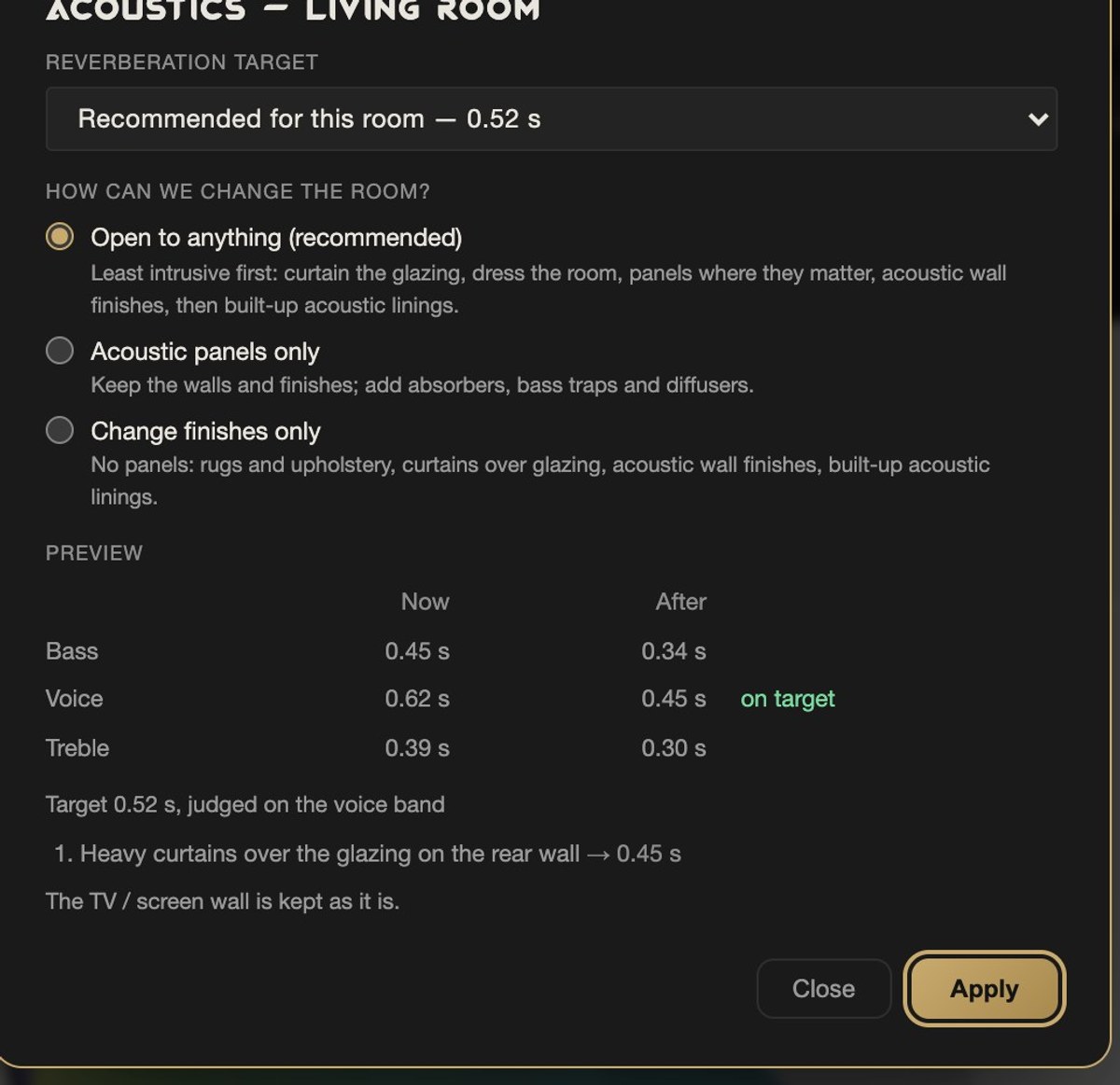
- Reverberation: 0.45 s in the bass, 0.62 s in the voice band and 0.39 s in the treble, against a 0.52 s target for the volume. The voice band is over target because of the glazed wall.
- Room modes: axial modes at 22.9, 45.7 and 68.6 Hz along the length, 26.4, 52.8 and 79.2 Hz across the width, and 57.2 Hz in height. Schroeder frequency 130 Hz, so everything the subwoofer does below that is modal and seat-dependent.
- Bass at the seats: a seat-to-seat spread of 11.3 dB with one subwoofer, worst at 106 Hz. One sub is a compromise in a room this size, and the plan says so.
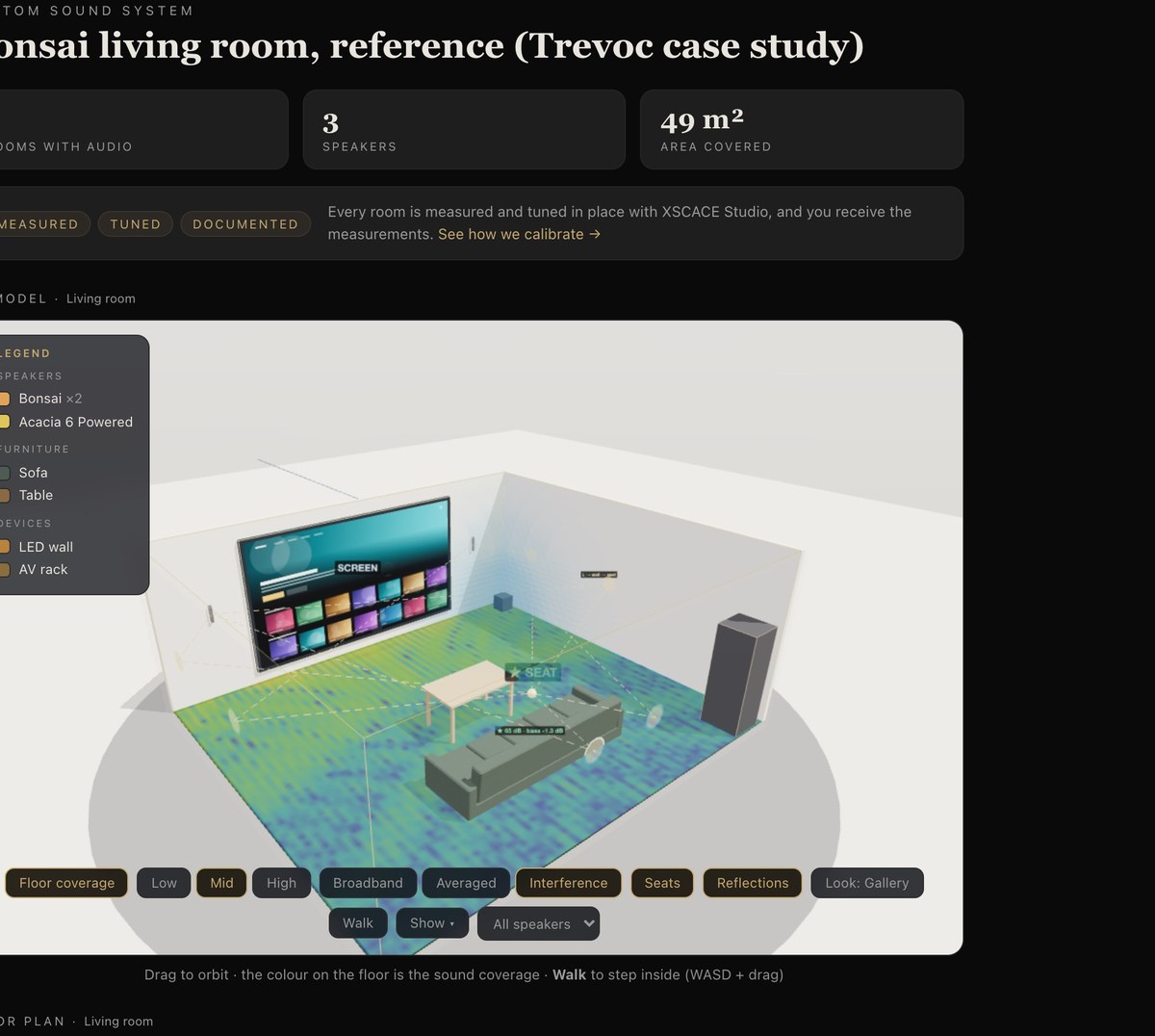
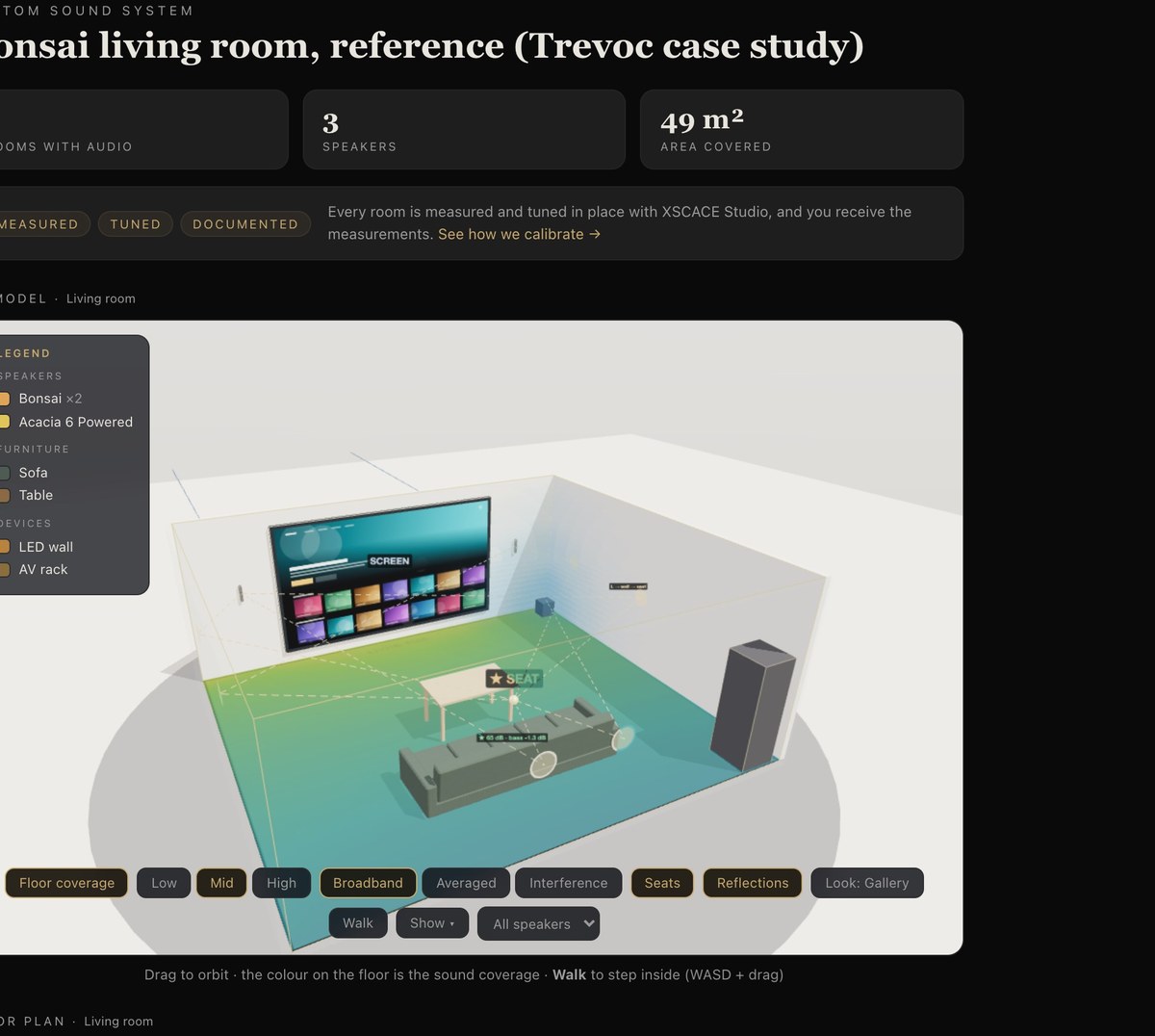
The acoustics assistant in the simulator proposes the least intrusive fix first. For this room it is heavy curtains over the rear glazing, which brings the voice band from 0.62 s to 0.45 s and on target, with the screen wall left exactly as it is. That is the kind of note an interior designer can act on without a single panel being added.
Controlled
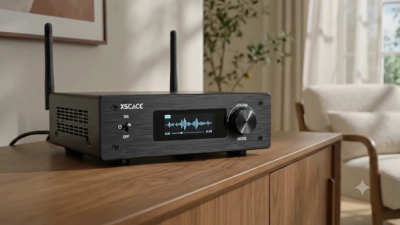
With the Air Amp or Air Mini as the source, the rooms are controlled from the XSCACE Controller app on any phone, which discovers every streamer on the network, groups rooms, and holds the volume limits set at commissioning. The owner never touches a DSP; the integrator never has to come back to change a preset.
Calibrated
The calibration toolkit inside XSCACE Studio measures what the room actually does once the furniture and curtains are in, and works with the measurement microphone the integrator already carries. For Bonsai the order of work is fixed:
- Measure the room: RT60 and a waterfall at the main seat, and an unweighted FFT of the background, so the target is the room's own and not a generic one.
- Check every channel: polarity per driver, a near-field response overlay per speaker, and a 3 dB seat-to-seat level match.
- Delay to the seat: per-channel delay to the main listening position, set to the millimetre, so both Bonsai arrive together.
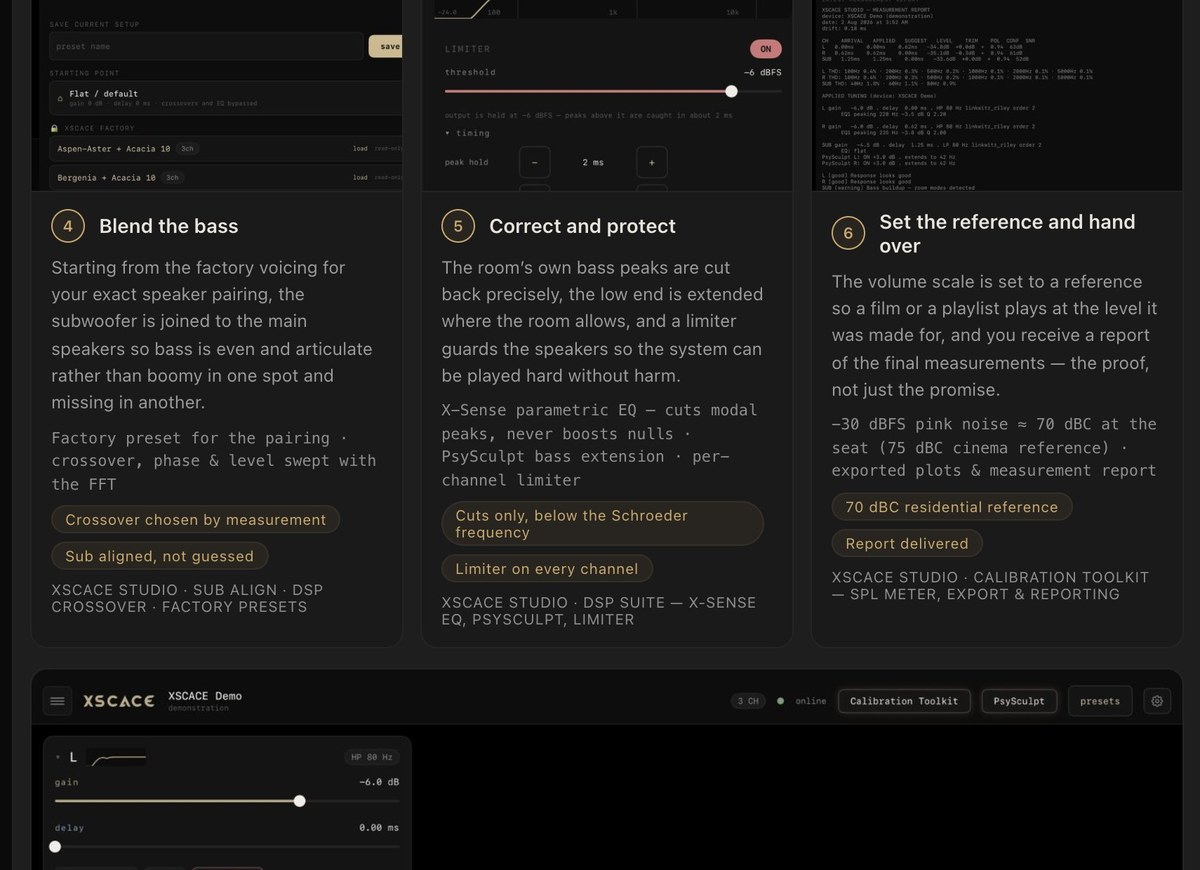
- Blend the bass: the 300 Hz crossover, phase and level swept with the FFT so the Acacia 6 joins the pair without a bump or a hole. Crossover chosen by measurement, sub aligned, not guessed.
- Correct and protect: X-Sense parametric EQ cuts the room's modal peaks and never boosts nulls; PsySculpt adds equal-loudness compensation at low level; a limiter guards every channel.
- Set the reference and hand over: −30 dBFS pink noise set to 70 dBC at the seat for a residential room, with the exported plots and measurement report delivered to the client.
What this apartment settles
An apartment is the hardest brief for architectural audio because nothing can be built in after the fact. Walls are shared, ceilings are services, and the joinery is the finish. Bonsai answers that with a speaker that mounts to a keyhole on any panel, needs no bracket and no cut-out, and takes the finish of whatever it is fixed to. The film shows four rooms; the same logic runs through a whole floor. Read the fluted foyer case study for Bonsai in an entrance, the lacquered wardrobe for a bedroom where the speaker disappears into joinery, or pick the living room in Room Solutions to see the systems XSCACE would put in a room like this one.