Contents6 sections
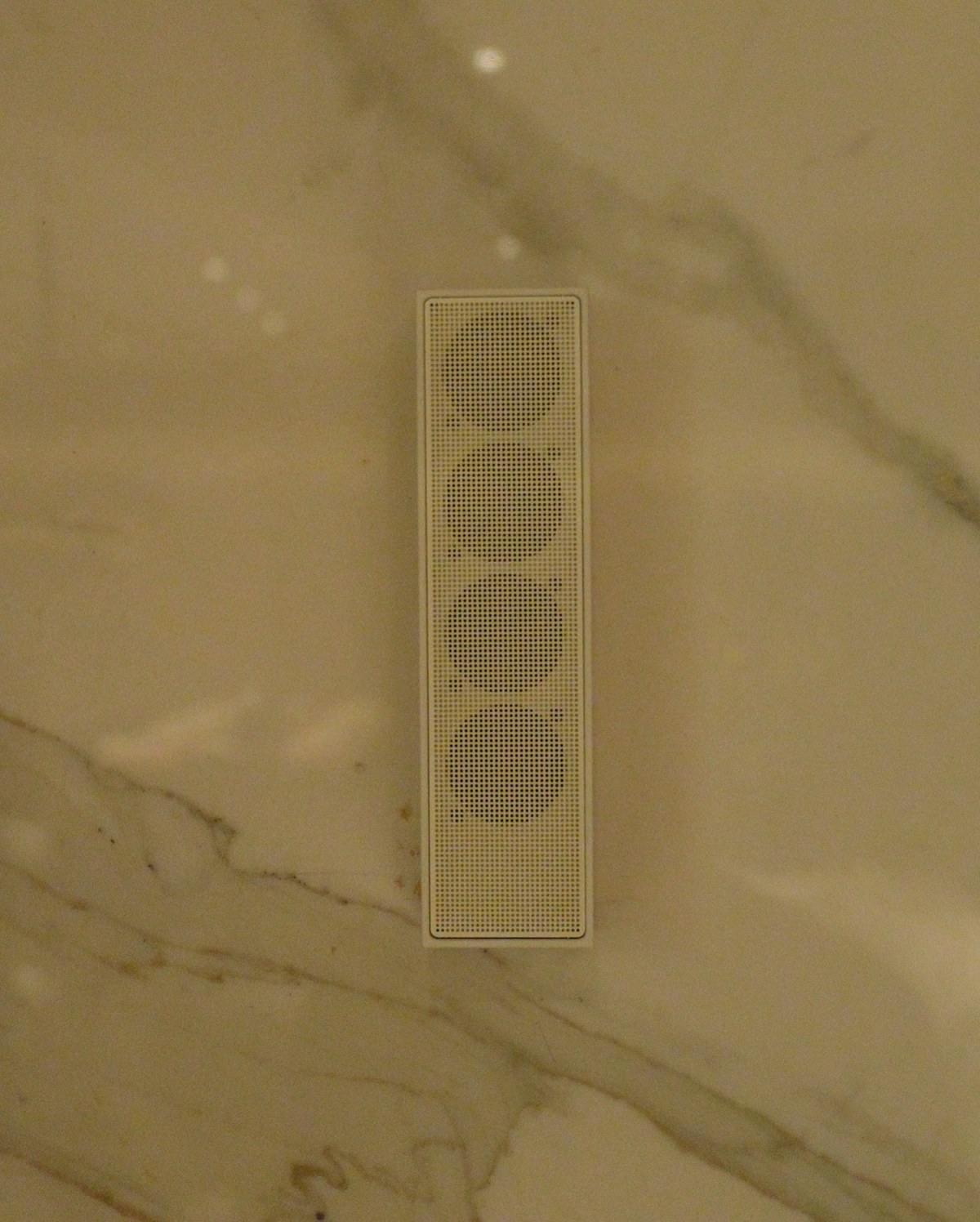
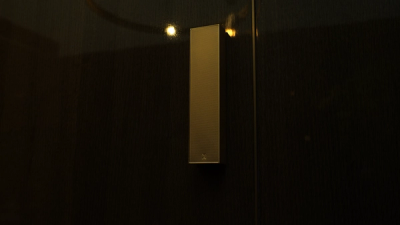
A private dining room with a long dark polished wood table, gold-rimmed china, brass-trimmed marble panels, and corduroy-textured wall fabric reads closer to a members' club than a typical home dining room — the kind of formal space where background music needs to be present without being noticed. Cane was mounted flush on a woven beige fabric wall panel, chosen specifically for how it sits against a soft, textured surface rather than a hard one.
Case Study at a Glance
- Room: private dining room / members'-club-style anteroom
- Product: Cane (23mm slim-array)
- Mounting surface: woven fabric wall panel
- Finish: champagne and cream aluminium
- Goal: background music under conversation, not over it
Setting playback level for a room built around conversation
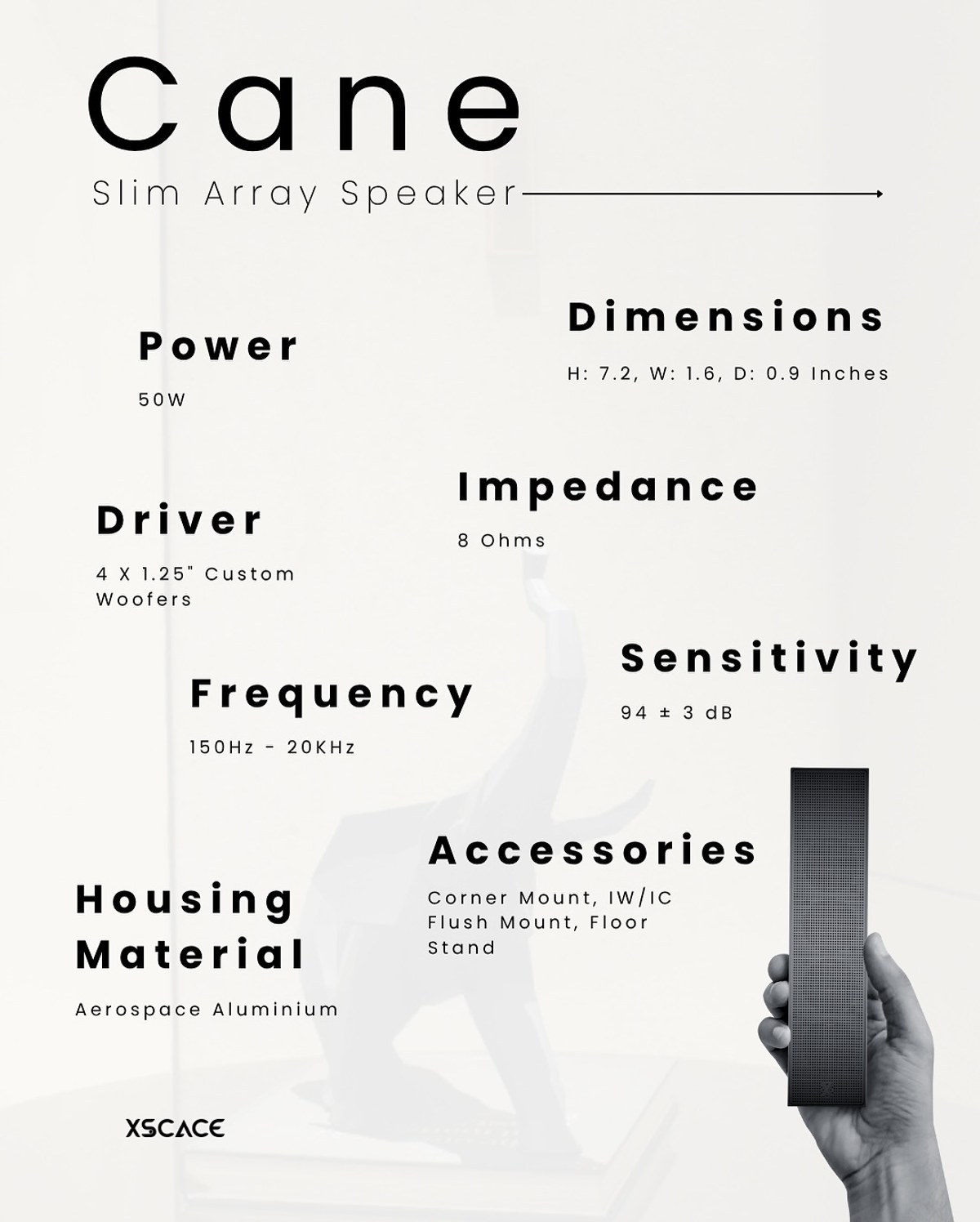
Formal dining rooms are one of the few spaces where the correct target volume is deliberately low — background music that supports conversation rather than competing with it. Cane's 92dB sensitivity means that target level draws only a small fraction of its 50W RMS capacity, which in practice means the amplifier is rarely pushed anywhere near its ceiling in this kind of room, leaving substantial clean headroom in reserve for the rare occasion the room is used differently.
Speakers on fabric-upholstered walls
Fabric wall panelling is common in formal dining and hospitality interiors for its acoustic damping — it reduces echo and hard reflections in a room full of hard surfaces like the marble and polished wood table. Mounting Cane directly onto the fabric panel, rather than cutting through it to a hard wall behind, kept that acoustic treatment intact.
92dB sensitivity for a formal room
Cane's 92dB sensitivity means it reaches comfortable dinner-conversation volume well below its power ceiling — important in a formal dining setting where music needs to sit under conversation, not compete with it.
The system
An Air Amp drives the dining room's Cane speakers, paired with an Acacia 10 Powered subwoofer for a fuller low end without adding perceptible volume to the room.
Planned, controlled and calibrated around conversation
Every XSCACE installation follows the same three stages: planned in the simulator, controlled from the app that matches the hardware, and calibrated with measurement. A dining room carries music underneath conversation, so intelligibility matters more than impact.
Planned
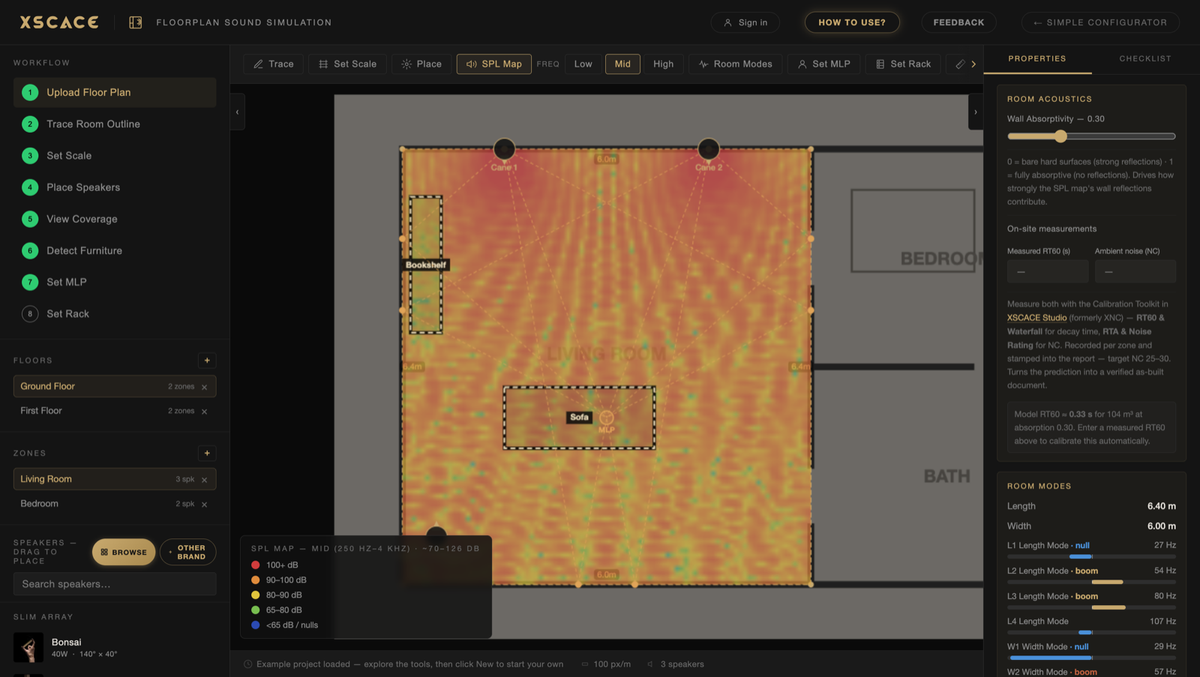
XSCACE Floorplan Sound Simulation takes a plan from trace to bill of quantities in the browser. For a room like this the outputs that matter are:
Coverage along the length of the table, evenly
Reflections located, since hard tables and glazing colour speech
Quantities agreed alongside the lighting plan
Controlled
Day-to-day control is XSCACE Controller on iOS and Android. It handles volume, EQ and grouping, and the streaming amplifiers also appear natively as AirPlay 2 and Spotify Connect targets, so the app is for control rather than for getting audio into the room.
Calibrated
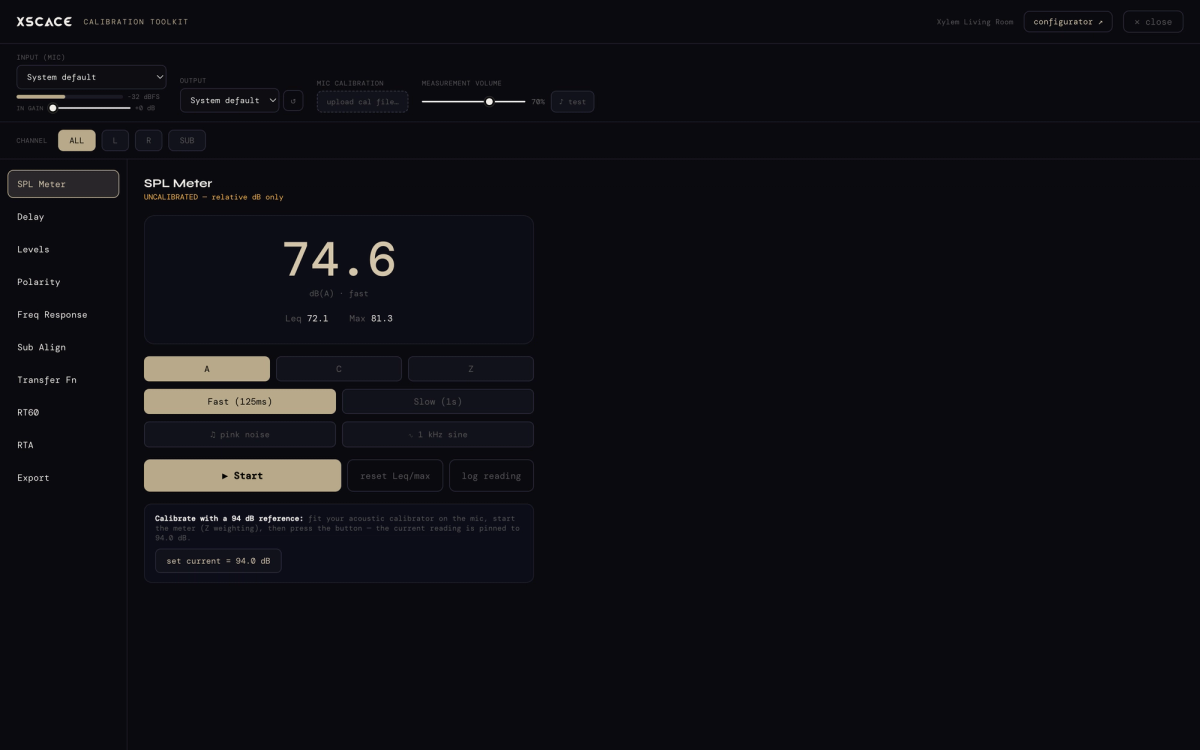
The calibration toolkit inside XSCACE Studio measures what the room actually does — eleven instruments covering SPL, delay, levels, polarity, frequency response, THD, sub alignment, transfer function, RT60, RTA and export, free on macOS. Here the ones that earn their place are:
SPL at each end of the table, matched
RT60 to ISO 3382, which predicts whether conversation will be comfortable
Levels matched so no diner sits under a hotspot
Cane runs down to 150Hz against Acacia 10 Powered's 35Hz, and the two records recommend different crossover points (200Hz and 300Hz). Which suits the room is a measurement, not a preference.