Contents4 sections
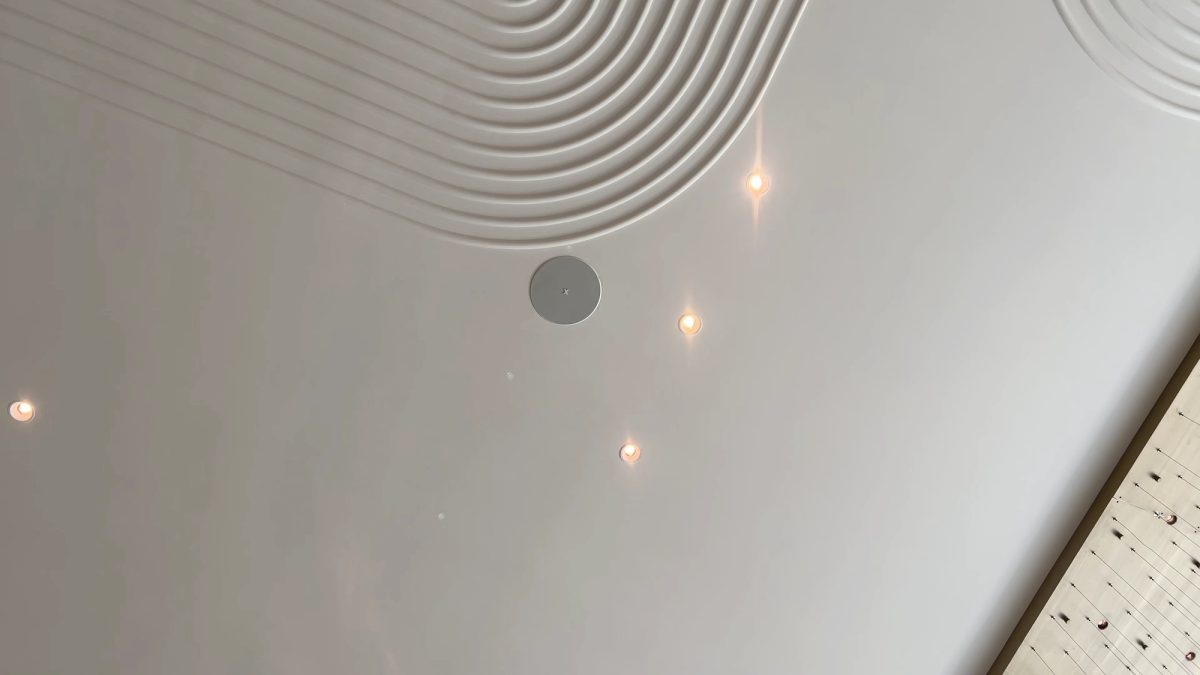
Sound obeys physics before it obeys budgets. In-ceiling speakers are the most invisible — and most misunderstood — category in residential audio, and that invisibility cuts both ways. Specified correctly, the best in-ceiling speakers for luxury homes disappear architecturally and fill a room with sound that seems to come from everywhere and nowhere simultaneously. Specified incorrectly, they become an expensive retrofit problem that no amount of EQ can fully correct. This guide covers what actually matters when you are selecting and installing in-ceiling speakers in a luxury home — the physics, the specifications, and the room-by-room decisions that separate a system you will still love in twenty years from one you will quietly replace in three.
Why In-Ceiling Speaker Quality Varies More Than Any Other Category
No other speaker category spans a price range of $30 to $3,000+ per unit the way in-ceiling speakers do, and the variance is not arbitrary. Three engineering decisions account for nearly all of the difference: driver material, enclosure design, and crossover quality.
Driver materials divide into three practical tiers. Polypropylene (poly) cones are light, stiff, and moisture-resistant — a sensible choice for most residential installations. Aluminium cone drivers are stiffer still, which reduces cone breakup distortion at higher frequencies and improves transient resolution, but they radiate heat differently and require more sophisticated crossover design to prevent a harsh top end. Paper cones, treated or untreated, remain a legitimate choice for midrange reproduction when the crossover keeps them within their linear operating range. At XSCACE, our engineering approach — detailed on our technology page — specifies driver materials based on the acoustic role of each driver within the array, rather than defaulting to a single material across the frequency range.
Enclosure design is the variable most buyers overlook entirely. An open-back in-ceiling speaker uses the ceiling cavity as its enclosure — which means the volume, insulation density, and adjacent HVAC ducting all become part of the speaker's acoustic system. In a sealed, isolated ceiling void, this can work reasonably well. In an open attic or a ceiling cavity shared with mechanical systems, it produces unpredictable bass extension and measurable crosstalk between rooms. A back-can (a sealed enclosure mounted behind the speaker chassis) eliminates this variable entirely, making acoustic performance consistent regardless of what is above the ceiling. For any serious installation, a back-can is not optional — it is the specification floor.
Crossover quality is the most common source of "honky" or midrange-heavy in-ceiling sound. Budget crossovers use electrolytic capacitors and iron-core inductors — components that introduce measurable phase shift and coloration, particularly in the 500Hz–2kHz band where human hearing is most sensitive. The audible result is a nasal, compressed character that no amount of amplifier quality can overcome. Premium crossovers use polypropylene capacitors and air-core inductors, which are more expensive and physically larger but introduce far less coloration. XSCACE's PrecisionXover Array is built around this component standard — it is the benchmark to insist on for any luxury installation.
The Five Specifications That Actually Matter (And Three That Don't)
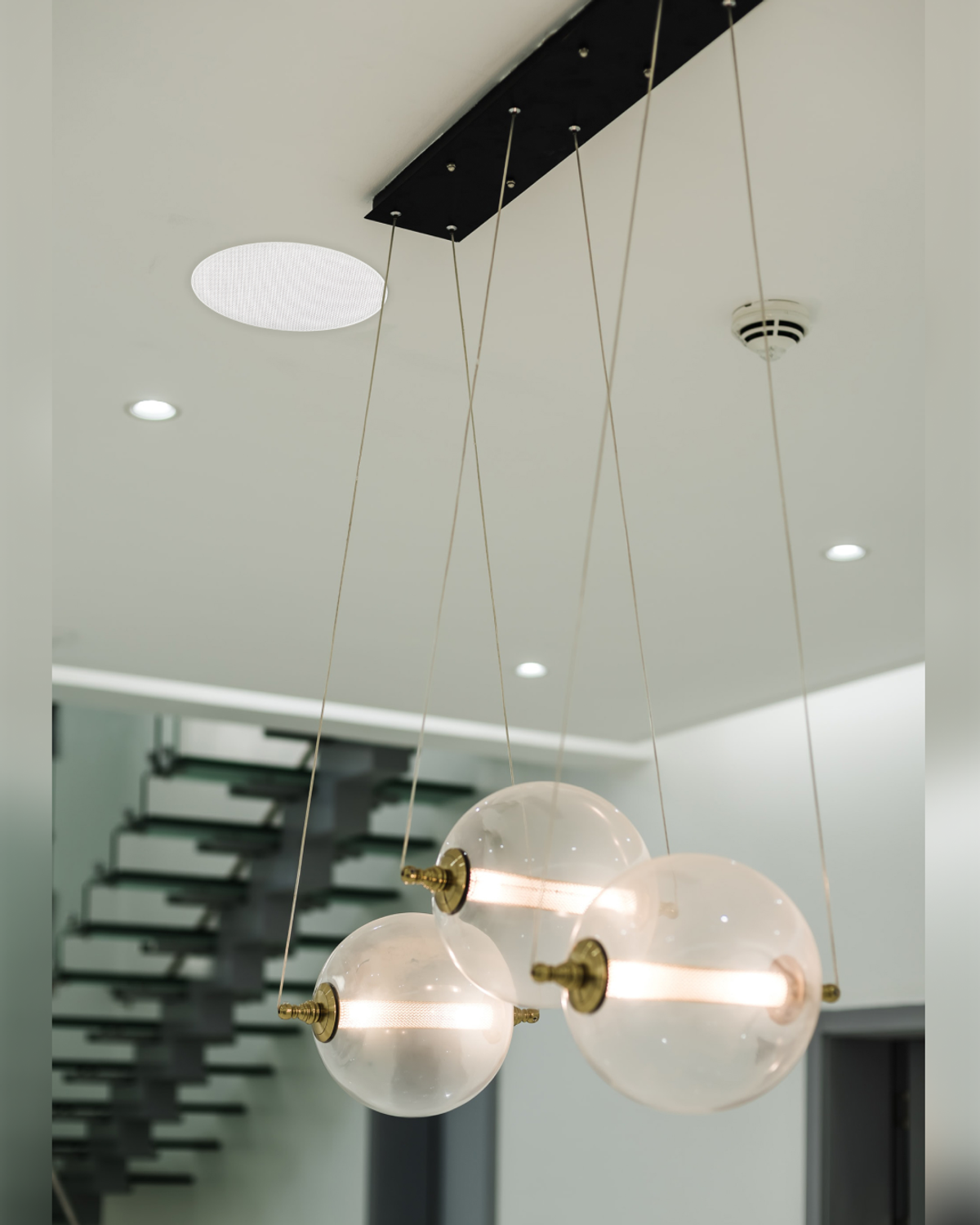
In-ceiling speaker specification sheets are dense with numbers, most of which are selected by marketing teams rather than acoustic engineers. These five specifications have direct bearing on real-world performance.
- Frequency response (-3dB point): For music-primary rooms, aim for a -3dB point at 60Hz or lower. For home cinema with a dedicated subwoofer handling low-frequency effects, 80Hz is the practical handoff frequency — but the in-ceiling speaker still needs to reach below that cleanly or the crossover region will be audible.
- Sensitivity (dB/1W/1m): Higher sensitivity means less amplifier power is required to reach a given SPL. For music listening rooms, 84dB sensitivity or higher is the practical minimum. A speaker rated at 84dB requires half the amplifier power of one rated at 81dB to achieve the same volume — a difference that is directly audible as dynamic headroom.
- Driver size: 6.5" drivers are appropriate for most residential rooms up to approximately 40 square metres. For rooms larger than 40sqm, an 8" driver provides greater low-frequency extension and higher maximum SPL before dynamic compression.
- Crossover component quality: Polypropylene capacitors and air-core inductors vs electrolytic capacitors and iron-core inductors. This is not a subtle difference — it is audible within the first 30 seconds of a direct comparison.
- Chassis material: Machined aluminium chassis resist corrosion and maintain dimensional stability over decades. Stamped steel rusts in humid environments. Polymer frames are adequate for low-humidity residential applications but flex slightly under driver excursion, which can introduce resonance over time.
Three specifications routinely appear in marketing materials but carry little acoustic meaning. Total harmonic distortion measured at 1 watt is meaningless — music and cinema operate at 85–95dB SPL, and THD figures change dramatically with drive level. Gold-plated binding posts are a cosmetic feature; the resistance difference over a speaker cable run is immeasurable. And any claimed frequency response without a stated -3dB or -6dB reference point is an invented number — a speaker "reaching" 35Hz at -20dB is delivering essentially no useful energy at that frequency.
Room-By-Room Specification Guide
Living Room and Lounge
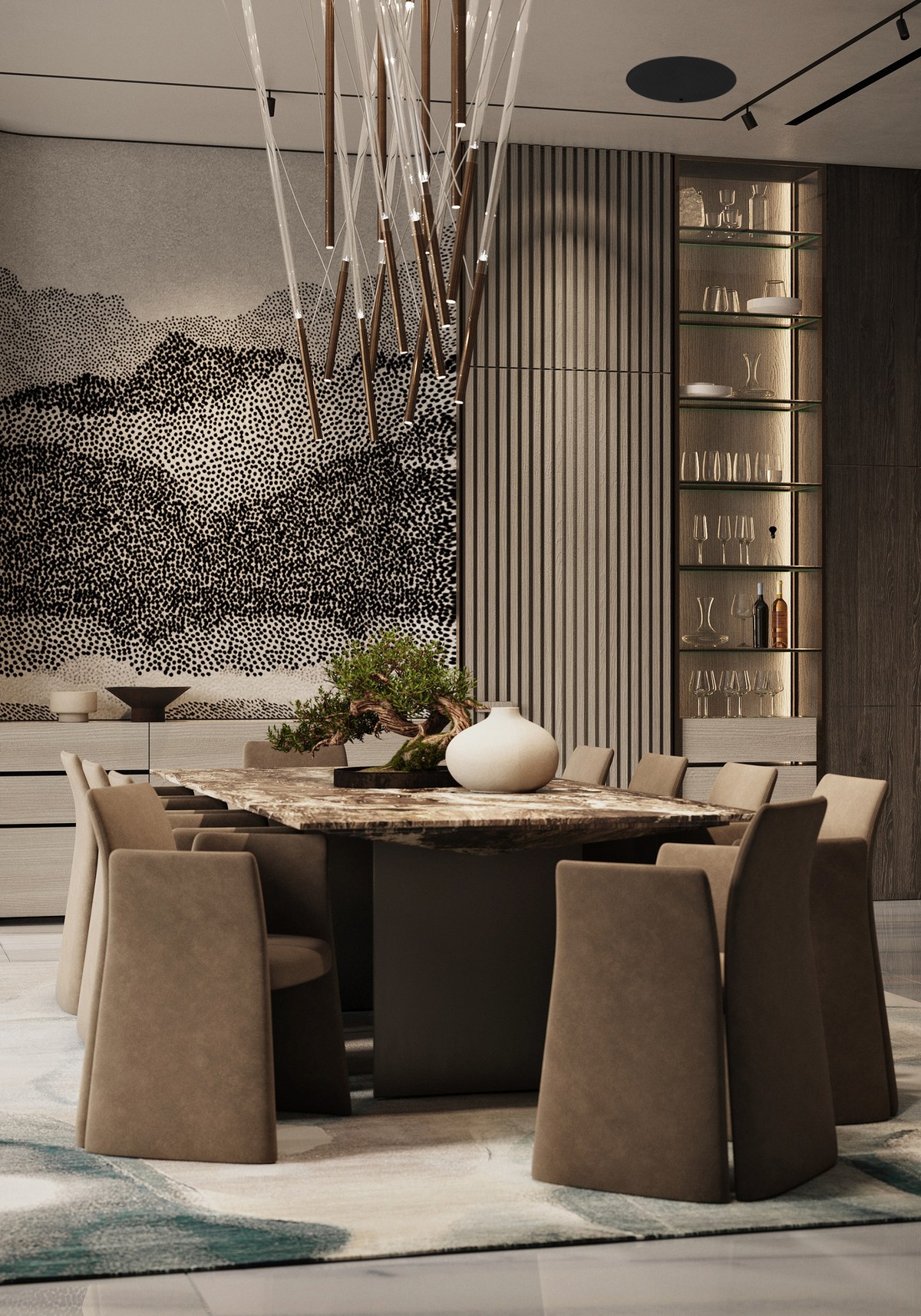
The primary listening room demands the highest specification. Use 6.5" drivers as a minimum, targeting 65Hz low extension (-3dB) and 84dB sensitivity or above. A stereo pair is the minimum — four speakers in a larger lounge allows for better off-axis coverage and lower per-speaker drive levels, which reduces distortion at listening volumes. Browse XSCACE's in-ceiling speaker range for options matched to this specification. The speaker placement calculator works the spacing and count out from the coverage angle and the ceiling height.
Kitchen and Open-Plan Living
Open-plan spaces prioritise dispersion angle over deep bass extension — the goal is even coverage across a large, irregularly shaped area rather than audiophile fidelity at a fixed listening position. Wide-dispersion 6.5" drivers are appropriate. Critically, open-plan ceilings almost always share a cavity with HVAC ducting, which makes sealed back-cans mandatory rather than optional. Mono or wide-stereo distribution is more useful here than a standard stereo pair, as listeners are moving rather than seated at a defined sweet spot.
Master Bedroom
The master bedroom is the one room where an 8" driver is actively counterproductive. Larger drivers in a bedroom ceiling generate bass resonance in the room's corners and boundaries at typical listening volumes, and that resonance is physically noticeable during sleep — even when the system is not playing music, the residual structural coupling from earlier listening can sustain for minutes. Use 6.5" drivers and pair them with an XSCACE Acacia 6 subwoofer for a premium result that delivers accurate bass without room-mode problems from oversized ceiling drivers. The Acacia 6 extends to 45Hz with 84dB sensitivity — precisely the extension needed to complement a 6.5" in-ceiling driver.
Home Cinema
Home cinema installations justify 6.5"–8" drivers for front left and right channels, where dynamic range and low-frequency extension support the full film soundtrack. XSCACE's in-ceiling series covers both driver sizes. For the LFE (low-frequency effects) channel, pair the in-ceiling system with the Acacia 10 subwoofer, which extends to 35Hz (-3dB) with 88dB sensitivity — capable of delivering cinema reference levels in rooms up to 60 square metres without mechanical stress.
Outdoor and Covered Terrace
Covered terraces and outdoor living spaces require weatherised drivers — materials and adhesives rated for humidity cycles, temperature extremes, and UV exposure that would degrade a standard residential driver within two seasons. Standard in-ceiling speakers are not interchangeable with outdoor speakers regardless of how sheltered the installation appears. XSCACE's outdoor speaker range is engineered specifically for these conditions, with the same acoustic standards as the indoor range.
What Installation Quality Does to Acoustic Performance
The highest-specification speaker in the world performs as a mediocre speaker when it is installed poorly. Four installation variables have measurable acoustic consequences.
Backbox vs open-back installation. Without a sealed backbox, the ceiling cavity becomes the acoustic enclosure. Its volume, insulation type, and neighbouring cavities all contribute to the speaker's effective bass response in ways that are impossible to predict at design stage. Backboxes eliminate this uncertainty and are particularly important in multi-storey homes, where an open-back ceiling speaker in a first-floor room transmits sound directly into the second-floor floor structure.
Ceiling height. The optimal ceiling height range for in-ceiling speakers is 2.4m–3.6m. Below 2.4m, the speaker is too close to the listening position, creating uneven imaging. Above 4m, standard 84dB-sensitivity speakers begin to run out of headroom at reasonable amplifier power levels — installations above 4m ceiling height require 87dB+ sensitivity speakers to maintain the same perceived loudness.
Wiring gauge. Cable resistance adds directly to amplifier damping factor load. For speaker runs under 30 metres, 16AWG cable is the practical minimum. For runs exceeding 30 metres, move to 14AWG — the resistance difference between 16AWG and 14AWG over a 40-metre run is approximately 0.3 ohms, which is audible as reduced bass control and slightly compressed dynamics at higher SPL.
Acoustic sealing. The gap between the backbox flange and the ceiling drywall is a direct path for HVAC noise and structural vibration to enter the listening room. Acoustic sealant applied around the backbox perimeter reduces flanking noise by 8–12dB in practice — the difference between an installation where you notice the air conditioning and one where you do not.
A luxury home deserves an audio system that matches its architecture. In-ceiling speakers, specified correctly, are the most elegant audio solution available — invisible, immersive, and permanent. Specified incorrectly, they are the most expensive speakers nobody wants to listen to. The difference between the two outcomes is not budget alone; it is the quality of the specification decisions made before a single hole is cut. For more technical guides and installation insights, visit the XSCACE journal.