Contents6 sections
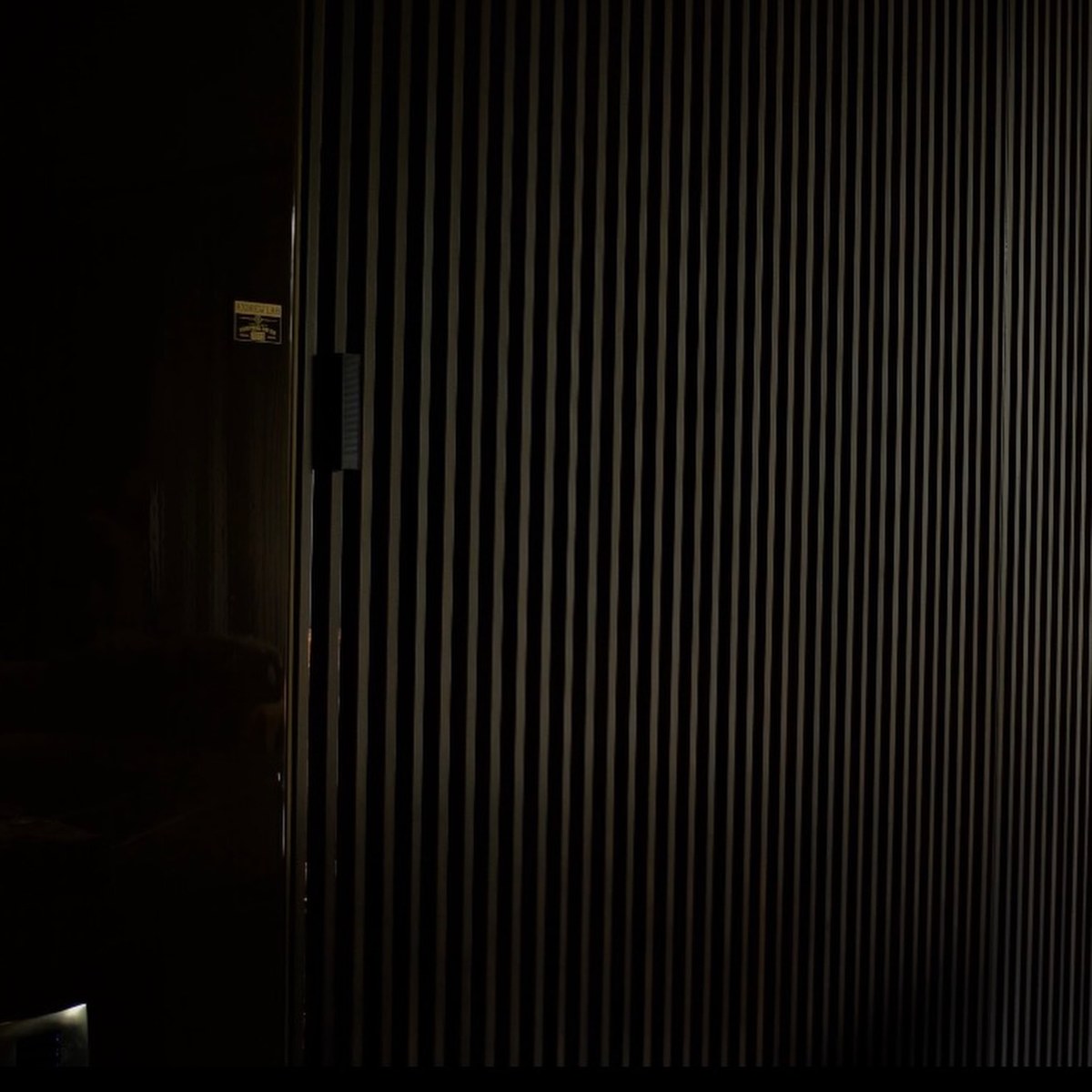
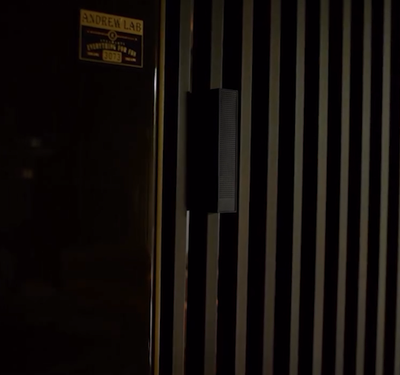
A speakeasy-style games and media room — dim, warm-toned lighting, a vintage brass plaque, a framed film poster — is designed around low light and intentional shadow, which changes the brief for a speaker finish. A pale or reflective speaker would catch every point of light in a room built to avoid exactly that. Bonsai was specified in black finish, mounted on a black-and-tan fluted slat wall.
Case Study at a Glance
- Room: speakeasy-style games and media room
- Product: Bonsai (12mm slim-array)
- Mounting surface: black-and-tan fluted slat wall
- Finish: black aluminium
- Goal: sound that recedes into deliberately dim, moody lighting
Finish selection as a function of ambient light, not just wall colour
Most finish decisions in this series were driven by wall colour or material — but in a deliberately dim room, ambient light level matters more than the wall's actual colour. A pale finish in a dark room catches every stray light source and becomes a small bright point wherever it's mounted, regardless of what colour the wall behind it is; black finish avoids that regardless of the wall tone, which is why it was specified here even against a wall with warm tan elements.
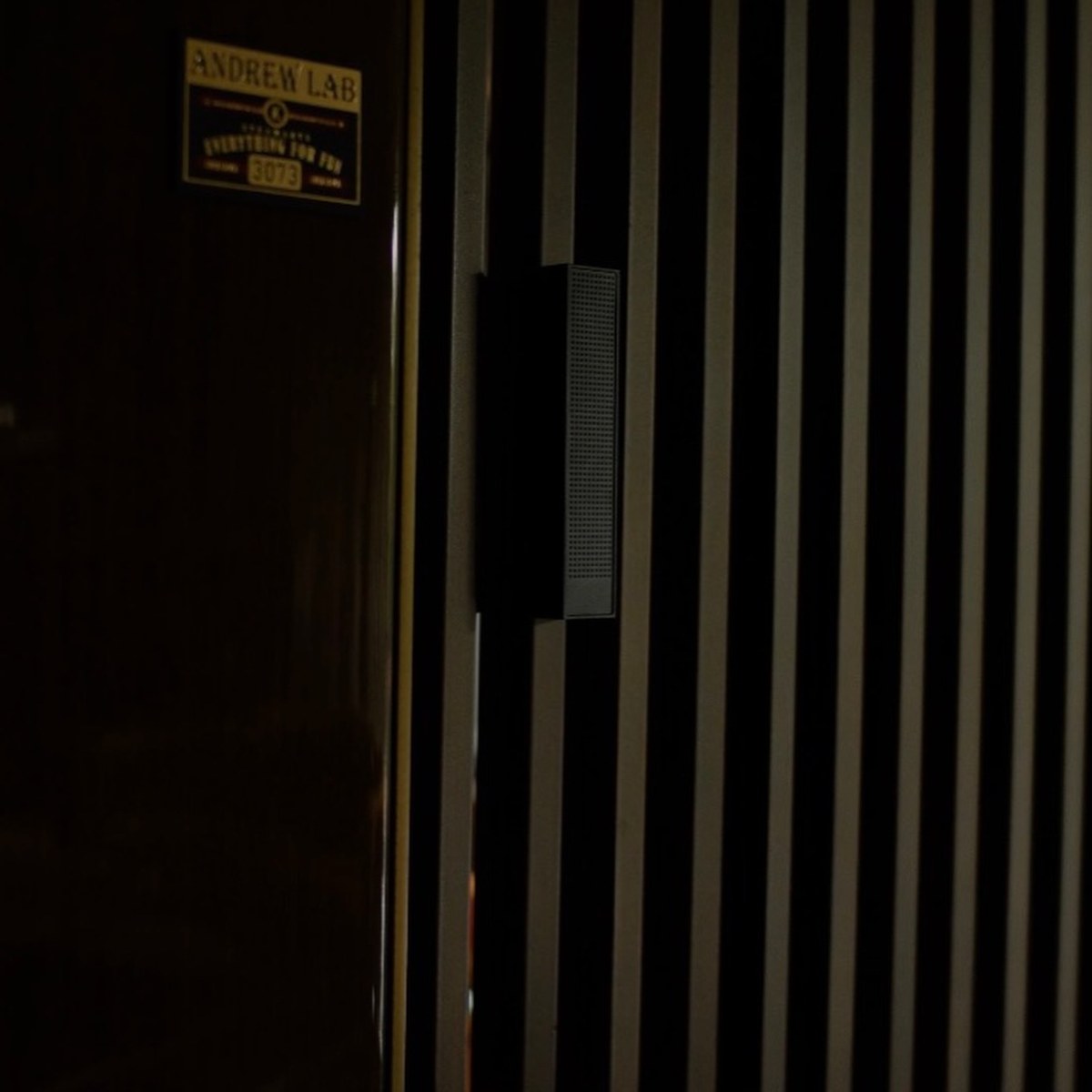
Black finish for low-light rooms
In brighter rooms, XSCACE speakers are often chosen to match or contrast a wood tone directly. In a deliberately dim room, black finish serves a different purpose: it doesn't catch ambient light the way a champagne or white finish would, so the speaker recedes into shadow rather than becoming a small bright point against the dark walls.
Fluted slats as camouflage
The black-and-tan fluted slat wall already breaks up light and reflection by design — mounting Bonsai within that texture, rather than on a flat adjacent wall, let the speaker borrow the wall's own visual noise as cover.
The system
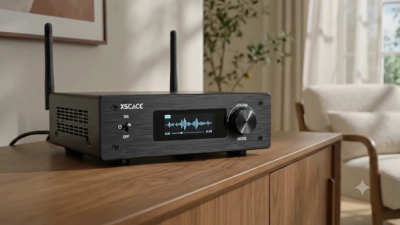
An Air Amp handles wireless streaming for the room, with an Acacia 6 Powered subwoofer adding low-end weight suited to a games room where music, film dialogue, and ambient sound all need to carry.
Planned, controlled and calibrated for two jobs
Every XSCACE installation follows the same three stages: planned in the simulator, controlled from the app that matches the hardware, and calibrated with measurement. A media room is asked to be a cinema in the evening and a living room the rest of the time, and the layout has to satisfy both.
Planned
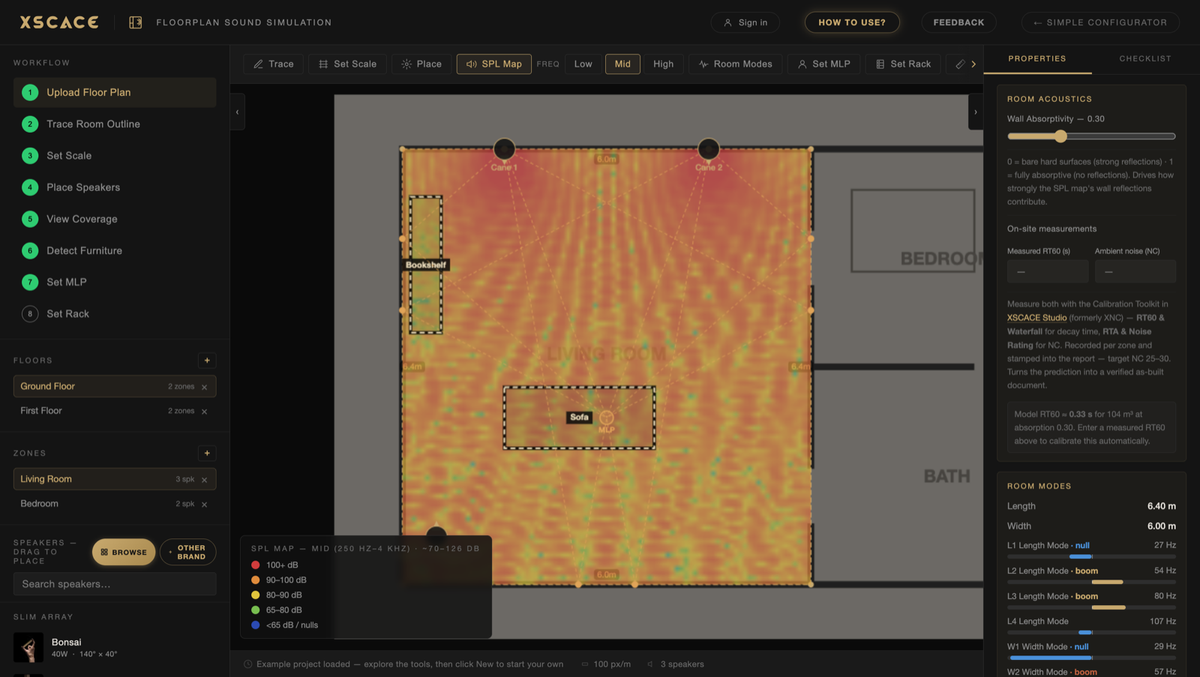
XSCACE Floorplan Sound Simulation takes a plan from trace to bill of quantities in the browser. For a room like this the outputs that matter are:
Reference geometry checked against the seating that is actually there
Coverage across the whole sofa, not one seat
Room modes located before the joinery is built around them
Controlled
Day-to-day control is XSCACE Controller on iOS and Android. It handles volume, EQ and grouping, and the streaming amplifiers also appear natively as AirPlay 2 and Spotify Connect targets, so the app is for control rather than for getting audio into the room.
Calibrated
The calibration toolkit inside XSCACE Studio measures what the room actually does — eleven instruments covering SPL, delay, levels, polarity, frequency response, THD, sub alignment, transfer function, RT60, RTA and export, free on macOS. Here the ones that earn their place are:
Delay, levels and polarity from one sweep per channel
Sub Align to integrate the low end deterministically
Frequency response at each main seat
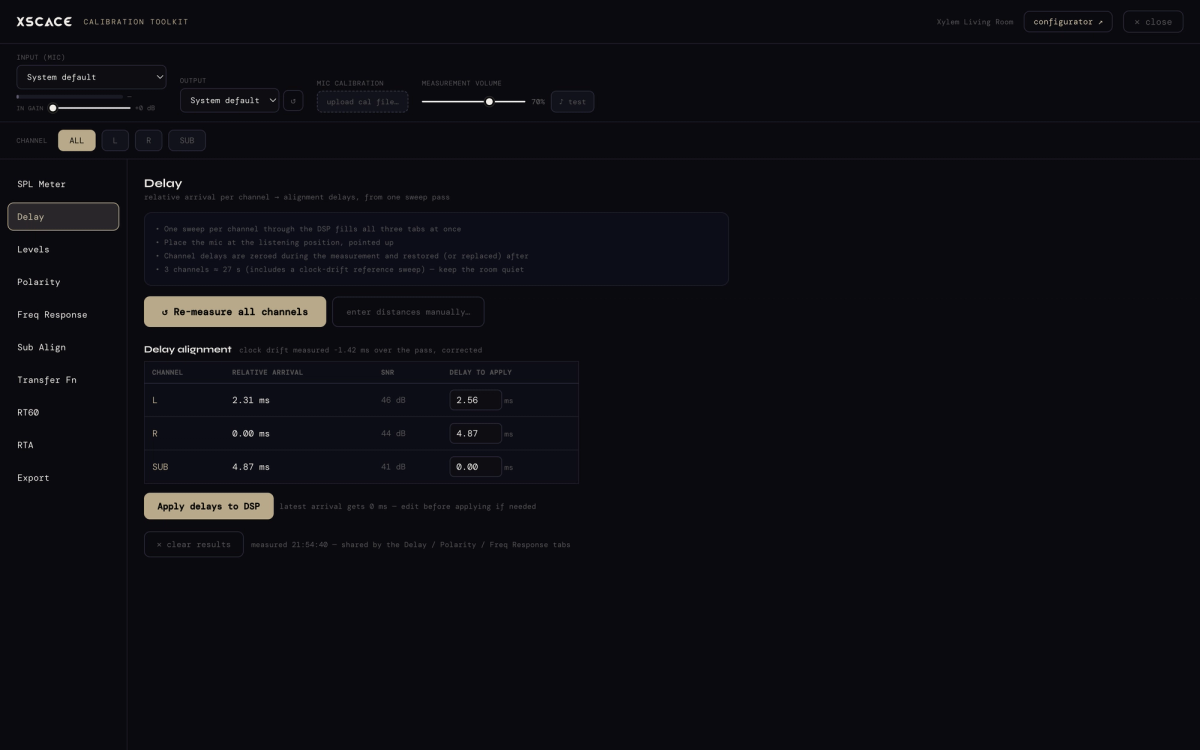
Bonsai runs down to 300Hz and Acacia 6 Powered reaches 35Hz, meeting at the 300Hz crossover both records specify — a number to verify by measurement rather than assume.