Contents4 sections
A media lounge built around a backlit TV wall needs cinematic clarity without the setup reading as a home theater. This 20×15ft room, framed by a gold-lit marble surround, was specified for an immersive movie and music experience with minimal visual intrusion — a sleek, modern audiovisual zone rather than a dedicated screening room.
The System
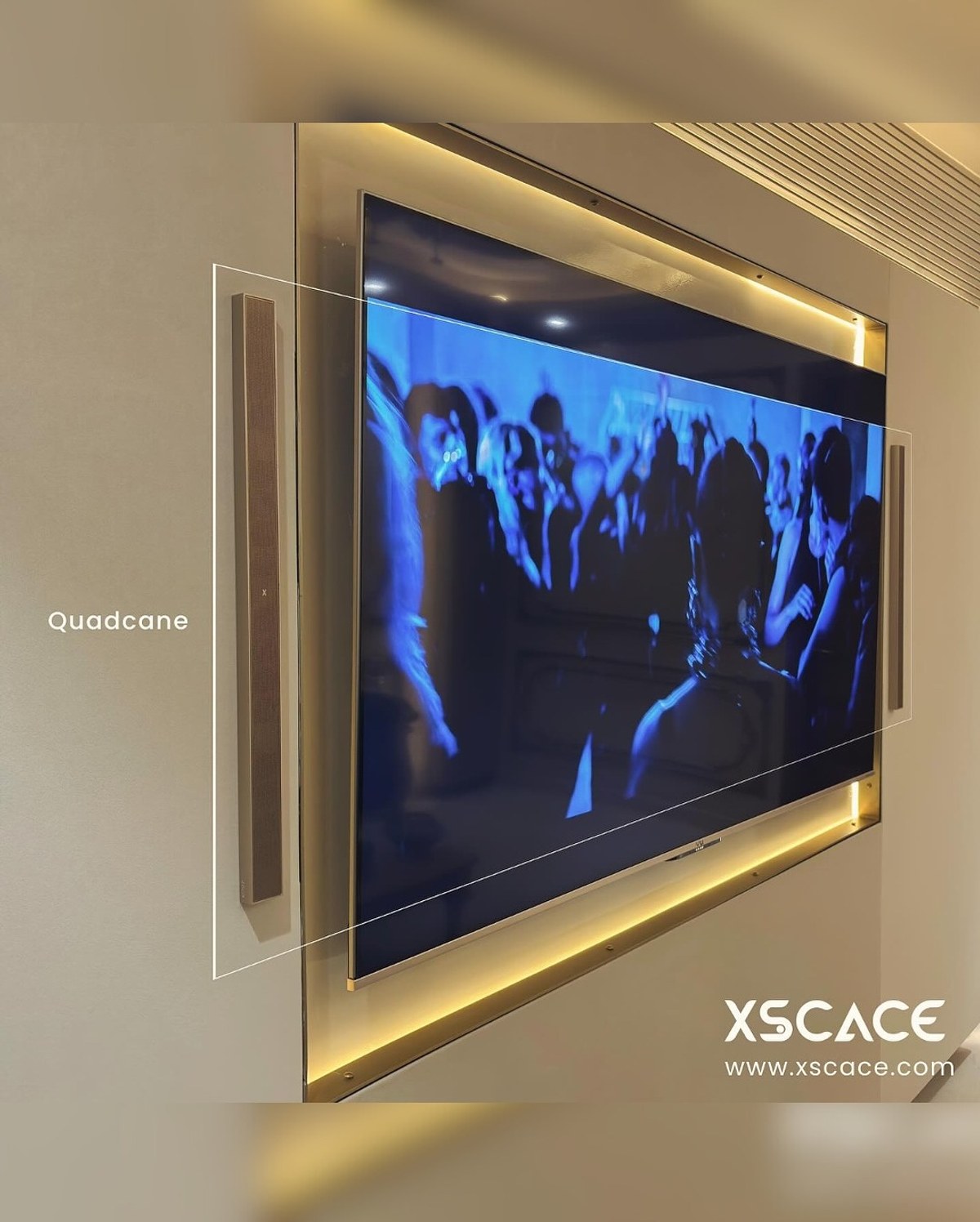
- A pair of XSCACE Quadcane speakers, wall-mounted on both sides of the TV, aligned with the visual axis
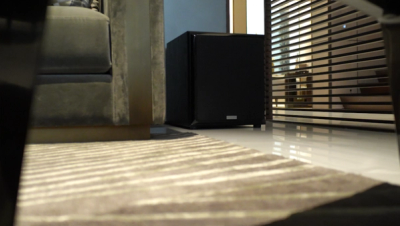
- One XSCACE Juniper subwoofer
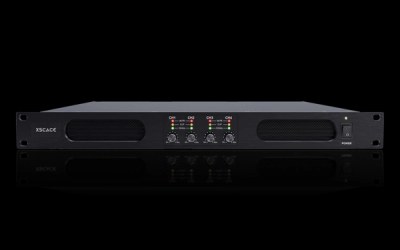
- An XSCACE Lucifer amplifier, 2.1 stereo setup
Discretion and Output, Together
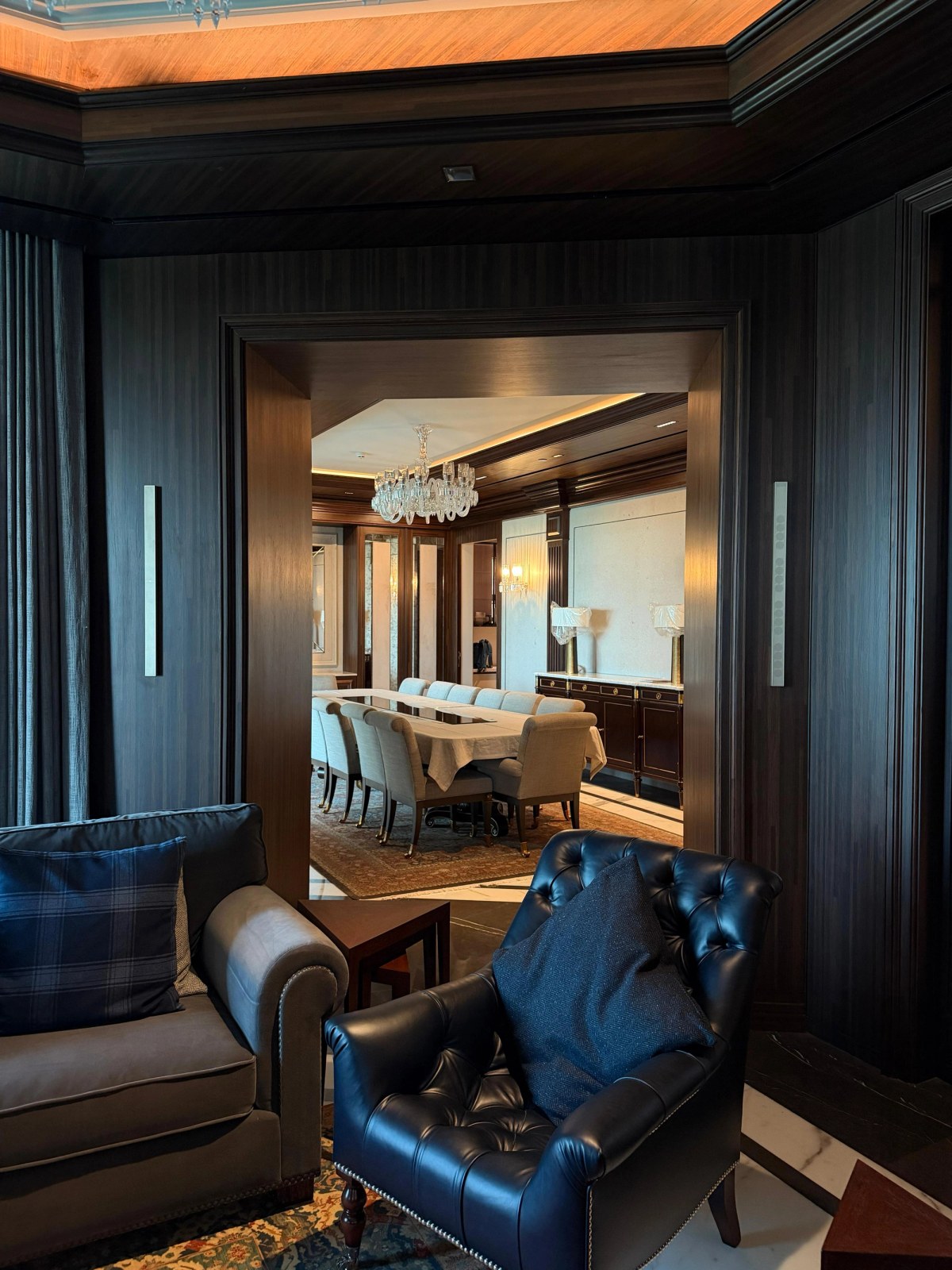
The goal statement for this room pairs two things that can pull against each other: a focused audiovisual zone with minimal visual intrusion, and cinematic sound clarity without disrupting the room's sleek modern design. Quadcane's 21mm depth — thinner than Cane, despite its higher 100W/95dB rating — is what makes that pairing possible: real output from a profile slim enough to mount flush either side of a backlit TV wall without becoming its own feature.
Case Study at a Glance
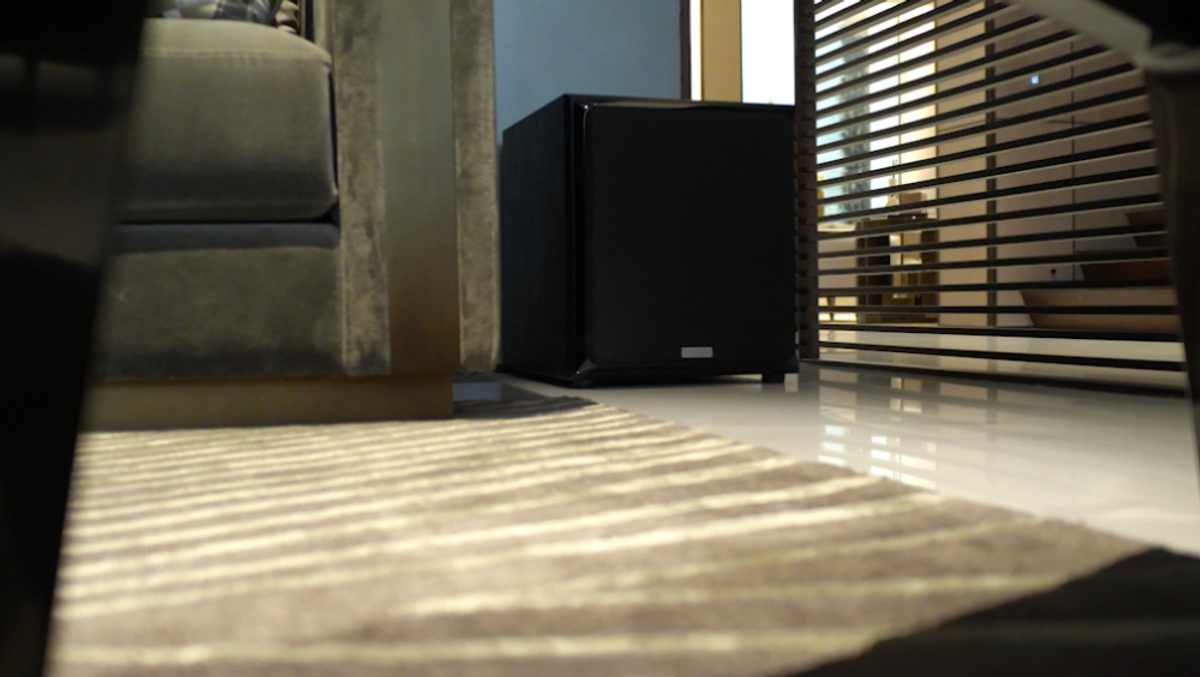
- Room: Media lounge, 20×15ft
- Use case: Immersive movie and music experience
- System: 2× XSCACE Quadcane, Juniper subwoofer, Lucifer amplifier, 2.1 stereo
- Placement: Wall-mounted on both sides of the TV, aligned with the visual axis
- Goal: Cinematic sound clarity without disrupting the room's sleek, modern design
Read the large lounge case study for Quadcane spread across a much bigger room, or see the full spec sheet for XSCACE Quadcane.
Planned, controlled and calibrated to reference
Every XSCACE installation follows the same three stages: planned in the simulator, controlled from the app that matches the hardware, and calibrated with measurement. A cinema is the one room where the geometry is defined for you, and where getting it wrong is measurable rather than a matter of taste.
Planned
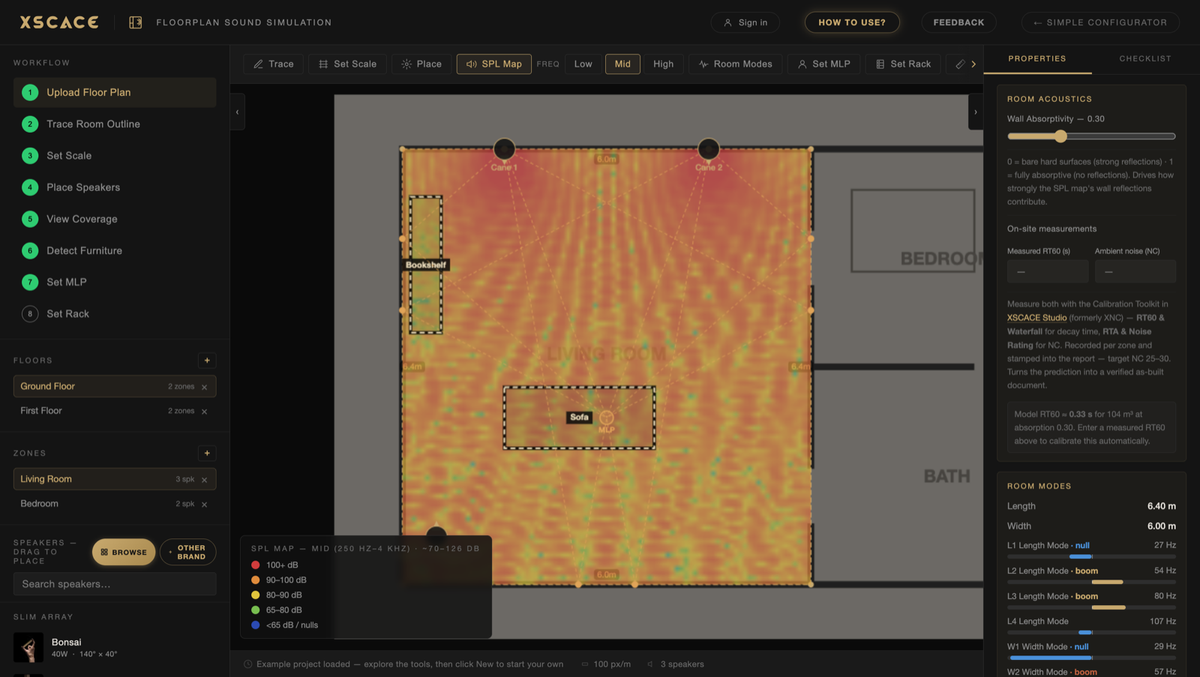
XSCACE Floorplan Sound Simulation takes a plan from trace to bill of quantities in the browser. For a room like this the outputs that matter are:
Full Dolby reference geometry checked speaker by speaker
Coverage at every seat, not just the reference seat
Room modes and first reflections located before treatment is specified
Controlled
The amplifier is configured and controlled from XSCACE Studio on macOS — routing matrix, per-channel gain and delay, parametric EQ, crossovers and limiting, with network-wide discovery rather than one amplifier at a time.
Calibrated
The calibration toolkit inside XSCACE Studio measures what the room actually does — eleven instruments covering SPL, delay, levels, polarity, frequency response, THD, sub alignment, transfer function, RT60, RTA and export, free on macOS. Here the ones that earn their place are:
Delay and polarity per channel, with delay figures agreeing with REW to 0.01ms
Sub Align, then a re-measure to verify the correction did what it claimed
A PDF report documenting the calibration for handover
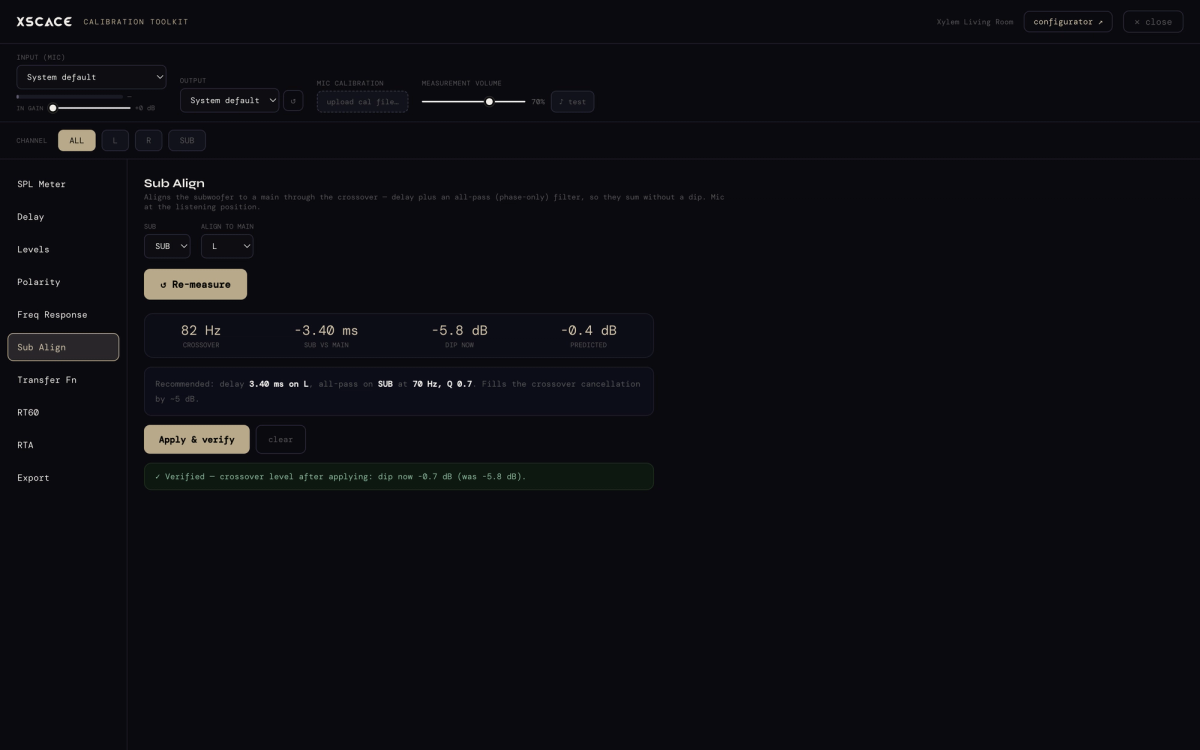
QuadCane runs down to 150Hz and Juniper reaches 25Hz, meeting at the 200Hz crossover both records specify — a number to verify by measurement rather than assume.