Contents6 sections
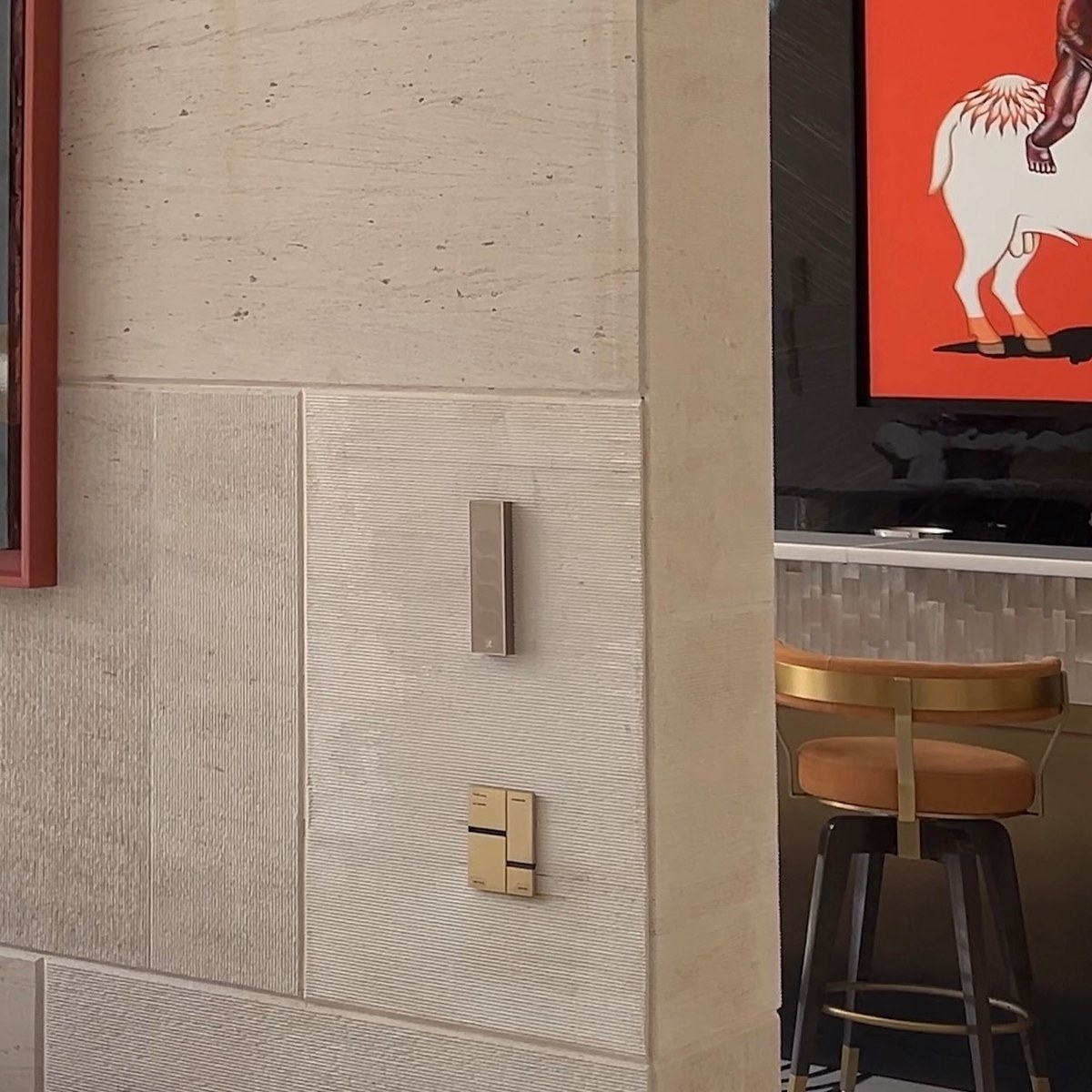
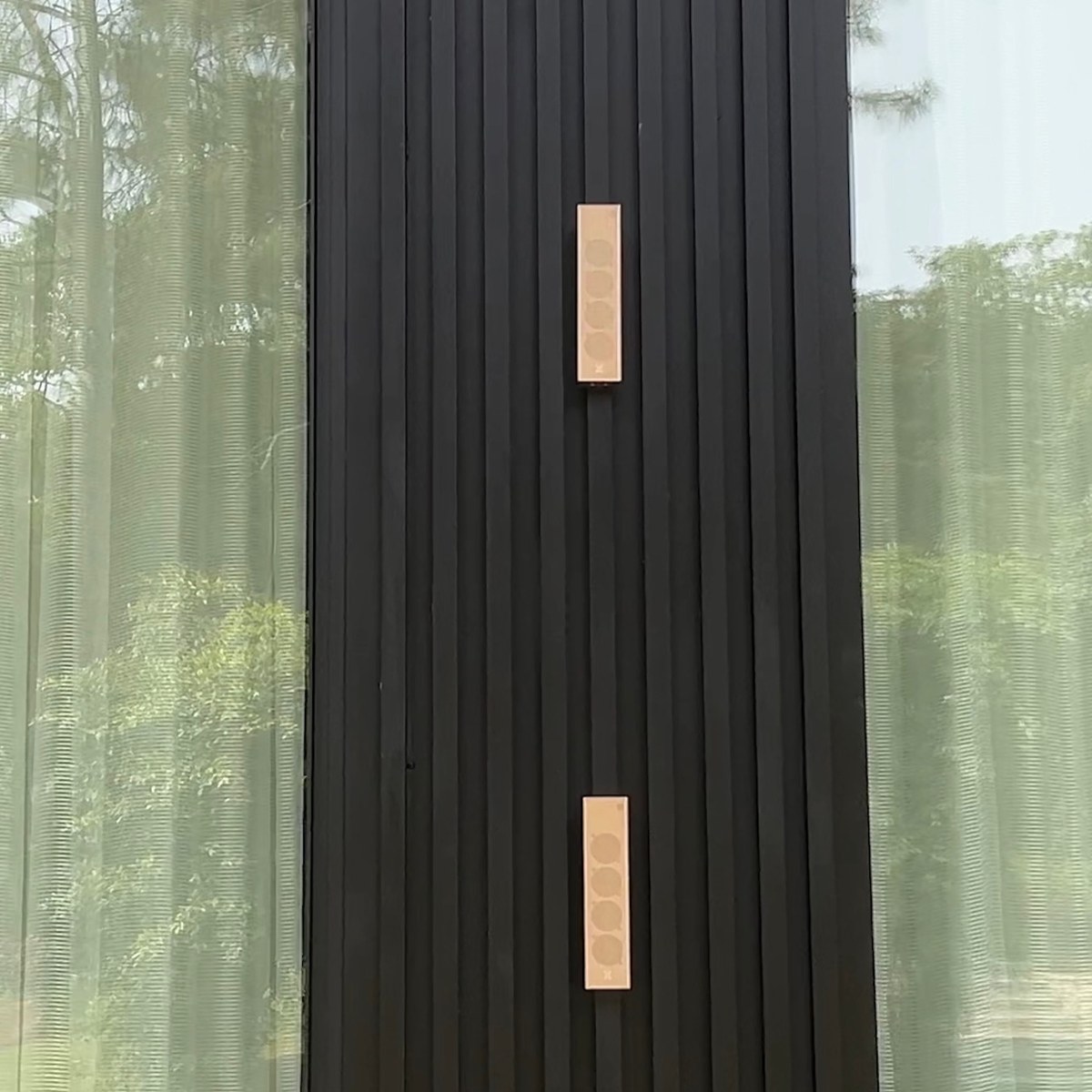
The most varied of this batch of installs, this residential project ran Cane across five distinct surfaces in one home: a painted plaster wall near sheer curtains, black slatted timber cladding on an exterior garden-facing facade with two speakers stacked vertically, beige limestone block, cross-cut travertine wainscoting in a home bar with brass barstools and equestrian artwork, and a ribbed plaster wall above a stone skirting.
Case Study at a Glance
- Property: multi-room residence — bar, facade, interior walls
- Product: Cane (23mm slim-array, IP66)
- Mounting surfaces: travertine, limestone, black timber, painted plaster
- Finish: champagne aluminium throughout
- Goal: one product line, consistent spec, across five different surfaces
The practical case for single-model whole-property specification
Beyond the visual consistency, specifying one speaker model across five different rooms and materials also simplifies the installer's job significantly — one cutout template, one wiring gauge recommendation, one crossover setting, applied repeatedly rather than re-solved per room. For a property this varied, that consistency reduces both install time and the chance of a mismatched configuration between rooms.
One product line, five materials
Running a single speaker model across painted plaster, timber cladding, limestone, travertine, and ribbed plaster in one property is a practical decision as much as an aesthetic one — a consistent product line means consistent sonic character room to room, and a single spec sheet for the installer to work from regardless of which surface they're mounting to.
The home bar as the anchor room
The home bar — travertine wainscoting, brass-and-tan barstools, gold-framed art — is the room where the system likely gets used hardest, and Cane's 92dB sensitivity and 50W RMS give it enough headroom for an entertaining space without distortion at party volume.
The system
An Air Amp drives the interior zones, with an Acacia 10 Powered subwoofer anchoring the bar room's low end, while the exterior facade speakers take advantage of Cane's IP66 rating for the garden-facing black timber cladding zone.
Planned, controlled and calibrated for a room that gets loud
Every XSCACE installation follows the same three stages: planned in the simulator, controlled from the app that matches the hardware, and calibrated with measurement. A bar room runs louder than the rest of the house and usually sits next to somewhere that must stay quiet.
Planned
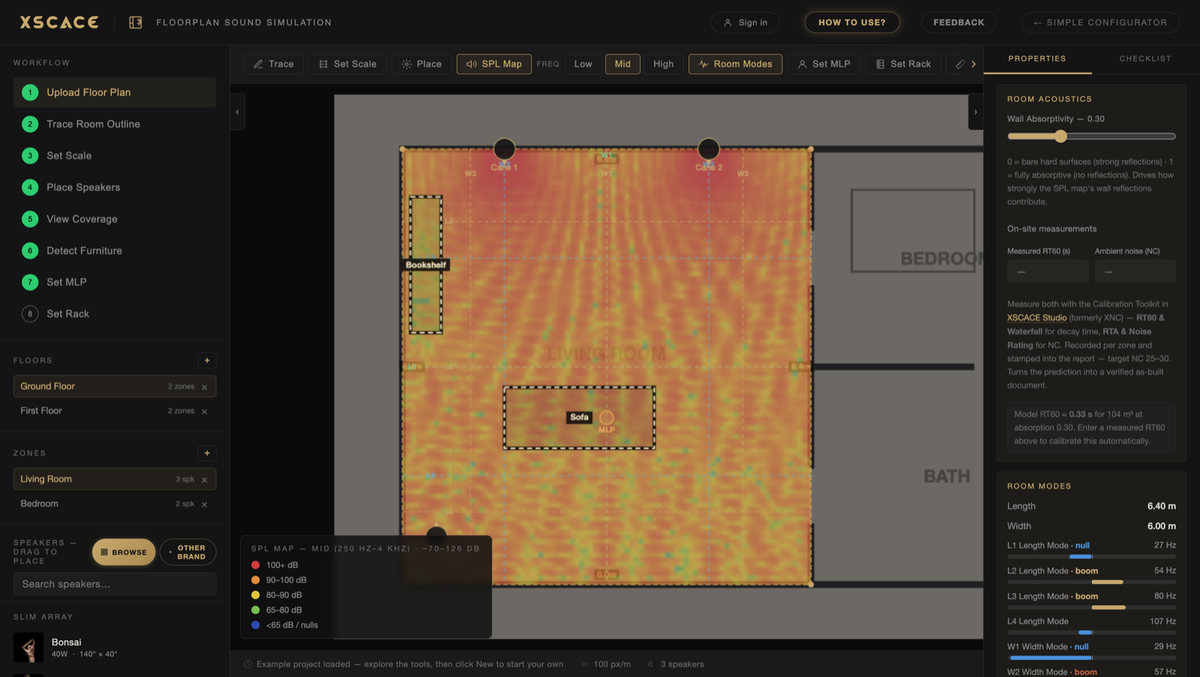
XSCACE Floorplan Sound Simulation takes a plan from trace to bill of quantities in the browser. For a room like this the outputs that matter are:
Coverage across standing positions, not seated ones
Room modes located, so bass is even rather than boomy in one corner
Placement checked against the structure the bass will otherwise excite
Controlled
Day-to-day control is XSCACE Controller on iOS and Android. It handles volume, EQ and grouping, and the streaming amplifiers also appear natively as AirPlay 2 and Spotify Connect targets, so the app is for control rather than for getting audio into the room.
Calibrated
The calibration toolkit inside XSCACE Studio measures what the room actually does — eleven instruments covering SPL, delay, levels, polarity, frequency response, THD, sub alignment, transfer function, RT60, RTA and export, free on macOS. Here the ones that earn their place are:
Sub Align, so the low end integrates instead of dominating
SPL at the positions people actually stand
THD measured as H2+H3 across 30Hz–5kHz, where a system driven hard shows strain
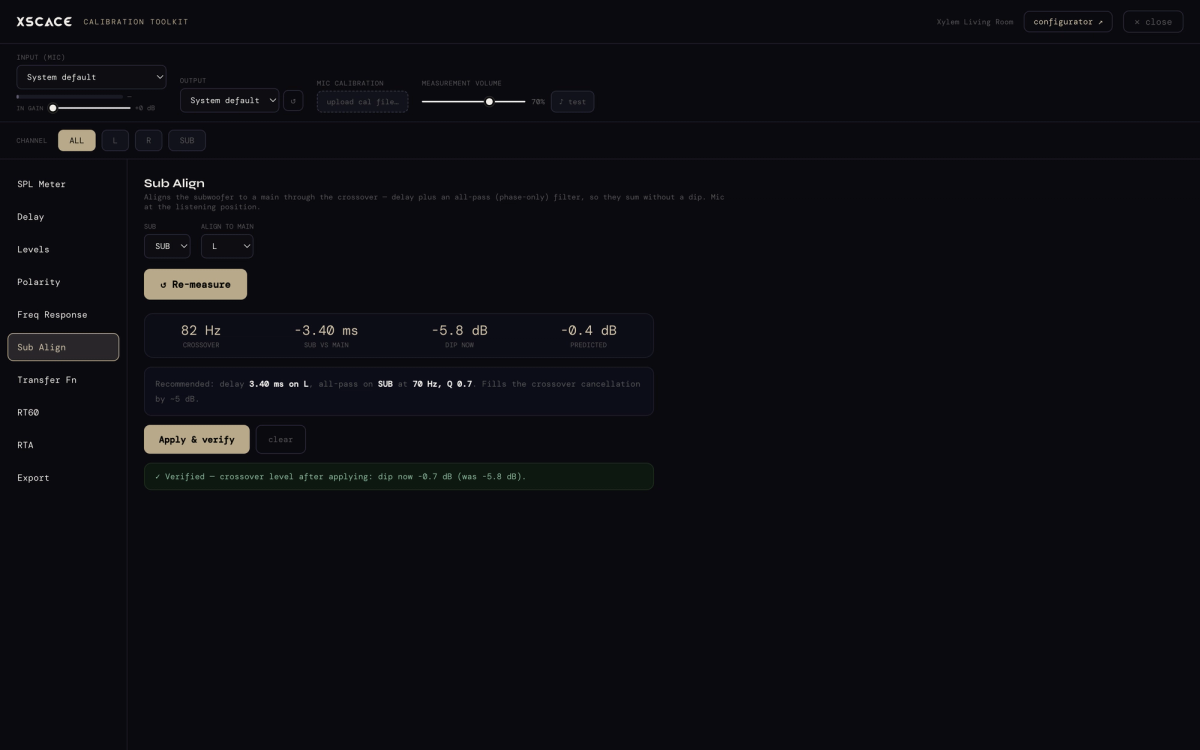
Cane runs down to 150Hz against Acacia 10 Powered's 35Hz, and the two records recommend different crossover points (200Hz and 300Hz). Which suits the room is a measurement, not a preference.