Home cinema design in Dubai
The acoustic geometry is the same everywhere. What changes is the building — and UAE construction changes it more than most. Concrete slabs instead of timber studs, generous ceiling voids that are already full of services, blockwork walls, villa ceiling heights that suit Atmos better than European housing does, and a cooling load that will define the room's noise floor if nobody designs for it.
Six things UAE construction changes
Everything below is a difference from the timber-framed housing most published cinema guidance assumes. Some of it works in your favour.
Concrete slab with a suspended ceiling
Most UAE villas and apartments are reinforced concrete slab with a suspended gypsum ceiling below. That is the opposite problem from timber-frame markets: instead of fighting for depth behind 89 mm of stud, there is often 300 mm or more of void. Deep in-ceiling models that would be impossible elsewhere are straightforward here.
But the void is full of services
That same void carries the ducting, chilled-water pipework, cable trays and sprinkler runs that a hot climate demands. Depth is available; the specific position frequently is not. Speaker positions have to be coordinated with the MEP drawings, not just set from the acoustic geometry, and that coordination belongs at design stage rather than on site.
Blockwork and concrete walls
Internal walls are commonly blockwork or concrete rather than stud partition. Recessing an in-wall speaker means chasing out masonry — possible, noisy, dusty and slow. Slim on-wall arrays that need no cavity at all are very often the practical answer for the front stage and surrounds, particularly in a finished or occupied property.
Villa ceiling heights favour Atmos
Floor-to-ceiling heights of 3 m and above are common in UAE villas, against the 2.4 m typical of much European housing. That sits squarely in the optimal band, giving 40–50° elevation to the height channels and clean separation between the overhead and ear-level layers. Atmos works properly in a space like this rather than being squeezed in.
Cooling, and the noise it makes
A sealed cinema room in this climate needs serious cooling, and cooling makes noise. A room with a 35 dBA noise floor from the air handling has thrown away much of the dynamic range the system was specified for. Duct routing, diffuser selection and acoustic lining matter as much to the result as the speakers, and are far cheaper to get right before the ceiling closes.
Apartment versus villa
A villa can take a dedicated room with a full 7.1.4 layout. A tower apartment usually cannot, and structural walls, neighbour separation and building management approvals all constrain what is possible. Slim on-wall arrays and in-ceiling height channels in a living space typically deliver a better result than trying to force a dedicated room into a floor plan that will not take one.
Coordinate with the services drawings
Because position rather than depth is the binding constraint here, the speaker layout has to be agreed against the MEP drawings before first fix. Trace the room, place the speakers to the geometry, and take the layout and bill of quantities to the coordination meeting.
Who supplies XSCACE in the UAE
Specification and supply across the UAE and wider Middle East, working with local integrators on installation.
IFZA Business Park, Building A1, Nadd Hessa, Dubai Silicon Oasis, Dubai, UAE
+971 50 313 0489 · info@miantic.ae · miantic.ae
See all distributors →
Rooms we have designed
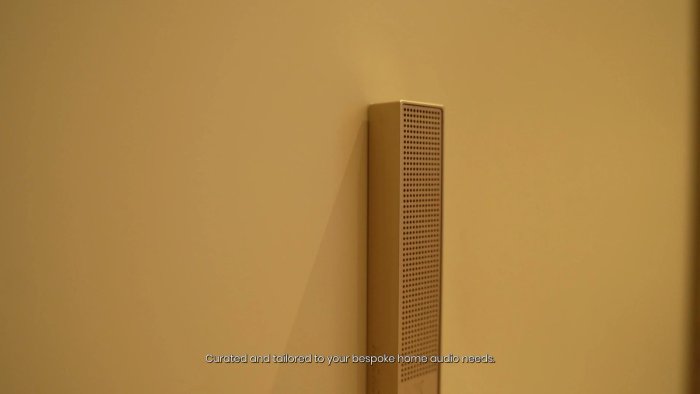
Bonsai Slim Wall Speakers Across an Apartment at Trevoc Royal Residences
Bonsai on the wall panels of the living room, lounge, dining room and bedroom of a residence at Trevoc Royal Residences — 12 mm thin, in the panel's own finish — with the simulation and calibration behind a room like this.

Grand Prix Plaza, Las Vegas — 25 Rooms of F1, Designed in the XSCACE Planner
Formula 1's permanent home in Las Vegas: F1 Hub, F1 X and F1 Drive, twenty-five rooms and 147 speakers designed as one system in the XSCACE Floorplan Sound Simulation — on Sonance, Fulcrum, Martin Audio and Q-SYS hardware; the planner works with any brand. Installation next month. The design, room by room.
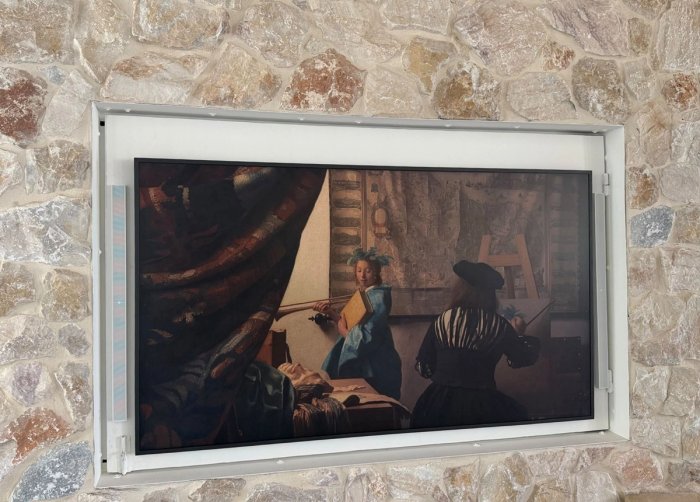
A Stone Fireplace Wall With Nowhere to Put a Speaker
A limestone feature wall with a recessed display, a working fire and no cavity to build into. A pair of 21 mm QuadCane slim arrays mounted in the frame reveal, with nothing cut into the stone.
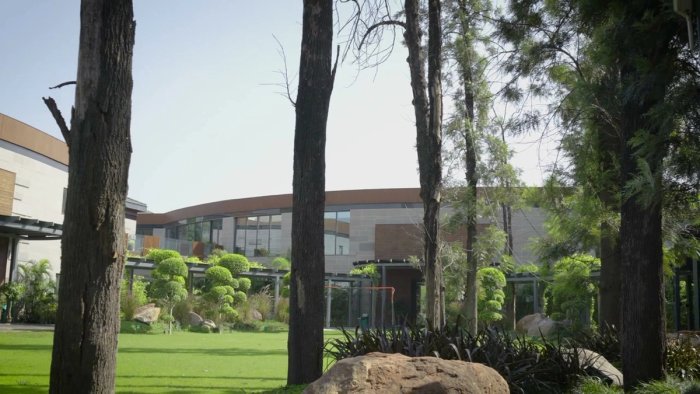
A Whole-Home System Across Nine Zones
Nine zones in one house — a reference cinema in a curved acoustic shell, a living room whose marble could not be cut, a pool terrace built for a crowd — designed in one model before a wall was closed, then measured against it.
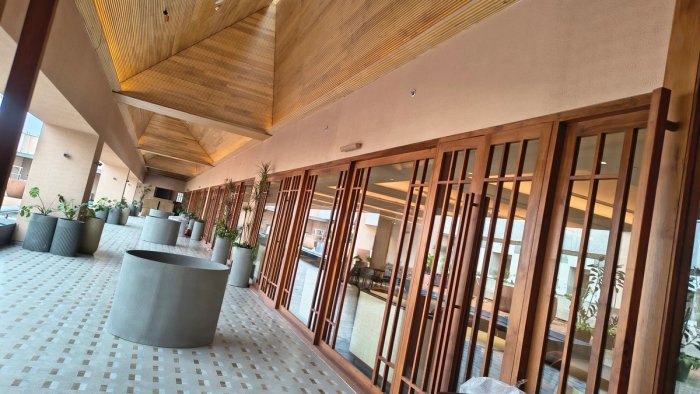
Restaurant Sound System: A Clubhouse in Two Zones
A covered terrace and a dining room behind folding teak doors, one playlist, two zones. Flush in-walls inside, slim arrays outside, and the reasoning behind each choice.
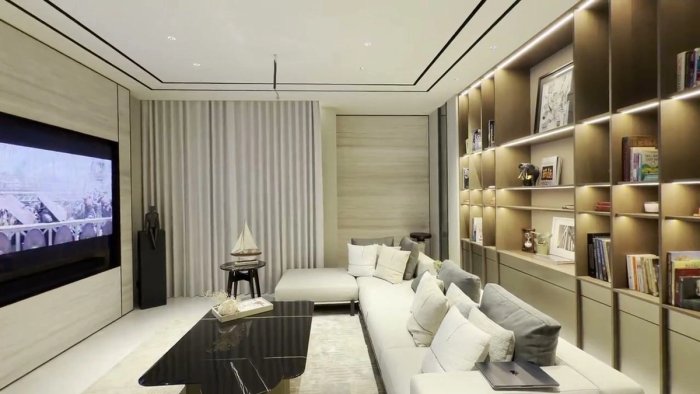
A 5.1.2 Media Room Sound System With a Custom LCR Soundbar
Three channels from a custom bar built to the width of the recess, two Canes in the shelf line, two Ghosts overhead and one powered Acacia 10 — seven channels driven by a seven-channel receiver, with nothing spare.
Common questions
Frequently asked questions6 answers
Does concrete ceiling construction make in-ceiling speakers harder in Dubai?
It generally makes them easier. UAE construction is typically a concrete slab with a suspended gypsum ceiling below, which often leaves 300 mm or more of void — considerably more than the roughly 89 mm a timber stud allows. The real constraint is not depth but congestion, because that void also carries ducting, chilled-water pipework and cable trays. Positions have to be coordinated against the MEP drawings.
Can speakers be recessed into blockwork walls?
Yes, but it means chasing out masonry, which is slow, noisy and dusty, and is rarely welcome in a finished or occupied property. Slim on-wall speakers need no cavity at all and are frequently the better answer in the UAE for the front stage and surrounds, particularly in apartments and completed villas.
What ceiling height do UAE villas usually have, and is it good for Dolby Atmos?
Three metres and above is common, which is well suited to Atmos. It gives the height channels a 40–50° elevation angle from seated ear height, the optimal band, with clear separation between the overhead and ear-level layers. Below 2.3 m the required 30° minimum elevation cannot be achieved at all.
How does air conditioning affect a home cinema in the UAE?
Significantly. A sealed room in this climate needs substantial cooling, and cooling generates noise. If the air handling leaves a 35 dBA noise floor, much of the system dynamic range is lost before anything is played. Duct routing, diffuser selection and acoustic lining should be designed alongside the audio, and are far cheaper to resolve before the ceiling is closed.
Who supplies XSCACE in the UAE?
Miantic AV MENA is the authorised distributor for the UAE and the wider Middle East, based at IFZA Business Park in Dubai Silicon Oasis. They handle specification and supply, and work with local integrators on installation.
What does a home cinema cost in Dubai?
System cost falls into bands — roughly $5K–$15K for a living-room layout, $15K–$40K for a dedicated room, $40K–$100K for a larger installation with separate amplification, and above that for reference builds. Installation labour, any building work and the cooling design are quoted separately, because they depend on the property.
Plan your room
Draw the layout, check the geometry, and take a bill of quantities to your integrator.