Contents7 sections
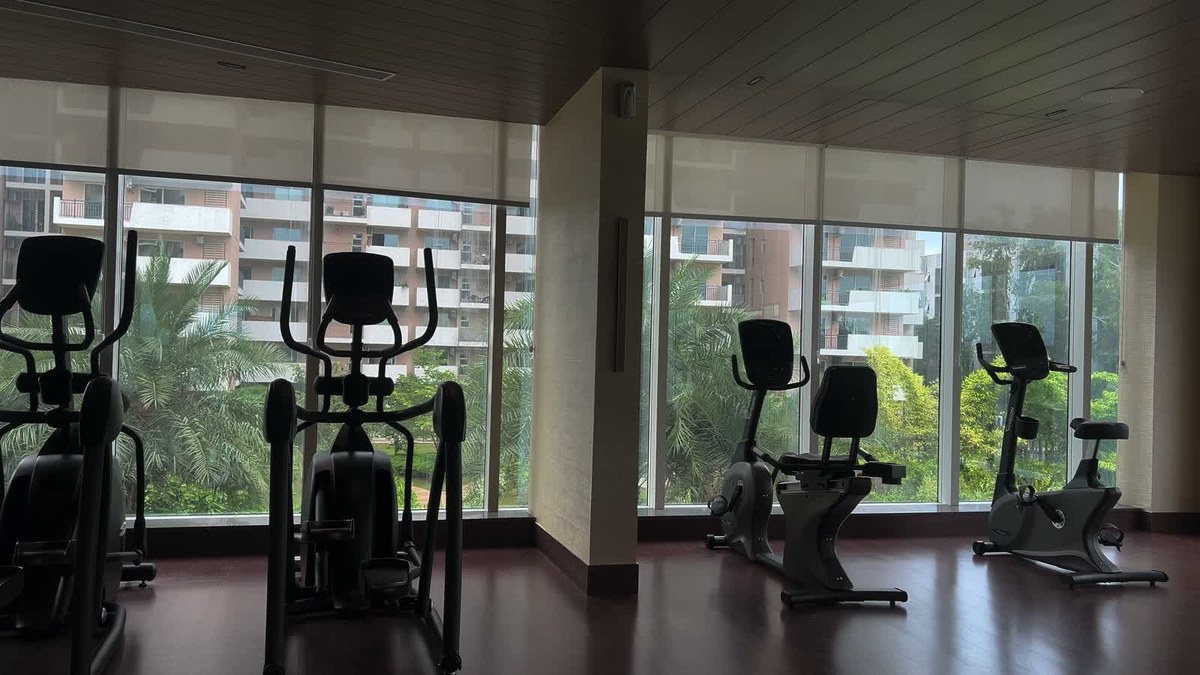
A commercial gym sound system has to solve a problem most residential audio never faces: the room is almost entirely hard surfaces. This clubhouse gym is glazed on three sides, floored in dark timber and ceiled in timber slats, with textured plaster piers between the windows. There is no soft furnishing anywhere in it. Every watt that goes in comes back.
The installed system is four QuadCane slim arrays on the piers, one Xylem 4 DSP amplifier driving them, two Juniper powered subwoofers, and an Air Mini handling streaming. What follows is why each one is there, how they connect, and how a room this reflective gets specified and proven rather than guessed at.
Why a glazed gym is the hard case
Glass, timber and plaster are all acoustically reflective. In a room like this the practical consequences are specific:
Reverberation runs long, so speech and lyrics smear before they reach the far end of the floor
Sound arriving from a single point source at one end drops off sharply — the far corner gets a fraction of the near corner
Turning up the volume to reach the far corner makes the near corner unpleasant rather than louder
Bass builds unevenly, because parallel hard walls reinforce some frequencies and cancel others
The instinct is a bigger speaker. The correct answer is more, smaller sources placed to cover the floor evenly — which is what the piers between the glazing are for.
The system, part by part
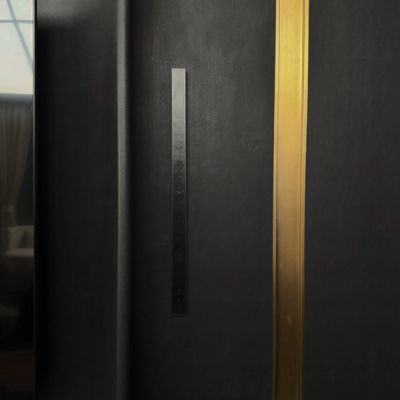
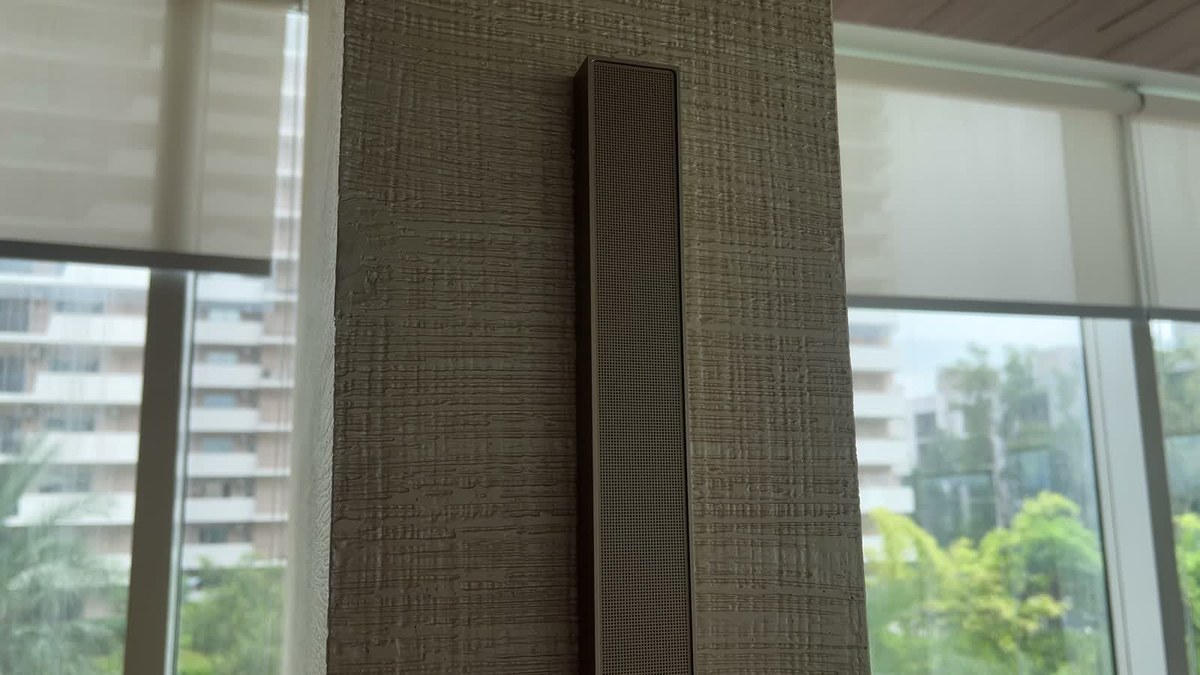
QuadCane is a passive slim array: 16 power-dense custom woofers in a single aerospace-grade aluminium body 763mm tall, 43mm wide and 21mm deep. It handles 100W RMS and 120W peak at 8Ω, with 95dB sensitivity and a 116dB maximum SPL across 150Hz–20kHz. Two figures matter in a gym. The 95dB sensitivity means it produces high output without demanding a large amplifier, and the 21mm depth means it sits on a plaster pier without projecting into a room where people move quickly past it.
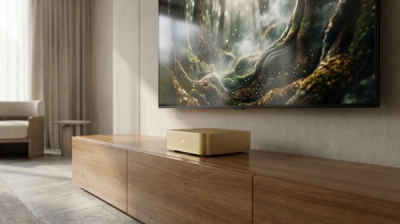
Xylem 4 supplies 4×100W from a CNC-machined aluminium chassis — one channel per QuadCane, matched exactly to the speaker's 100W RMS rating. That one-to-one relationship is the point: each speaker gets its own channel, so each can carry its own delay, level and EQ rather than being paralleled onto a shared output.
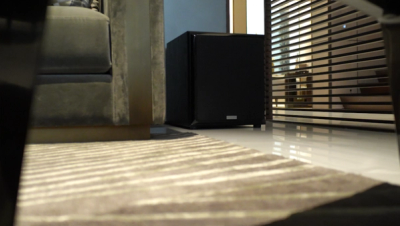
Juniper takes the bottom. It is a powered 12-inch subwoofer reaching 25Hz, with 350W RMS and 500W peak, 92dB sensitivity and a 119dB maximum SPL. Because it is powered it takes a line-level feed rather than a speaker output, so it does not compete with the Xylem for amplifier channels. Its low-pass crossover and QuadCane's 150Hz low corner meet cleanly at the 200Hz crossover point both products specify.
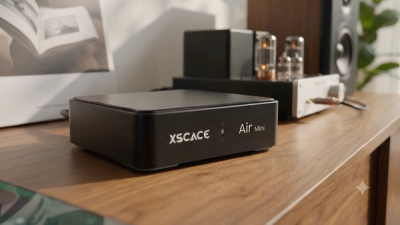
Air Mini is the source. It is a pure streaming preamp with no internal amplifier — AirPlay 2, Bluetooth 5.0 with aptX-HD and Spotify Connect in a 130×130×28mm aluminium body. In a shared facility that matters more than it sounds: staff change the music from a phone without touching a rack, and there is no laptop to be left connected.
How the four parts connect
The chain is short, and each link exists because of what the previous box does not do:
Air Mini → Xylem 4, line level. Air Mini is a preamp with no amplifier of its own, so it hands a line-level signal to the Xylem rather than driving anything directly.
Xylem 4 → 2 × Juniper, line level out. Because Juniper is powered, it takes a line feed and brings its own amplification — so the subwoofers cost the Xylem no amplifier channels.
Xylem 4 → 4 × QuadCane, speaker level out. Four channels, four speakers, one channel each at 100W — matched exactly to QuadCane's 100W RMS rating.
That last line is the reason the system is built this way. With one channel per speaker, each QuadCane carries its own delay, level and EQ, so the four can be aligned to the room instead of paralleled onto a shared output and left to average out.
Two subwoofers rather than one is a coverage decision, not a loudness one. A single sub in a rectangular hard-walled room excites the room modes from one position; two, placed apart, even out the bass across the floor rather than making one corner boom.
Who controls what
Control splits by hardware, and it is worth being precise about which app does which job. XSCACE Controller on iOS and Android is the day-to-day control for the Air Mini — volume, EQ and grouping from a phone, with no laptop involved and nothing for gym staff to learn. XSCACE Studio on macOS is where the Xylem 4 is configured: routing matrix, per-channel gain and delay, parametric EQ, crossovers and limiting. Studio is also where the calibration happens, which is the next section.
Proving the layout before anything is ordered
A room with no soft surfaces is exactly the room you should not specify by eye. XSCACE Floorplan Sound Simulation runs in the browser and takes a plan from trace to bill of quantities in one pass. For a gym like this the relevant outputs are:
SPL coverage predicted per zone, so the far corner is proven before anything is ordered rather than discovered afterwards
Room modes flagged on the plan — the uneven bass that parallel hard walls cause, located rather than guessed
First-reflection points marked, which in a fully glazed room is most of the perimeter
An automatic bill of quantities, and a client-ready PDF for the committee that signs it off
QuadCane's published guidance is coverage up to 30 × 30 ft per unit in open-plan and commercial spaces; Juniper's is up to 40 × 40 ft. Those are starting points for a layout, not a substitute for predicting the actual room — which is the entire reason the simulator exists.
Verifying it once it is on the wall
Prediction is half the job. The calibration toolkit inside XSCACE Studio measures what the room actually does, and it is free on macOS. Eleven instruments cover SPL, delay, levels, polarity, frequency response, THD, sub alignment, transfer function, RT60, RTA and export. In a reflective gym four of them carry most of the weight:
RT60, aligned to ISO 3382, measures how long sound actually hangs in the room — the number that tells you whether the space needs treatment as well as speakers
RTA's noise rating scores background noise from NC-15 to NC-65, which in a gym full of running machines sets the floor the system has to clear
Sub Align integrates the Juniper against the QuadCanes deterministically, then re-measures to verify the correction did what it claimed
Delay and polarity come from one sweep per channel, and the delay figures agree with REW to 0.01ms
The session exports as a PDF report. On a shared amenity that document is the difference between telling a client the system was tuned and showing them. Impulse responses also export to WAV for REW or Smaart if the acoustician wants to work in their own tools.
What a specifier should take from this
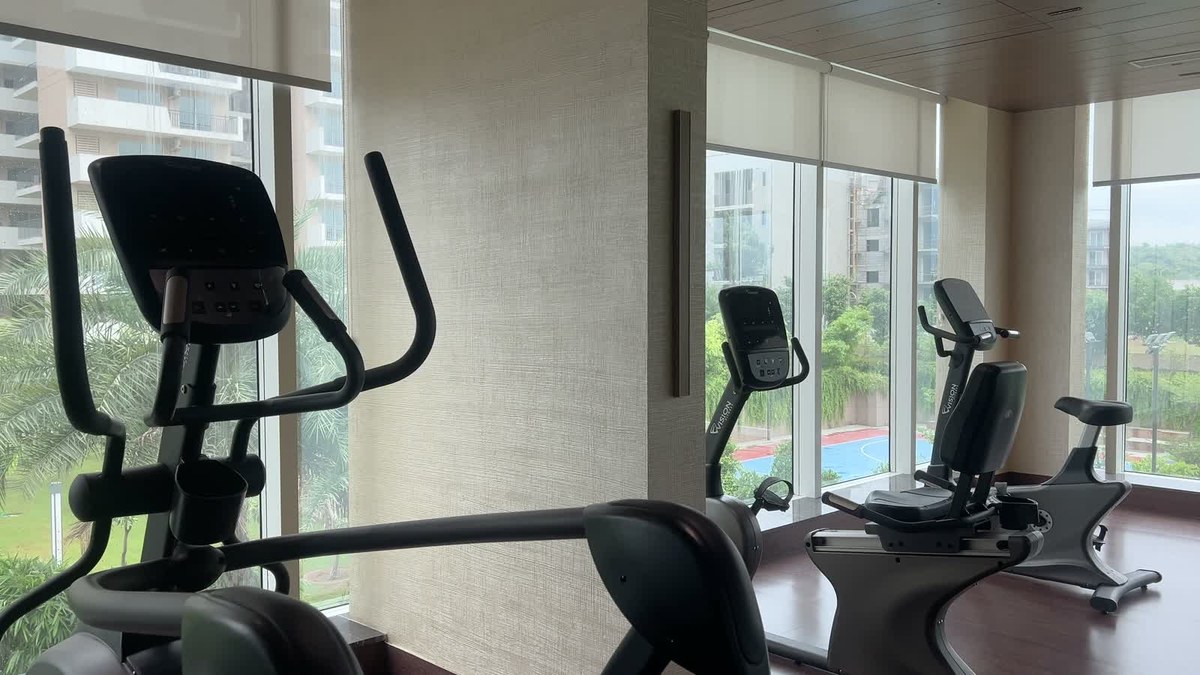
The design principle in a hard, glazed, high-activity room is distribution rather than power. Several slim sources on the structure, each on its own amplifier channel, cover a floor more evenly than one loud pair at the end — and a 21mm-deep speaker on a pier survives a room where people move fast and equipment gets dragged.
The rest is method. Predict the coverage on the plan, order against the bill of quantities that falls out of it, then measure the finished room and keep the report. In a commercial or shared facility, the report is what turns a subjective complaint into a specific, fixable number.
The signal chain used here — source to amplifier at line level, powered subwoofers on the line output, passive speakers on the speaker output — is the same one every XSCACE system uses, set out in the installation workflow. The billiards room in the same development shows the same method at a smaller scale, with Cane rather than QuadCane.
The same development also has a cafe covered by a distributed in-ceiling grid, book cafe covered by the smallest speaker in the range — four rooms, four acoustics, one method.