Contents5 sections
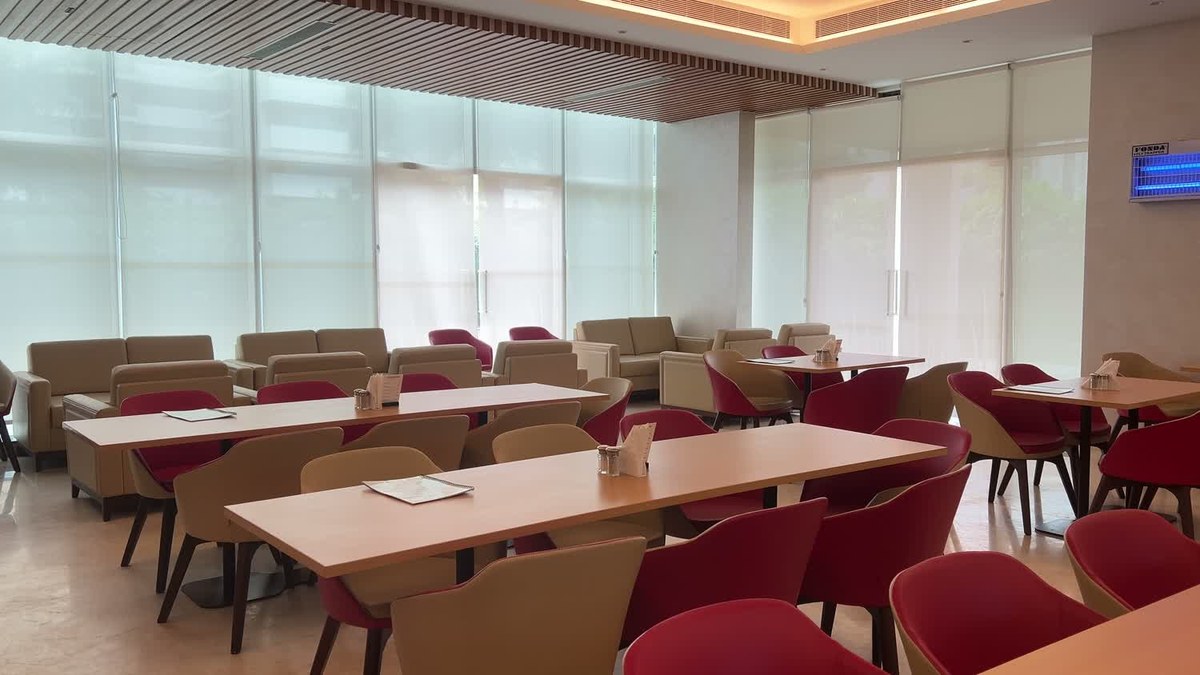
A cafe sound system is judged on one thing above all: whether the table by the window hears what the table by the counter hears. Not peak volume, not bass — consistency. This clubhouse café is glazed down one side, floored in stone and ceiled in plasterboard with timber slats at the perimeter, and it seats perhaps sixty people across banquettes, loose tables and a lounge run.
It is covered by Aspen 8 in-ceiling speakers on a distributed grid, painted to match the ceiling so they disappear into it entirely, driven by a Root 4 DSP amplifier.
Why a cafe sound system is a coverage problem, not a loudness problem
Every diner is a listening position, and they are spread across the whole floor rather than sitting in front of anything. That inverts the usual domestic brief:
There is no reference seat to aim at — coverage has to be even across the entire plan
Music sits underneath conversation, so intelligibility of speech at the next chair matters more than impact
Surfaces are hard — stone floor, glazing, timber — so reverberation builds and smears whatever is playing
A single loud pair at one end makes the near tables uncomfortable long before the far ones are served
What Aspen brings to it
Aspen 8 is an 8" in-ceiling speaker handling 120W RMS at 8Ω, with 89dB sensitivity, a 111dB maximum SPL and a response of 40Hz–22kHz. Published coverage guidance is Up to 25 × 25 ft — living rooms, open-plan kitchens, lounges.
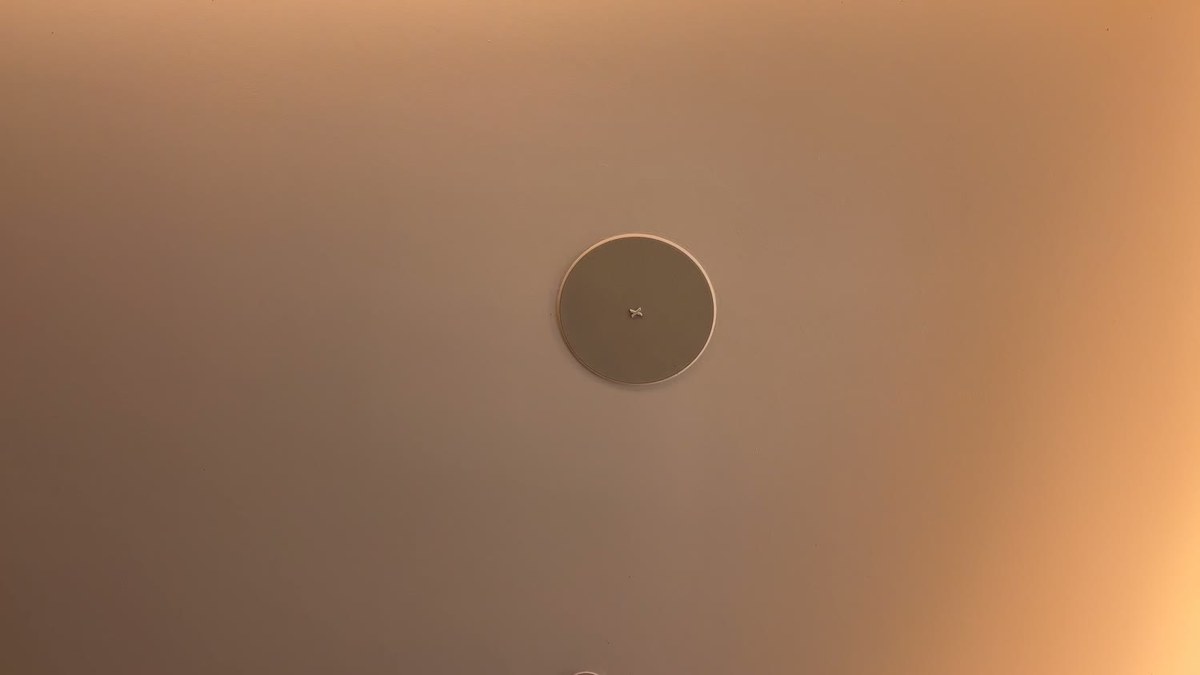
Two things make it right for this room. The 40Hz low corner means the café gets real warmth from the ceiling without a subwoofer in the void — one fewer service to coordinate above a finished plasterboard soffit. And the grille is paintable, which is why the speakers in the footage read as ceiling rather than as equipment: they were finished in the ceiling colour, so the only thing giving them away is the XSCACE mark at the centre.
Coverage guidance of Up to 25 × 25 ft per unit is what sets the spacing of the grid. It is a starting point for a layout, not a substitute for predicting the actual room — which is exactly what the next section is for.
The amplifier
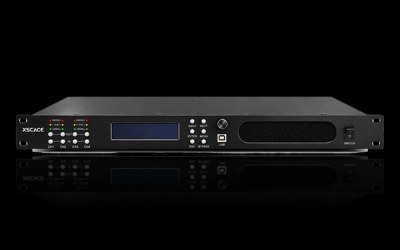
Root 4 is a 4-channel matrix DSP amplifier delivering 250W per channel at 8Ω — 1000W in total — with 48-bit DSP and twenty preset configurations. That is deliberately more power than Aspen 8's 120W RMS rating asks for. The headroom is the point: a café system spends its life at low level and needs to stay clean on the occasional busy evening, and it is the amplifier's limiting that protects the driver rather than a small amplifier running out of road.
The matrix matters as much as the wattage. Four channels means the room can be split into zones — the banquette run, the loose tables, the lounge end — each with its own level and EQ, rather than one volume for a room whose far end is glazed and whose near end is not.
How this café was planned, controlled and calibrated
Every XSCACE installation follows the same three stages: planned in the simulator, controlled from the app that matches the hardware, and calibrated with measurement. A commercial room is judged on consistency — the table by the window should hear what the table by the counter hears.
Planned
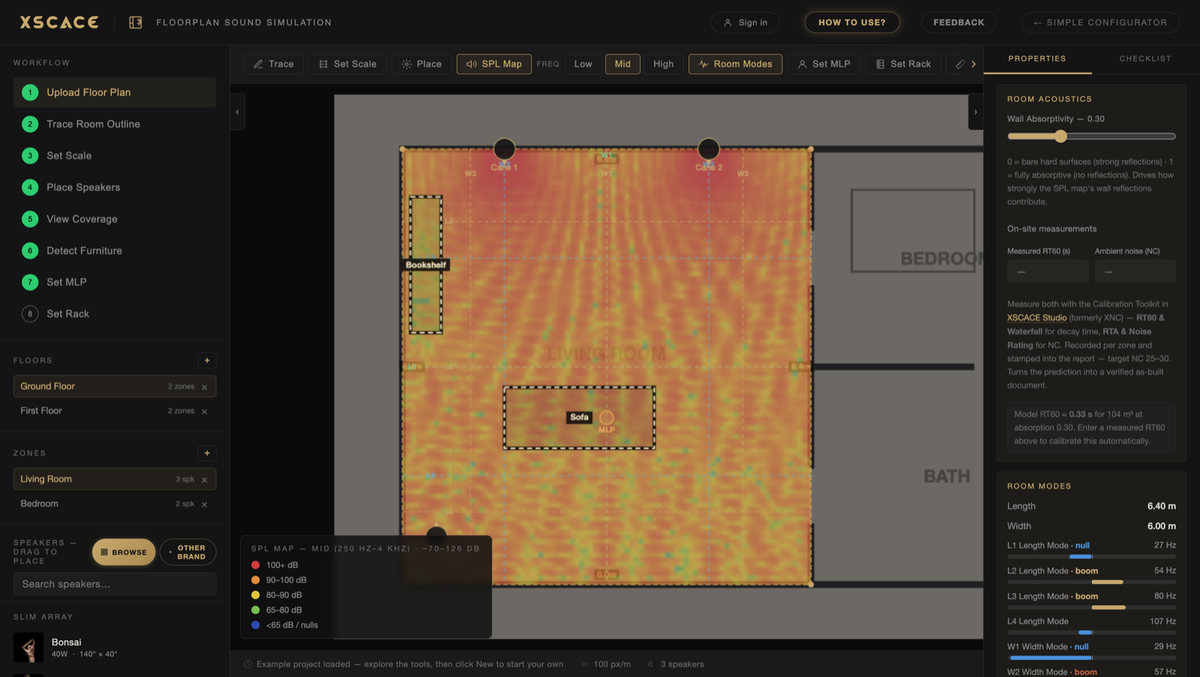
XSCACE Floorplan Sound Simulation takes a plan from trace to bill of quantities in the browser. For a room like this the outputs that matter are:
Coverage checked table by table, so no seat is the bad seat
Grid spacing set from the predicted overlap rather than from a rule of thumb
A bill of quantities the operator can price against, and a drawing the committee can sign off
Controlled
Root 4 is configured and controlled from XSCACE Studio on macOS — the routing matrix, per-channel gain and delay, parametric EQ, crossovers and limiting all live there, with network-wide discovery rather than one amplifier at a time. The two signal chains, and why a powered subwoofer takes a line feed rather than an amplifier channel, are set out in the installation workflow.
Calibrated
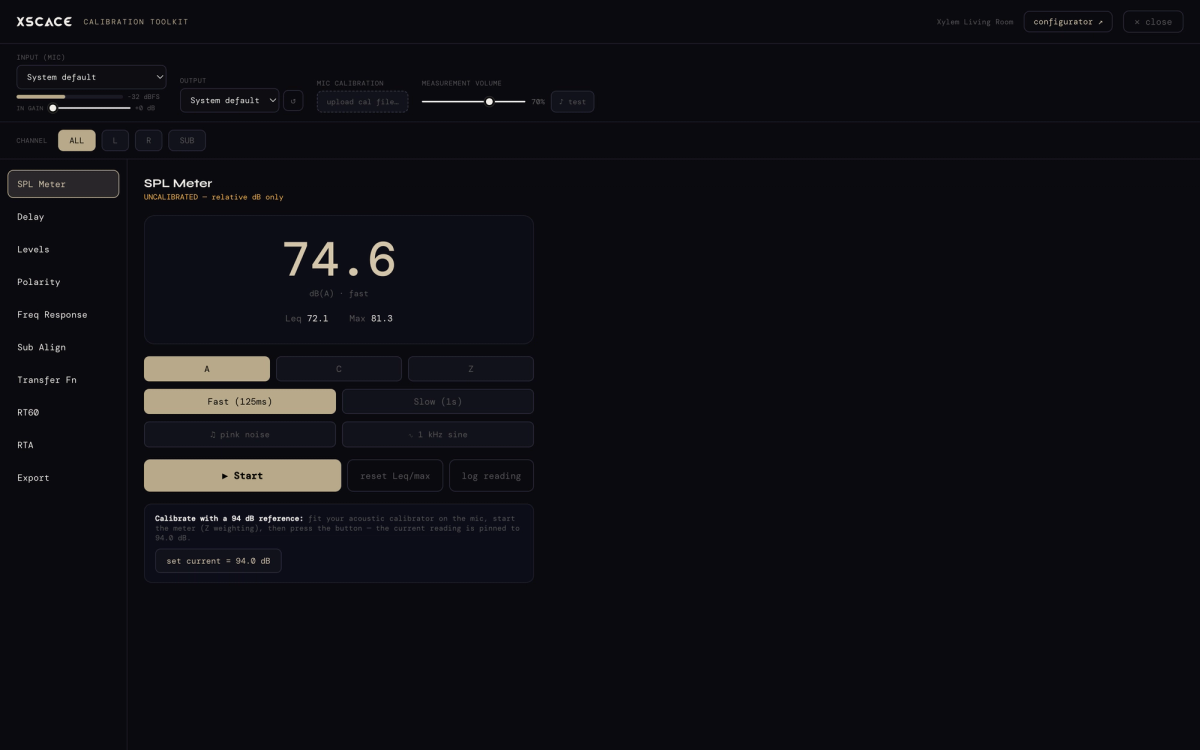
The calibration toolkit inside XSCACE Studio measures what the room actually does — eleven instruments covering SPL, delay, levels, polarity, frequency response, THD, sub alignment, transfer function, RT60, RTA and export, free on macOS. Here the ones that earn their place are:
RTA noise rating, NC-15 to NC-65, which sets the level the system must clear once the room is full of people and cutlery
SPL measured at each zone against the design target
RT60 to ISO 3382, telling you whether stone and glass need treating as well as covering
Aspen 8 publishes 89dB sensitivity and a 111dB maximum SPL — the figures a coverage prediction works from, and the ones a measurement should confirm once the room is finished and full.
What a specifier should take from this
In hospitality the speaker that wins is usually the one nobody notices. A paintable in-ceiling grille finished in the ceiling colour does that better than any bracket or box, and a distributed grid does it acoustically — no table sits under a hotspot, and nobody has to raise their voice at the far end.
This café sits in the same development as the clubhouse gym and the billiards room. Three very different rooms, one method: predict the coverage on the plan, order against the bill of quantities that falls out of it, then measure the finished room and keep the report.