Contents7 sections
In-ceiling speakers have five real disadvantages: sound arrives from above rather than in front of you, they cannot be moved once installed, they need a subwoofer for genuine bass, they can leak sound into the room above, and installation is destructive and hard to reverse.
Each of those is a design constraint rather than a fault, and each has a specific engineering answer. Below is what actually goes wrong, why, and what to do about it — including the cases where a ceiling speaker is the wrong choice and something else should be specified instead. If you are weighing the format as a whole rather than troubleshooting it, start with whether ceiling mounted speakers are worth it.
1. Sound comes from above, so stereo imaging is weak
This is the disadvantage that matters most and the one that cannot be engineered away. A speaker in the ceiling radiates downward, so the sound arrives above ear level rather than in front of the listener. For background music across a room that is fine, and often better than a stereo pair. For critical listening — where you want an instrument to appear in a specific place between two speakers — it is a genuine compromise.
The partial answer is an angled or pivoting driver aimed at the seating position, which recovers some directness. A full answer is not to use ceiling speakers as the left and right channels of a music system at all. Use them for distributed audio, surround channels, and Dolby Atmos height channels, where overhead arrival is the point rather than the problem.
2. They are permanent, so placement mistakes are expensive
Once a hole is cut, the speaker's position is fixed for the life of the ceiling. Moving it by half a metre means patching, skimming and repainting. That makes ceiling speakers the format least tolerant of a layout guess.
This is the disadvantage most easily removed, and it is removed before installation rather than after. Predicting SPL coverage on the floor plan first — which ', ['XSCACE Floorplan Sound Simulation', FP], ' does free in a browser — turns placement from an opinion into a drawing. A coverage map costs nothing; a re-cut ceiling costs a trade and a redecoration.
3. Bass is limited by physics, not by price
A ceiling speaker has no cabinet of its own — the ceiling void is its enclosure, and that volume is uncontrolled. Low-frequency output is limited by driver area and excursion, so smaller in-ceiling models roll off well above the bottom of the audible range.
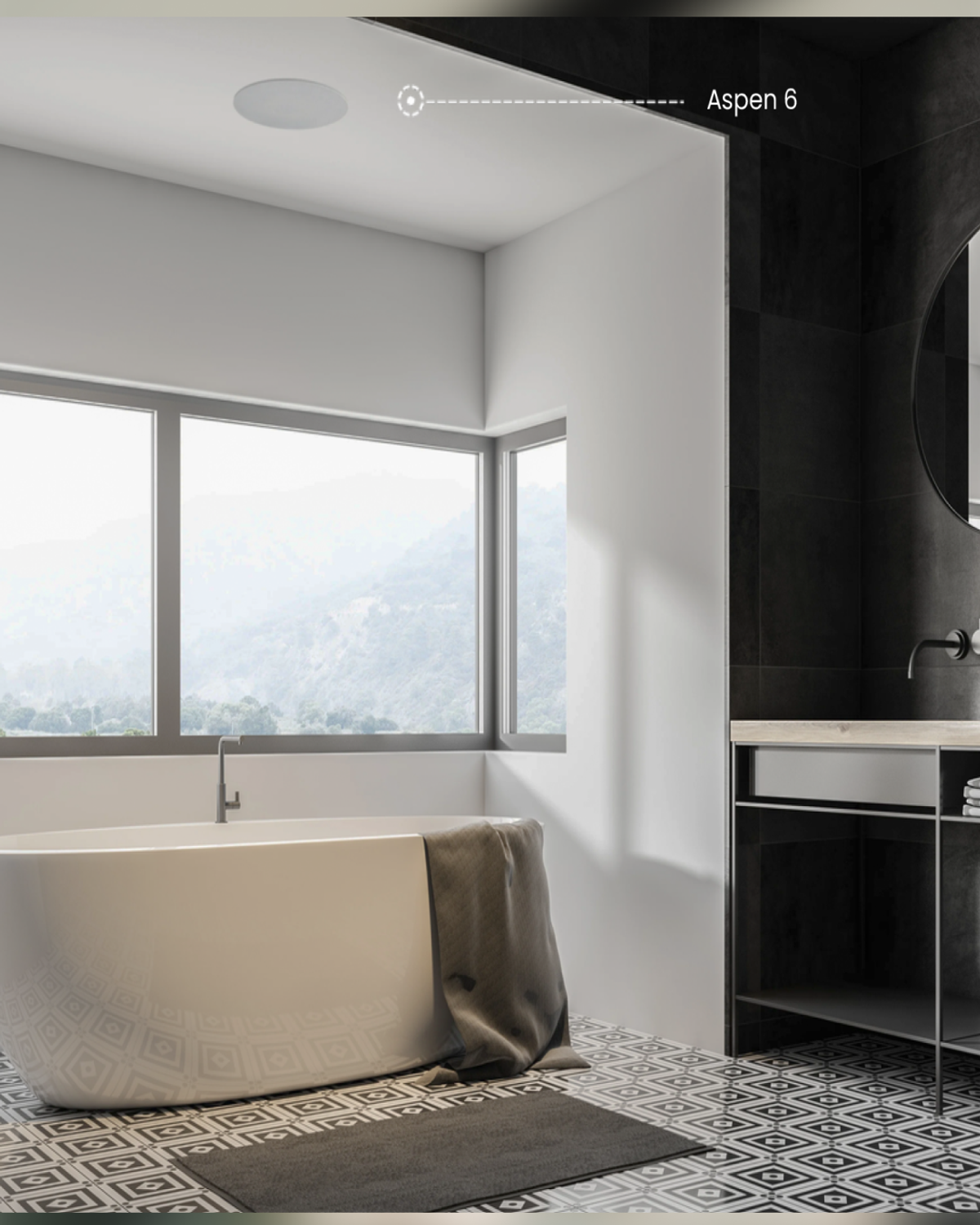
The published figures make the trade-off concrete. Aspen 6 reaches 50Hz with a 6" driver, Aspen 8 reaches 40Hz with an 8", and Aster 6 LCR reaches 35Hz. Anything below that comes from a subwoofer — Acacia 6 Powered covers 35Hz–300Hz, for example.
So the honest position is: a ceiling speaker on its own will not give you deep bass, and a specification that claims otherwise is quoting a frequency without its tolerance. Budget for a subwoofer, or accept the roll-off deliberately.
| Model | Low-frequency limit | Cavity depth needed |
|---|---|---|
| Bonsai In-Ceiling / In-Wall | 300 Hz (–6 dB) | 25 mm |
| QuadCane In-Ceiling / In-Wall | 150 Hz (±3 dB) | 32 mm |
| Cane In-Ceiling / In-Wall | 150 Hz (±3 dB) | 35 mm |
| Aspen 6 | 50 Hz (±3 dB) | 115 mm |
| Aspen 8 | 40 Hz (±3 dB) | 130 mm |
| Aster 6 LCR | 35 Hz (±3 dB) | 155 mm |
| Ghost 2.0 | 80 Hz (–3 dB) | 200 mm |
4. Sound leaks into the room above
Because the ceiling void is the enclosure, roughly half the speaker's output radiates upward into that void — and from there into the room above. In a single-storey space that is irrelevant. Below a bedroom it is the complaint you will hear about.
The fix is a back-box or an enclosed cavity behind the speaker, which contains the rear radiation and also makes the low-frequency response predictable instead of dependent on joist spacing. If the room above matters, specify the back-box at the same time as the speaker, not after the first complaint.
5. Installation is destructive and constrained by structure
Fitting a ceiling speaker means a circular cut, a cable run and enough clear depth above the plasterboard. Where the ceiling is concrete rather than a suspended void — common in apartment construction across India and much of the Gulf — a true in-ceiling fitting may be impossible without dropping a false ceiling first.
Two consequences follow. Retrofits cost far more than first-fix installations, because the cable route is the expensive part rather than the speaker. And in a concrete-slab building the right answer is often an on-wall slim speaker instead — which is a specification decision that should be made from the drawings, not discovered on site.
When a ceiling speaker is the wrong choice
Stated plainly, because the answer is not always yes:
For the main left and right channels of a serious music system — use ear-level speakers
Where the ceiling is a structural concrete slab with no void and no false ceiling planned
Where a bedroom sits directly above and no back-box is being fitted
In a room where the listening position is fixed and imaging matters, such as a two-seat cinema front stage
Where the brief needs deep bass without space for a subwoofer
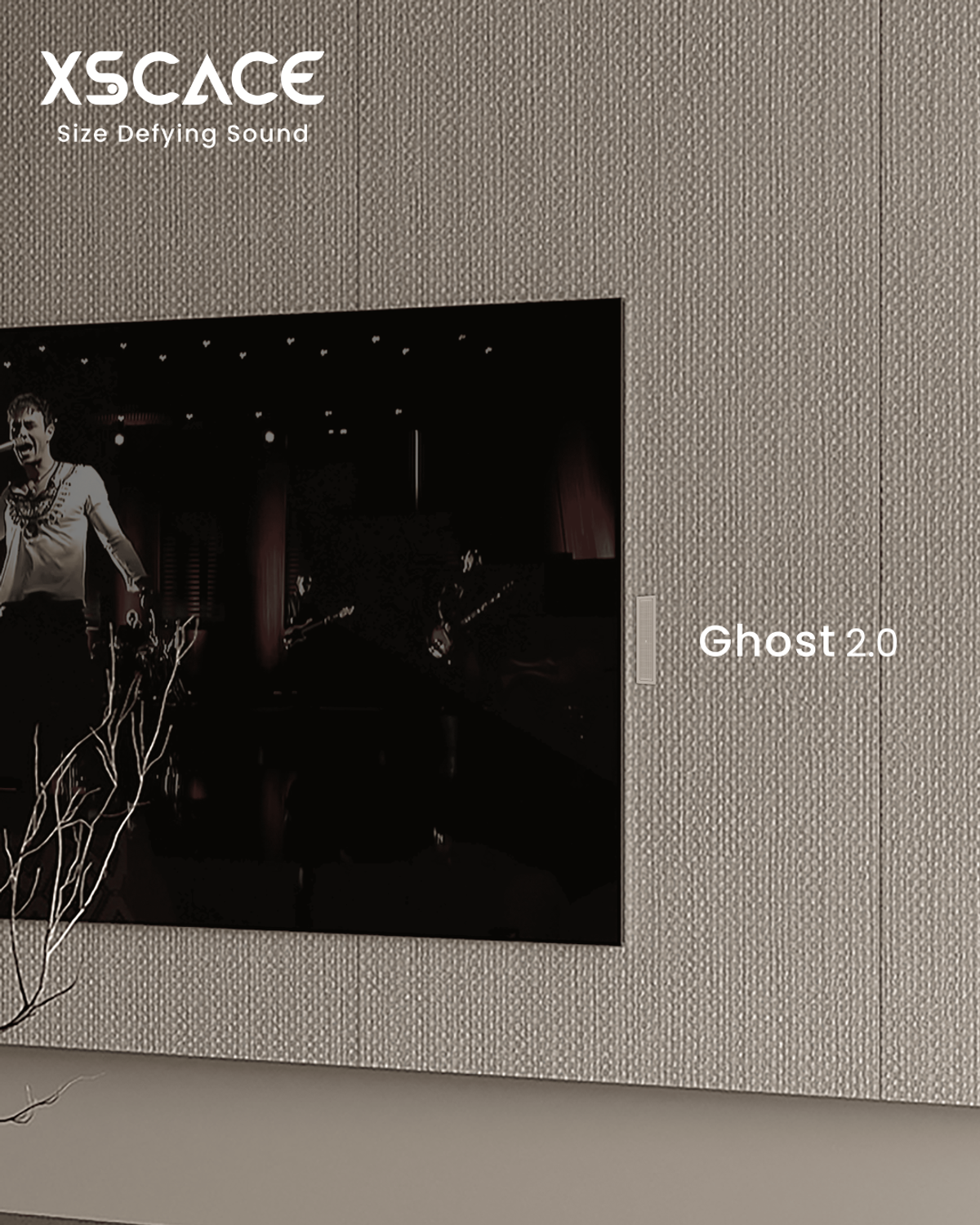
A visible grille is the disadvantage most often raised, and there are two ways around it: hidden and concealed speakers versus ultra-slim architectural ones.
Where in-ceiling speakers are the right answer
Distributed audio across kitchens, corridors, dining rooms and open-plan spaces, where even coverage matters more than imaging. Dolby Atmos height channels, where overhead arrival is the intended effect. And any room where the design brief will not tolerate a visible box — a paintable grille finished in the ceiling colour is the least visible way to put sound in a room.
The full comparison with the in-wall format is in in-wall vs in-ceiling speakers, and the method for proving a layout before cutting anything is set out in the installation workflow.