Contents6 sections
Most in-ceiling speakers are passive: they have no mains connection and no internal amplifier. They receive an already-amplified signal over two-core speaker cable from an amplifier elsewhere in the building. Powered models are the exception and need either a mains socket or a line-level feed.
That distinction decides the whole design of the system — how many amplifier channels you need, what cable goes in the ceiling, and whether a socket has to be provided above a finished plasterboard soffit. Below is how each type is wired, and how to size the amplifier.
Passive in-ceiling speakers: power arrives as an amplified signal
A passive speaker has two terminals and nothing else. The amplifier does the work, and the speaker cable carries the amplified output — signal and power in the same two conductors. There is no mains supply at the speaker and nothing to switch on.
Almost every architectural in-ceiling speaker is passive, including Aspen 6 at 100W RMS and 8Ω, Aspen 8 at 120W and 8Ω, and Ghost 2.0. What they require is one amplifier channel each, not a socket.
Powered speakers and subwoofers: these do need mains
A powered — or active — unit contains its own amplifier, so it needs a permanent mains supply and takes a low-level signal rather than an amplified one. Subwoofers are the common case: Acacia 6 Powered carries a 200W built-in amplifier and accepts a line input.
The practical consequence is a coordination item, not an audio one. A powered unit above a ceiling needs a socket provided there before the ceiling closes. That is an electrician's job scheduled against the ceiling contractor, and it is the single most commonly missed step in a first-fix.
What actually feeds the amplifier
Working backwards from the speaker, a complete chain has three stages:
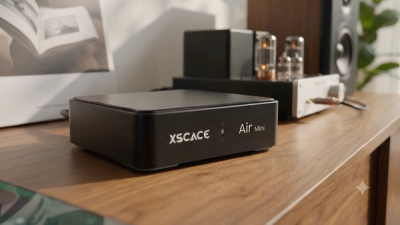
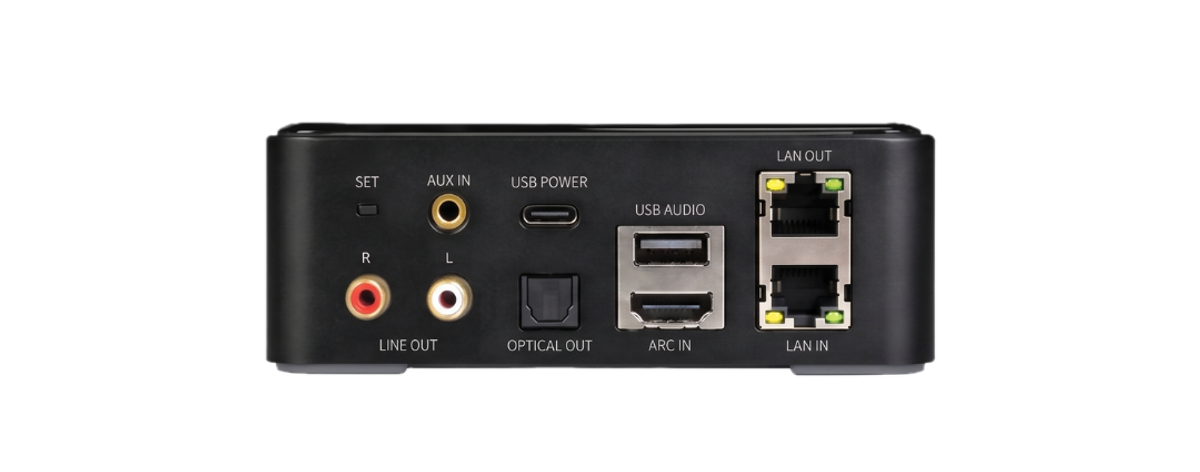
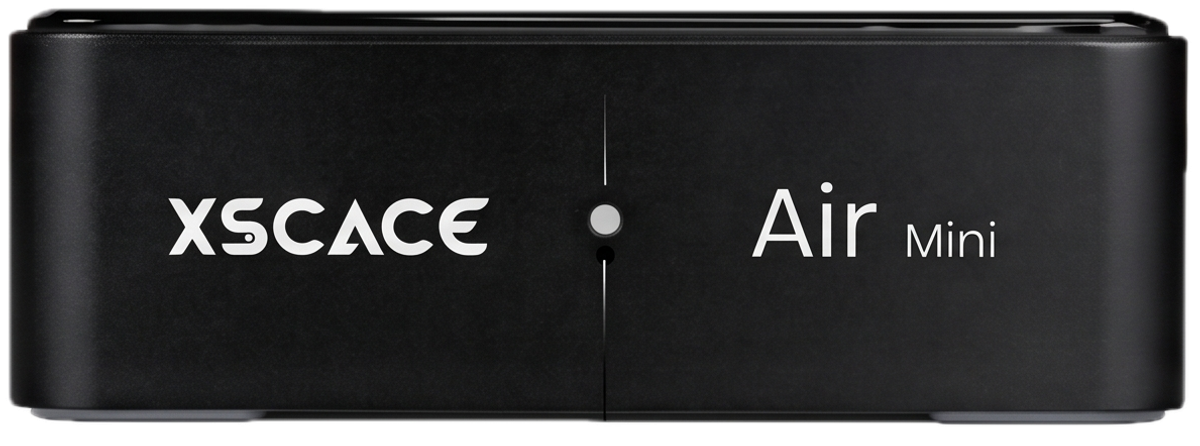
A source at line level. Air Mini is a streaming preamp with no internal amplifier — it handles AirPlay 2, Bluetooth and Spotify Connect and hands a line-level signal onward.
A DSP amplifier that drives the passive speakers. Xylem 4 supplies 400W across 4 channels, or 100W each.
Powered subwoofers taking a line-level output from that amplifier, so they consume no amplifier channels.
For a small room with passive speakers and no subwoofer, Air Amp amplifies directly and removes a box from the chain. The full explanation of both wiring paths is in the installation workflow.
How to size the amplifier to the speaker
Match the amplifier's per-channel output to the speaker's RMS rating, and give each speaker its own channel where you can. One channel per speaker lets each carry its own level, delay and EQ, so the room can be corrected rather than averaged.
| Speaker | RMS power | Impedance | Amplifier channel that suits it |
|---|---|---|---|
| Aspen 6 | 100 W | 8 Ω | Xylem 4 at 100 W per channel |
| Aspen 8 | 120 W | 8 Ω | Xylem 4, or Root 4 at 250 W with headroom |
| Aster 6 LCR | 150 W | 8 Ω | Root 4 or Lucifer 4 at 250 W |
| Ghost 2.0 | 80 W | 4 Ω | Check the amplifier is rated into 4 Ω before specifying |
| Cane | 50 W | 8 Ω | Air Amp at 80 W, or one Xylem channel |
| QuadCane | 100 W | 8 Ω | Xylem 4 at 100 W per channel |
The impedance column is the one that catches people out. Most of the range is 8 Ω, but Ghost 2.0 and Oak are 4 Ω, and an amplifier chosen on wattage alone can be wrong for them — a 4 Ω load draws roughly twice the current an 8 Ω load does at the same voltage. Confirm the amplifier is rated into 4 Ω before it is ordered, not after it is racked.
Channel count follows from this directly. Six passive ceiling speakers in three zones need six amplifier channels, not three — one per speaker — which is why sensitivity matters commercially as well as acoustically. A 95 dB speaker reaches a given level on roughly a quarter of the power an 86 dB speaker needs, and that difference is often what decides whether a job takes one amplifier or two.
Headroom above the speaker's rating is not a fault. An amplifier comfortably larger than the speaker spends its life well inside its limits and stays clean, and it is the amplifier's limiting that protects the driver. The real danger is the opposite: a small amplifier driven into clipping sends a distorted waveform to the tweeter, and that is what destroys drivers.
Cable, impedance and long runs
Two-core speaker cable is all a passive ceiling speaker needs, but two figures decide the gauge. Most architectural speakers are 8Ω, and long runs add resistance that wastes amplifier power before it reaches the driver.
As a working rule, increase the conductor size as the run lengthens rather than accepting the loss — the cable is buried in the structure and cannot be upgraded later without opening the ceiling. In commercial installations with many speakers on long runs, a 70V/100V line system is used instead, which trades some fidelity for the ability to run dozens of speakers on one pair.
Do ceiling speakers use electricity when idle?
A passive ceiling speaker consumes nothing at all when no music is playing — it has no power supply of its own. Standby consumption belongs to the amplifier and the source, not to the speakers. A powered subwoofer does draw a small standby current, which is why most offer an auto-on mode that wakes on signal.