Root 4
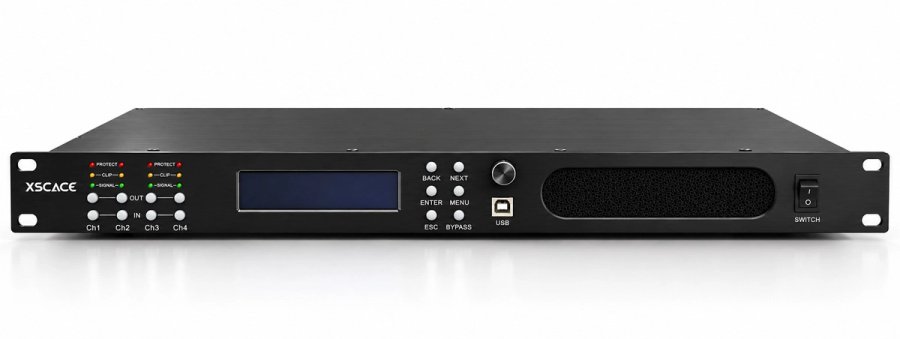
4×4 matrix DSP amplifier delivering 250W per channel at 8 ohms. Bridgeable to 2×900W mono at 4 ohms. 48-bit DSP with 20 preset configurations, now controlled from XSCACE Studio.
Pricing is quoted by your regional distributor. Find yours →
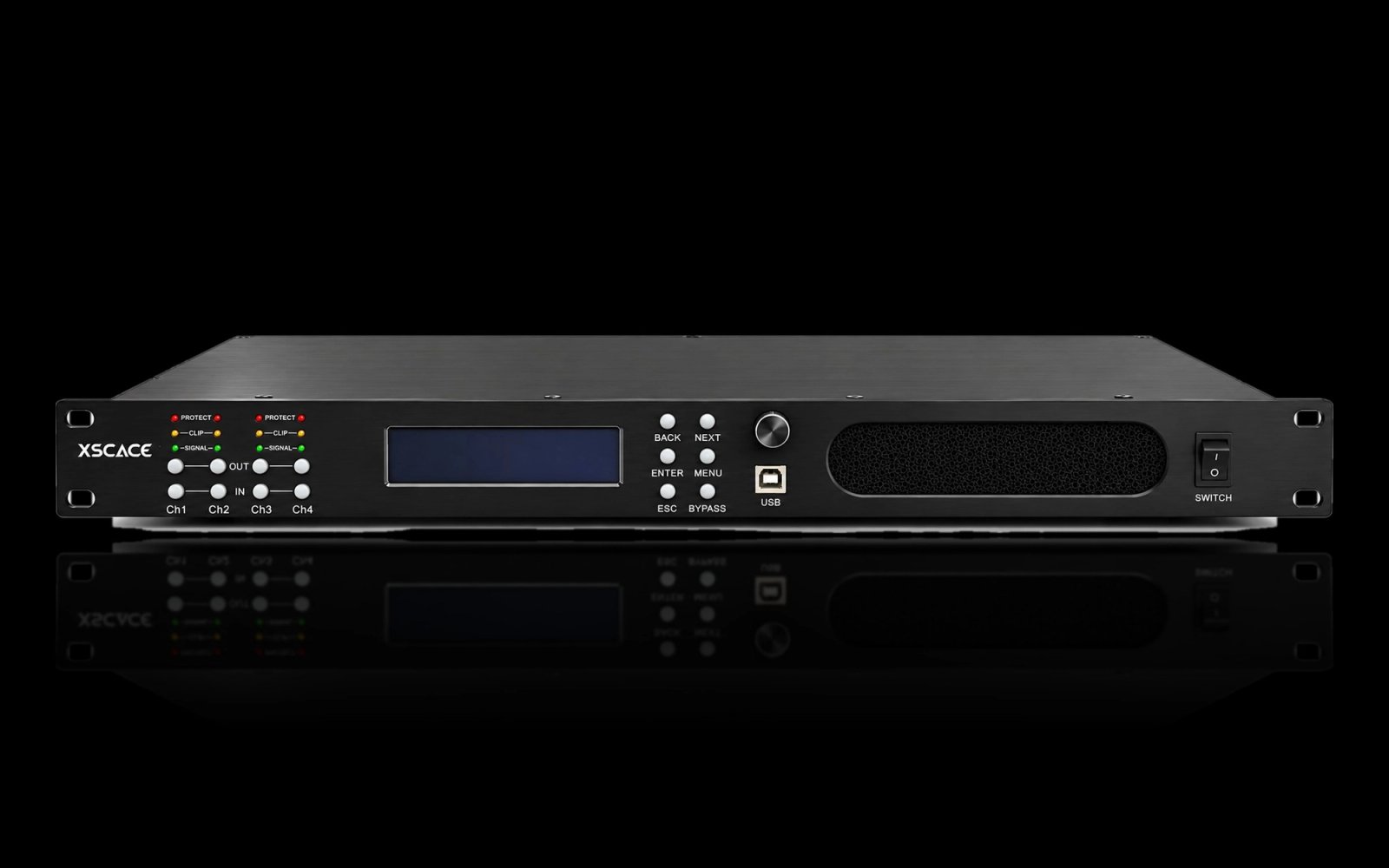
Power Output
250W per channel.
Up to 800W bridged.
4 channels · Class D · 1U rack · XLR balanced inputs · Speakon NL4 outputs · 48-bit DSP
Signal Routing
Any input.
Any output.
The 4×4 routing matrix lets you send any input signal to any combination of output channels. Sub mixes, zone splits, mono sums — all programmable without external hardware.
Diagonal = default identity routing (In 1→Out 1, etc.) · Any cell is programmable via Root 4 DSP Software
Bridge Mode
4 channels stereo.
Or 2 × 800W mono.
Bridge any adjacent channel pair into a single high-power mono output. Drive subwoofers or high-SPL zones without additional hardware.
Speakon NL4 — Bridge wiring
Signal Path
Balanced in.
Speakon out.
DSP Control
Full control.
Without limits.
Root 4 DSP Software gives you complete control over every parameter — EQ, routing, crossovers, delay, gain, and limiting — from a single interface.
Download Root 4 DSP SoftwareContents8 sections
Technical Specifications
Built different. By design.
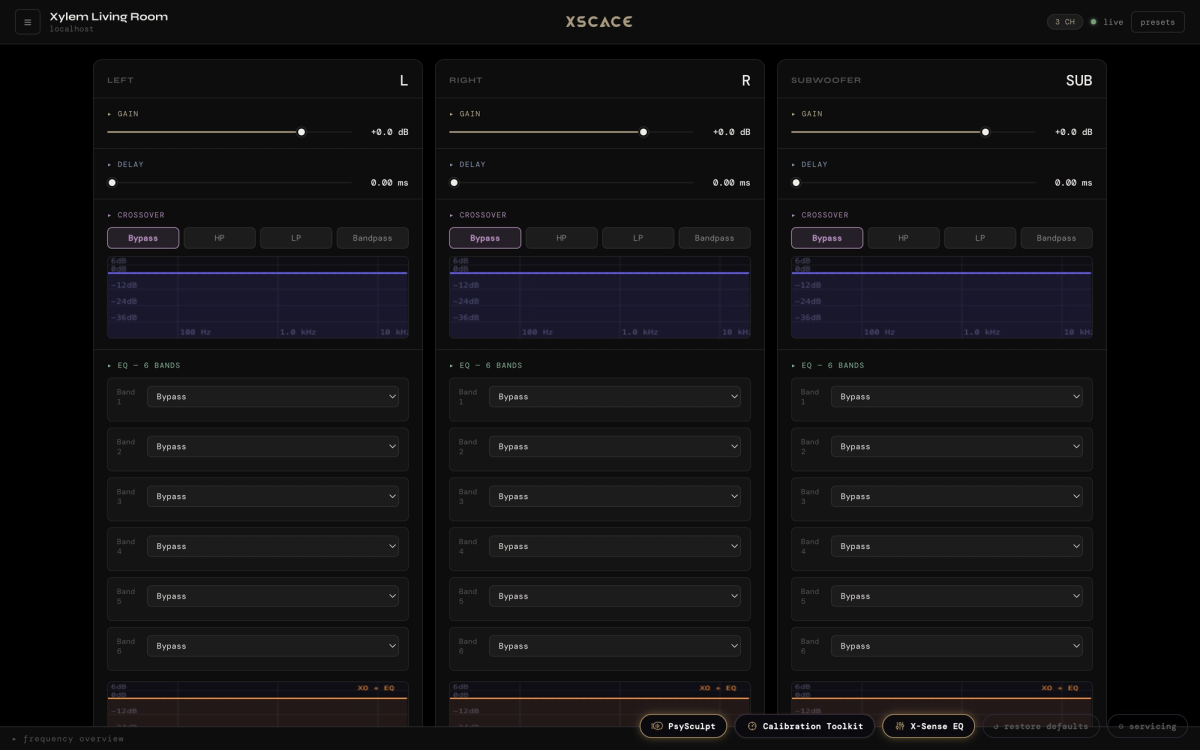
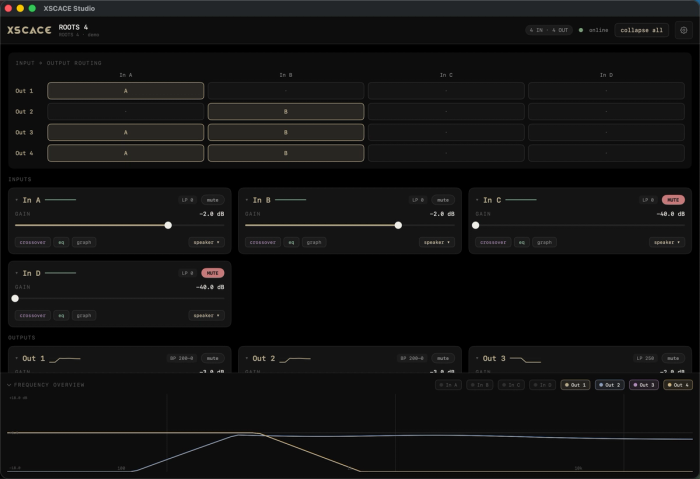
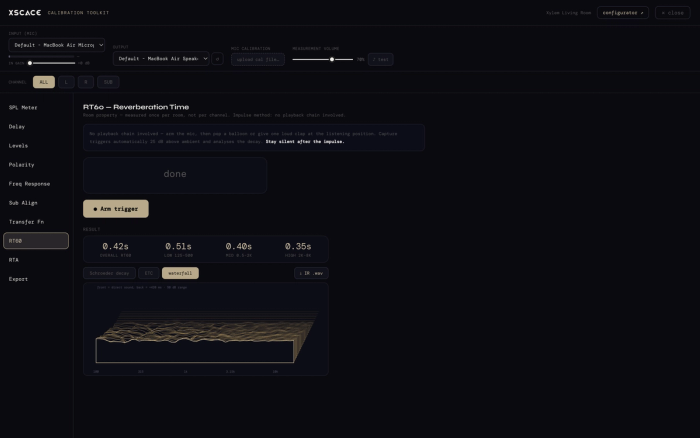
Set up in XSCACE Studio
DSP control, intelligent room correction and a full professional calibration suite. Every parameter on this 4-channel dsp power amplifier · class d — levels, delay, crossovers, limiter and EQ — opens in the same application that configures the rest of the range, so an installer learns one tool.
Live DSP Control
Connect to any Xylem on the network and the full signal chain opens up: per-channel gain and delay, four crossover modes with live curve rendering, and six bands of parametric EQ per channel. Changes hit the DSP instantly over the local network — no round trips, no cloud. Discovery is zero-configuration: amplifiers announce themselves, so there is nothing to pair and no address to type. The delay block itself is accurate to 3 µs on a commanded 5.000 ms.
A Preset for Every XSCACE Speaker — and Yours
Connect a Cane, a Bonsai, a QuadCane, and the amplifier lists an XSCACE factory preset for that speaker: crossover, EQ and limiter threshold already set from the model's real driver and power handling. Load it and the zone is playing correctly before anything has been measured. Tune further from there, then save the result under your own name — the next identical zone in the project starts from a proven configuration instead of the factory default.
One Number, Not Thirty-Four
Per-channel limiting built on a peak-and-RMS combo: a 34-point gain transfer curve plus five time constants. You set one value — threshold in dBFS — because that is the number printed on the driver's datasheet and therefore the one an installer actually has. The device generates the curve from it, and the app states the consequence in plain language: at −6 dBFS, output is held there and peaks above it are caught in about 2 ms. Peak and RMS detectors run in parallel and whichever asks for more reduction wins. 33 factory presets across the range ship with thresholds derived from each speaker model's real power handling; an amplifier lists the presets matching its own channel count.
PsySculpt Low Extension
A per-input side-chain that synthesises harmonics of fundamentals the cabinet cannot physically reproduce, so the ear infers a fundamental that is not being played — the usable low end reads about an octave below the driver's rated limit. A Cane rated to 150 Hz reads to about 75 Hz; a Bonsai rated to 300 Hz to about 150 Hz. It is not a bass boost — nothing below the driver's range is amplified, because there is nothing there to amplify. The control reads "extend down to X Hz" because it sets how deep the effect reaches rather than naming a filter, with an extension target down to 40 Hz and settings that ride along with system presets.
- About XSCACE Studio →
Built to work together
The back panel, explained
Everything a Root 4 needs arrives at the back: mains, four amplifier outputs, four balanced inputs with link-through, and three ways to talk to XSCACE Studio.
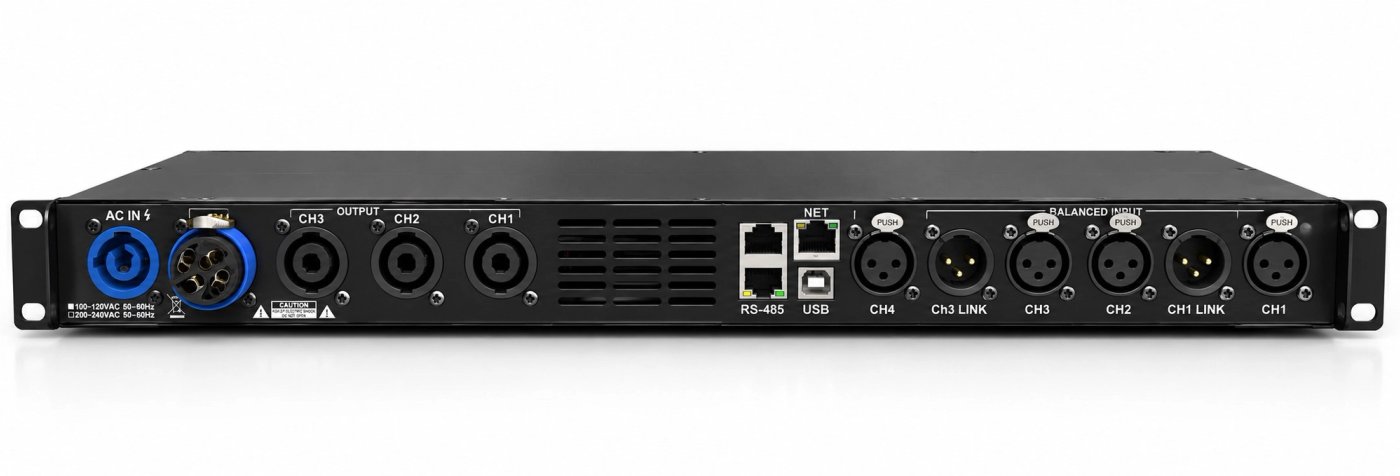
- 1
Mains inlet
Locking powerCON inlet. Marked for 100–120 V and 200–240 V, 50/60 Hz.
- 2
Channel 4 output
Four-pole locking connector beside the mains inlet for the fourth amplifier channel.
- 3
Speaker outputs CH1–CH3
Speakon NL4 outputs for channels 1 to 3. Bridged pairs are configured in XSCACE Studio.
- 4
NET and RS-485
Ethernet for control and monitoring from XSCACE Studio; RS-485 for third-party control systems.
- 5
USB
Direct USB-B connection to a laptop running XSCACE Studio for configuration on site.
- 6
Balanced inputs
XLR inputs for channels 1 to 4. CH1 LINK and CH3 LINK pass the signal on to the next amplifier in the rack.
Common installations
The signal chain.
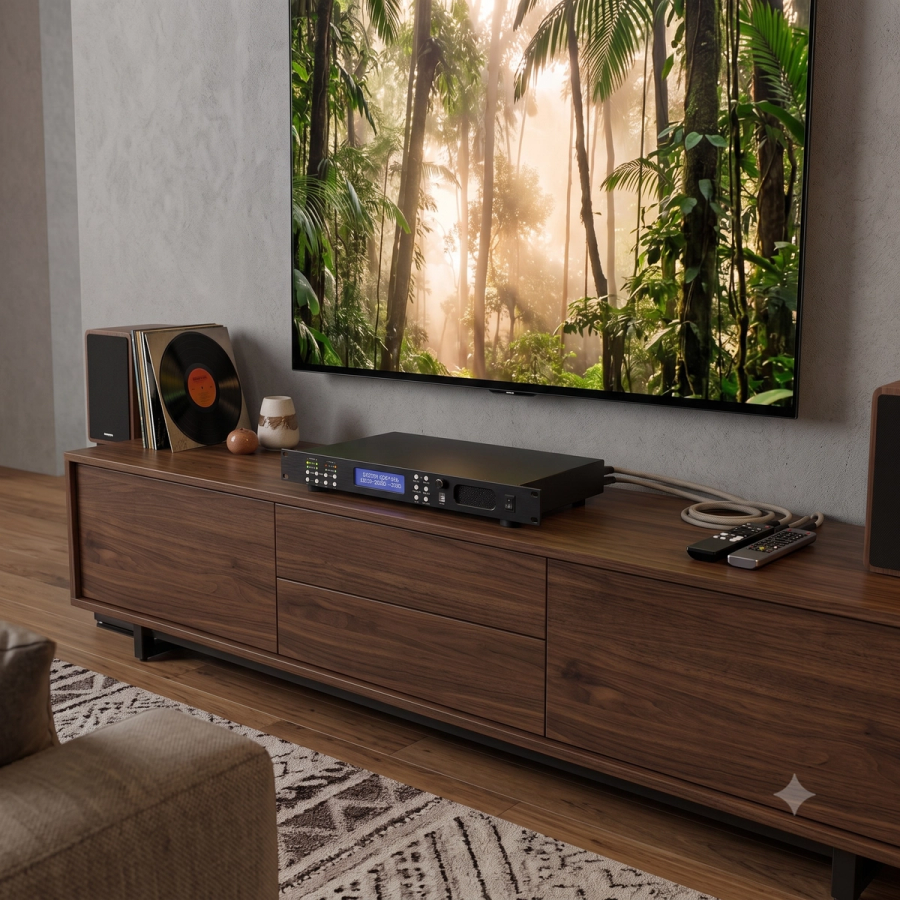
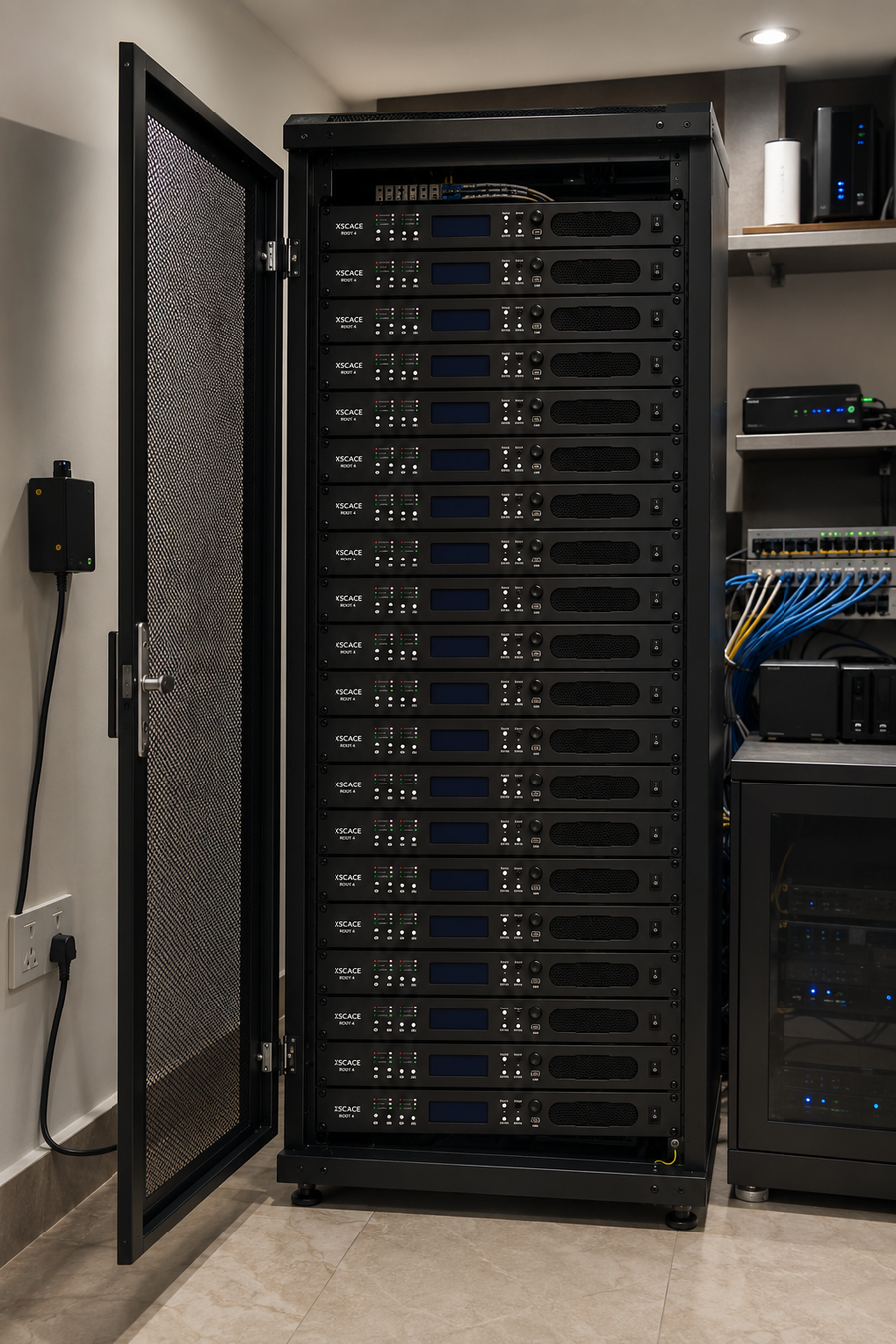
Root 4 handles DSP and amplification in a single 1U chassis. XLR balanced in, Speakon NL4 out — no separate processor required.
Engineering notes.
Engineering notes and technical background on the Root 4 — how it is built, measured and configured.
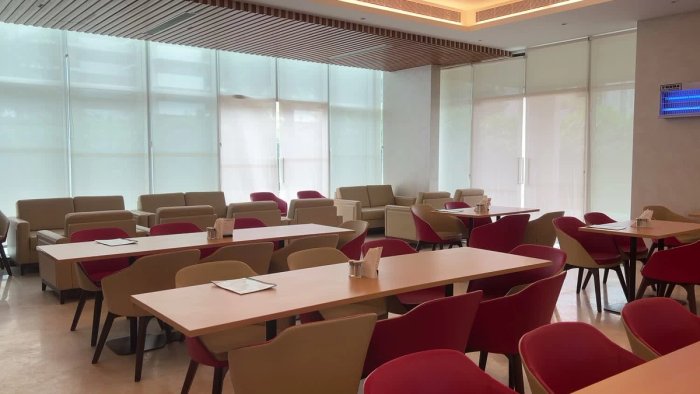
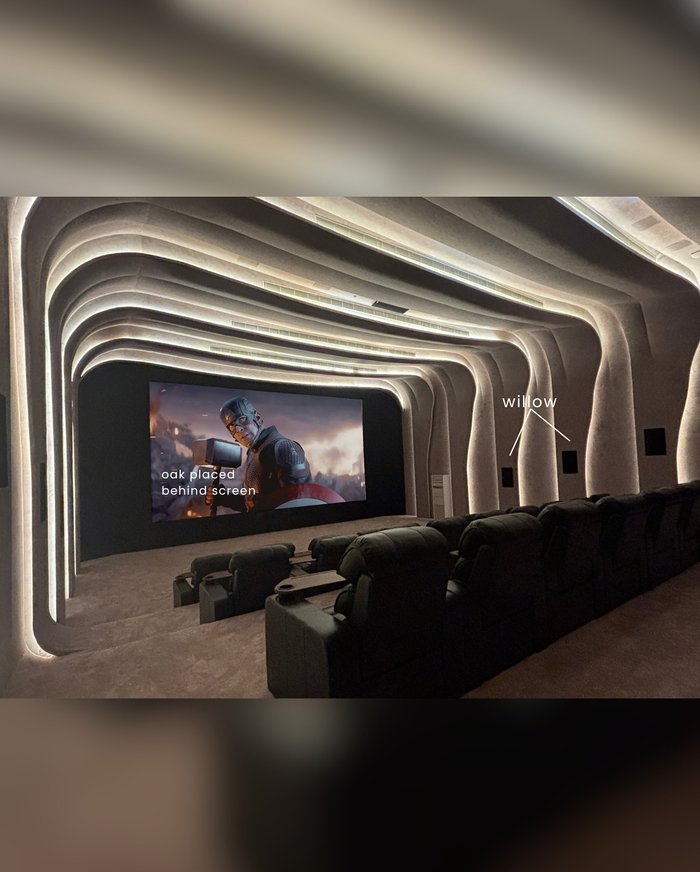
Root 4 in context
Frequently asked questions10 answers
What is the XSCACE Root 4?
Specified for luxury residential AV racks, commercial hospitality, corporate AV, and multi-zone architectural audio systems in Canada, the UK, and India.
What is the power output of the Root 4?
The Root 4 is rated at 250W RMS into 8Ω.
What type of product is the Root 4?
The Root 4 is an amplifier product.
What DSP does the Root 4 use?
48KHz, 48-bit Fixed-Point DSP, 24-bit A/D & D/A. Every crossover, EQ band, delay and limiter runs on that processor and is set from XSCACE Studio over the network; the configuration is stored on the amplifier itself.
What does PsySculpt do on the Root 4?
PsySculpt is equal-loudness compensation running continuously on the DSP. A log-decay peak detector tracks programme level and drives low and high shelving filters from it, so perceived tonal balance stays constant as volume changes, with a level-tracked bass stage and a hard ceiling before the converters. It is not room correction — room correction is measured and applied in XSCACE Studio.
Can a room calibrated on the Root 4 be verified against CEDIA RP22?
Yes. XSCACE Studio includes a CEDIA RP32 verification checklist. CEDIA/CTA-RP22 defines four objective performance levels a room can be designed to, and CEDIA RP-32 is the companion practice for measuring and verifying whether it reached one. Set the target RP22 level and the room volume, and each parameter is marked pass or fail against RP22's table for that level — interchannel level and time, polarity, sub integration, background noise floor as an NCB rating, in-room bass extension, response below the transition frequency, early reflections against the direct sound, and reflection decay time to ISO 3382-1. Parameters needing a test the current version does not run are marked "not measured" rather than assumed, and the exported client report states that this is measurement to RP32 practice rather than a certification.
Do the Root 4 settings survive a power cut?
Yes. Gain, EQ, crossover, delay and limiter settings are held in non-volatile memory on the amplifier, so it returns to the configured state after any power event or firmware update.
What is the power output of the Root 4 at 4 ohms?
4 × 250W @ 8Ω / 4 × 450W @ 4Ω
How much space does the Root 4 need?
The chassis is 43.9 mm high, 482.9 mm wide and 324.9 mm deep.
How deep is the Root 4?
The Root 4 requires 324.9mm of depth.