Contents5 sections
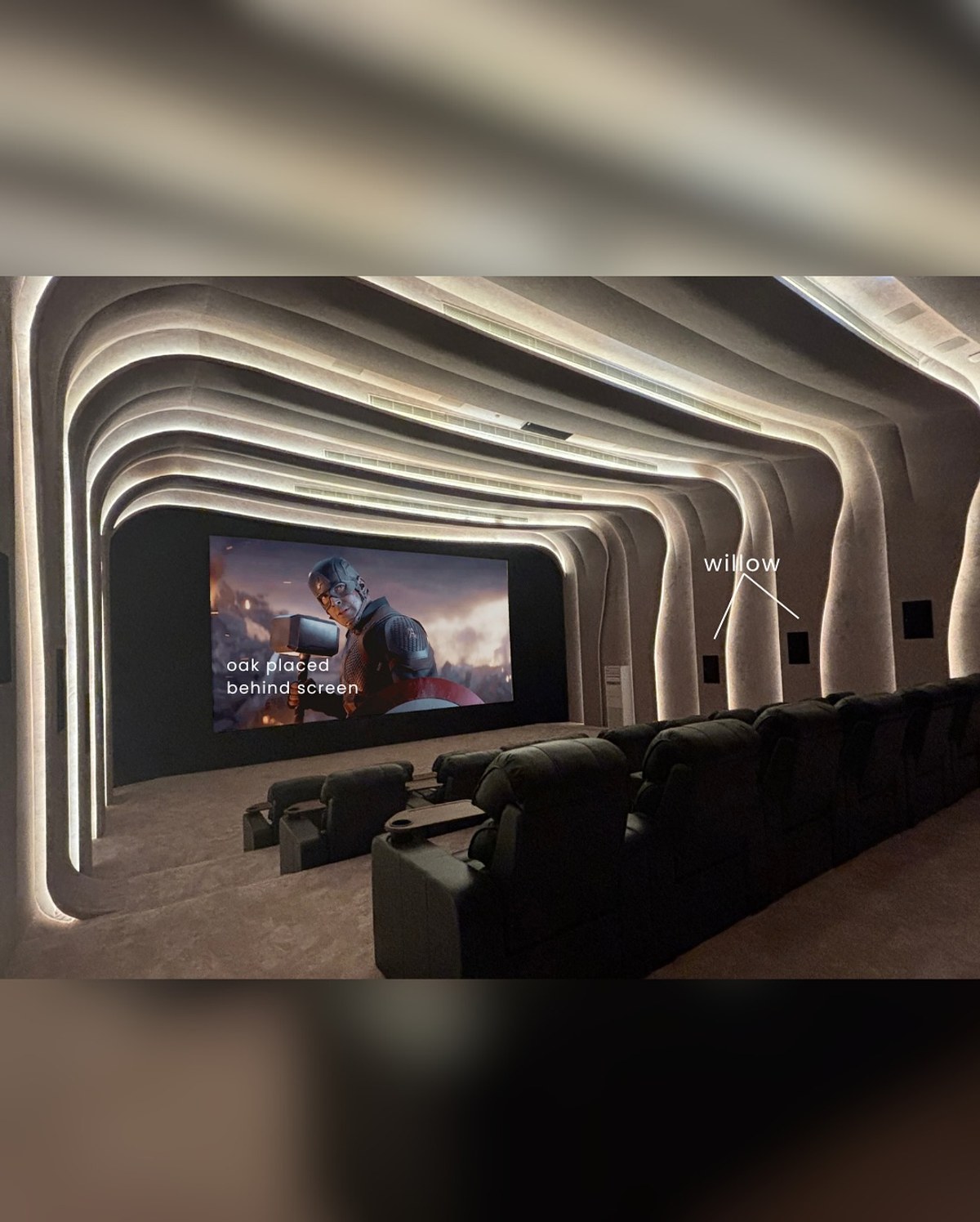
Most case studies in this series are a stereo pair and a subwoofer in a single living room. This one is a different order of project: a 50×40ft private home cinema, its ceiling carved into tiered, backlit ribs, built for an immersive private movie experience with theater-grade surround sound — while still keeping every speaker out of sight.
The System
- XSCACE Oak speakers placed behind the acoustically transparent screen for the main channels
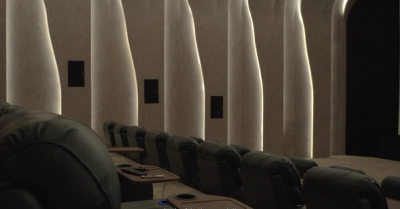
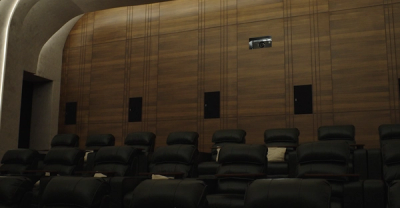
- XSCACE Willow speakers on the side and back walls for full surround balance
- Four 18-inch XSCACE custom subwoofers
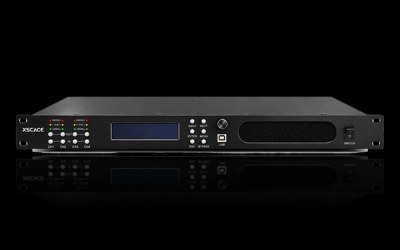
- An XSCACE Root 4 amplifier
Two Speakers, Two Jobs
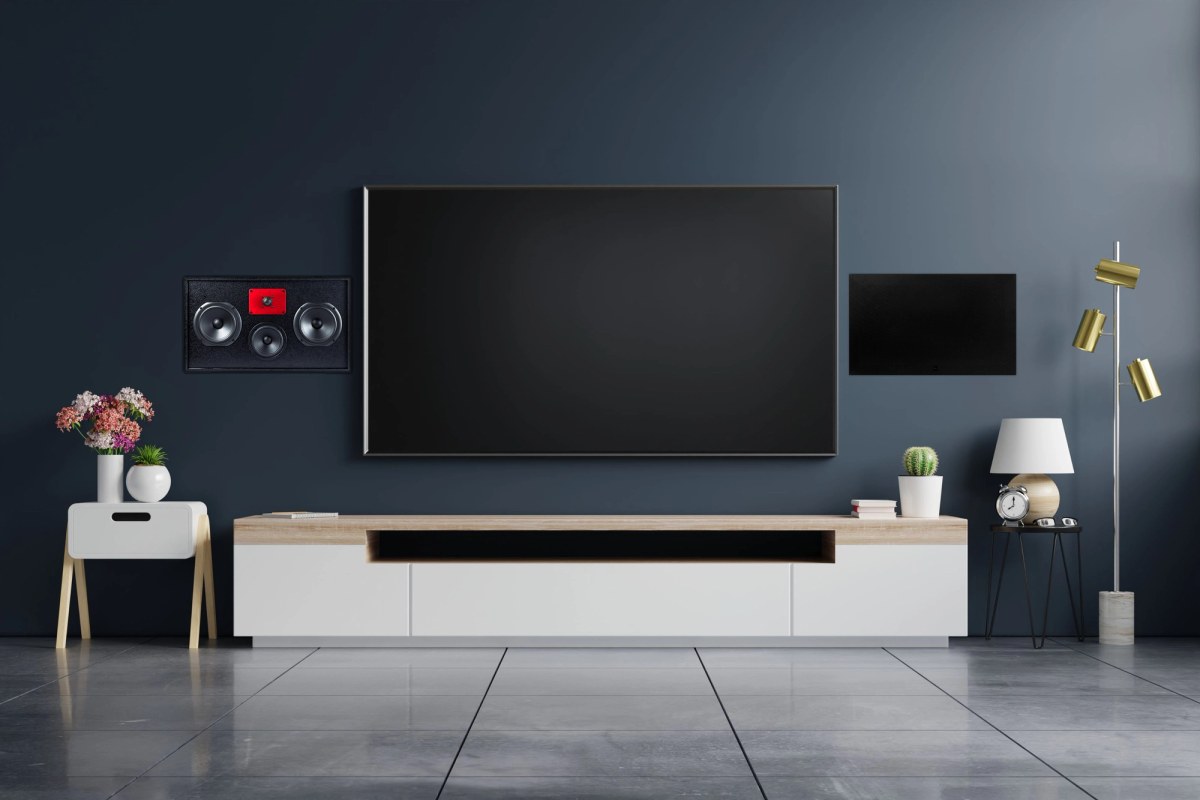
Oak is rated 350W RMS across 40–22,000Hz — the widest, deepest response in the pairing — and sits directly behind the screen, so the main dialogue and effects channels originate exactly where the picture is. Willow, rated 300W RMS across 45–22,000Hz, covers the side and back walls: matched closely enough in tonal character to Oak that the transition between screen channels and surrounds doesn't announce itself, but placed for envelopment rather than direct output toward the seats.
Why Four Subwoofers, Not One Big One
At 50x40ft, a single subwoofer — however powerful — creates strong peaks and nulls in bass response depending on where you sit relative to the room's dimensions. Distributing four 18-inch custom subwoofers around the room evens that out, trading raw output-per-unit for consistency across every seat, which is the actual goal in a room built for multiple people to watch from meaningfully different positions.
Case Study at a Glance
- Room: Private home cinema, 50×40ft
- Use case: Immersive private movie experience
- System: XSCACE Oak (screen channels), Willow (side/back surrounds), 4× 18" custom subwoofers, Root 4 amplifier
- Placement: Oak behind the screen, Willow on the side and back walls for full surround balance
- Goal: Cinematic sound clarity and depth with seamless immersion, preserving architectural elegance
Read the contemporary living room case study for a single-room take on the same cinematic brief.
Planned, controlled and calibrated to reference
Every XSCACE installation follows the same three stages: planned in the simulator, controlled from the app that matches the hardware, and calibrated with measurement. A cinema is the one room where the geometry is defined for you, and where getting it wrong is measurable rather than a matter of taste.
Planned
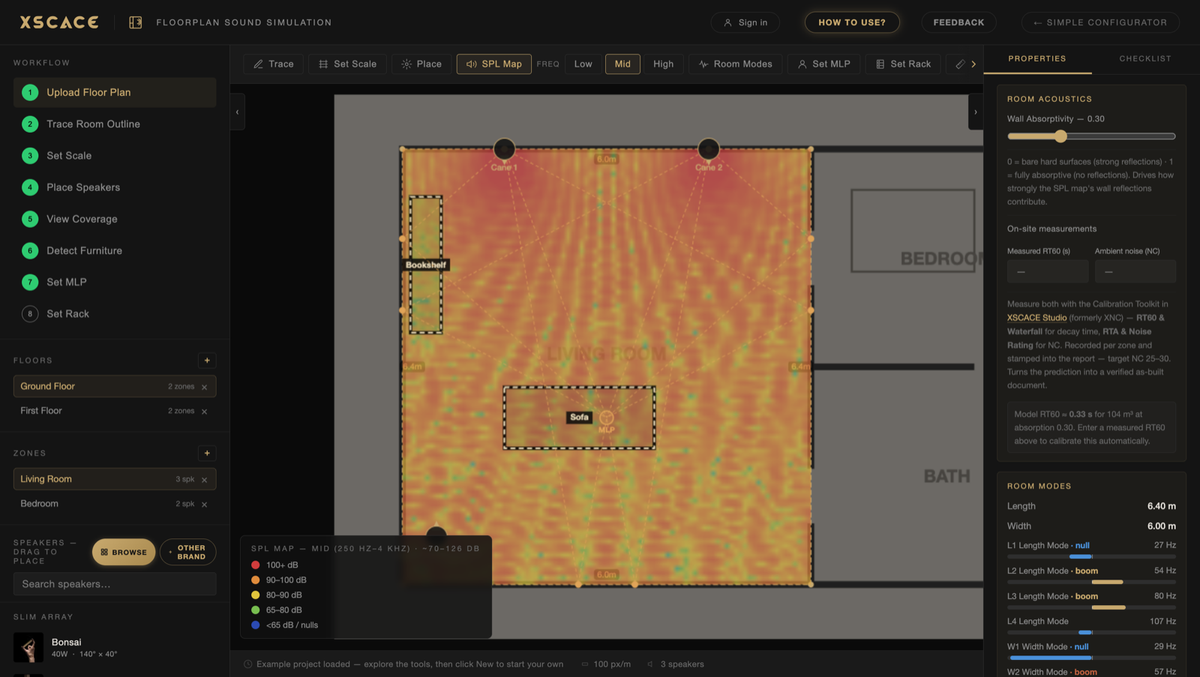
XSCACE Floorplan Sound Simulation takes a plan from trace to bill of quantities in the browser. For a room like this the outputs that matter are:
Full Dolby reference geometry checked speaker by speaker
Coverage at every seat, not just the reference seat
Room modes and first reflections located before treatment is specified
Controlled
The amplifier is configured and controlled from XSCACE Studio on macOS — routing matrix, per-channel gain and delay, parametric EQ, crossovers and limiting, with network-wide discovery rather than one amplifier at a time.
Calibrated
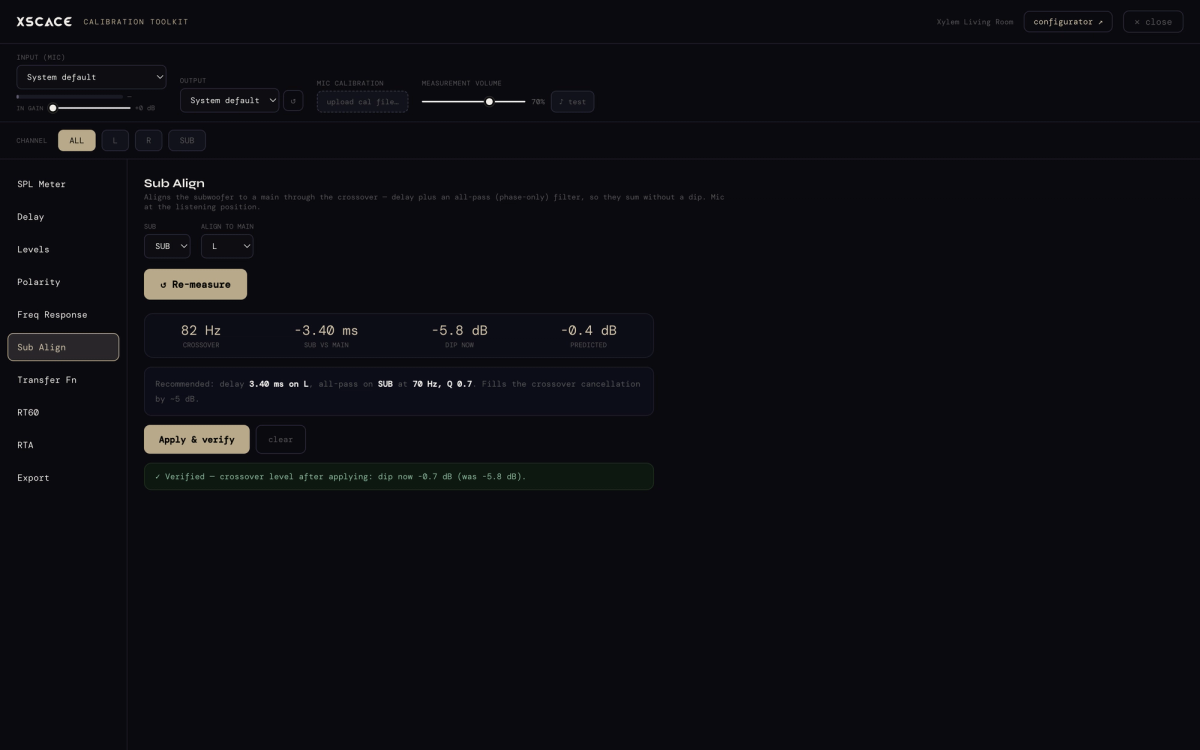
The calibration toolkit inside XSCACE Studio measures what the room actually does — eleven instruments covering SPL, delay, levels, polarity, frequency response, THD, sub alignment, transfer function, RT60, RTA and export, free on macOS. Here the ones that earn their place are:
Delay and polarity per channel, with delay figures agreeing with REW to 0.01ms
Sub Align, then a re-measure to verify the correction did what it claimed
A PDF report documenting the calibration for handover
Oak publishes 90dB sensitivity and a 117dB maximum SPL — the figures the coverage prediction works from, and the ones the finished room should measure.