Contents4 sections
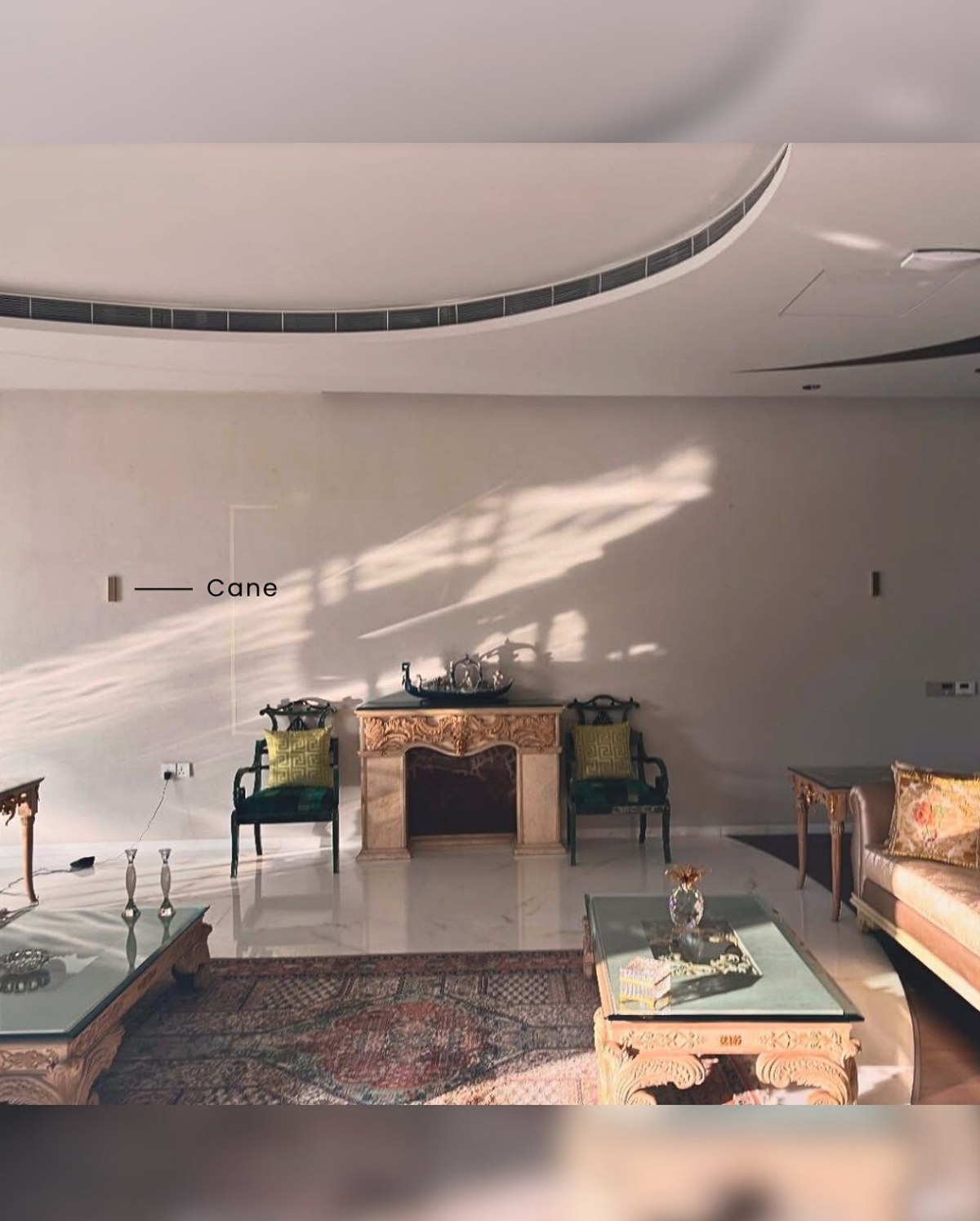
A hotel lobby is a public room with a private-room brief: soft, immersive audio that supports conversation and formal hosting without ever calling attention to itself, in a space more than twice the size of a typical living room. At 25×20ft, this lobby's classic marble fireplace and symmetrical seating set the terms for where the sound could go.
The System
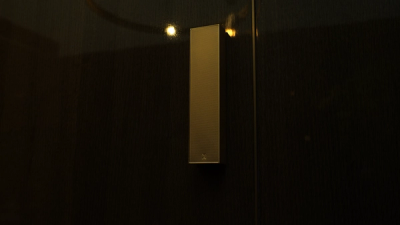
- A pair of XSCACE Cane speakers, wall-mounted symmetrically beside the mantel
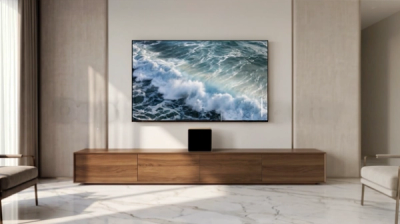
- One XSCACE Acacia 10 Powered subwoofer
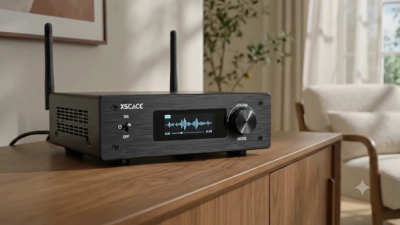
- One XSCACE Air Amp, 2.1 stereo
Why Sensitivity, Not Just Power, Covers a Room This Size
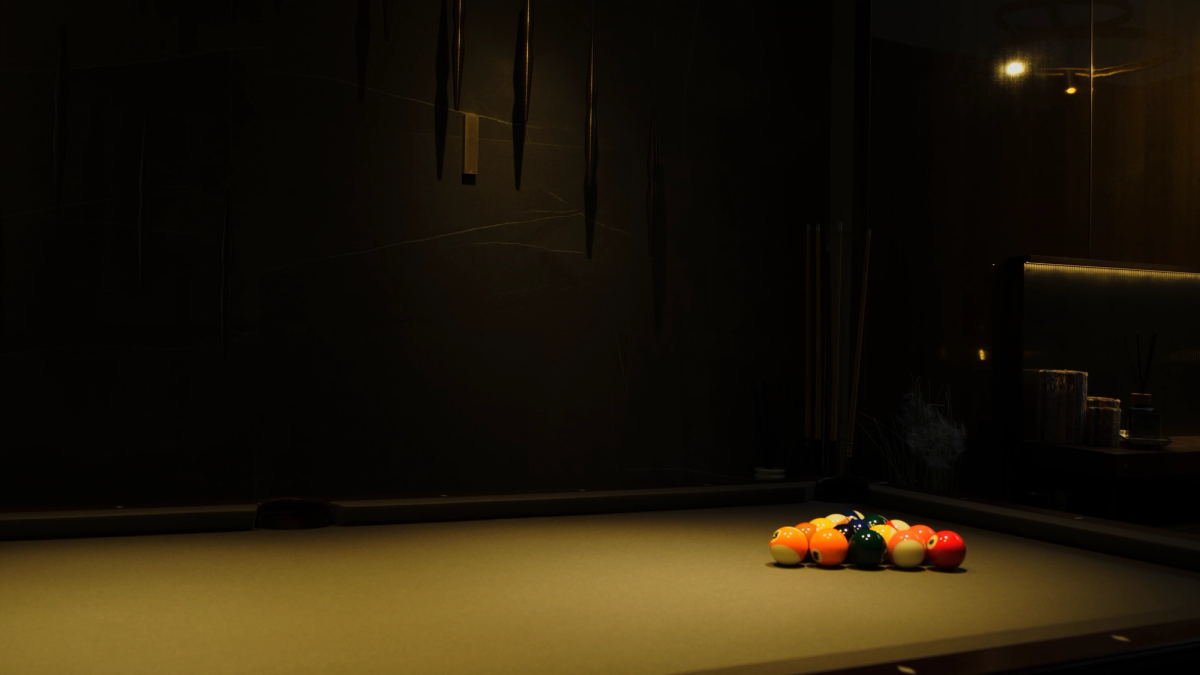
Covering 500 square feet with a single stereo pair sounds like a job for raw power, but Cane's 92dB sensitivity is the more relevant number: it reaches usable output at relatively low input levels, and its horizontal dispersion spreads that output across a wide seating area rather than beaming it at one point. For a lobby's brief — soft, ambient, complementing conversation rather than commanding it — that reach matters more than headroom for concert-level peaks.
Case Study at a Glance
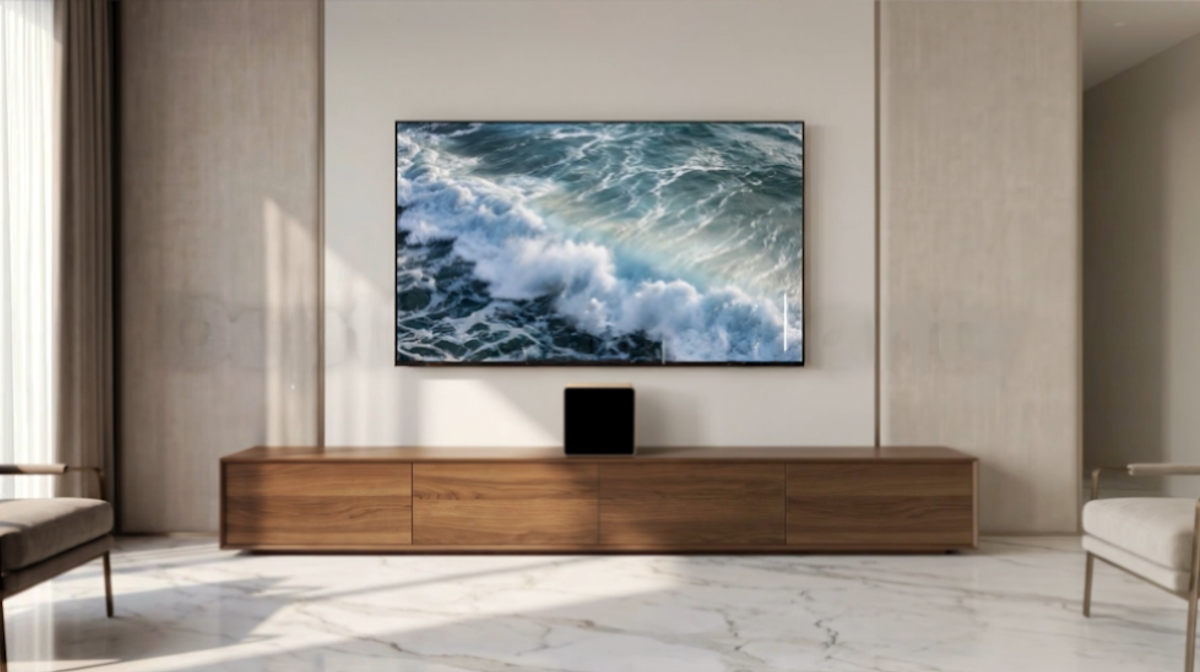
- Room: Hotel lobby / common area, 25×20ft
- Use case: Formal hosting and ambient sound
- System: 2× XSCACE Cane, Acacia 10 Powered, Air Amp
- Placement: Wall-mounted symmetrically beside the mantel for balanced coverage
- Goal: Soft, immersive audio complementing conversation with invisible technology integration
Read the home bar case study for the same system in a much smaller room, or see how to build an audio BOQ for multi-zone commercial projects.
How this room was planned, controlled and calibrated
Every XSCACE installation follows the same three stages: planned in the simulator, controlled from the app that matches the hardware, and calibrated with measurement. A commercial room is judged on consistency — the table by the window should hear what the table by the bar hears.
Planned
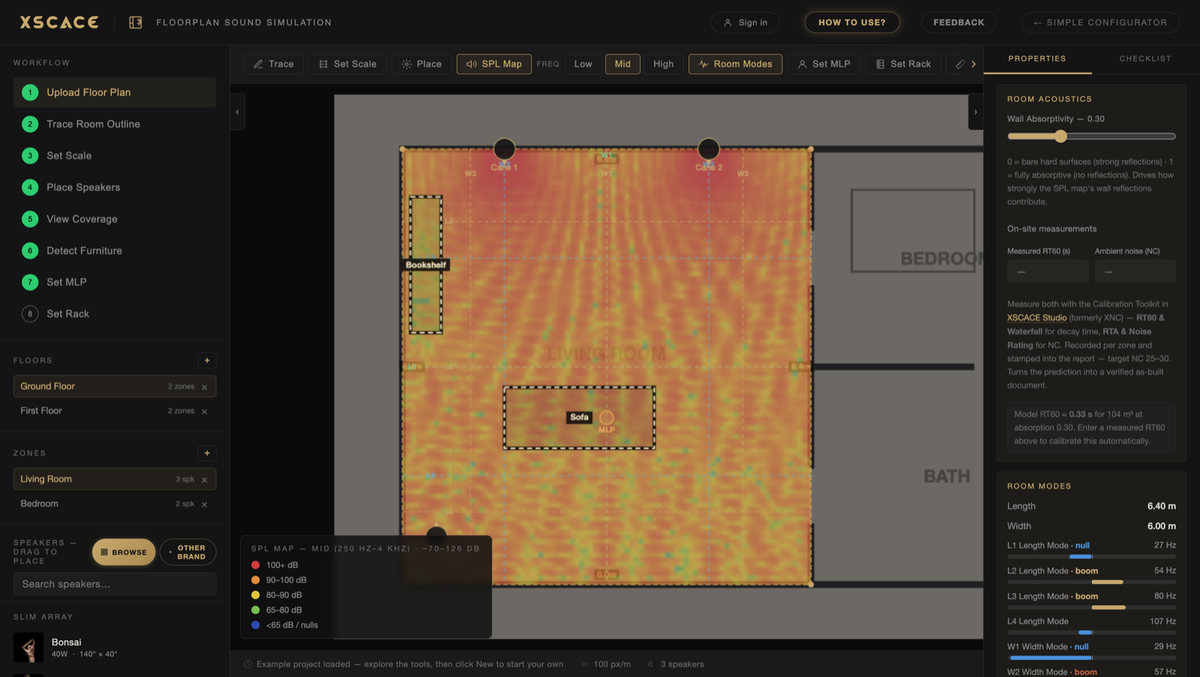
XSCACE Floorplan Sound Simulation takes a plan from trace to bill of quantities in the browser. For a room like this the outputs that matter are:
Coverage checked table by table, so no seat is the bad seat
Room modes located before the fit-out covers the structure
A bill of quantities the operator can price against
Controlled
Day-to-day control is XSCACE Controller on iOS and Android. It handles volume, EQ and grouping, and the streaming amplifiers also appear natively as AirPlay 2 and Spotify Connect targets, so the app is for control rather than for getting audio into the room.
Calibrated
The calibration toolkit inside XSCACE Studio measures what the room actually does — eleven instruments covering SPL, delay, levels, polarity, frequency response, THD, sub alignment, transfer function, RT60, RTA and export, free on macOS. Here the ones that earn their place are:
RTA noise rating, NC-15 to NC-65, setting the level the system must clear once the room is full
SPL measured at each zone against the design target
RT60 to ISO 3382, showing whether hard surfaces need treating as well as covering
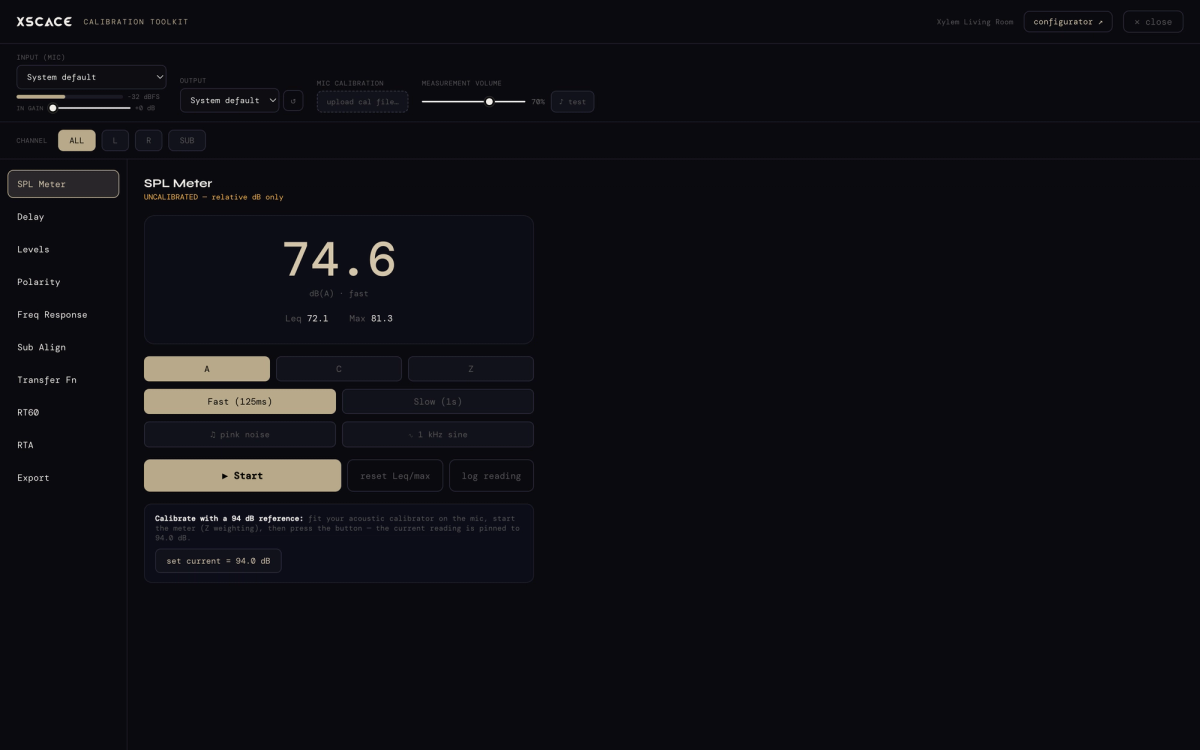
Cane runs down to 150Hz against Acacia 10 Powered's 35Hz, and the two records recommend different crossover points (200Hz and 300Hz). Which suits the room is a measurement, not a preference.