Contents4 sections
Thermal compression in architectural speakers is not a marginal inconvenience — it is a fundamental physics problem that most manufacturers simply do not solve. When a voice coil heats up under sustained power, its electrical resistance rises. Higher resistance means more power is wasted as heat rather than converted to sound. The speaker you specified for 88dB of output at 1 watt is quietly delivering something closer to 85dB by the third hour of a dinner party — and you have no way of knowing, because the degradation is gradual, invisible, and never mentioned in the spec sheet.
XSCACE engineered PowerDense Dynamics™ to address this directly. It is a voice coil winding technology — not a marketing category — that changes the material and gauge of the coil itself to reduce resistive heating at the source. Here is the full explanation of why the problem exists, and how we solved it.
Thermal Compression: The Hidden Problem in Architectural Audio
A voice coil is a resistor. When current flows through it, some of that energy is converted to heat — this is Joule heating, and it is unavoidable. Copper, the standard material for voice coils, has a positive temperature coefficient of resistance: as temperature rises, resistance rises. At typical listening levels this effect is small enough to ignore. At sustained high volume — the kind generated during a home cinema screening or a large gathering — the coil temperature can climb well above 100°C, and resistance can increase by 20 to 30 percent.
In a conventional freestanding speaker, this is partly mitigated by airflow around the cabinet. Heat dissipates into the room. In an in-wall or in-ceiling installation, that path is closed. The driver sits inside a sealed or semi-sealed cavity — insulation on one side, plaster on the other — with no convective cooling whatsoever. The coil heats up, resistance climbs, sensitivity drops, and the speaker that measured flat at low power sounds congested and dynamically compressed at party volume.
The consequence is a speaker that passes every lab measurement but underperforms in real-world residential and commercial use. Specifications are almost always measured at 1 watt for 1 second at 1 metre. No specification sheet tells you what happens after three hours of sustained output at 90dB in an enclosed ceiling cavity. That is precisely the scenario most architectural audio systems are asked to handle.
The PowerDense Dynamics™ Solution: Copper-Silver Composite Voice Coil
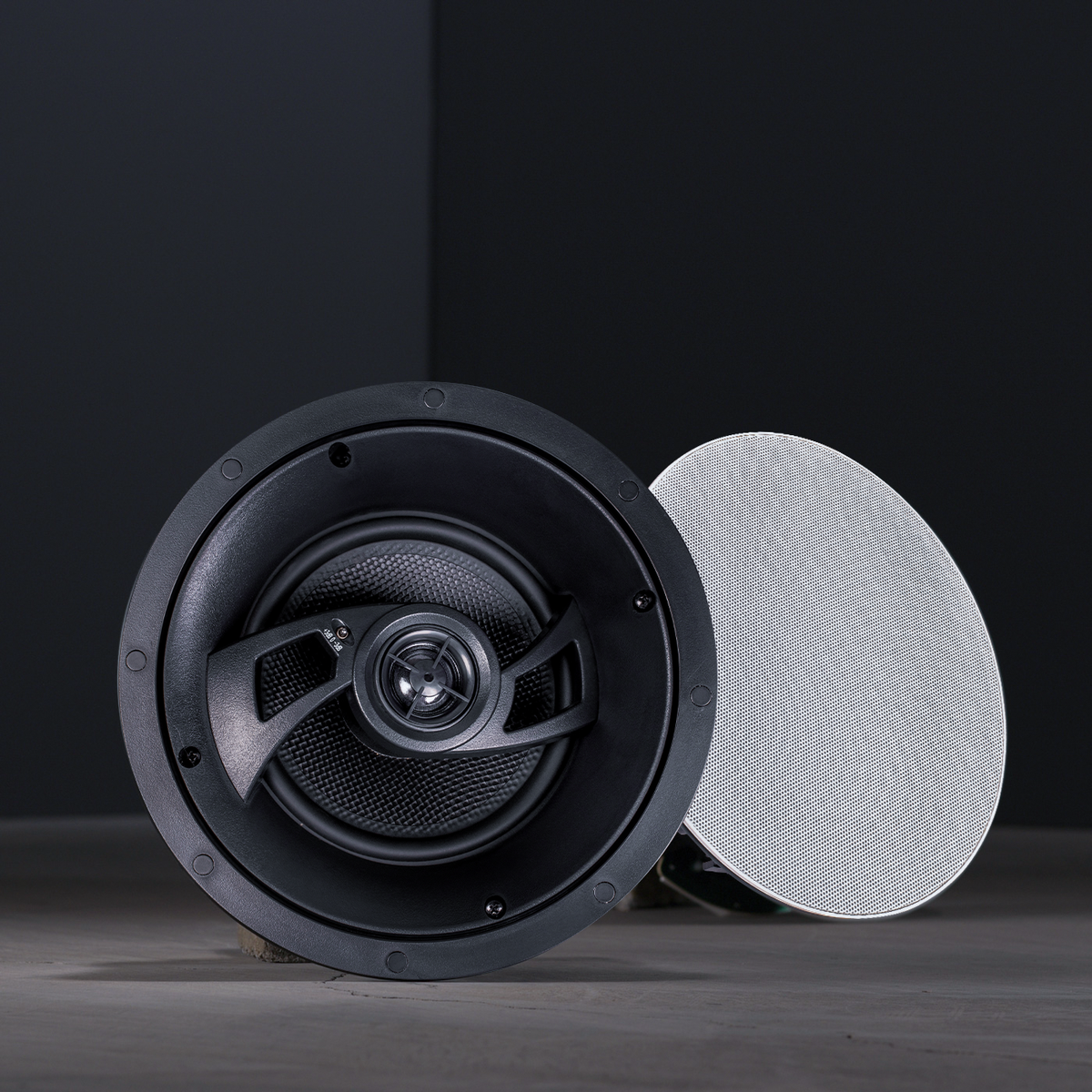
XSCACE wound the voice coil in its architectural drivers from a copper-silver composite wire — a deliberate choice that addresses the thermal problem at the material level rather than through passive workarounds like vented pole pieces or ferrofluid cooling. Each element of the composite does a specific job.
Silver has the lowest electrical resistivity of any common metal — approximately 15 percent lower than copper. Less resistivity means less heat generated per watt of input. Under sustained high-power conditions, the coil runs cooler, resistance stays closer to its rated value, and sensitivity remains stable. The copper component provides structural mass and mechanical stability: under high-excursion conditions — particularly relevant for subwoofers like the Acacia 10 operating at its rated 35Hz–300Hz range — the coil must tolerate significant physical stress without deforming. Pure silver is too soft for this application. The composite gives us silver's thermal advantage and copper's mechanical durability in a single winding.
The wire gauge is also heavier than standard. Thicker wire carries higher sustained current without the resistive losses that cause coil failure in under-specified drivers. This matters for architectural subwoofer applications where amplifiers may sustain 200–400 watts of continuous output during film replay. The Acacia 10 Metal is rated at 88dB sensitivity; that figure holds under sustained load because the coil is built to sustain it.
What This Sounds Like in Practice
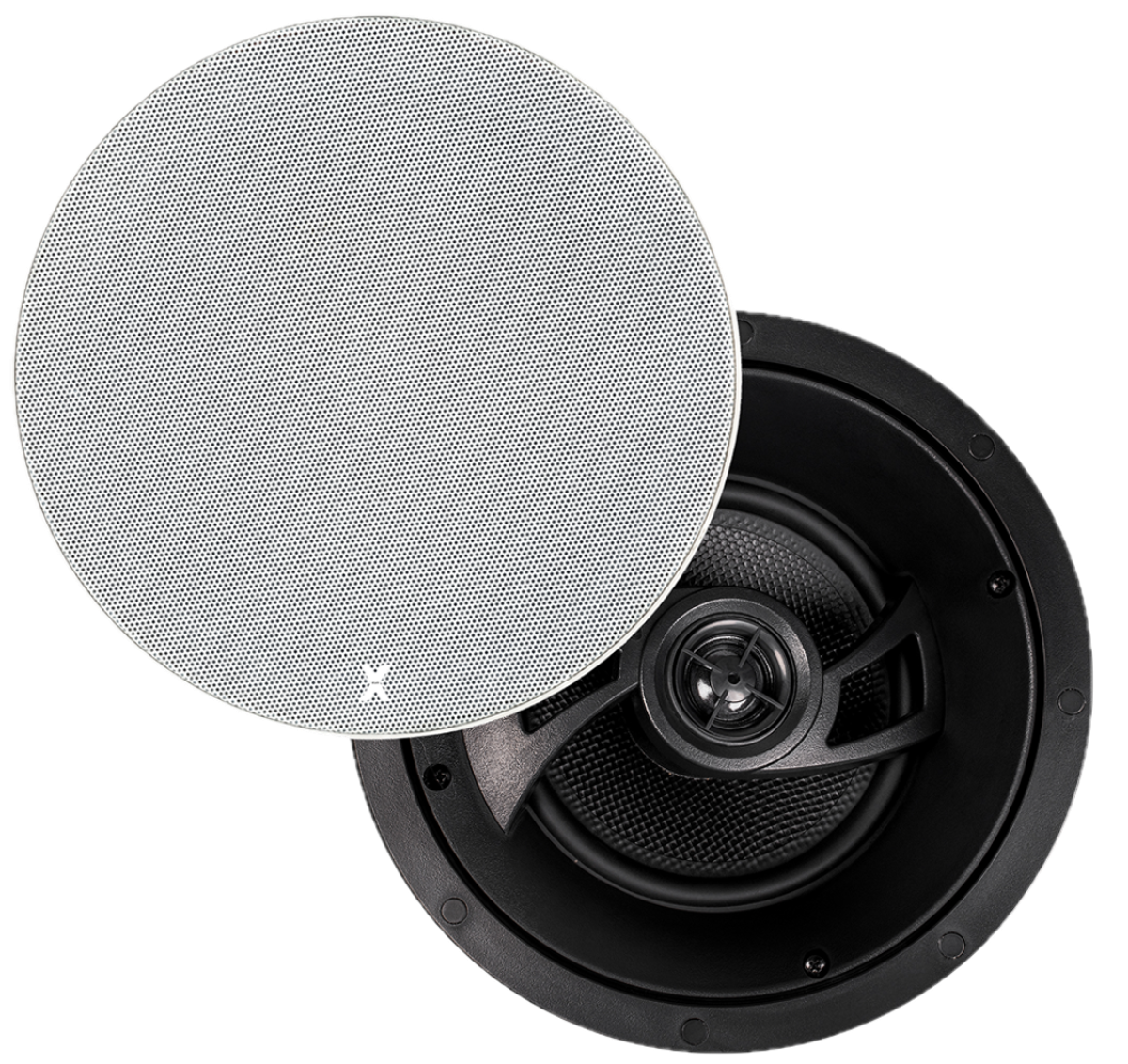
The engineering difference translates directly into audible and measurable outcomes across the listening environments XSCACE speakers are specified for:
- Volume levels that stay dynamically consistent — loud passages in a film or live recording retain their transient impact rather than sounding squashed or congested after extended use
- Music that sounds the same at background level as it does at party volume — tonal balance does not shift as the driver heats up, which is the most common listener complaint with architectural audio at scale
- No smell of a burning voice coil during sustained high-power use — the coil simply does not reach the temperatures at which insulation begins to degrade
- Reliable sustained output in AV screening rooms, large open-plan entertainment spaces, and commercial restaurant or retail installations where speakers run at elevated levels for six to eight hours continuously
- Longer service life — voice coil failure is the leading cause of driver replacement in architectural audio; reducing thermal stress directly extends the operational lifespan of the driver
PowerDense Dynamics™ does not operate in isolation. It works in direct coordination with XSCACE's Nano Resonance™ cone technology. Nano Resonance™ uses a heavier, more internally damped cone material to suppress resonance and break-up modes — but heavier cones require more power to move efficiently. The composite voice coil in PowerDense Dynamics™ is built specifically to handle that sustained power demand without thermal failure. One technology creates the acoustic requirement; the other fulfils the electrical requirement to meet it. Full technical details of both systems are documented on the XSCACE technology page.
Specifying for Sustained Performance
For AV integrators and architects specifying a system, PowerDense Dynamics™ changes the conversation. The Acacia 6 at 84dB sensitivity and the Acacia 10 at 88dB sensitivity are not just rated values measured under laboratory conditions — they are sustained performance figures that hold during real installation use. When you specify an XSCACE subwoofer for a screening room or a large open-plan living space, the number you see in the data sheet is the number you get at hour one and at hour six.
A speaker's specification on paper only tells you what it does at low power, for a short time, under ideal conditions. PowerDense Dynamics™ is about what XSCACE speakers do over an evening of sustained listening — the dinner that runs long, the film marathon, the commercial venue that opens at noon and closes at midnight. That is the performance standard we engineered for, and it is the standard by which architectural audio should be measured.