Contents5 sections
A home workout studio has to do two contradictory jobs: motivate through a high-intensity interval session, then settle into calm background music for a cooldown or meditation session, without anyone touching a second system. This 15×13ft gym, finished in warm plaster with brass detailing, was built around a single XSCACE Bonsai speaker doing both.
The System
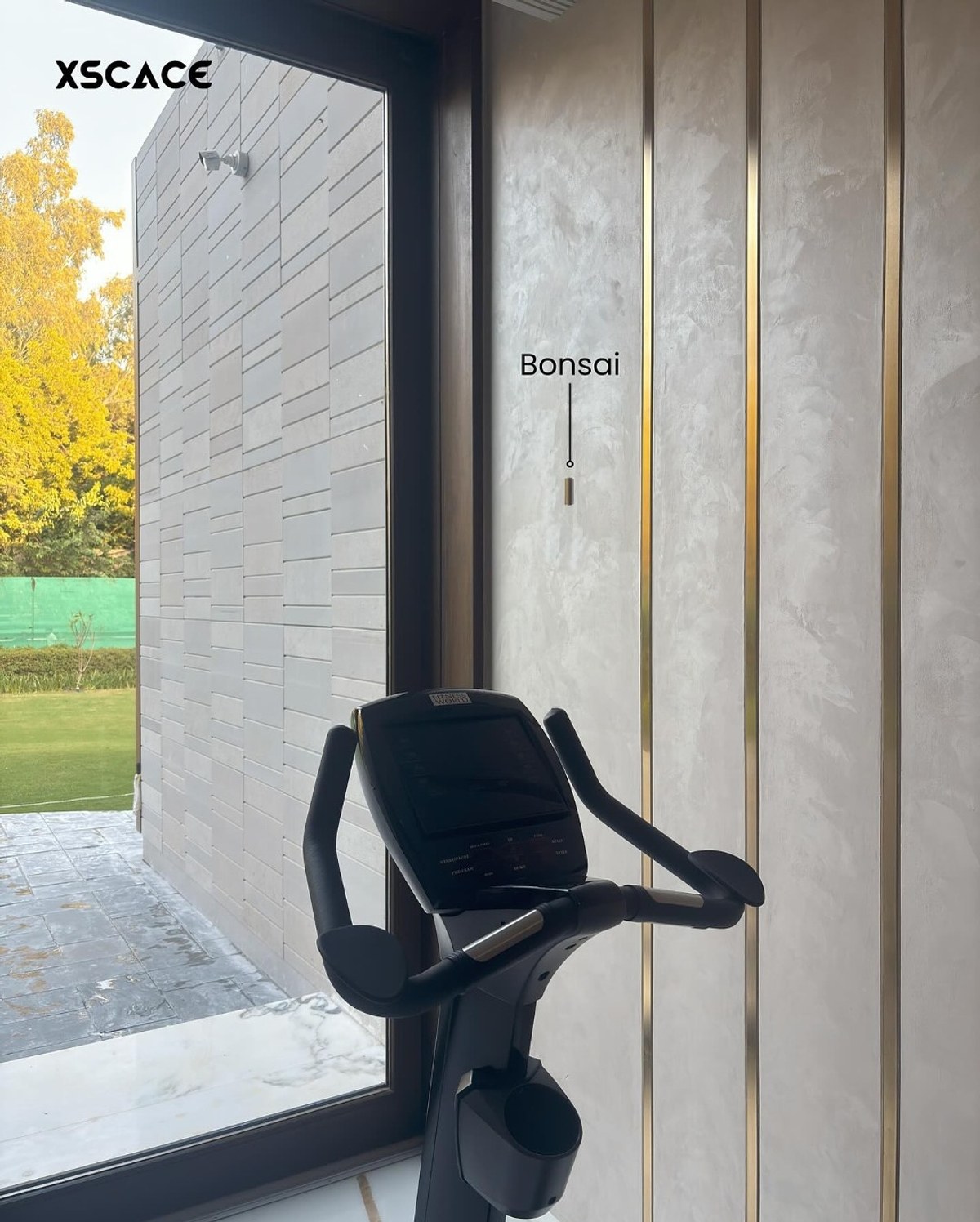
- XSCACE Bonsai, wall-mounted beside the treadmill, aligned with the room's vertical detailing
- One XSCACE Acacia 6 Powered subwoofer
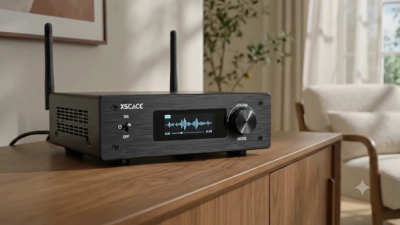
- One XSCACE Air Amp
One Speaker, Two Very Different Jobs
Focused workouts and meditation music ask for almost opposite things from a system — one wants rhythmic drive and clarity at higher volume, the other wants smooth, low-fatigue output at a whisper. What makes one Bonsai-plus-sub system credible at both is that neither use case is actually asking for extreme output: Bonsai's 86dB sensitivity means the amplifier isn't working hard at typical home-gym listening levels either way, so the tonal character stays consistent rather than the system straining at one end of the brief.
Placement: Function Over Symmetry
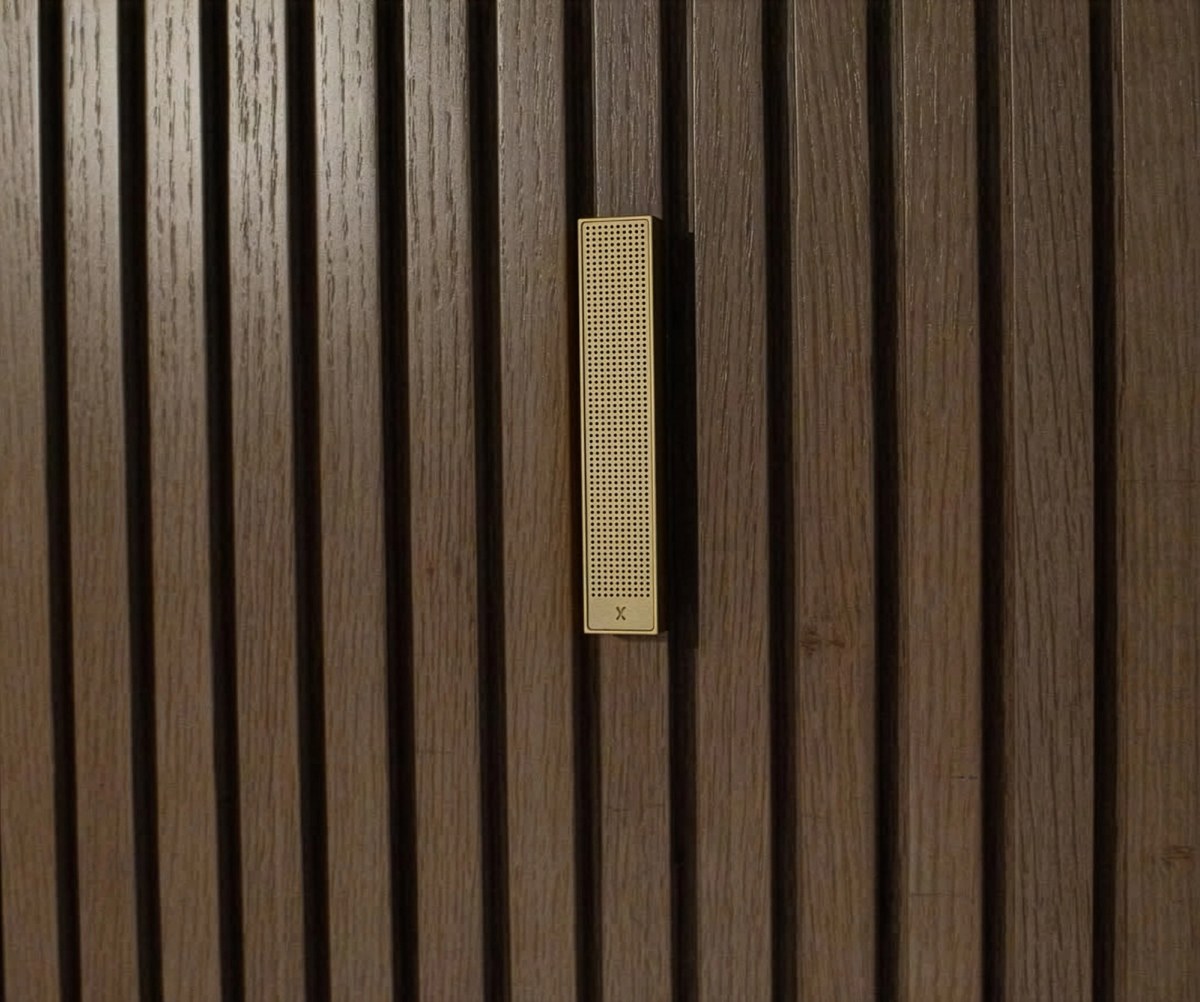
Unlike a living room or bedroom brief, this placement wasn't about a symmetrical pair either side of a feature wall — it's a single speaker positioned where the person actually is: beside the treadmill, within earshot at the one spot in the room where someone spends the most time, aligned with the vertical brass detailing so it reads as part of the wall's rhythm rather than an add-on.
Case Study at a Glance
- Room: Home gym, 15×13ft
- Use case: Focused workouts and meditation music
- System: XSCACE Bonsai, Acacia 6 Powered, Air Amp
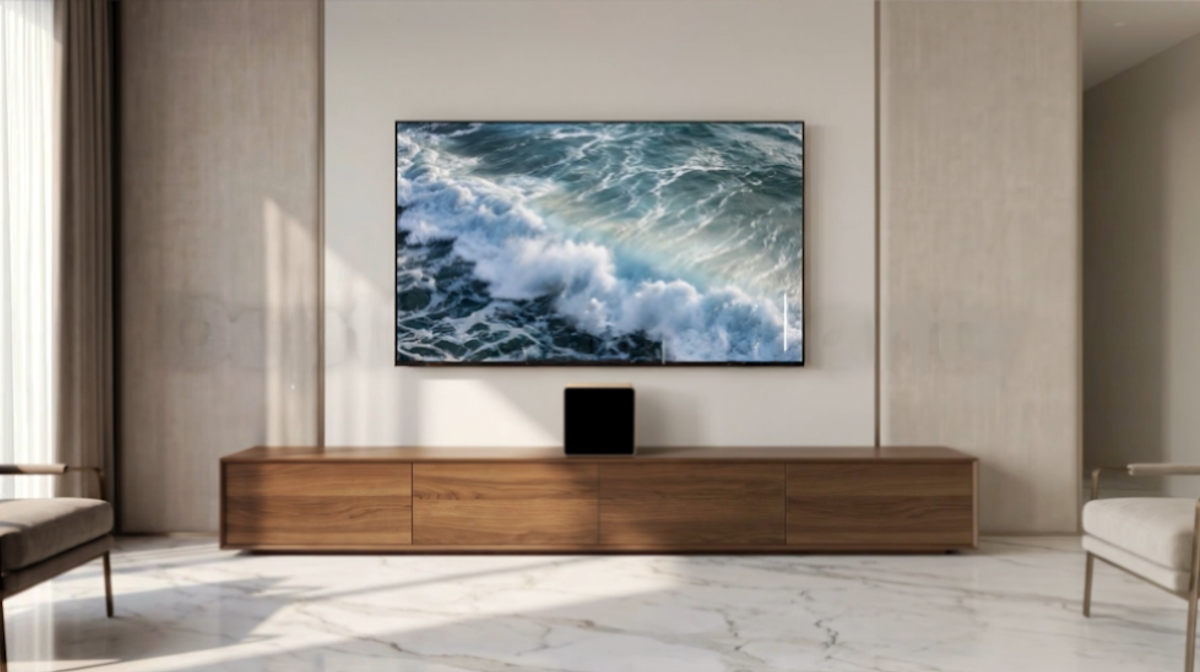
- Placement: Wall-mounted beside the treadmill, aligned with vertical wall detailing
- Goal: Crisp, motivating audio without visual distraction from the room's minimalist design
Compare this to the master bedroom case study, which uses the same core system for a very different brief.
Planned, controlled and calibrated for a hard room
Every XSCACE installation follows the same three stages: planned in the simulator, controlled from the app that matches the hardware, and calibrated with measurement. Gyms are reflective and noisy, so even coverage and headroom over the equipment matter more than raw output.
Planned
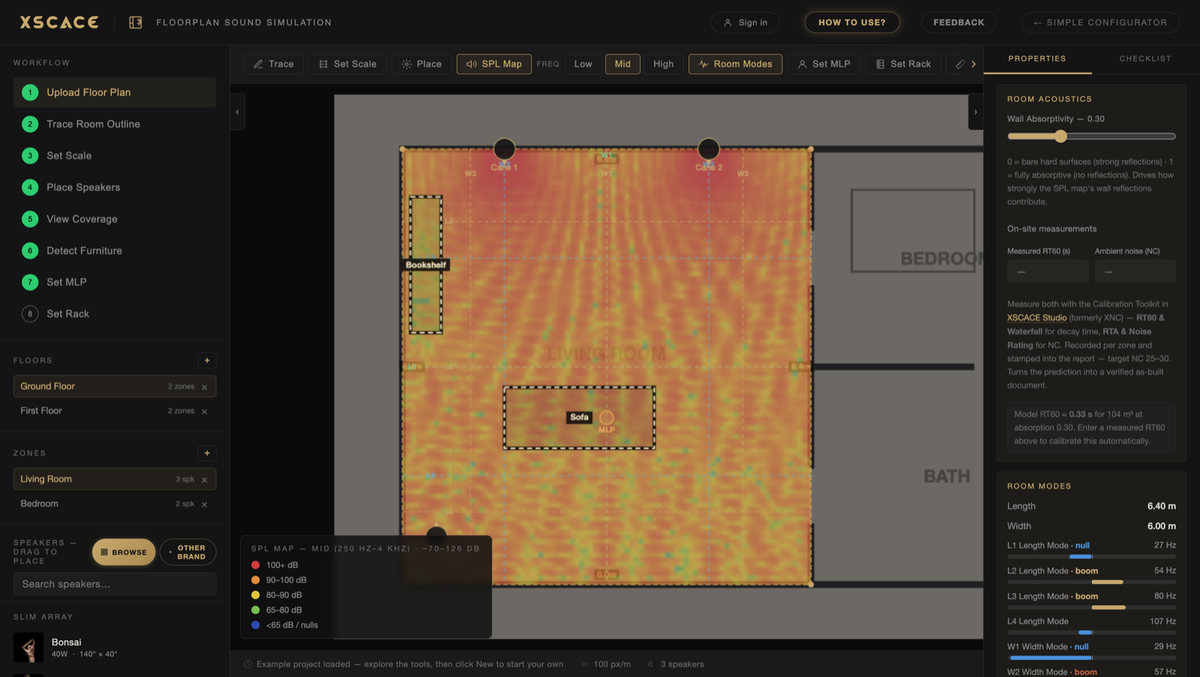
XSCACE Floorplan Sound Simulation takes a plan from trace to bill of quantities in the browser. For a room like this the outputs that matter are:
SPL coverage across the whole floor, so the far corner is proven before anything is ordered
Room modes flagged, because parallel hard surfaces build bass unevenly
First reflections marked, which in a glazed room is most of the perimeter
Controlled
Day-to-day control is XSCACE Controller on iOS and Android. It handles volume, EQ and grouping, and the streaming amplifiers also appear natively as AirPlay 2 and Spotify Connect targets, so the app is for control rather than for getting audio into the room.
Calibrated
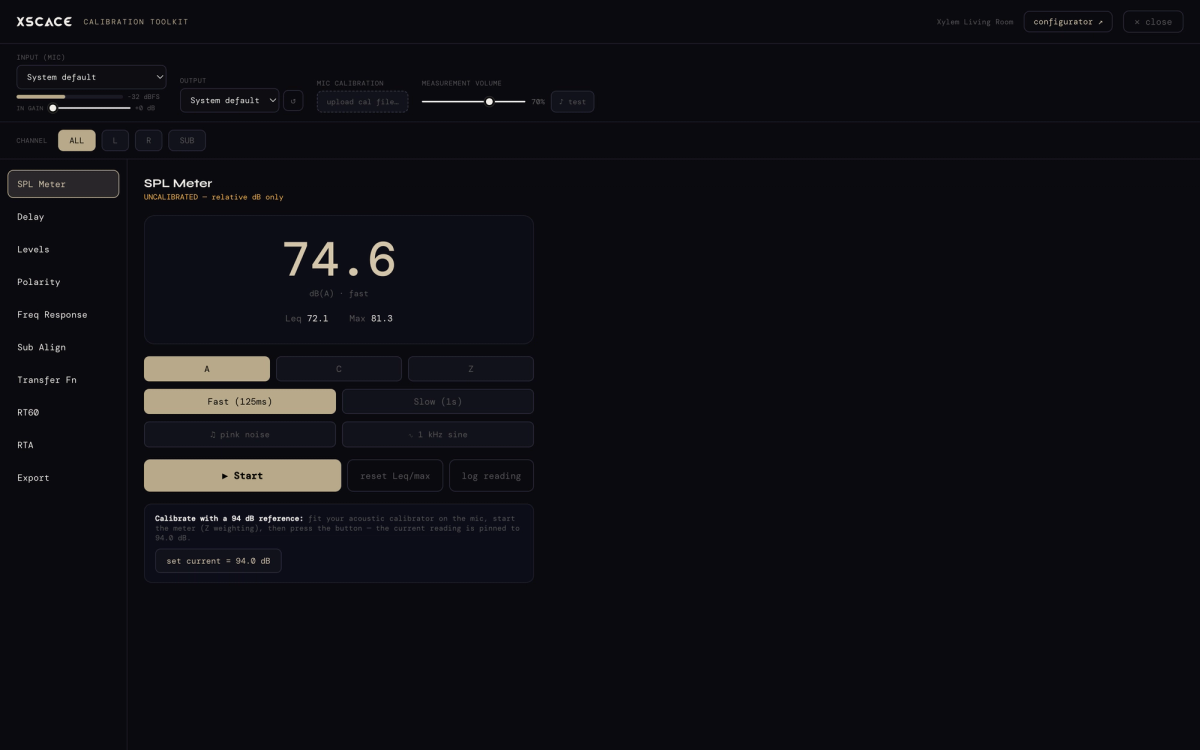
The calibration toolkit inside XSCACE Studio measures what the room actually does — eleven instruments covering SPL, delay, levels, polarity, frequency response, THD, sub alignment, transfer function, RT60, RTA and export, free on macOS. Here the ones that earn their place are:
RTA noise rating, giving the actual background level the system must clear
RT60 to ISO 3382, the number that says whether the room needs treatment too
SPL at the far corner, measured rather than assumed
Bonsai runs down to 300Hz and Acacia 6 Powered reaches 35Hz, meeting at the 300Hz crossover both records specify — a number to verify by measurement rather than assume.