Contents5 sections
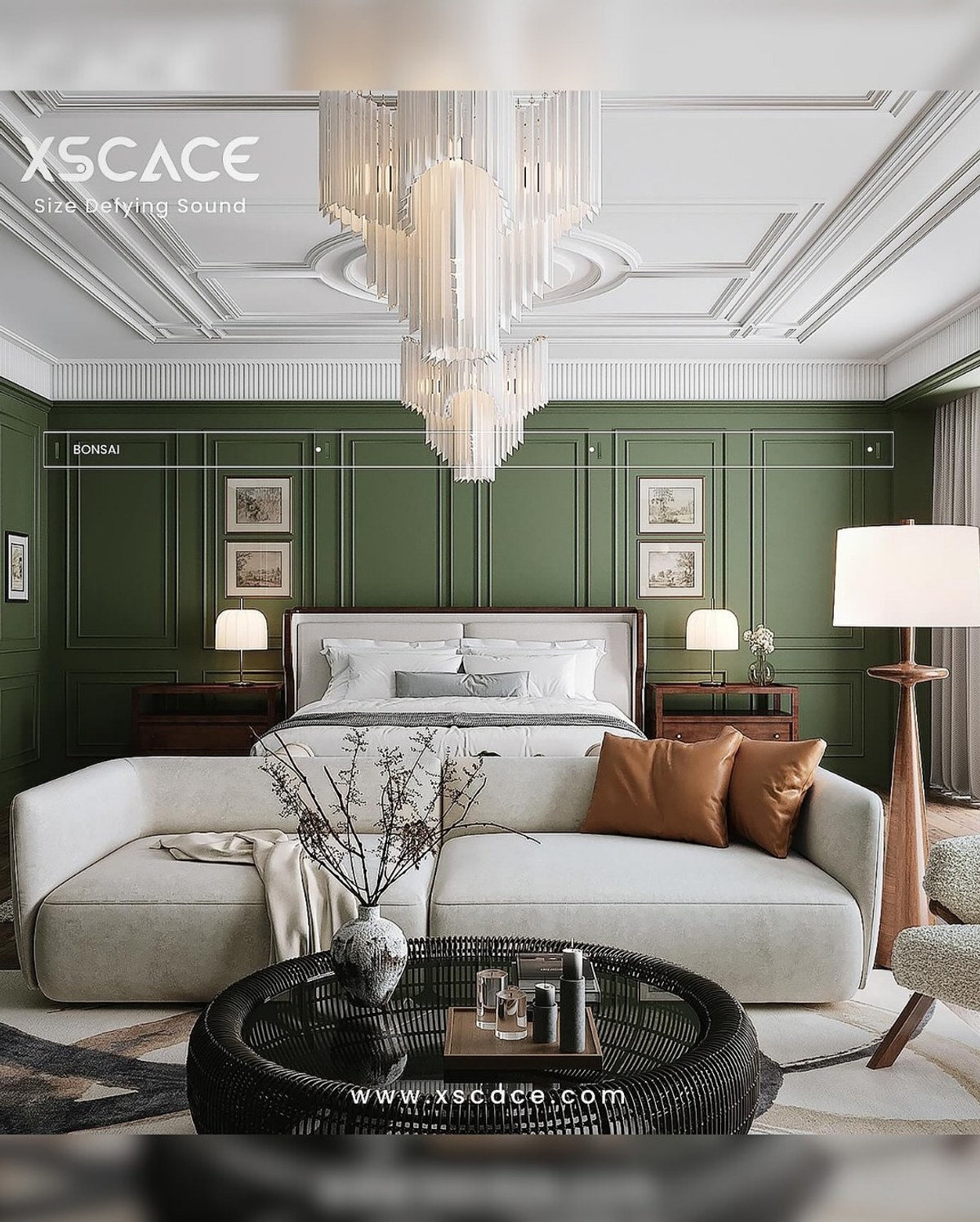
A master bedroom is one of the few rooms in a home where the speaker has to be more invisible than anywhere else — no floor-standing cabinet, nothing beside the bed, nothing that reads as ‘audio equipment’ in a room built for rest. This 16×14ft bedroom, finished in deep green wall panelling under a crystal chandelier, was specified for exactly that: discreet sound for personal viewing and private entertainment, with zero visible hardware.
The System
- XSCACE Bonsai, wall-mounted symmetrically above the headboard, flush within the panelling
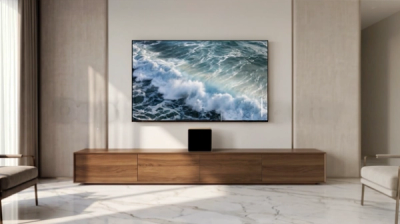
- One XSCACE Acacia 6 Powered subwoofer
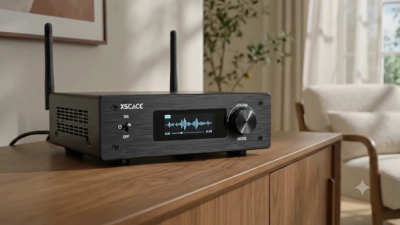
- One XSCACE Air Amp driving the 2.1 signal chain
Why Bonsai, Specifically
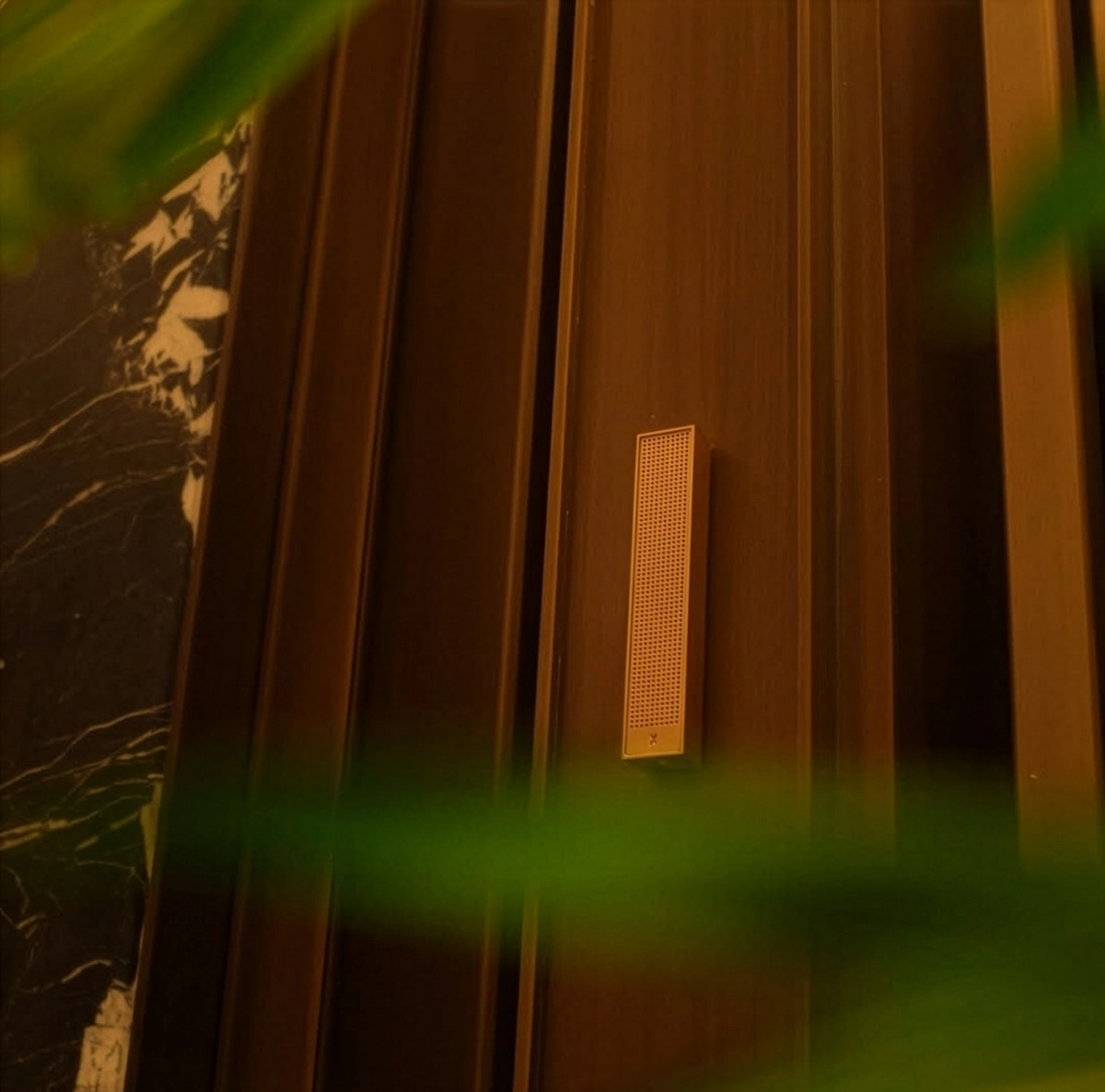
At 12mm deep, Bonsai is XSCACE's thinnest speaker — thin enough to sit genuinely flush within wall panelling rather than proud of it. That mattered here because the mounting position is directly above a headboard flanked by framed prints on either side: anything thicker would have broken the panelling's flat plane and become the visual anchor of the wall instead of one detail among several.
The Trade-Off, and Why the Subwoofer Matters More Here
That thinness has a real cost: Bonsai is rated 300Hz–18kHz, a narrower low-frequency range than XSCACE's thicker slim array speakers. The Acacia 6 Powered subwoofer, rated 35–300Hz, picks up everything below that — which in this system is a wider slice of the audible range than a subwoofer typically has to cover. Skipping the sub here wouldn't just make the system sound thin; it would leave a much larger gap than it would with a deeper speaker.
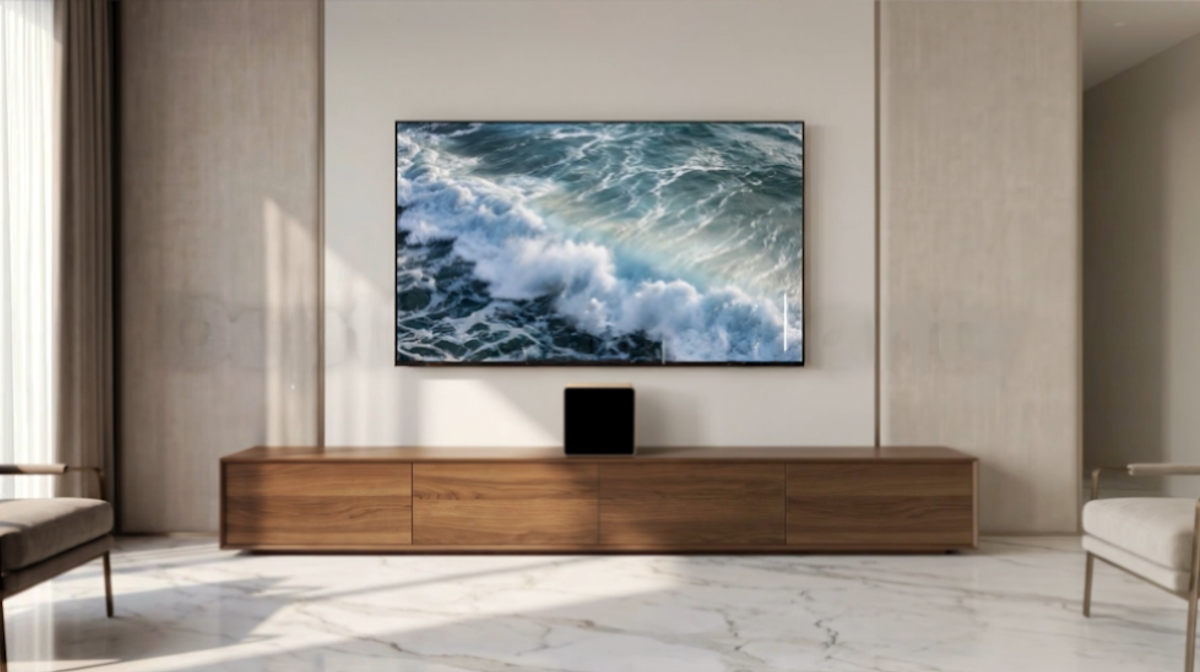
Case Study at a Glance
- Room: Master bedroom, 16×14ft
- Use case: Discreet sound for personal viewing, private entertainment
- System: XSCACE Bonsai, Acacia 6 Powered, Air Amp
- Placement: Wall-mounted symmetrically above the headboard, flush within paneling
- Goal: Immersive, room-filling sound blending seamlessly into a refined luxury interior
See the full spec sheet for XSCACE Bonsai, or plan your own room with the free Floorplan Sound Simulation tool.
Planned, controlled and calibrated for low-level listening
Every XSCACE installation follows the same three stages: planned in the simulator, controlled from the app that matches the hardware, and calibrated with measurement. A bedroom is used quietly, and quiet listening is unforgiving — at low level, timing and tonal balance are all that is left.
Planned
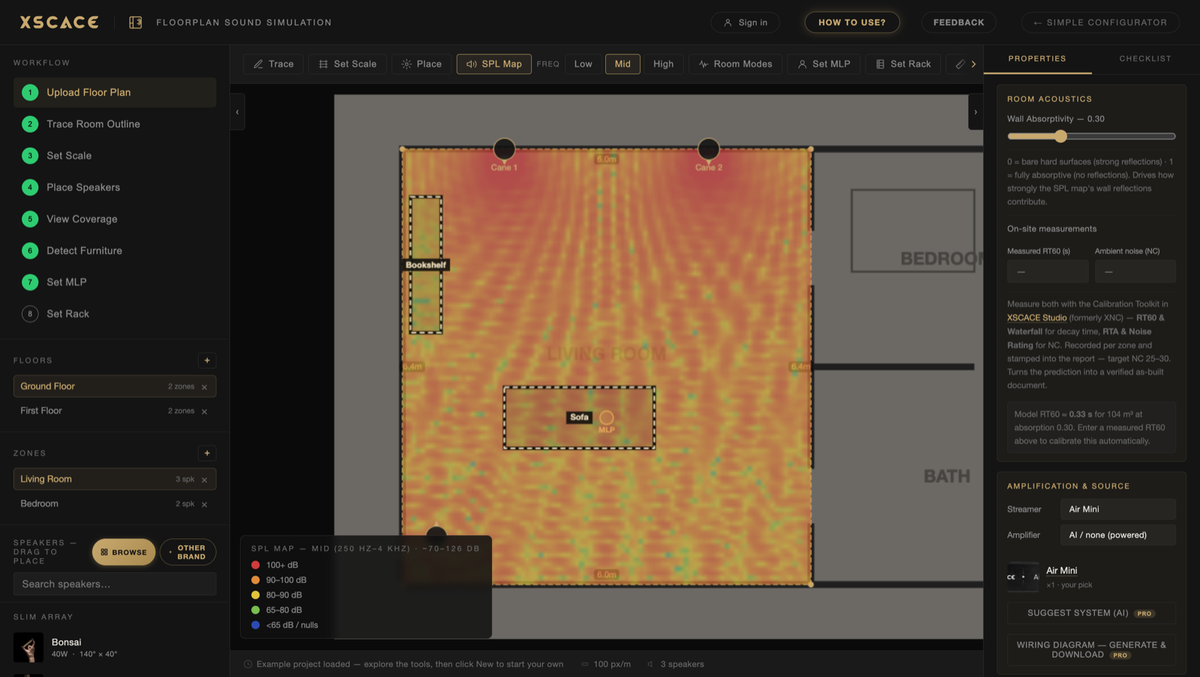
XSCACE Floorplan Sound Simulation takes a plan from trace to bill of quantities in the browser. For a room like this the outputs that matter are:
Coverage at the bed, the one position that matters
Placement checked against soft furnishing, which absorbs unevenly across frequency
Quantities and finishes agreed before joinery is cut
Controlled
Day-to-day control is XSCACE Controller on iOS and Android. It handles volume, EQ and grouping, and the streaming amplifiers also appear natively as AirPlay 2 and Spotify Connect targets, so the app is for control rather than for getting audio into the room.
Calibrated
The calibration toolkit inside XSCACE Studio measures what the room actually does — eleven instruments covering SPL, delay, levels, polarity, frequency response, THD, sub alignment, transfer function, RT60, RTA and export, free on macOS. Here the ones that earn their place are:
Levels matched channel to channel, so the image sits where it should
RT60 to ISO 3382 — soft rooms measure very differently from the rest of a house
Frequency response, because tonal balance is what carries at low volume
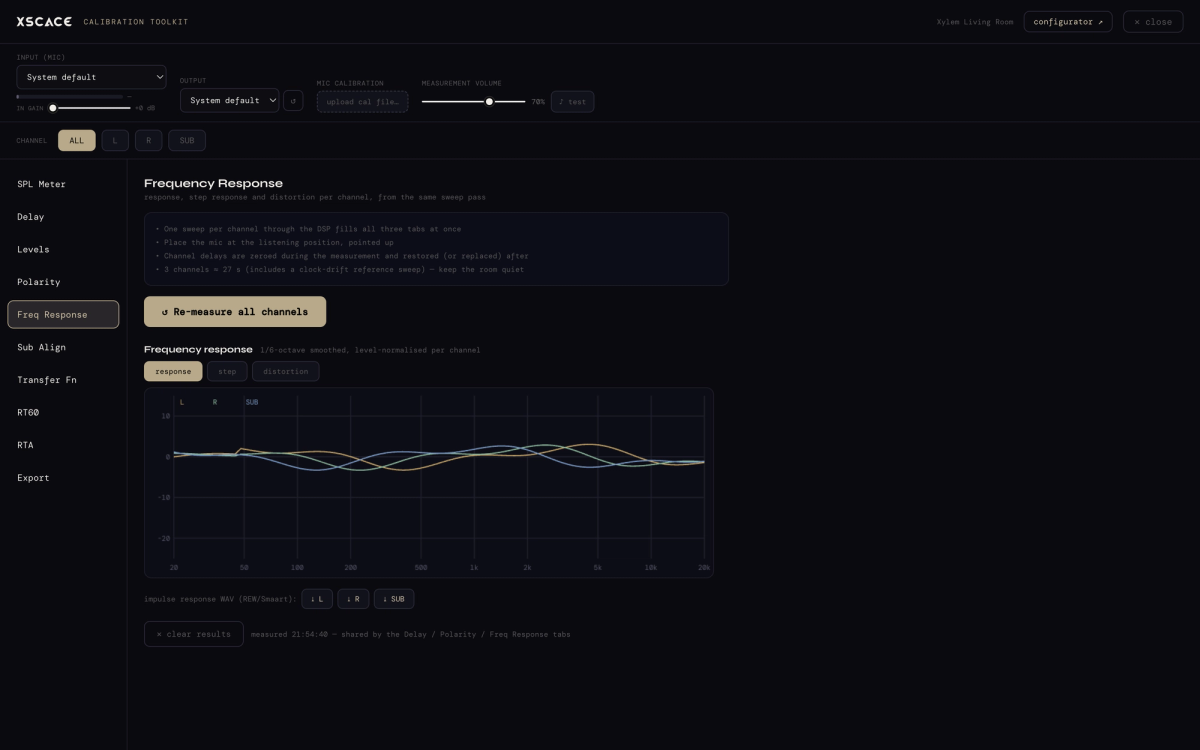
Bonsai runs down to 300Hz and Acacia 6 Powered reaches 35Hz, meeting at the 300Hz crossover both records specify — a number to verify by measurement rather than assume.