Contents4 sections
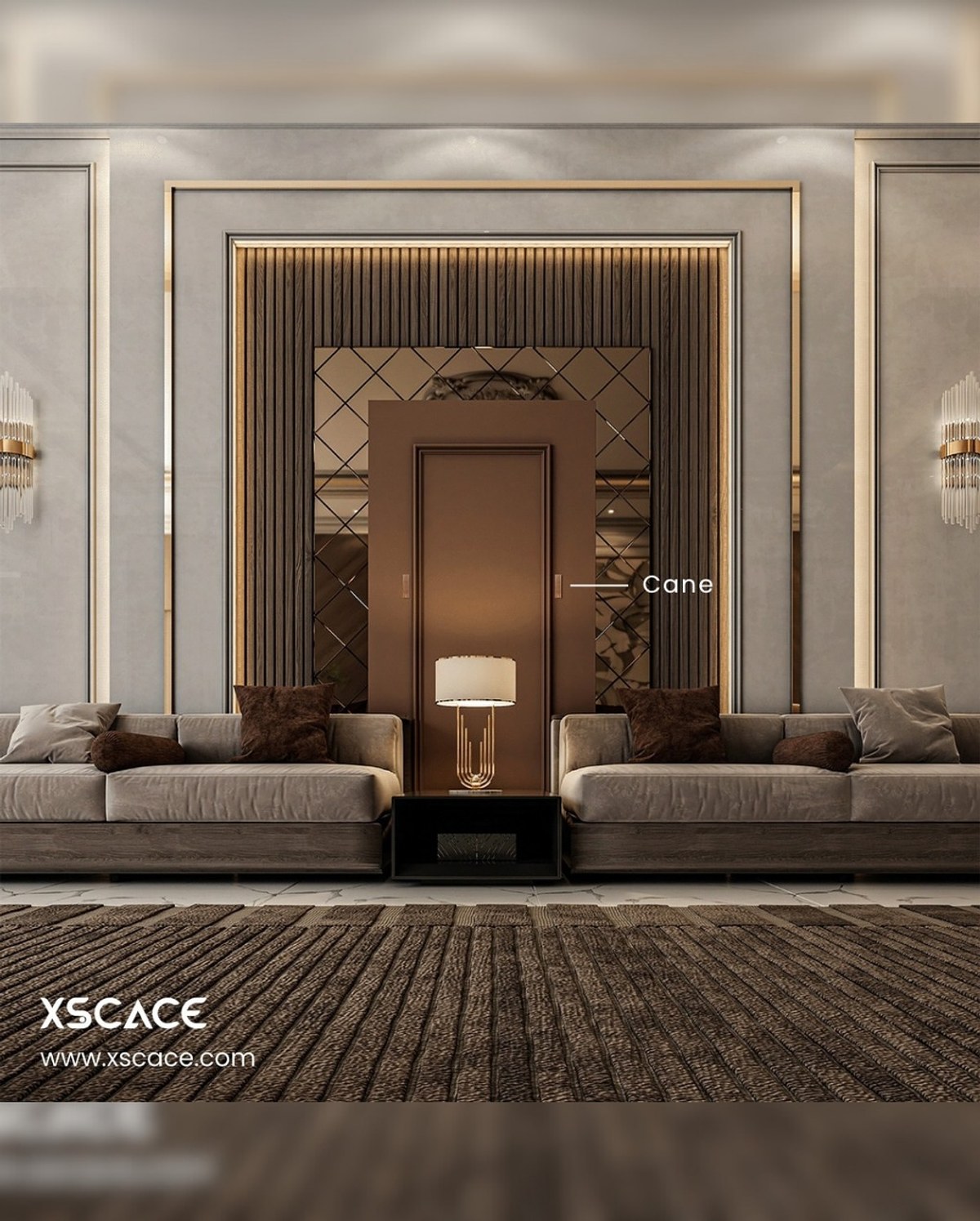
Not every lobby is a grand hall built around a fireplace. This 12×10ft lobby area — a mirrored, diamond-panelled doorway flanked by low sofas — called for something more relaxed: luxury ambient sound and casual listening, discreetly embedded within the wall panels or beside the sofas, whichever kept the room's visual harmony intact.
The System
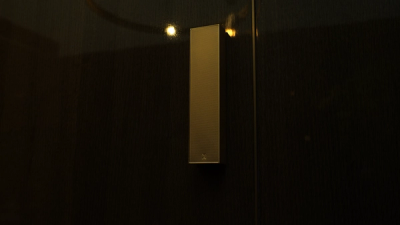
- A pair of XSCACE Cane speakers, discreetly embedded within the wall panels beside the sofas
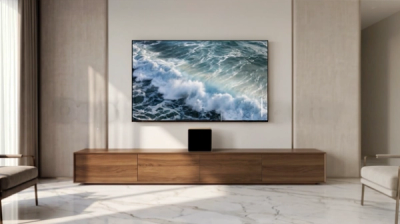
- One XSCACE Acacia 10 Powered subwoofer
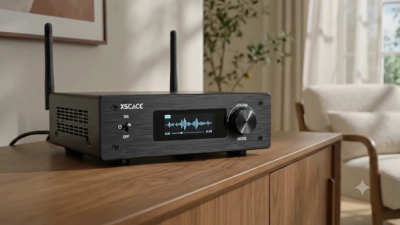
- One XSCACE Air Amp, 2.1 stereo
Letting the Architecture Do the Hiding
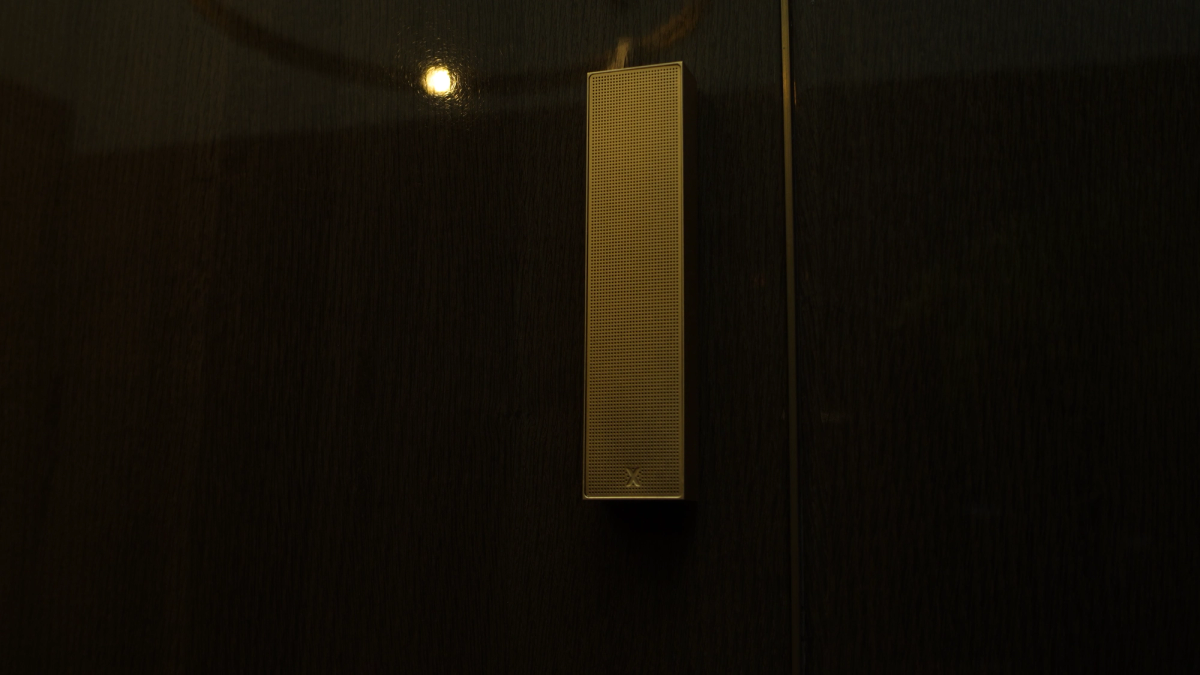
The mirrored, diamond-panelled doorway in this lobby has enough visual texture of its own that Cane's slim 23mm profile disappears into it rather than needing a flush, seamless wall the way a plain plaster surface would. Placing the speaker where the wall detailing is already busy is a different discretion strategy than the flat-panel integrations seen elsewhere in XSCACE's case studies — the goal is the same, but the method follows whatever the room's own architecture offers.
Case Study at a Glance
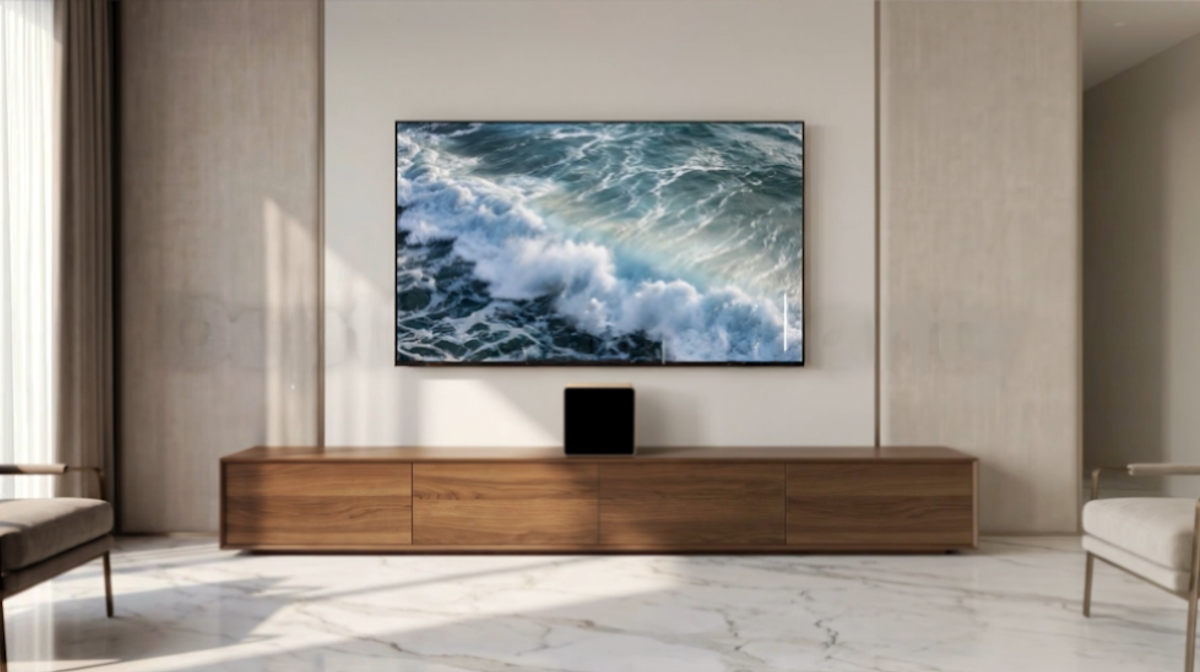
- Room: Lobby area, 12×10ft
- Use case: Luxury ambient and casual listening
- System: 2× XSCACE Cane, Acacia 10 Powered, Air Amp
- Placement: Discreetly embedded within wall panels or beside the sofas
- Goal: Immersive, high-fidelity sound without disrupting the room's symmetry and elegance
Read the hotel lobby case study for a larger, more formal common-area brief using the same core system.
Planned, controlled and calibrated in a reverberant space
Every XSCACE installation follows the same three stages: planned in the simulator, controlled from the app that matches the hardware, and calibrated with measurement. Lobbies are stone, glass and height — the least forgiving acoustic in a building, and the first thing a visitor experiences.
Planned
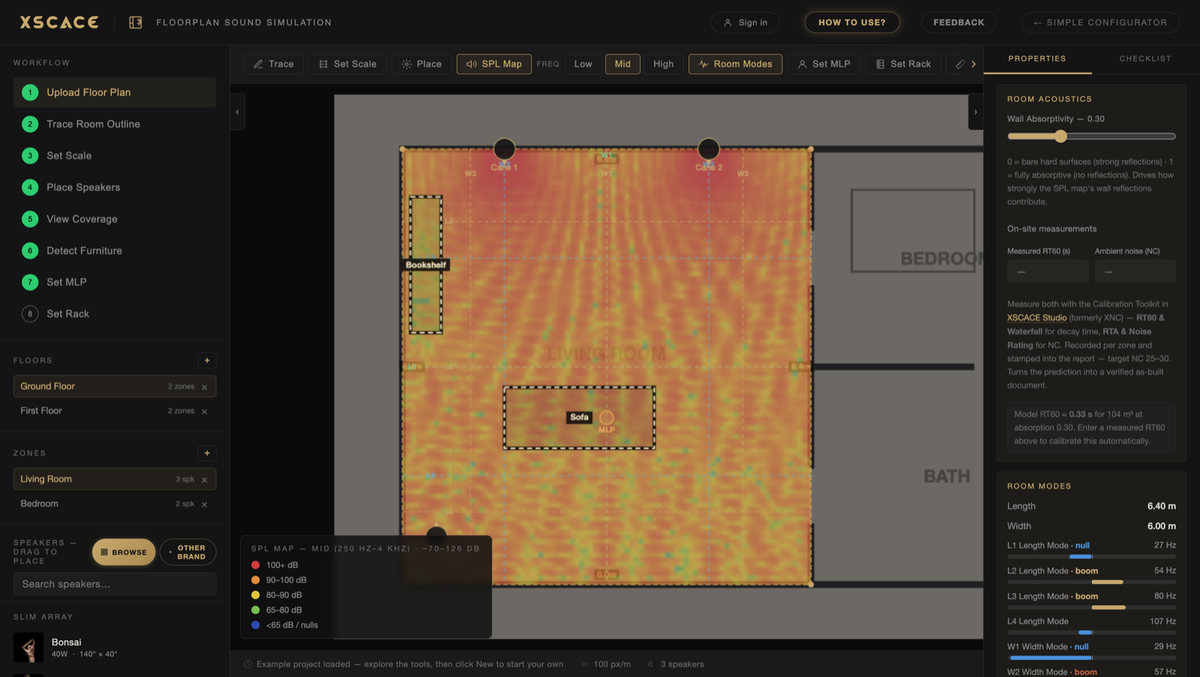
XSCACE Floorplan Sound Simulation takes a plan from trace to bill of quantities in the browser. For a room like this the outputs that matter are:
Coverage across the arrival path rather than a single point
Room modes and reflections located in a space with no absorption
A client-ready drawing for sign-off before the finishes go on
Controlled
Day-to-day control is XSCACE Controller on iOS and Android. It handles volume, EQ and grouping, and the streaming amplifiers also appear natively as AirPlay 2 and Spotify Connect targets, so the app is for control rather than for getting audio into the room.
Calibrated
The calibration toolkit inside XSCACE Studio measures what the room actually does — eleven instruments covering SPL, delay, levels, polarity, frequency response, THD, sub alignment, transfer function, RT60, RTA and export, free on macOS. Here the ones that earn their place are:
RT60 to ISO 3382, the defining number in a hard tall room
SPL along the arrival route
Frequency response, since reverberation colours tone as well as timing
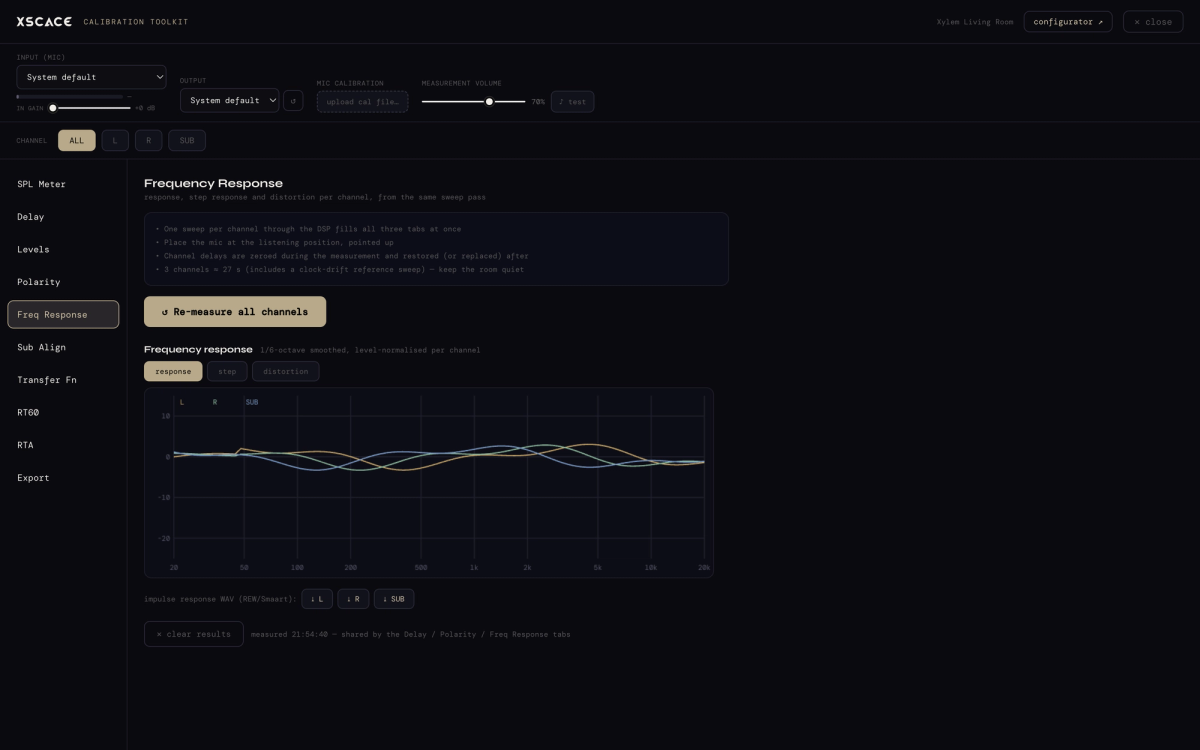
Cane runs down to 150Hz against Acacia 10 Powered's 35Hz, and the two records recommend different crossover points (200Hz and 300Hz). Which suits the room is a measurement, not a preference.