Contents5 sections
On 12 October 2026, Inc42 — India's most-read startup and technology publication — ran a feature titled "How XSCACE Is Taking On Bose And B&O With 12mm-Thin Speakers". It is the first long-form piece to set out, in one place, why XSCACE builds 12mm-thin speakers at all, what the trade-off behind that number is, and how a bootstrapped Canadian architectural audio company is going about it. This page summarises what Inc42 reported, adds the specifications behind the claims, and links to the original article so you can read it in full.
What Inc42 reported about XSCACE's 12mm-thin speakers
The article is written for a general technology readership rather than for installers, so it stays at the level of the idea and the business. The facts it puts on record:
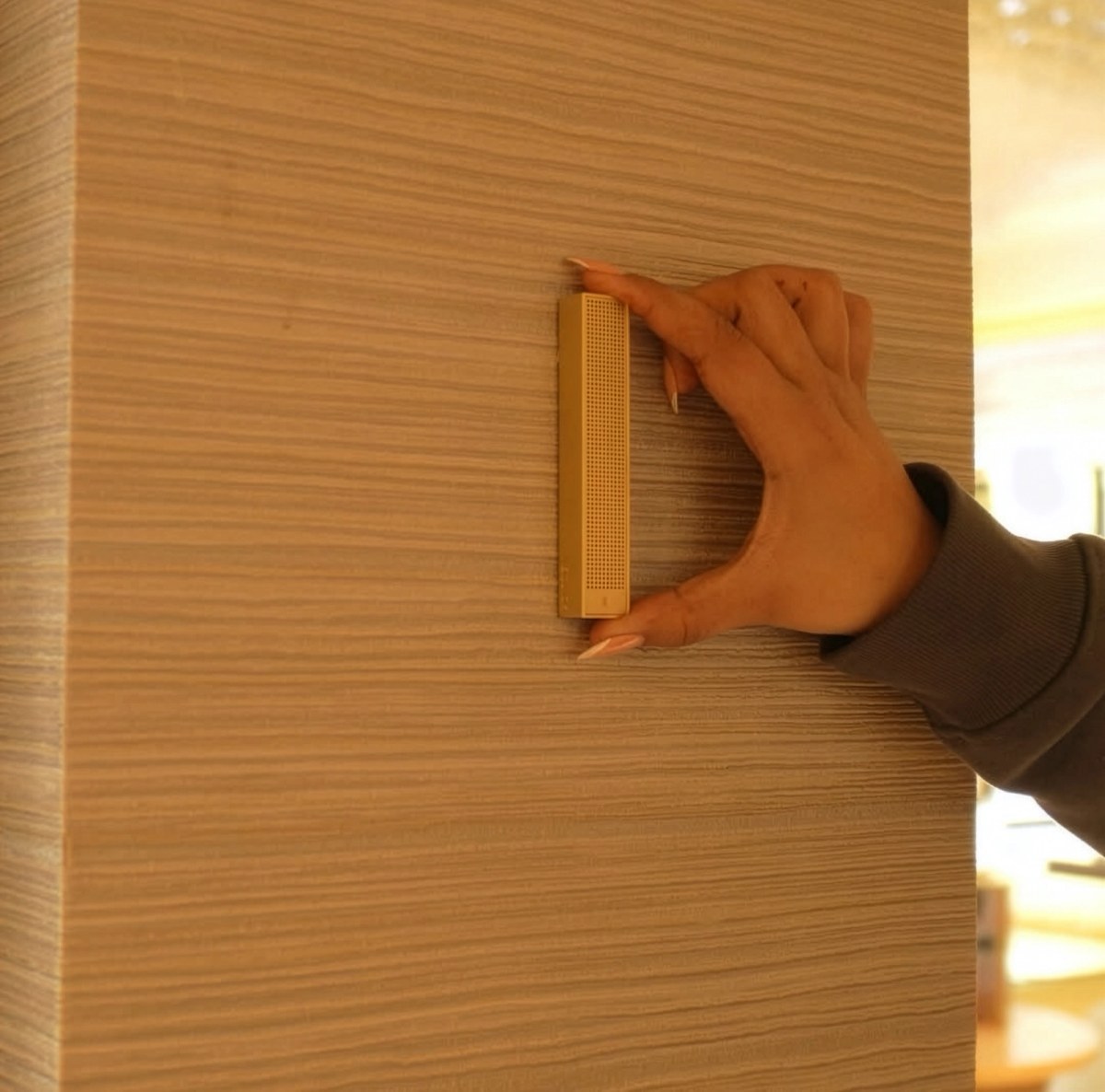
- Bonsai — 12 mm thin, 40 W, mounts on the wall, in the wall or in the ceiling.
- Cane — 23 mm thin, 50 W, the slim-array format in a longer, higher-output body.
- Six proprietary technologies behind the form factor: Nano Resonance, PowerDense Dynamics, AeroFrame Chassis, PrecisionXover Array, XS-Flow and PsySculpt.
- Software alongside the hardware — Inc42 describes an "AI configurator" for planning and a "Xylem DSP controller" for tuning. On this site those are the Floorplan Sound Simulation and XSCACE Studio, which drives the Xylem DSP amplifiers.
- Bootstrapped, with the first commercial sale in January 2024 and reported FY26 revenue of ₹20.38 crore.
- Markets in focus: India, the United States, Europe and the Middle East, with the product range widening from speakers into DSP, amplification and the surrounding ecosystem.
The line from co-founder Utkarsh Hora that Inc42 builds the piece around is about the physics rather than the product: the trade-off in speaker design was not removed, the company simply became "far more intentional about where it exists".
The trade-off behind a 12mm-thin speaker
Inc42 frames the engineering problem through Hoffman's Iron Law, which is the right frame. In a loudspeaker you can have small size, deep bass extension or high efficiency — pick two. A 12 mm enclosure has almost no internal volume, so the usual answer is a speaker that is either quiet or thin-sounding. XSCACE's six technologies are each an attempt to move where the compromise lands rather than pretend it has gone:
- Nano Resonance: compact motor structures with denser cones, lowering the natural resonant frequency so a small driver reaches lower than its size suggests.
- PowerDense Dynamics: high-gauss neodymium magnets and light voice coils, so the driver has headroom despite the shallow motor.
- PrecisionXover Array: a crossover on a compact multilayer board, time-aligned, that fits inside the 12 mm.
- AeroFrame Chassis: the aluminium body as the heat sink, because there is no air volume to carry heat away.
- XS-Flow: port geometry from computational fluid dynamics, so the little air that moves does so without noise.
- PsySculpt: psychoacoustic tuning at the driver and crossover level — not room correction, which is done separately in XSCACE Studio.
What that produces, in numbers that are on the product pages rather than in the article:
| Bonsai | Cane | |
|---|---|---|
| Thickness | 12 mm | 23 mm |
| Power (RMS) | 40 W | 50 W |
| Sensitivity | 86 dB | 92 dB |
| Frequency range | 300 Hz – 18 kHz | 150 Hz – 20 kHz |
| Impedance | 8 Ω | 8 Ω |
| Format | Slim array · wall, in-wall, in-ceiling | Slim array · wall, in-wall, in-ceiling |
The honest reading of that table is the point Inc42's quote makes. A 12 mm speaker does not produce 40 Hz, and XSCACE does not claim it does: the Bonsai is rated from 300 Hz, the Cane from 150 Hz, and both are designed to be paired with a subwoofer — the Acacia in-wall or Juniper — which carries the bottom two octaves from somewhere the eye does not go. The trade-off is placed where it can be hidden, not abolished.
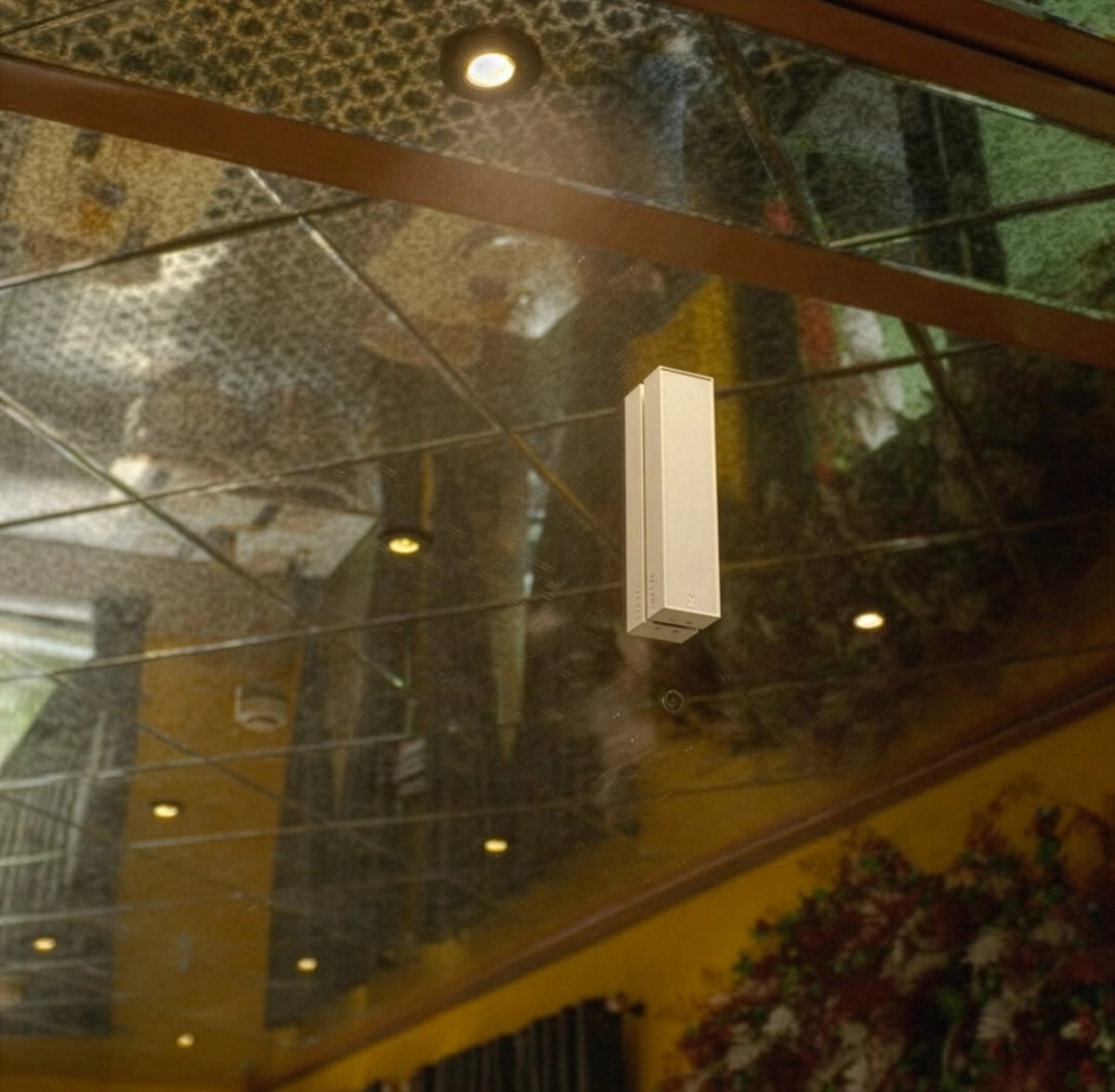
Taking on Bose and B&O — what the comparison means
The headline puts XSCACE against Bose and Bang & Olufsen. It is worth being precise about what that is a comparison of. Both are excellent at what they make, and both make objects: a speaker you see, choose for its looks and place in the room. XSCACE's argument is that in an architect-designed interior the best-looking speaker is the one that is not there — flush with the plaster, the stone or the timber, painted or finished to match, and sized so it can go into a wall that was never built to take a speaker. That is a different category, and the 12 mm figure is what makes the category possible. Whether the sound competes is settled room by room, which is why the company publishes predicted coverage for every design and measures the result at commissioning.
Where XSCACE is and where Inc42 says it is going
- Founded in Toronto, Canada, out of a University of Toronto research question about why architects left hi-fi speakers out of their drawings — the company story is on the About page.
- Six patents; 35 products across slim-array, in-ceiling, in-wall, outdoor, subwoofers and amplifiers.
- Distribution through appointed partners in India, the Philippines, Thailand, the Middle East, Australia, the United Kingdom, Europe and Canada — see Find a distributor.
- Inc42's reading of the next phase: the hardware range as one layer of an ecosystem with the planning software, DSP amplification and calibration tools around it. That is already visible in the Xylem DSP amplifier and in design work such as Grand Prix Plaza, Las Vegas, which was planned end to end in the simulation.
Read the original
The full feature is at inc42.com. Inc42 is independent of XSCACE; the facts and the framing above are theirs, the specifications are ours, and anything in between is marked as such. For press enquiries, write to support@xscace.com.