Contents6 sections
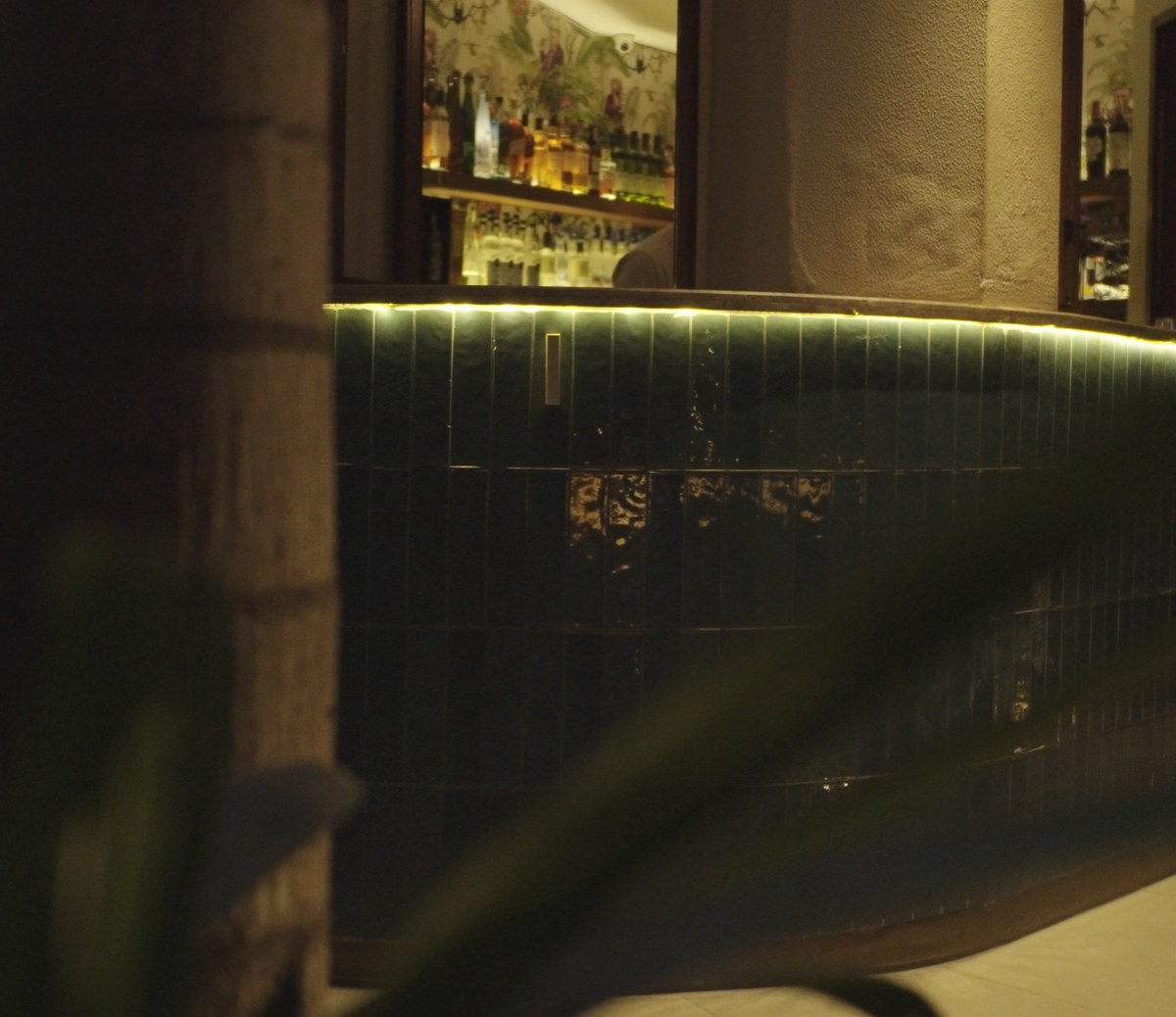
Restaurant and bar fit-outs are a different brief to a private home: speakers need to survive a commercial duty cycle — hours of continuous play, more foot traffic near the mounting surface, cleaning chemicals on nearby tile — while still disappearing into a considered interior design. This install placed Bonsai directly onto a curved bar counter faced in deep emerald glazed tile, and again on a stucco pillar beside an open exhibition kitchen with a wood-fired pizza oven.
Case Study at a Glance
- Room: restaurant bar + open exhibition kitchen
- Product: Bonsai (12mm slim-array)
- Mounting surface: emerald glazed tile + stucco pillar
- Finish: black aluminium
- Goal: even background coverage across a working commercial bar
Duty-cycle considerations for commercial installs
A private living room speaker might run a few hours a day; a restaurant bar speaker runs through every service period, potentially six or seven days a week. Bonsai's aerospace-aluminium chassis doubles as a passive heatsink, which matters more in continuous commercial duty than in intermittent home use — sustained playback generates more cumulative heat in the voice coil, and a chassis that dissipates it passively avoids the thermal compression that degrades sound quality on cheaper enclosures under long duty cycles.
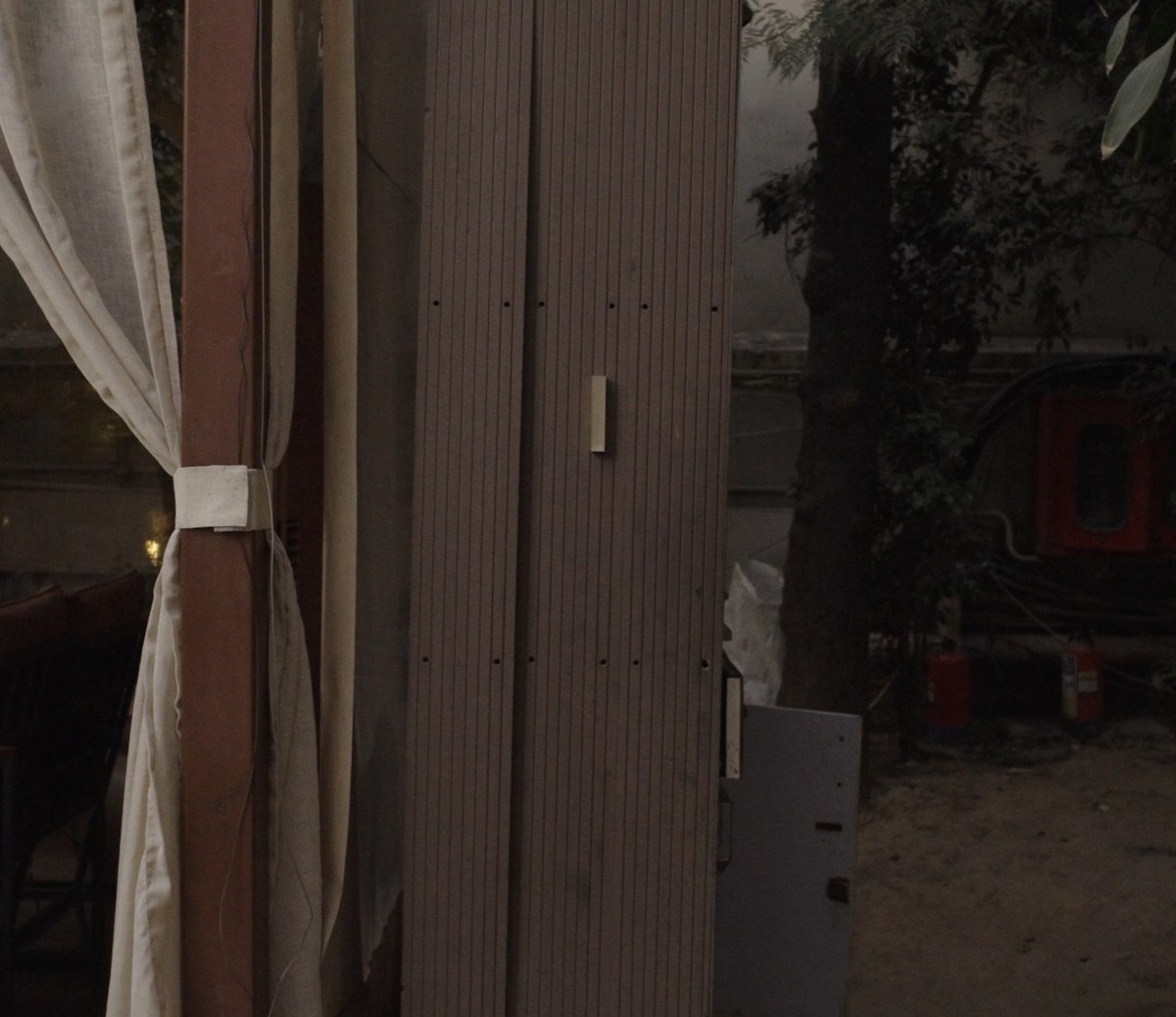
Two mounting surfaces, one design logic
The glazed tile bar face and the rougher stucco pillar are visually very different, but both share the same practical constraint: neither wanted a speaker enclosure large enough to become a design feature on its own. Bonsai's 12mm depth and champagne or black finish options meant the same speaker could work on both without looking like an afterthought on either.
Coverage over a bar and kitchen pass
Restaurant bars need consistent coverage across a wider area than a single listening position, so multiple Bonsai units were distributed across the bar face and pillar rather than concentrated in one spot — closer to how architectural speakers are typically zoned in hospitality projects, prioritising even SPL across the space over peak output at any one point.
The system
The Bonsai array runs off an Air Amp for the bar zone, with an Acacia 10 Powered subwoofer (200W RMS, 35Hz–300Hz) providing the low end for background music and ambient tracks through service hours.
How this room was planned, controlled and calibrated
Every XSCACE installation follows the same three stages: planned in the simulator, controlled from the app that matches the hardware, and calibrated with measurement. A commercial room is judged on consistency — the table by the window should hear what the table by the bar hears.
Planned
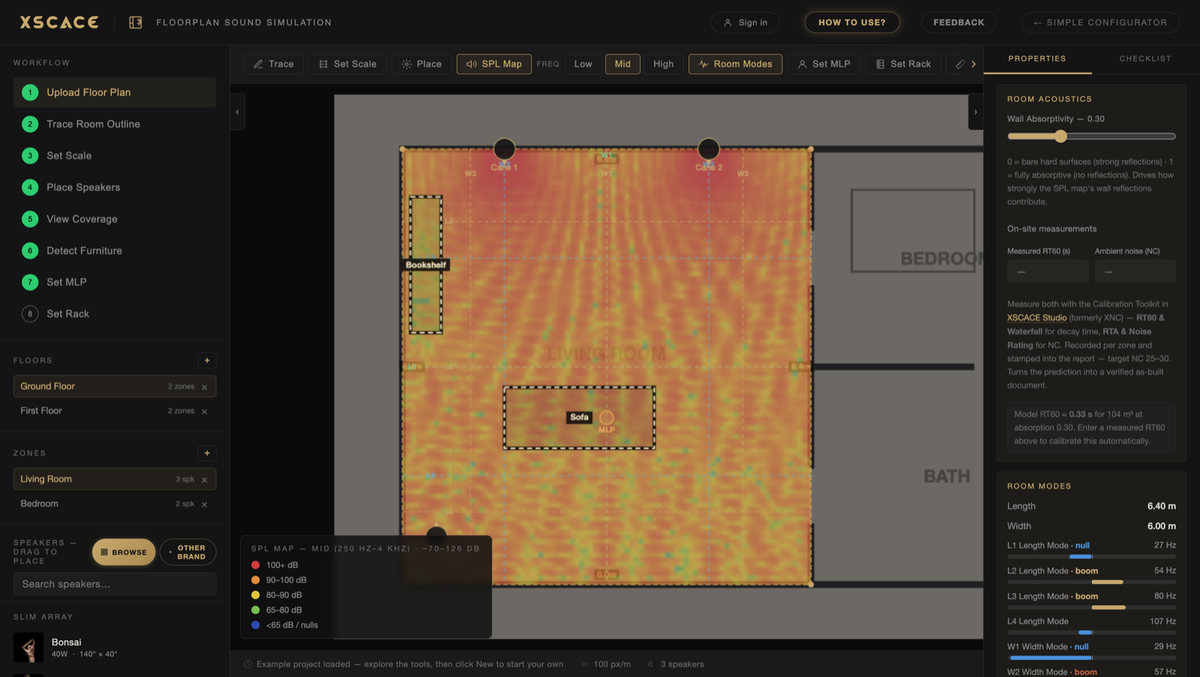
XSCACE Floorplan Sound Simulation takes a plan from trace to bill of quantities in the browser. For a room like this the outputs that matter are:
Coverage checked table by table, so no seat is the bad seat
Room modes located before the fit-out covers the structure
A bill of quantities the operator can price against
Controlled
Day-to-day control is XSCACE Controller on iOS and Android. It handles volume, EQ and grouping, and the streaming amplifiers also appear natively as AirPlay 2 and Spotify Connect targets, so the app is for control rather than for getting audio into the room.
Calibrated
The calibration toolkit inside XSCACE Studio measures what the room actually does — eleven instruments covering SPL, delay, levels, polarity, frequency response, THD, sub alignment, transfer function, RT60, RTA and export, free on macOS. Here the ones that earn their place are:
RTA noise rating, NC-15 to NC-65, setting the level the system must clear once the room is full
SPL measured at each zone against the design target
RT60 to ISO 3382, showing whether hard surfaces need treating as well as covering
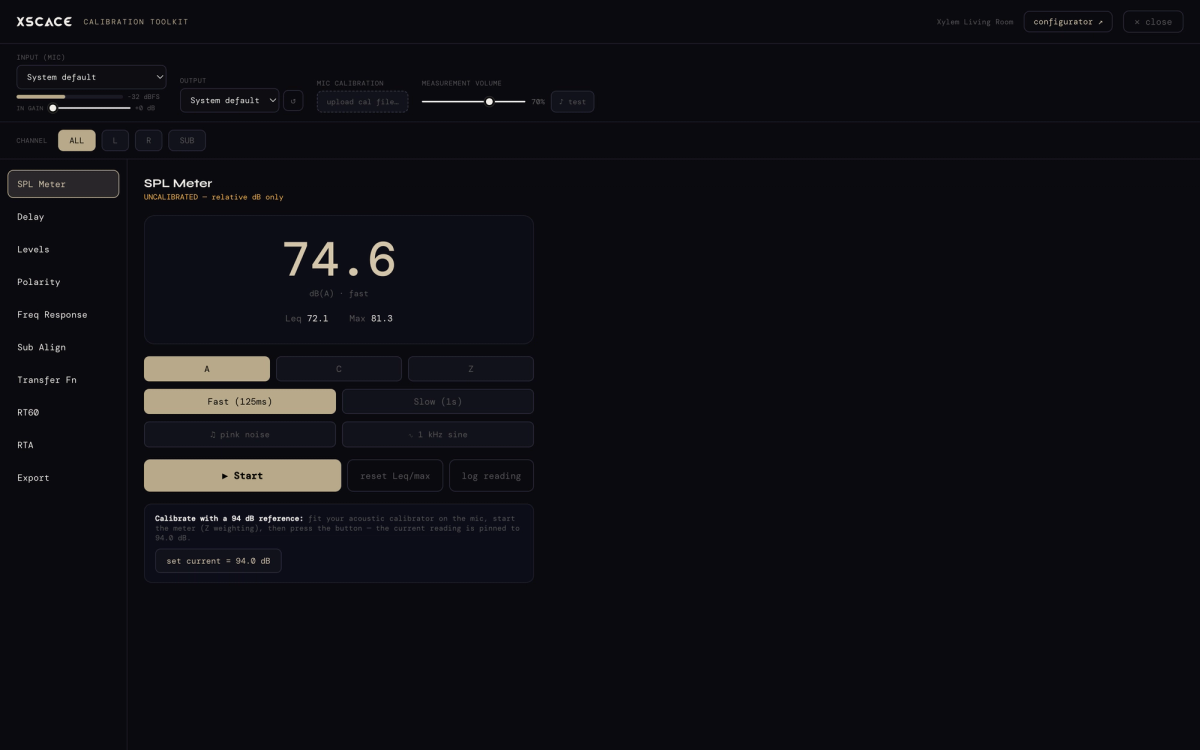
Bonsai runs down to 300Hz and Acacia 10 Powered reaches 35Hz, meeting at the 300Hz crossover both records specify — a number to verify by measurement rather than assume.