Contents6 sections
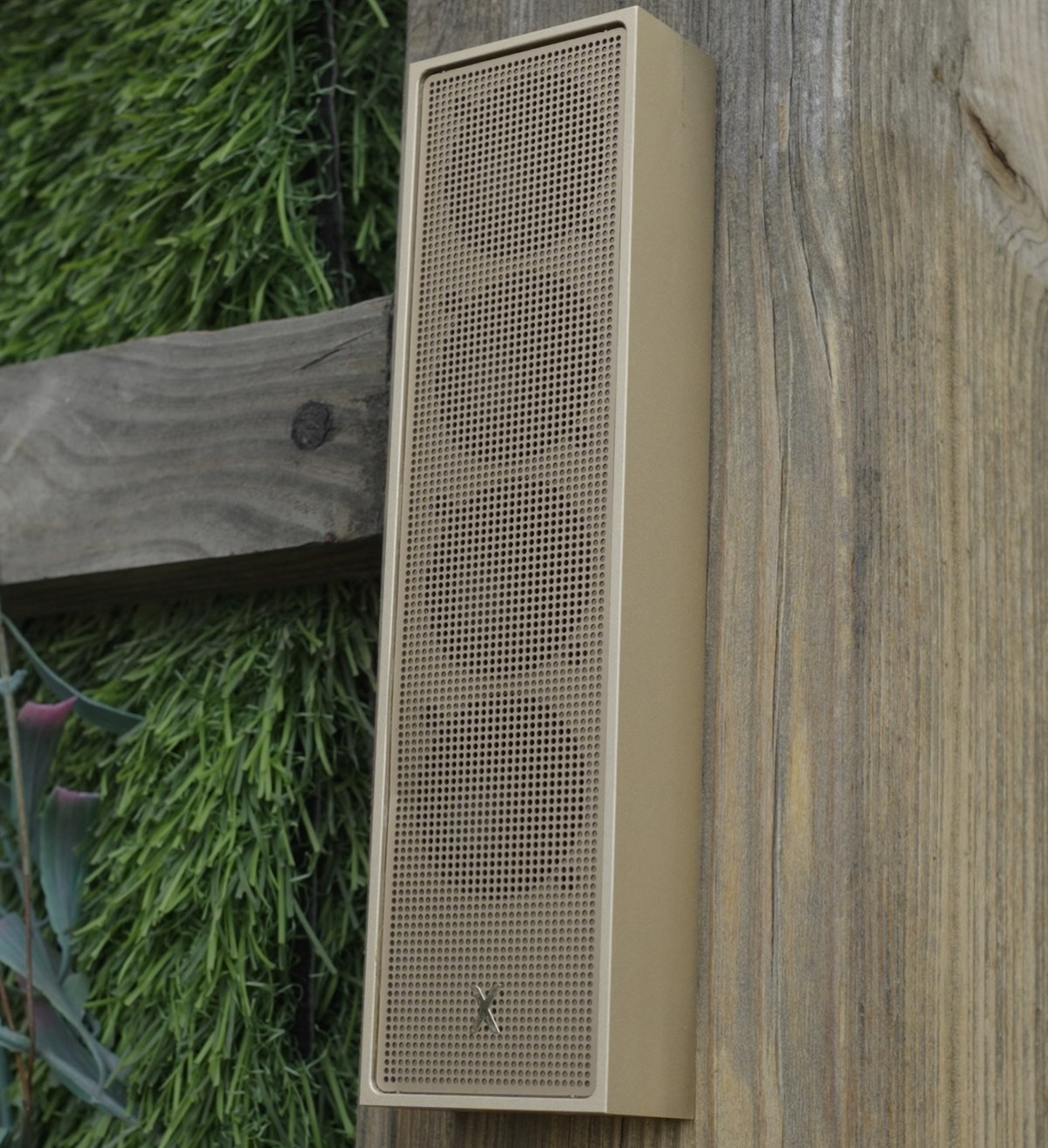
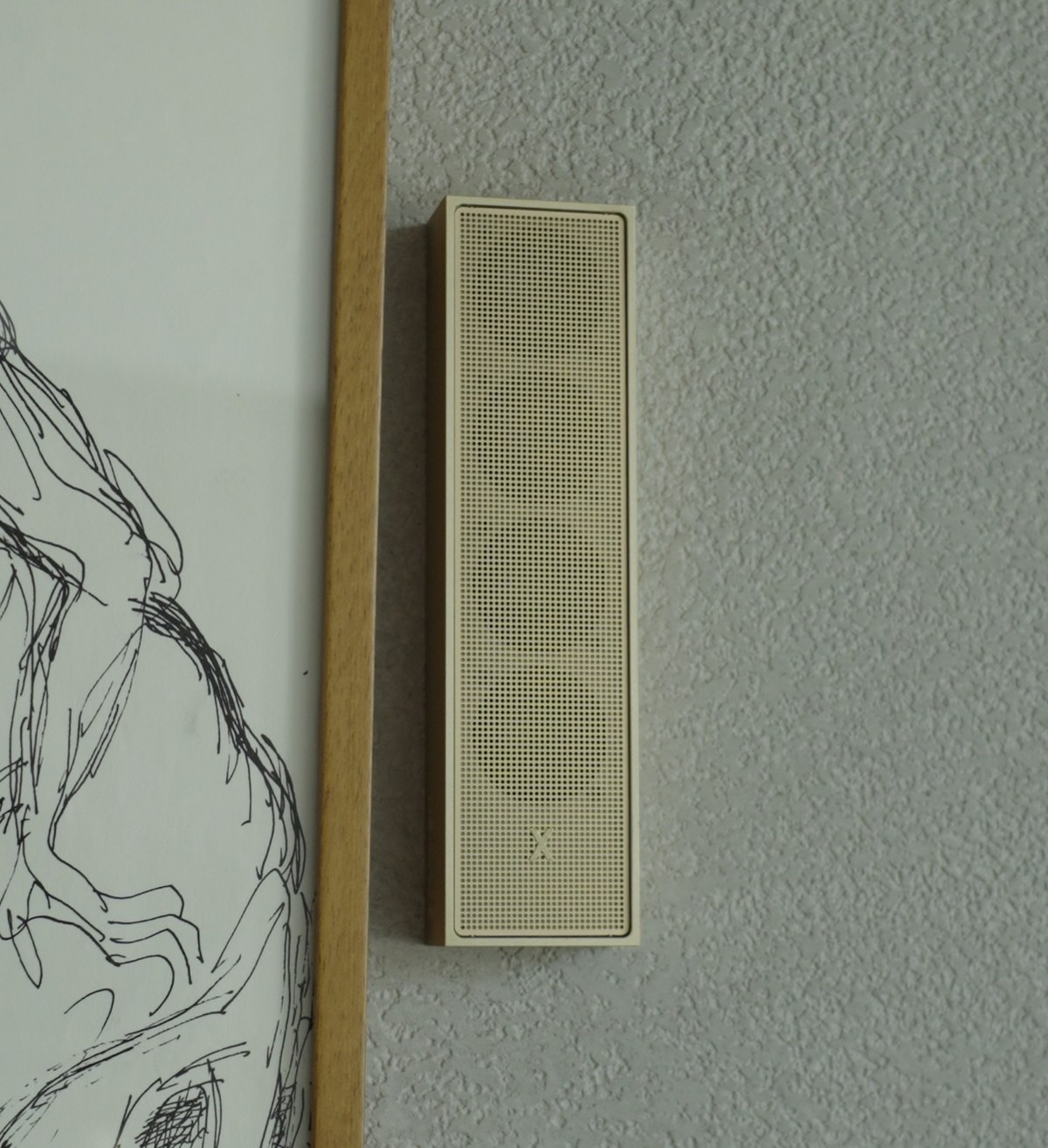
Outdoor garden and patio installs need a speaker that can handle humidity and temperature swings without needing a dedicated Outdoor Series enclosure in every case — for covered or semi-exposed settings, Cane's IP66 rating and marine-treatable construction cover that ground. This install mounted a champagne-finish Cane directly onto a weathered natural wood fence post backed by greenery, extending indoor sound out to a garden feature wall.
Case Study at a Glance
- Setting: outdoor garden wall, continuing into an indoor living room
- Product: Cane (23mm slim-array, IP66)
- Mounting surface: weathered wood fence + marble living room wall
- Finish: champagne aluminium
- Goal: one product line covering an exposed garden zone and a formal interior
Zoning an indoor-outdoor system from one product line
Running Cane across both the exposed garden fence and the adjoining marble living room doesn't mean the two zones share one volume control — outdoor ambient noise levels and indoor acoustics are different enough that independent zoning, even on the same amplifier, is the right approach. What the shared product line does simplify is the install itself: one cable spec, one set of mounting brackets, and one crossover setting to tune across both zones, even with independent volume control per zone.
IP66 on a slim-array speaker
Most ultra-thin architectural speakers trade weatherproofing for depth — sealing a 23mm enclosure against moisture ingress is harder than sealing a bulkier outdoor speaker. Cane carries an IP66 rating despite its slim profile, meaning it's protected against dust ingress and powerful water jets, which is why it was specified here instead of an indoor-only slim-array model.
From garden wall to living room
The same install continued indoors, with Cane mounted flush against a light beech-toned picture-frame edge and, further into the home, feeding a formal living room finished in bookmatched grey-veined marble — a single product line covering both an exposed garden feature and a formal interior space without switching speaker models between zones.
The system
An Air Amp drives the Cane array, with an Acacia 10 Powered subwoofer (200W RMS, 35Hz–300Hz) providing low-end support across both the outdoor and adjoining indoor zones.
Planned, controlled and calibrated without walls
Every XSCACE installation follows the same three stages: planned in the simulator, controlled from the app that matches the hardware, and calibrated with measurement. Outdoors there are no boundaries to reinforce anything, so level falls away with distance and coverage has to be designed rather than hoped for.
Planned
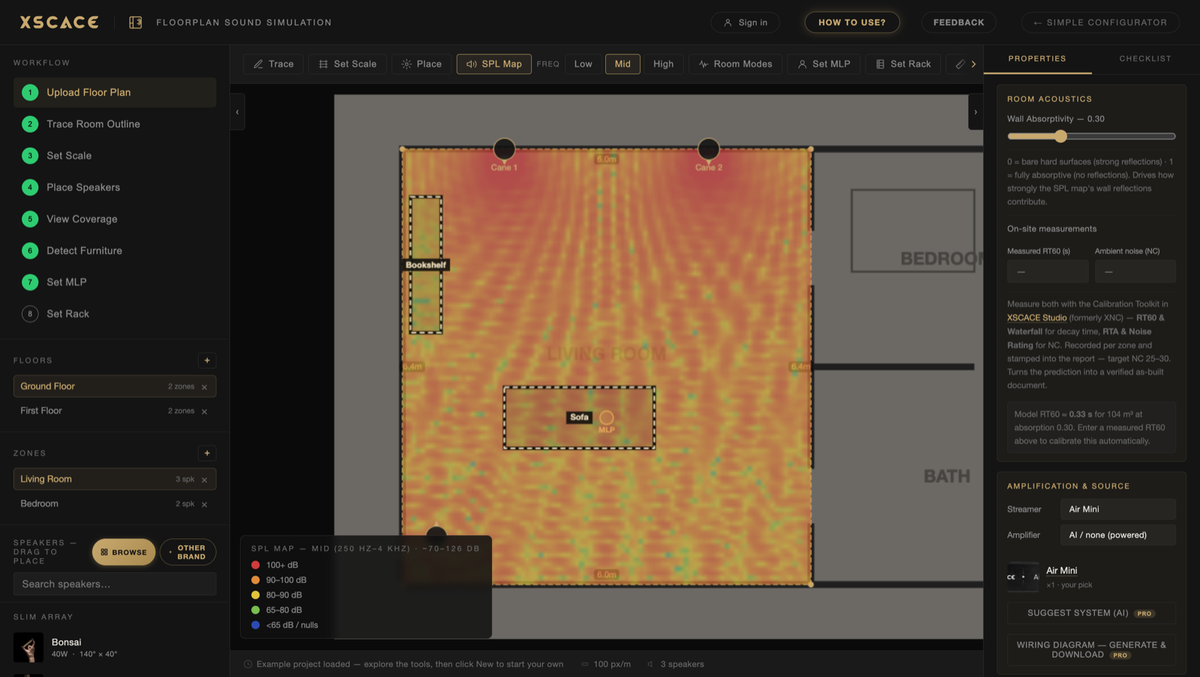
XSCACE Floorplan Sound Simulation takes a plan from trace to bill of quantities in the browser. For a room like this the outputs that matter are:
SPL coverage across the whole terrace or lawn, zone by zone
Source spacing set by the distance the level has to carry
Quantities and cable runs resolved before landscaping closes
Controlled
Day-to-day control is XSCACE Controller on iOS and Android. It handles volume, EQ and grouping, and the streaming amplifiers also appear natively as AirPlay 2 and Spotify Connect targets, so the app is for control rather than for getting audio into the room.
Calibrated
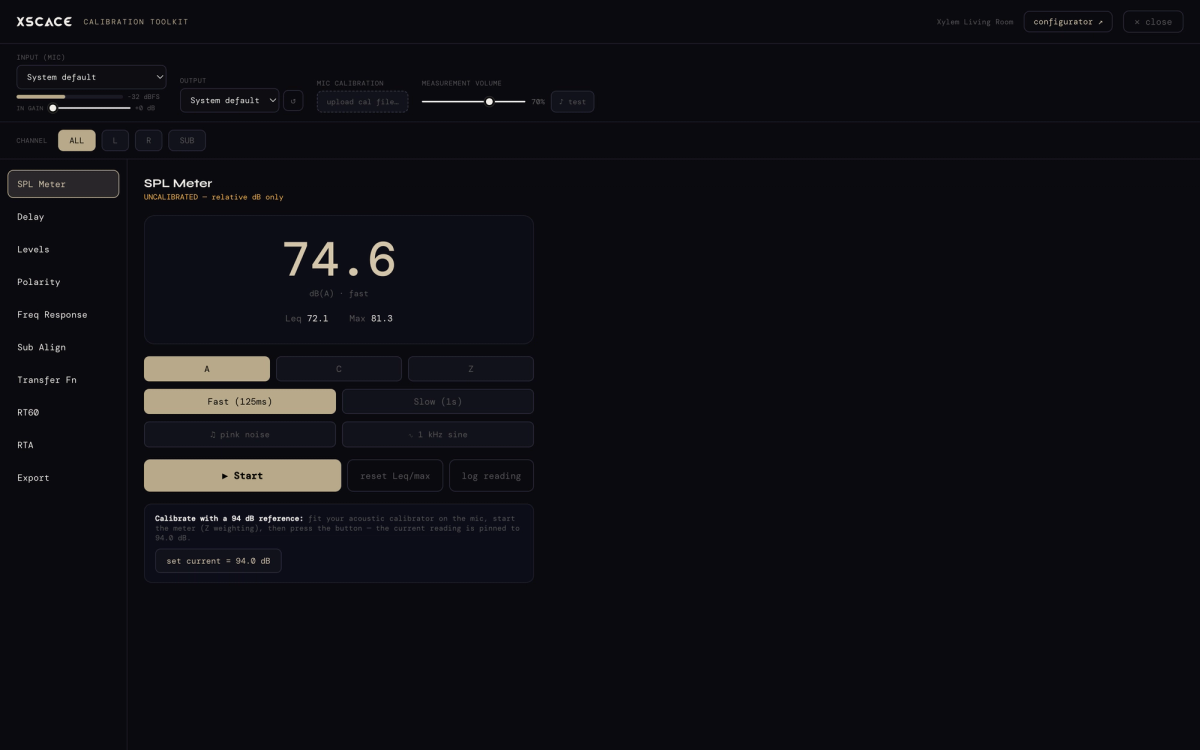
The calibration toolkit inside XSCACE Studio measures what the room actually does — eleven instruments covering SPL, delay, levels, polarity, frequency response, THD, sub alignment, transfer function, RT60, RTA and export, free on macOS. Here the ones that earn their place are:
SPL measured at the far edge of the listening area
Levels matched across sources so the garden reads as one system
RTA noise rating against traffic, water features and plant noise
Cane runs down to 150Hz against Acacia 10 Powered's 35Hz, and the two records recommend different crossover points (200Hz and 300Hz). Which suits the room is a measurement, not a preference.