Contents4 sections
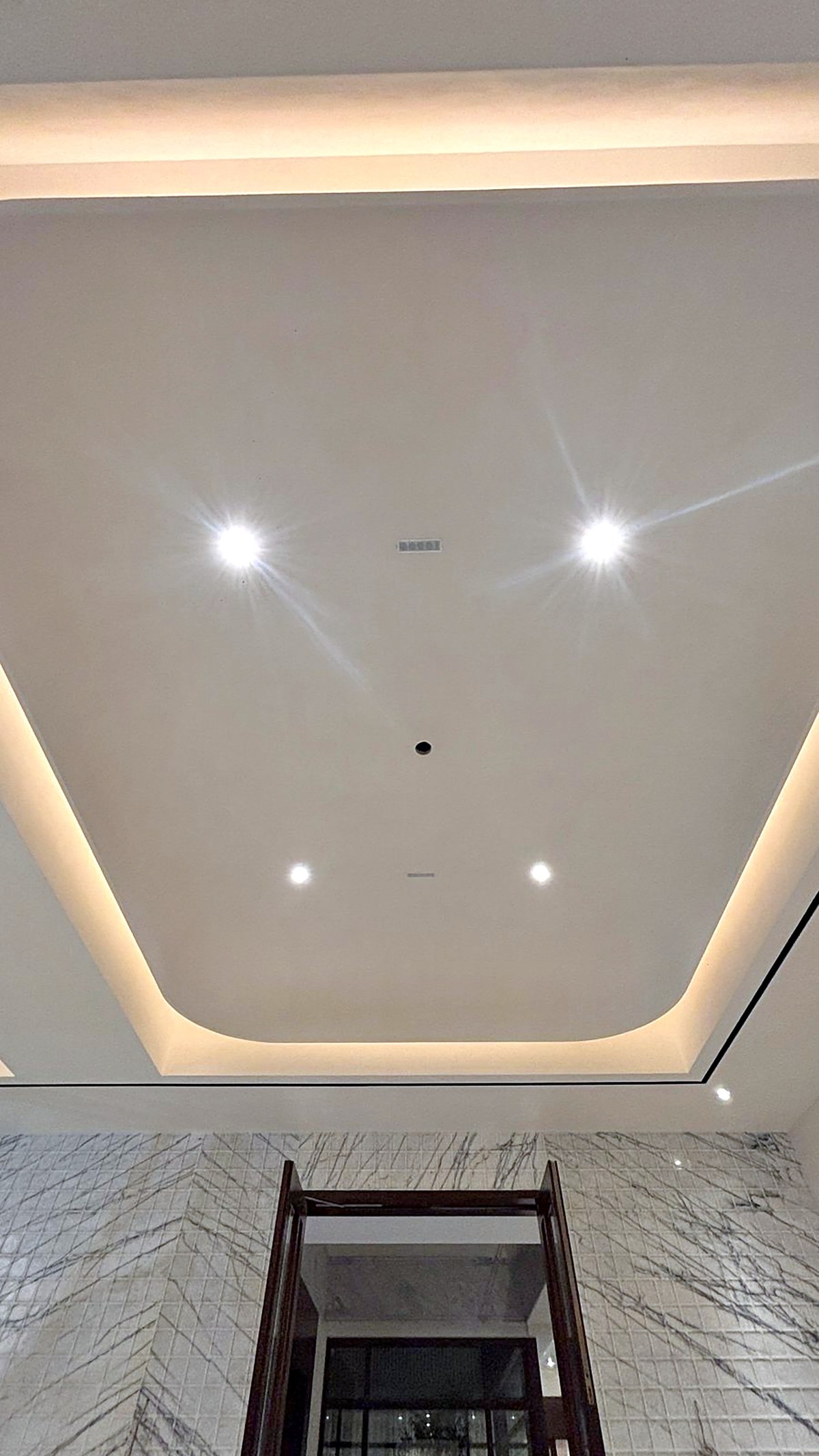
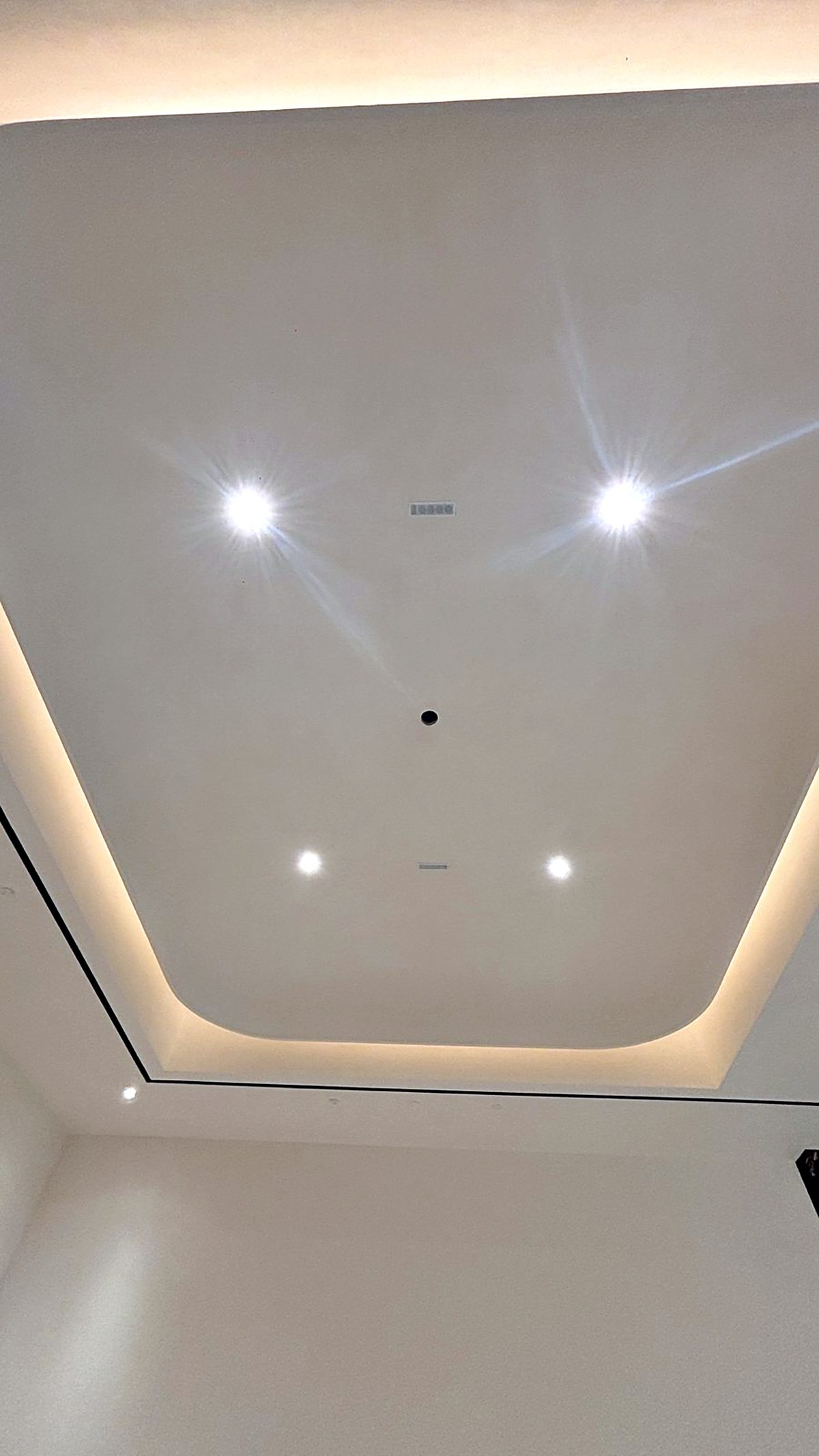
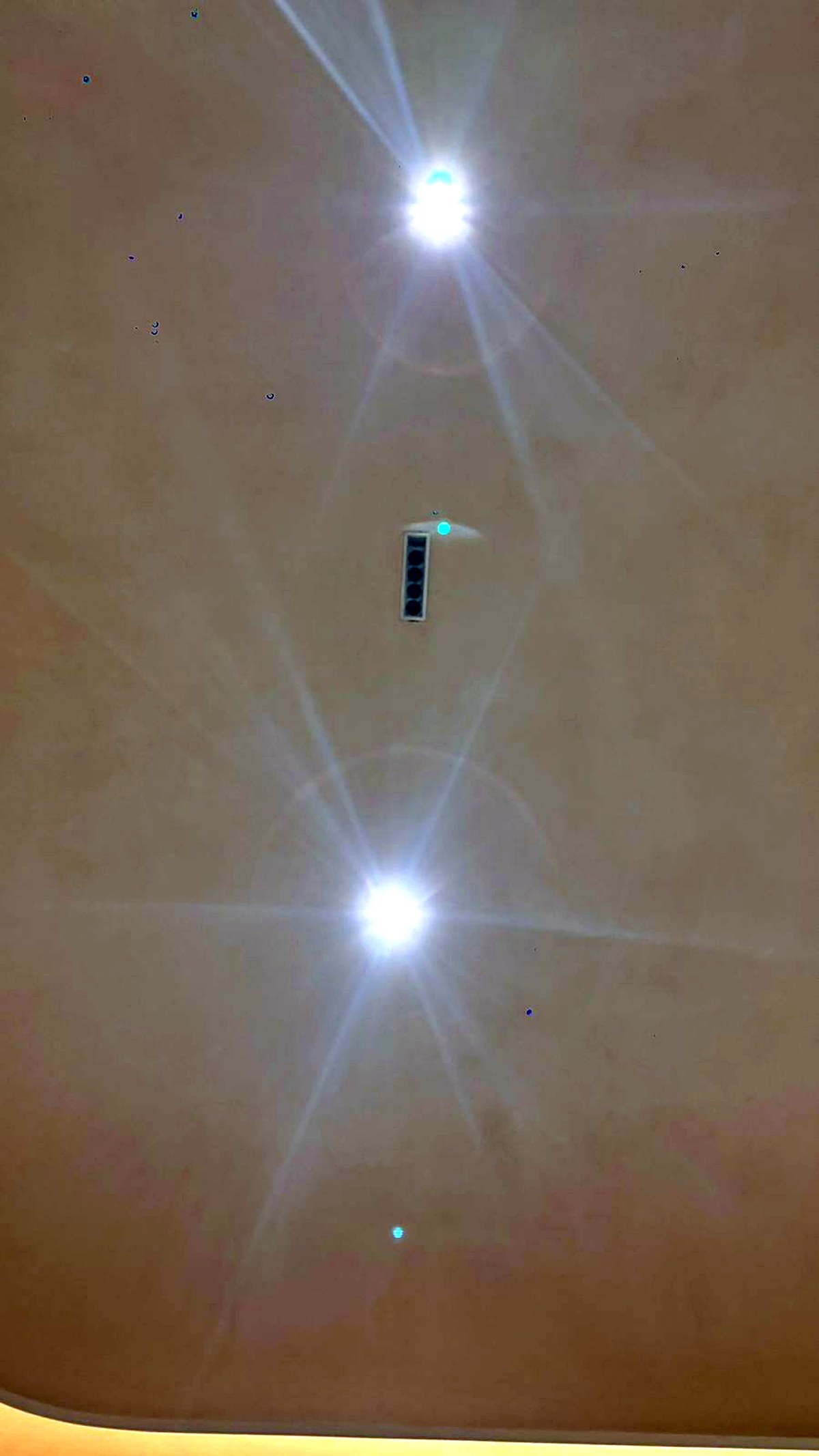
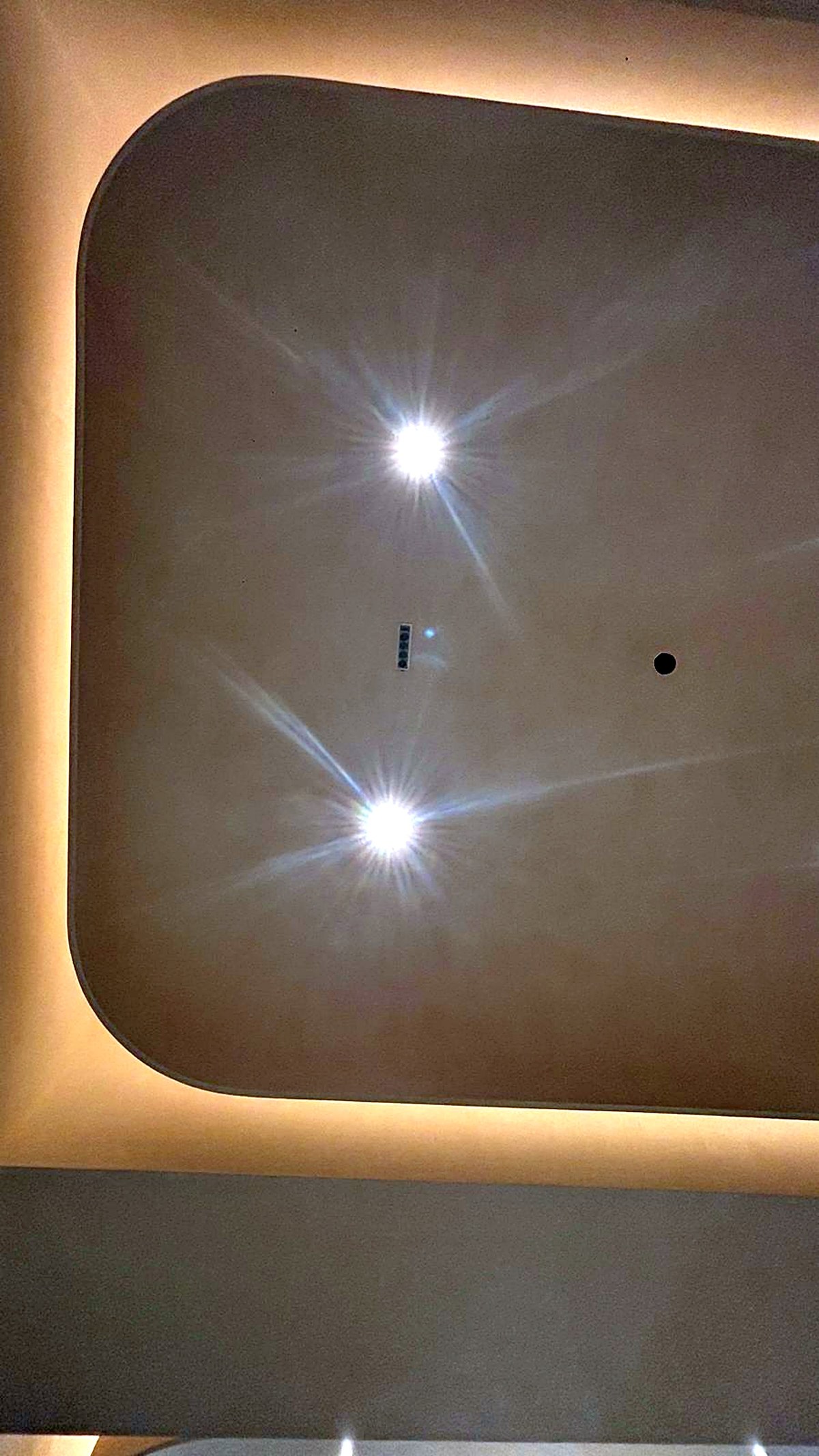
A curved cove ceiling is one of the least forgiving places for in-ceiling speakers: the eye follows the sweep of the plaster and the line of light, and a round grille interrupts both. This ceiling, above a marble stair, has a soft-cornered cove with concealed LED lighting and a grid of downlights. XSCACE Ghost 2.0 was set between the downlights, where its narrow linear face reads like another ceiling fitting.
Case study at a glance
- Space: stair and circulation space under a curved cove ceiling
- Product: Ghost 2.0 slim in-ceiling speaker
- Face width: 50.8 mm, with a magnetic grille
- Mounting surface: plastered cove ceiling with concealed LED
- Goal: music through the stair hall without breaking the ceiling's lines
A face narrower than the downlights
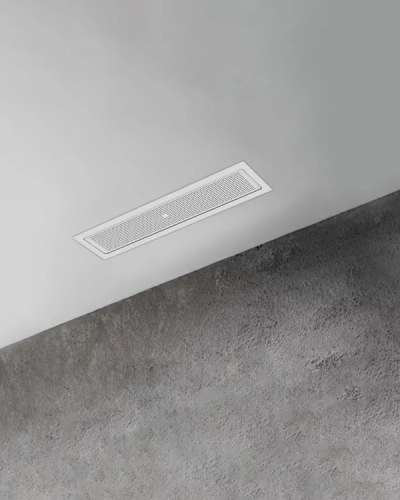
Ghost 2.0 has the slimmest front profile of any full-range in-ceiling speaker in the XSCACE range: a 50.8 mm-wide face, 172.72 mm long. Placed on the same lines as the downlights, the speakers follow the ceiling's grid rather than adding a second one. The magnetic grille sits flush with the plaster, with nothing visible to fix.
Full range from a slot
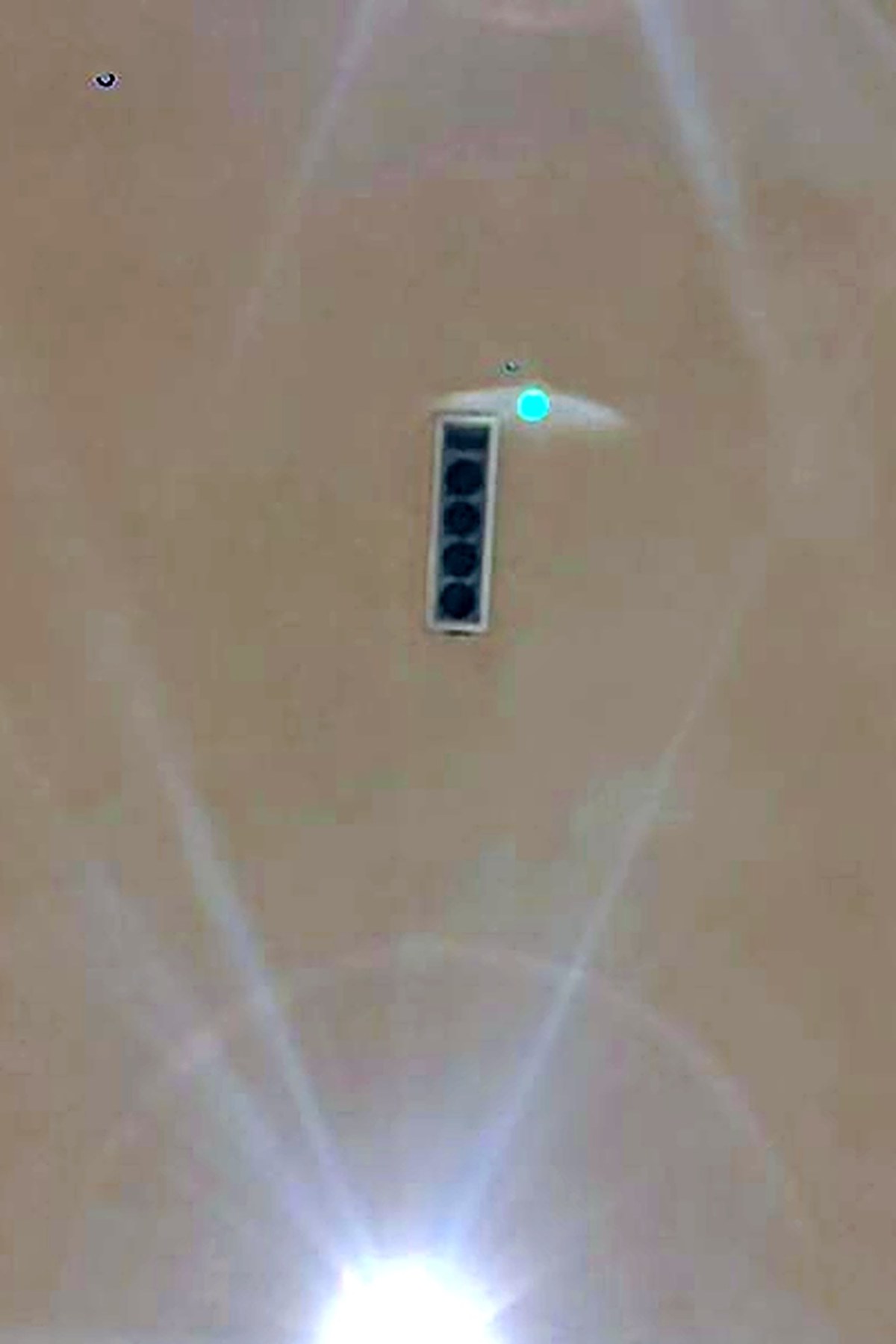
Ghost 2.0 carries four Power Dense custom woofers and a built-in 5.5-inch subwoofer driver behind its slot face, rated at 80 W RMS into 4 ohms with 92 dB sensitivity and up to 112 dB maximum SPL. Its frequency range runs from 80 Hz to 20 kHz, with a recommended 100 Hz crossover when a separate subwoofer is added.
Planning ceiling speakers around lighting
Coordinating speakers with downlights, LED coves and access panels is easiest on the plan. The XSCACE Configurator places ceiling speakers on the reflected ceiling plan and checks coverage before cut-outs are made. For more on ceiling installs, see the in-ceiling speaker installation guide and a contemporary living room built around Ghost.