Contents3 sections
The XSCACE Cane speaker review that appeared on The Swipe Up in March 2025 opened with a headline that did not need elaboration: "You'll keep wondering where that great sound is coming from." Reviewer Shubhankar Tiwari spent time with the Cane paired with our Acacia 10 subwoofer in a real living room, and his conclusion said what the spec sheet cannot fully convey. The Cane is 7.2 inches tall, 1.6 inches wide, and 0.9 inches deep — a speaker so slim it disappears against a wall. What it does not do is disappear acoustically. If you have been searching for an honest XSCACE Cane speaker review from a critic who started sceptical and ended converted, Tiwari's piece is the one to read.
A Test That Started With Scepticism and Ended With a Headline
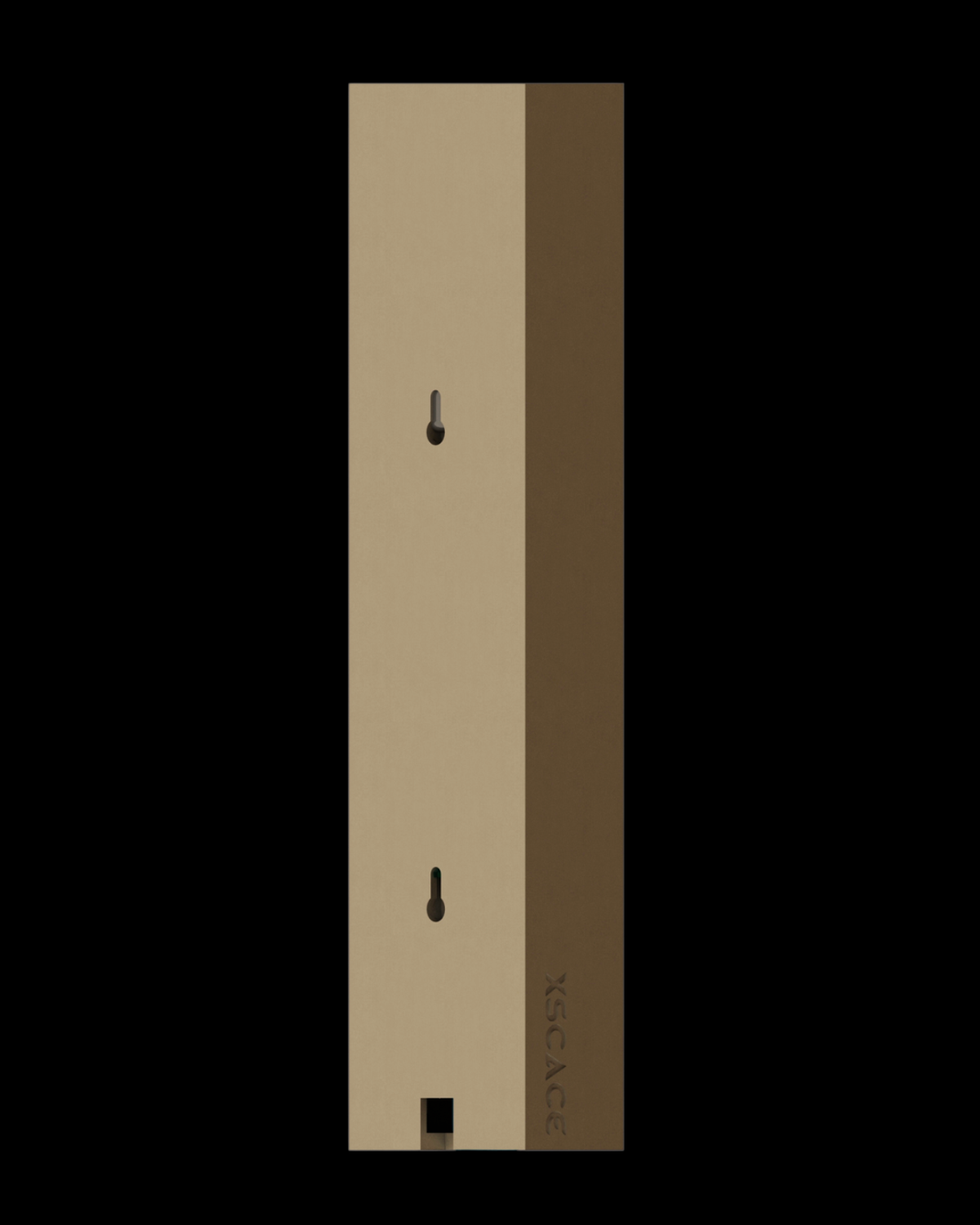
Tiwari set up two Cane speakers alongside the Acacia 10 passive subwoofer in a living-room environment — the kind of real-world test that exposes whether a compact speaker actually holds up outside a controlled demo room. The Cane's four 1.25-inch custom woofers, 50W power handling, and 92 dB sensitivity are meaningful on paper. What Tiwari found is that those numbers translate into a listening experience that recalibrates the room itself.
"The Cane's performance exceeded my expectations, filling the entire space with sound so effortlessly that I almost wondered if I had overestimated the size of my living room." — Shubhankar Tiwari, The Swipe Up, March 2025
The phrase "I almost wondered if I had overestimated the size of my living room" is precisely the response we engineer for. We designed the Cane around the principle that perceived acoustic space should exceed physical room dimensions. When a listener loses track of the speaker's location and starts questioning the boundaries of the room, the system is working exactly as intended. That disorientation is the product.
Volume Without Distortion: Why the Cane Holds Together at High Levels
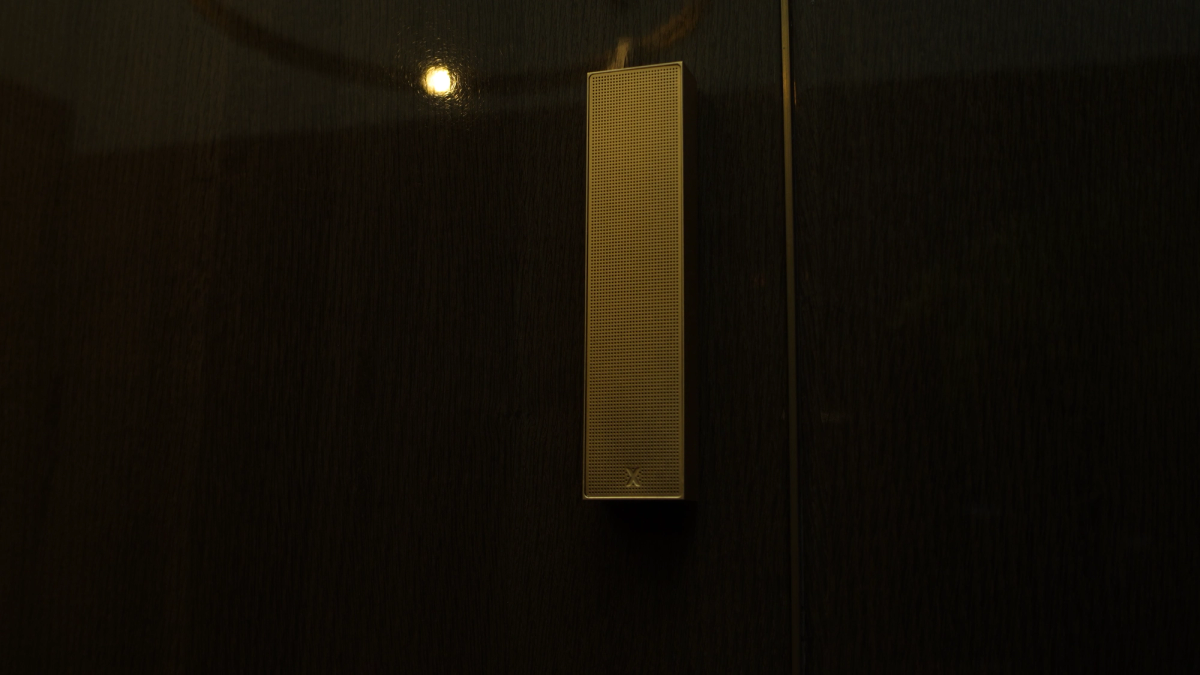
One of the sharpest observations in Tiwari's review concerned high-volume behaviour — the point at which most compact speakers reveal their limits. His finding: "Even at higher volumes, there was no distortion, just smooth, well-balanced audio that enveloped the room." That outcome is not accidental.
We built the Cane around our PowerDense Dynamics™ platform, which centres on a copper-silver voice coil designed specifically to resist thermal compression at sustained high output. Most miniature speakers lose clarity as the voice coil heats up under load — the coil expands, the magnetic gap tolerance tightens, and the response softens. The copper-silver alloy in the Cane dissipates heat faster, maintaining linearity even when the system is driven hard over extended listening sessions.
Tiwari also noted: "It delivered crisp, natural highs, rich mid-tones, and surprisingly deep lows, given its compact size." The "surprisingly deep lows" from a 0.9-inch-deep enclosure come from two additional technologies working in tandem. Our PrecisionXover crossover architecture routes frequency bands to the correct drivers with surgical accuracy, preventing low-frequency energy from muddying the midrange. Our Nano Resonance tuning then pushes the enclosure's resonant frequency lower than the cabinet volume would normally allow, extending usable bass output before the Acacia 10 takes over.
The Cane + Acacia 10: A Complete Architectural Audio System
Tiwari tested the Cane as a complete system alongside the Acacia 10 subwoofer. That pairing is the natural starting point for a full-range architectural installation. The Cane's low-frequency floor sits at 150Hz; the Acacia 10 covers 35Hz–300Hz at 88 dB sensitivity, handling everything below the handoff with authority. Together, the two components produce a frequency response of 35Hz to 20kHz — full-range audio from components that take up zero floor space.
The complete system Tiwari evaluated breaks down as follows:
- Cane: 150Hz–20kHz, 92 dB sensitivity, 50W, 8 ohm, four 1.25-inch custom woofers — dimensions 7.2in × 1.6in × 0.9in
- Acacia 10: 35Hz–300Hz, 88 dB sensitivity, passive configuration (requires an external amplifier)
- Combined frequency response: 35Hz–20kHz — full-range coverage from invisibly slim architectural components
- Physical footprint: zero floor space — both the Cane and Acacia 10 mount in-wall or flush to the surface
- Price as tested: over US$2,080 for a complete 2.1 system (two Cane speakers + one Acacia 10)
Tiwari characterised the intended buyer as "affluent consumers seeking high-fidelity audio integrated seamlessly into elegantly designed homes." That is an accurate read. The Cane is not a budget proposition — at approximately US$520 per speaker, it is a considered purchase for spaces where both acoustics and aesthetics are non-negotiable. The complete 2.1 system Tiwari tested represents a commitment to that standard, and his review confirms it delivers.
Tiwari's closing verdict: "The speaker redefines expectations. It is a statement piece without being ostentatious, a powerhouse without being intrusive." That is what XSCACE is for. We designed the Cane so that the most powerful thing in a room is also the thing you cannot see. Explore the Slim Array Series to find the right configuration for your space, or read the full review on The Swipe Up to hear it in Tiwari's own words. Size Defying Sound.