Contents3 sections
The XSCACE Bonsai speaker review that India TV News published in May 2025 arrives as a compelling piece of third-party validation for what we set out to achieve: a speaker so compact it fits between two fingers, yet capable of full-range audio that rivals components three times its size. Measuring just 3.5 inches, the Bonsai is our most compressed engineering statement — a distillation of Nano Resonance™ driver technology and AeroFrame Chassis™ construction into an enclosure that disappears into any room while filling it with sound. Reviewer Saumya Nigam of India TV News (@snigam04) spent 15 days living with the Bonsai before writing a word, and the verdict is exactly the kind of real-world confirmation that bench measurements alone cannot provide.
India TV News Puts the Bonsai Through 15 Days of Real-World Testing

Most audio reviews are conducted over a weekend. India TV News gave the Bonsai 15 days — enough time to move it between rooms, run it through different source material, and observe how it behaves across a range of playback volumes and listening distances. This is the kind of extended evaluation that reveals character rather than specifications, and Saumya Nigam's conclusions are unambiguous.
Writing on May 14, 2025, Nigam described the Bonsai as "a tiny palm-sized speaker which was just fantastic in every possible way" — a sentence that captures both the physical reality of the product and the surprise that tends to accompany first contact with a speaker this small.
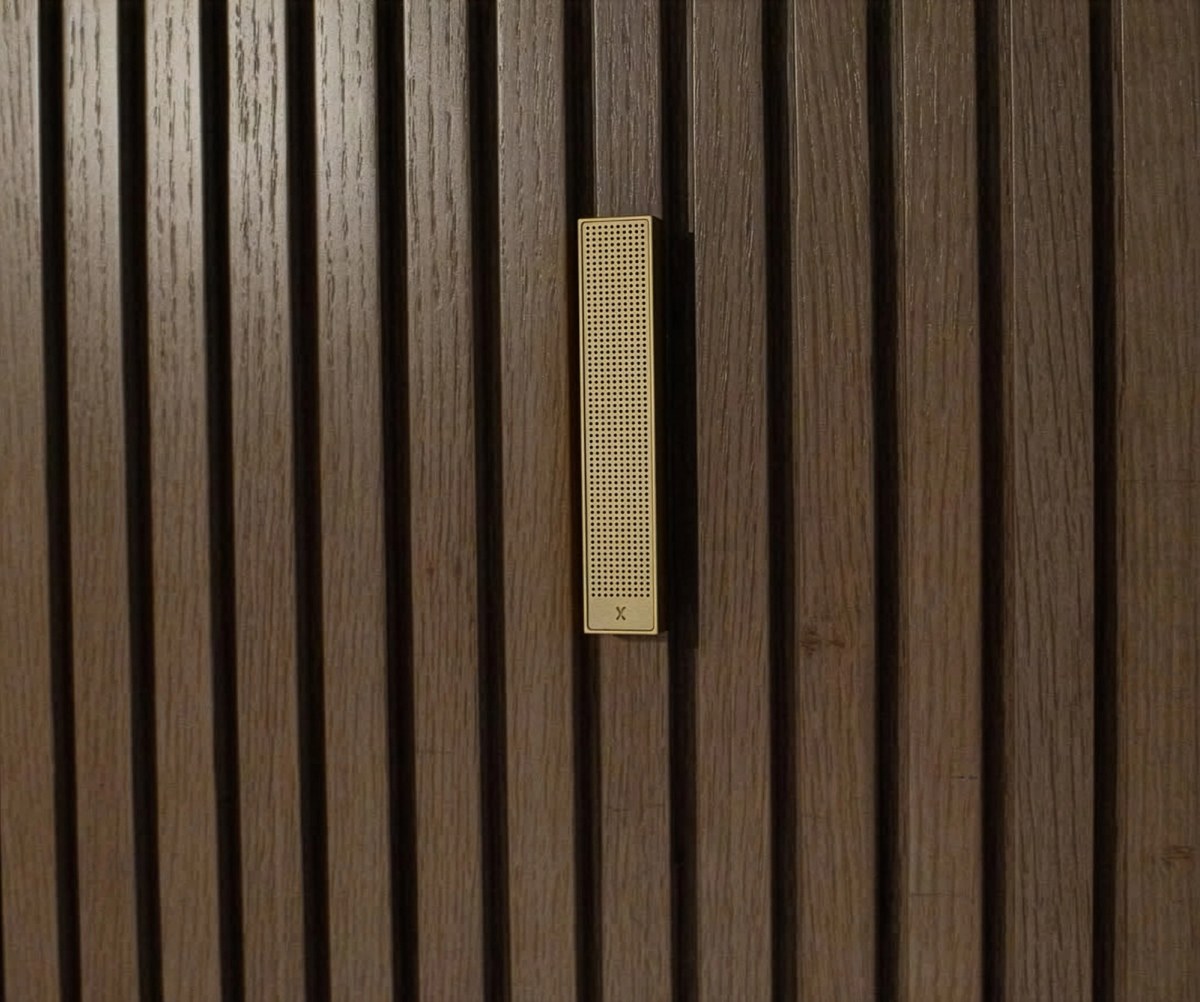
The Bonsai is designed for architectural concealment — wall-mounted at ear height, flush against a surface, nearly invisible in a finished room. Nigam's observation that it is "Almost invisible to the eyes but loud and clear to the ears!" is not incidental praise. It is the precise outcome we engineered for. When a reviewer arrives at that conclusion independently, after 15 days of use, it confirms that the acoustic and aesthetic objectives are converging as intended.
On the sonic performance itself, Nigam offered a frequency-by-frequency assessment that is particularly useful: "Despite their palm-sized form, the Bonsai delivers unrealistic crystal-clear highs, rich mids and satisfying lows." The word "unrealistic" is doing meaningful work in that sentence — it acknowledges that the expectation set by the enclosure size is exceeded by the actual output. That expectation gap is the core promise of the Slim Array Series.
What Makes the Bonsai Technically Possible

The Bonsai's dimensions — 7.2 inches long, 1.6 inches wide, 0.9 inches deep — are not the result of miniaturising an existing driver. We built Nano Resonance™ technology from the ground up to operate within a 3.5-inch enclosure, deliberately trading amplifier efficiency for low-frequency extension. Most compact speakers avoid bass; the Bonsai reaches for it. The result is 86dB sensitivity and 50W output from a chassis that weighs almost nothing.
Nigam noted the "ultra-slim build" and called it "impossibly sleek" — accurate from an aesthetic standpoint, but the AeroFrame Chassis™ aluminium body is structural as much as it is visual. Aerospace-grade aluminium dissipates heat generated by continuous high-output operation, which is what allows the Bonsai to sustain 50W without thermal throttling. The finish is the heat sink.
On the connectivity side, the Bonsai supports 4Stream app control, AirPlay, and Bluetooth — which means it integrates with existing streaming infrastructure rather than requiring a proprietary ecosystem. Spotify, Tidal, Apple Music via AirPlay, or any Bluetooth source: the Bonsai works with what users already have. Full technical documentation is available on our technology page.
Three colourways — Champagne, White, and Anthracite — were specified to align with architectural finish palettes rather than consumer electronics conventions. These are the colours of plaster, trim, and shadow, not the colours of gadgets.
Pricing in Context: What the Bonsai Costs and What It Competes Against
India TV News positioned the Bonsai as a premium luxury audio product competing with Sonos for design-conscious buyers and audiophiles. The key differentiator Nigam identified is compactness: the Bonsai offers architectural integration that Sonos cannot match. Pricing in the Indian market reflects the engineering investment:
- Single Bonsai: about US$500 — the entry point for architectural slim-array audio in any room
- Two Bonsai + Acacia 6 subwoofer: about US$960 — a stereo pair with low-frequency support for rooms under 25sqm; the Acacia 6 extends bass to 35Hz, covering the full audible spectrum alongside the Bonsai's highs and mids
- Full system with Air Mini streamer: about US$2,080 — a complete architectural audio installation with no additional components required
- Sonos comparison: India TV News noted the Bonsai competes with Sonos in the premium space, but the Bonsai's 0.9-inch depth and flush-mount architectural profile offer a level of spatial integration that bar-format speakers cannot replicate
The pricing tiers reflect how the Bonsai is actually purchased: rarely as a single unit, most often as a stereo pair, and frequently as part of a complete room solution. The about US$960 stereo-plus-subwoofer configuration is the most common entry point for buyers who want full-range performance without the visual footprint of traditional loudspeakers.
The Bonsai is available as part of the XSCACE Slim Array Series alongside the Cane and Ghost. The full India TV News review by Saumya Nigam is available on India TV News — it is worth reading in full for the 15-day real-world perspective.