Contents5 sections
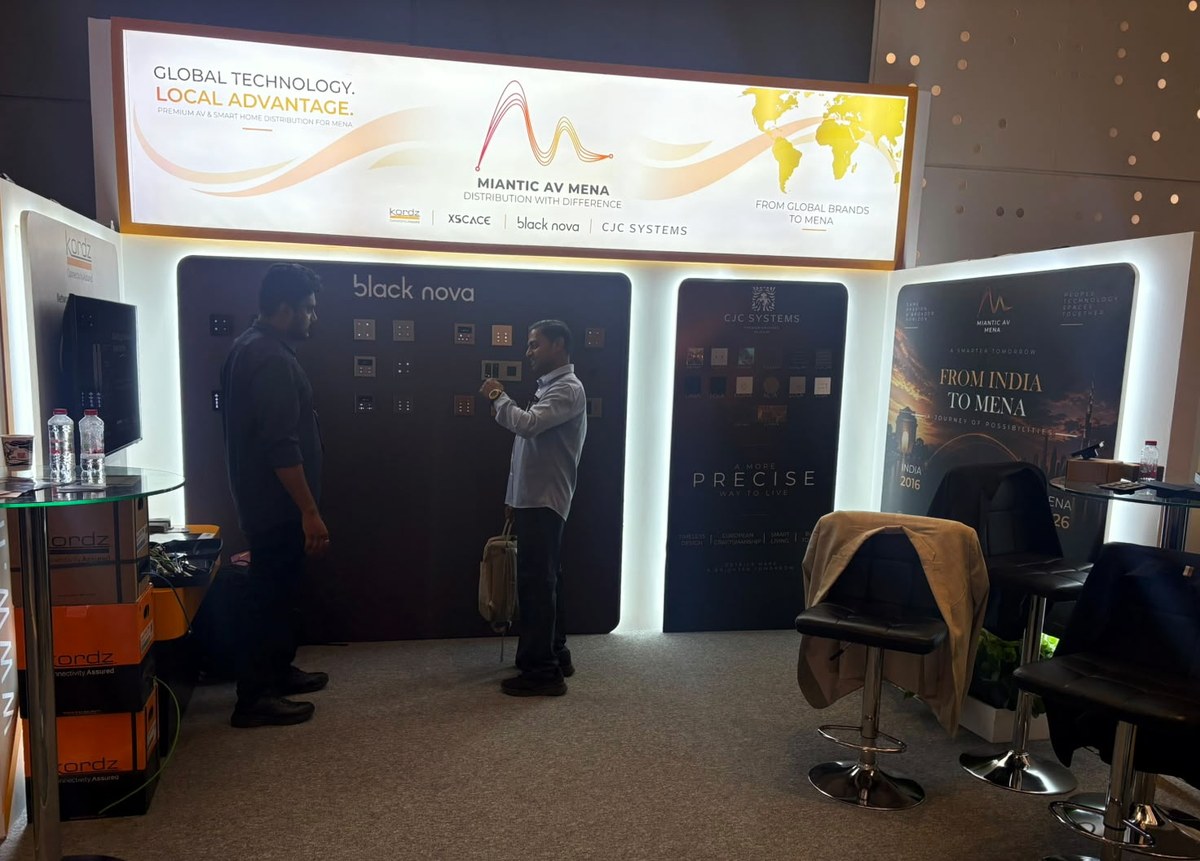
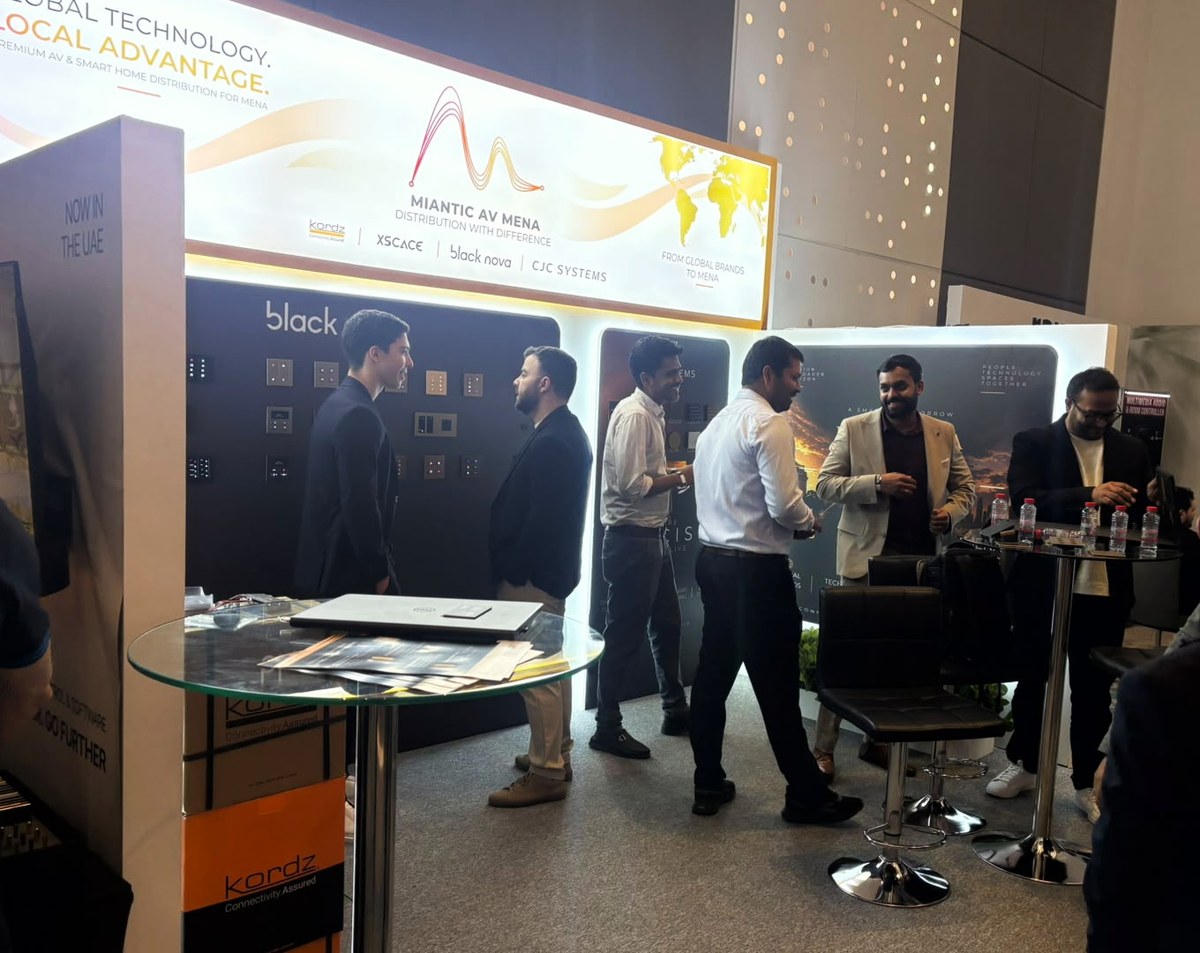
XSCACE exhibited at the High End & Smart Home Show 2026 in Dubai from 24 to 26 September, on stand B-15 with our MENA distributor, Miantic AV MENA. It was the first public outing for the Xylem DSP amplifier range, and the first time the full XSCACE catalogue has been shown together in the region.
Where it was

- High End & Smart Home Show 2026 — the show's third edition — at the Radisson RED Hotel, Dubai Silicon Oasis.
- Thursday 24 September, 11:00–19:00 — trade only.
- Friday 25 and Saturday 26 September, 10:00–19:00 — open to everyone.
- Stand B-15, with Miantic AV MENA.
Miantic distributes XSCACE alongside black nova and CJC Systems in the region. The stand ran under their line — global technology, local advantage — which is the honest description of what a distributor does: the engineering is ours, the specification support and the logistics are theirs.
What was on the stand
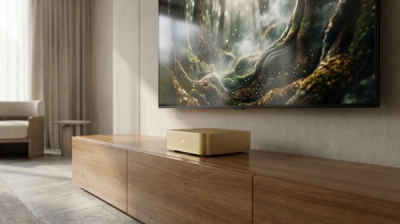
All three Xylem DSP amplifiers. Each delivers 400 W total from a CNC-machined aluminium chassis 218 mm wide, 64 mm high and 193 mm deep, weighing 1.7 kg. The difference between them is how that 400 W is divided:
- Xylem 2 — 2 × 200 W at 8 Ω. A stereo pair.
- Xylem 3 — 1 × 200 W plus 2 × 100 W at 8 Ω. A 2.1 system with a dedicated LFE channel.
- Xylem 4 — 4 × 100 W at 8 Ω. Four zones, or two stereo pairs.
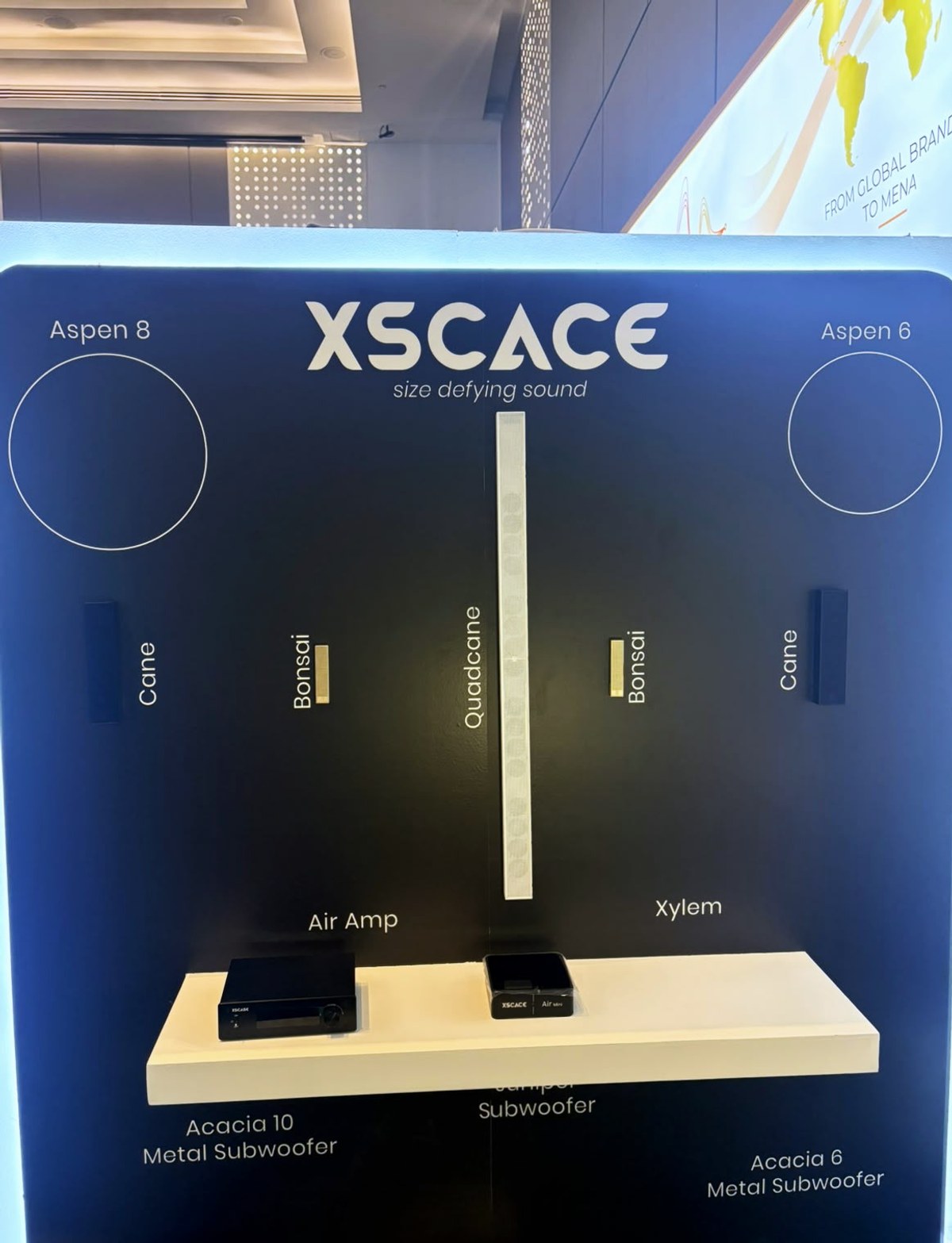
All three are Class D, drive 4–8 Ω loads, and are finished in champagne. Alongside them, the speakers the amplifiers are built to drive: Aspen 6 and Aspen 8 in-ceiling, Cane, Bonsai and QuadCane slim arrays, the Acacia 6 and Acacia 10 subwoofers, Juniper, and the Air Amp streaming amplifier.
What we actually did there
The offer on the stand was not a demonstration. It was an invitation: bring us a room you think is difficult.
Visitors brought a floor plan, a photograph, or just dimensions and a problem. We ran it through XSCACE Studio and the Floorplan Sound Simulation on the stand, showed the predicted coverage, and said whether what they were describing was a speaker problem or a room problem. Those are different problems with different budgets, and a surprising number of specifications are written as though they are the same one.
Studio ran live for the three days: eleven measurement instruments, room correction fitted from sweeps at up to three listening positions, and a verification pass that re-measures with the correction applied and overlays before, target and after. The point of showing the verification rather than the correction is that it is the only part that can prove the claim.
What the three days told us
Two things came up often enough to be worth recording.
The first is that the depth question arrives before the sound question. Integrators working on finished or near-finished interiors asked what cavity a speaker needs before they asked what it measures, because on their projects the cavity is the constraint that cannot move. That is the problem the slim array range exists to answer — QuadCane is 21 mm deep, Cane 23 mm, Bonsai Mini 12 mm — and it is why the product wall was laid out by physical size rather than by price or series.
The second is that nobody argued with the idea of measuring a room; they argued about whether it was practical on site. A calibration suite that needs a laptop, an interface and a loopback cable does not get used on a job with a handover date. One that runs on an iPhone over the network does. That is the whole reason Studio was built the way it was, and it was the part of the stand that took the longest conversations.
Thank you
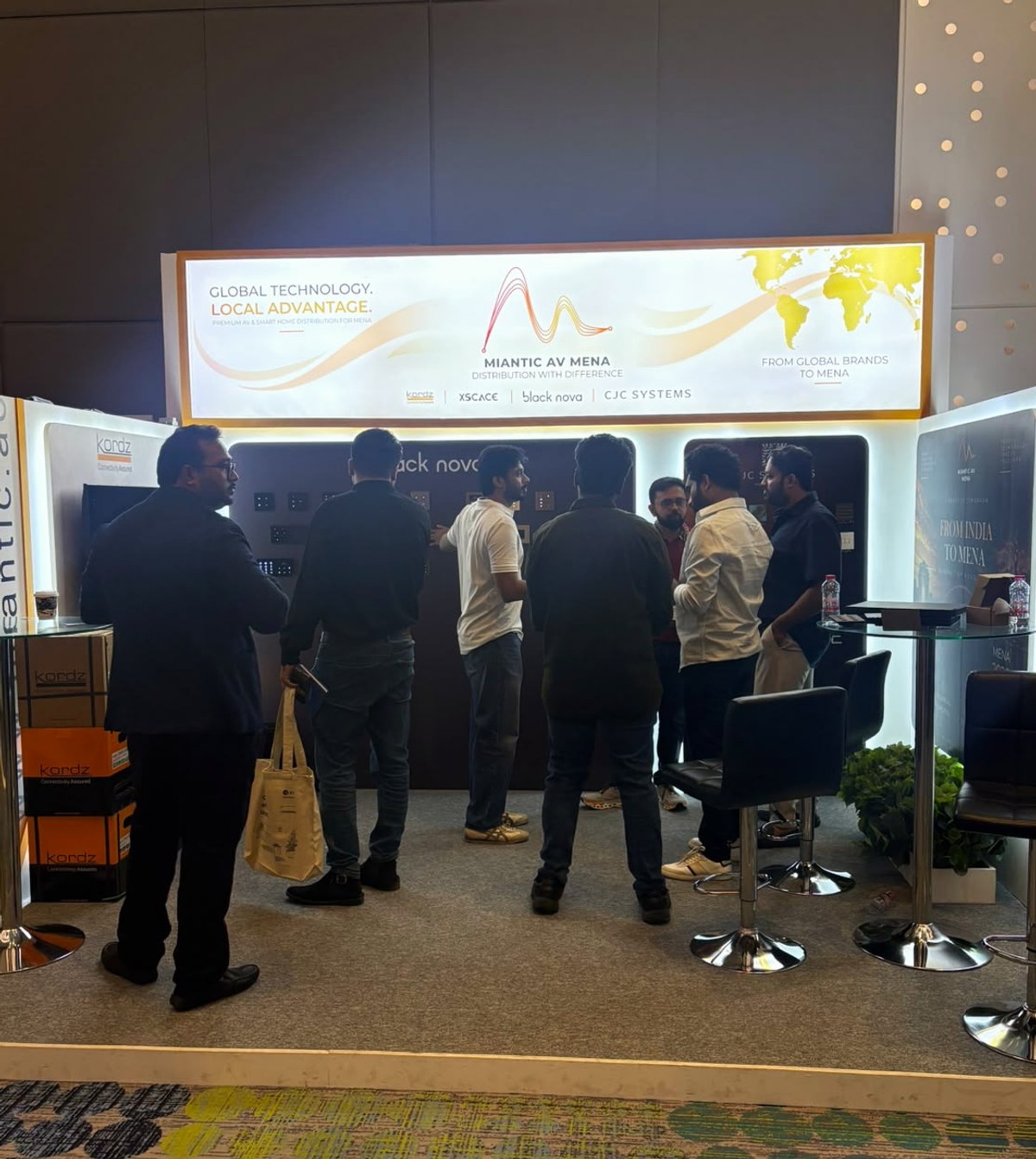
To Miantic AV MENA for the stand and for three days of translation, introductions and logistics. To everyone who brought a drawing and let us take it apart on the stand. And to the organisers of the High End & Smart Home Show for a hall where it was actually possible to have a technical conversation.
Xylem 2, 3 and 4 are available now. Pricing is quoted by the authorised distributor for your territory.