Contents6 sections
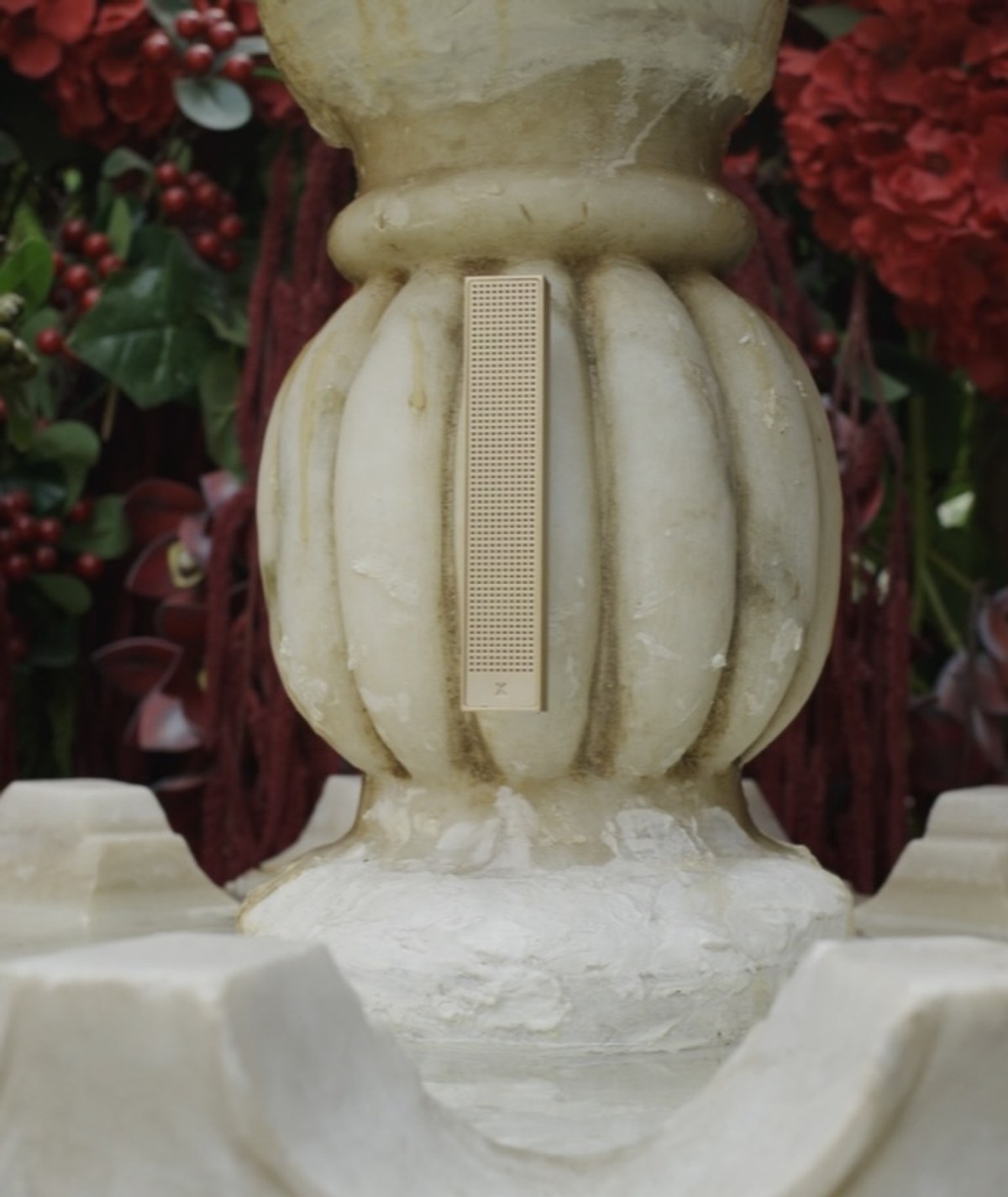
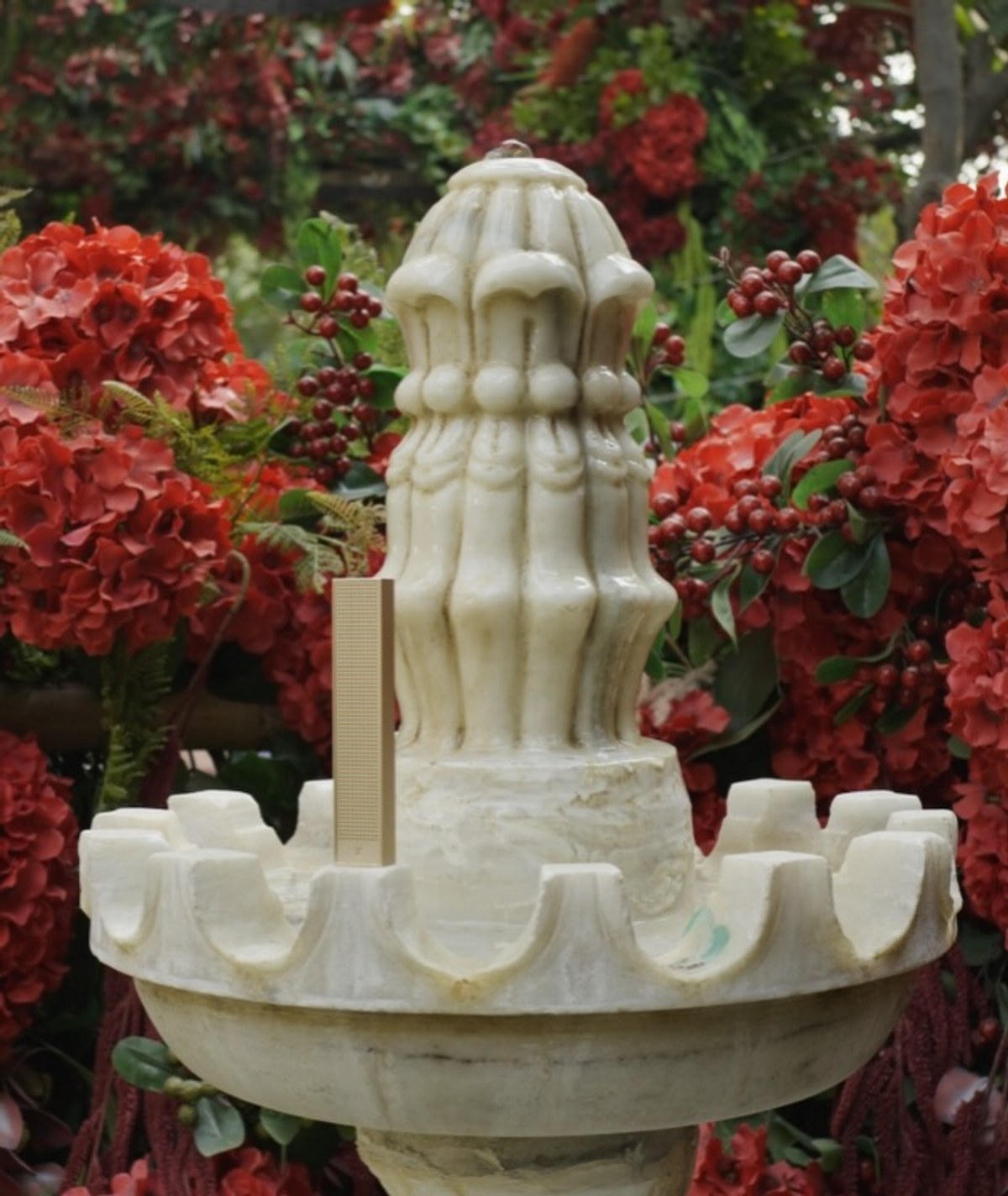
Event and garden installations have a specific constraint private cinemas and living rooms don't: the audio has to disappear into landscaping and floral styling that changes from event to event, without a fixed cavity or in-wall cutout to rely on. This install mounted Bonsai directly onto a carved white marble tiered fountain, framed by dense floral garlands — sound integrated into a decorative garden feature rather than bolted to a stand beside it.
Case Study at a Glance
- Setting: outdoor event garden with a carved marble fountain
- Product: Bonsai (12mm slim-array)
- Mounting surface: carved white marble/alabaster fountain
- Finish: champagne aluminium
- Goal: sound built into event floristry rather than a visible speaker stand
Designing for a floral installation that changes every event
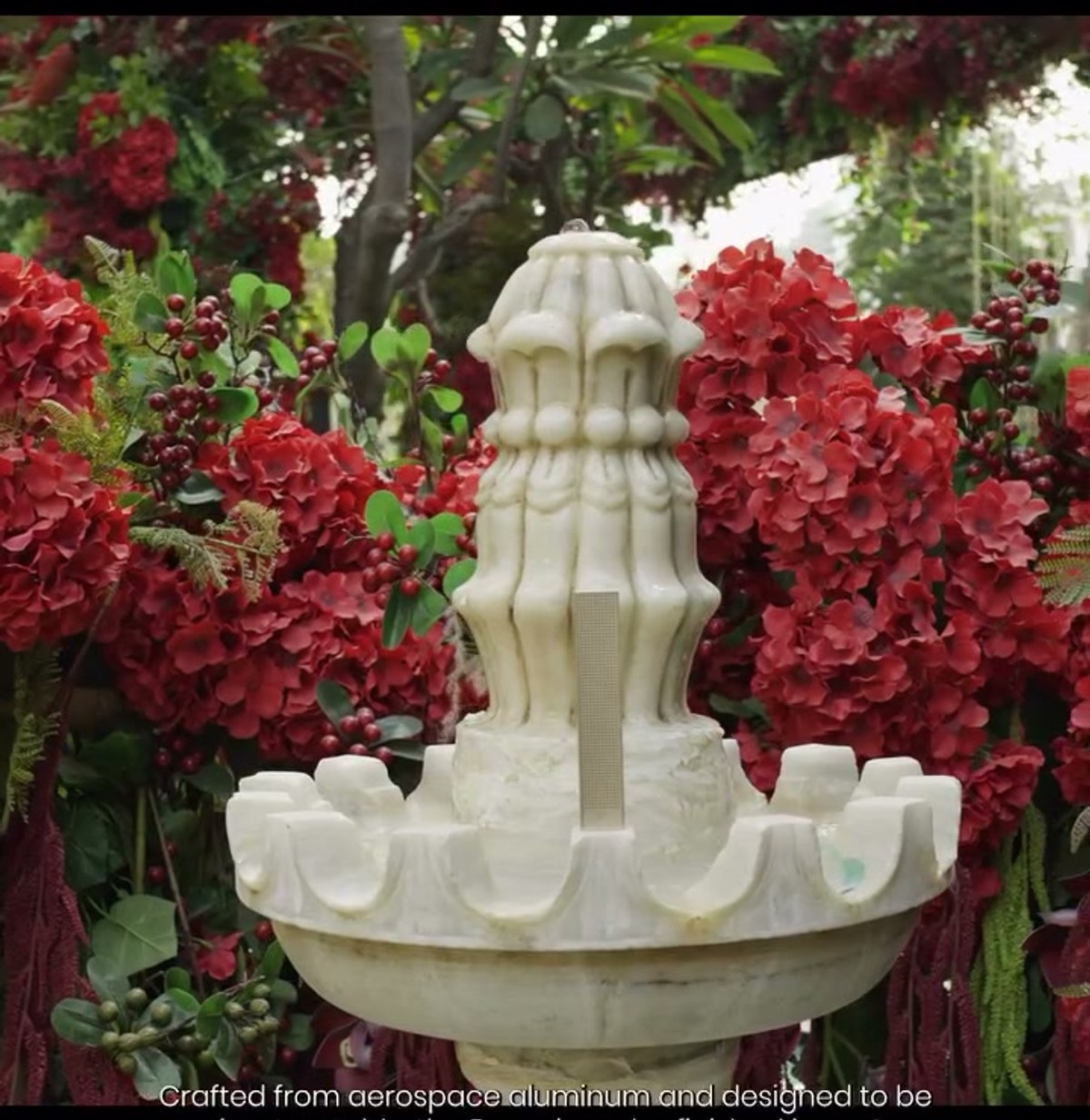
Because event floristry is rebuilt for every occasion, this install couldn't rely on a fixed sightline the way a permanent residential install can — the garlands, colours and density around the fountain change from event to event. Mounting directly to the fountain itself, rather than to a stand positioned relative to a specific floral layout, meant the speaker's position stayed fixed and correct regardless of how the surrounding florals were restyled for a given event.
Why a speaker on a fountain works
Bonsai's small footprint (22mm × 90mm × 12mm) and light weight mean it can be secured to a carved stone surface without needing structural reinforcement, and its champagne finish reads as a natural material against white marble rather than an obvious electronic fixture — important in event photography where the speaker itself should not be the visible subject.
Weather and outdoor duty
Outdoor event use means exposure to humidity and, potentially, rain — Bonsai carries marine-treatable construction suited to covered outdoor and semi-exposed applications, though a fully exposed, permanent outdoor install would typically call for a dedicated IP66-rated product from the Outdoor Series instead.
The system
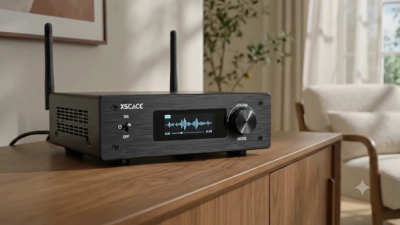
An Air Amp drives the Bonsai units wirelessly from a single source — practical for event AV, where the system needs to be set up and struck quickly between events without a fixed installation.
Planned, controlled and calibrated without walls
Every XSCACE installation follows the same three stages: planned in the simulator, controlled from the app that matches the hardware, and calibrated with measurement. Outdoors there are no boundaries to reinforce anything, so level falls away with distance and coverage has to be designed rather than hoped for.
Planned
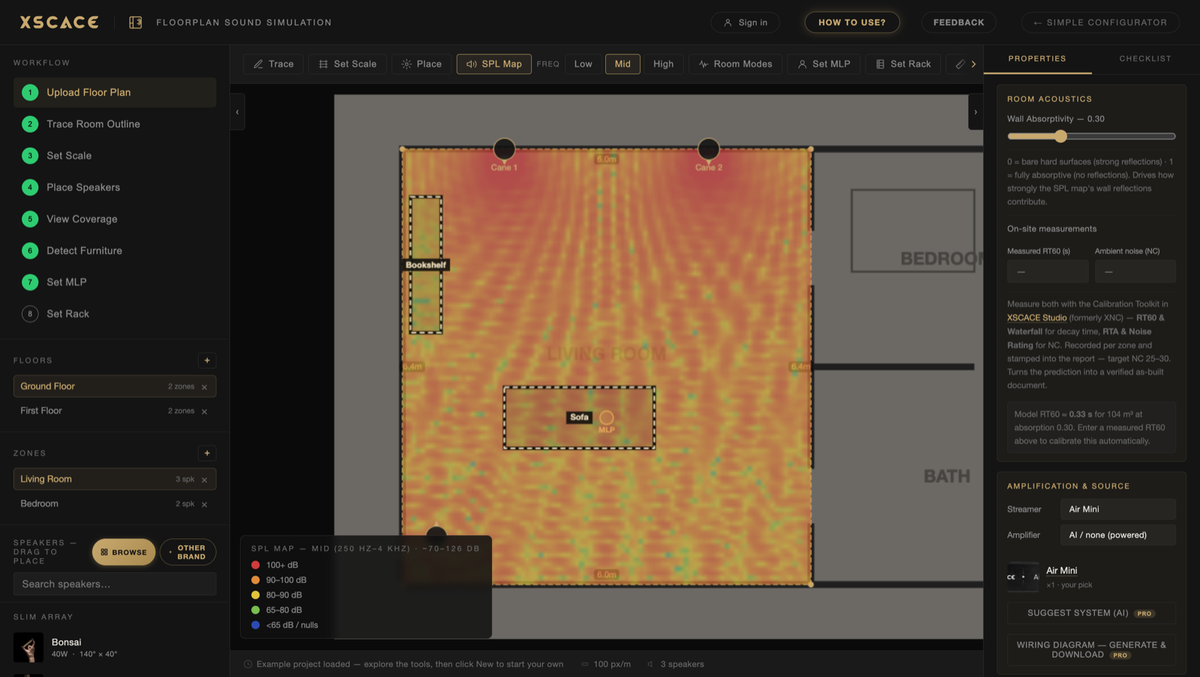
XSCACE Floorplan Sound Simulation takes a plan from trace to bill of quantities in the browser. For a room like this the outputs that matter are:
SPL coverage across the whole terrace or lawn, zone by zone
Source spacing set by the distance the level has to carry
Quantities and cable runs resolved before landscaping closes
Controlled
Day-to-day control is XSCACE Controller on iOS and Android. It handles volume, EQ and grouping, and the streaming amplifiers also appear natively as AirPlay 2 and Spotify Connect targets, so the app is for control rather than for getting audio into the room.
Calibrated
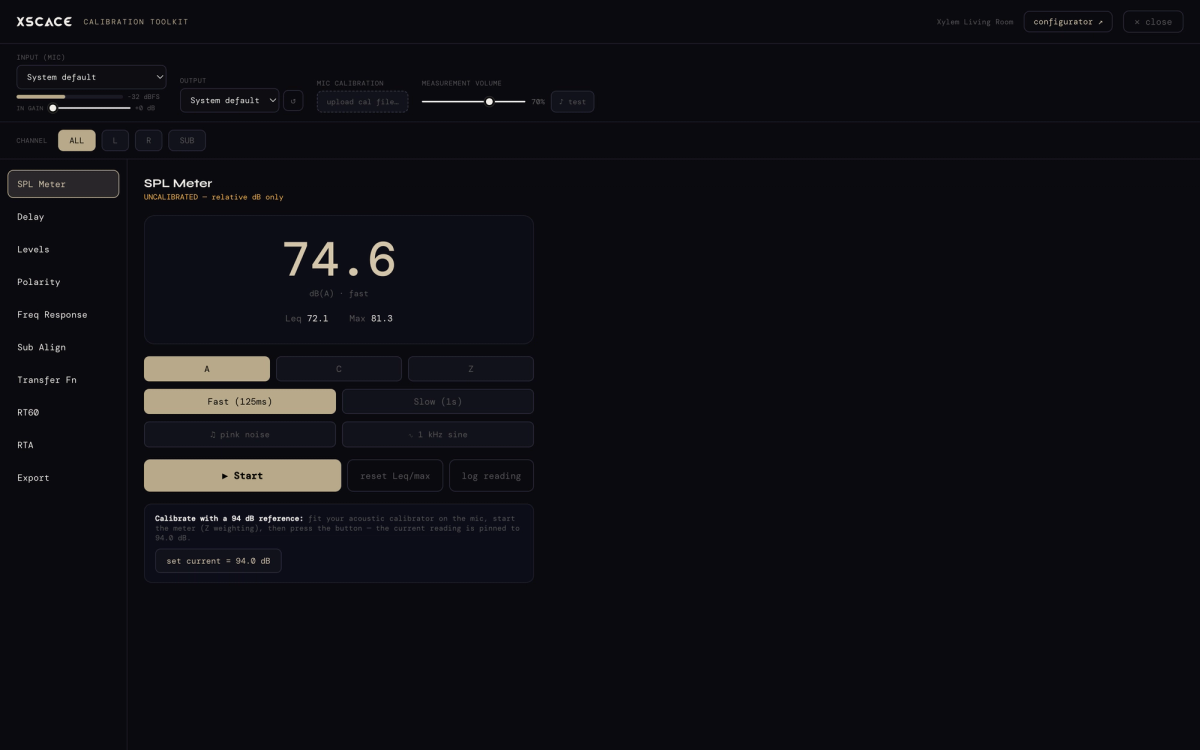
The calibration toolkit inside XSCACE Studio measures what the room actually does — eleven instruments covering SPL, delay, levels, polarity, frequency response, THD, sub alignment, transfer function, RT60, RTA and export, free on macOS. Here the ones that earn their place are:
SPL measured at the far edge of the listening area
Levels matched across sources so the garden reads as one system
RTA noise rating against traffic, water features and plant noise
Bonsai publishes 86dB sensitivity and a 103dB maximum SPL — the figures the coverage prediction works from, and the ones the finished room should measure.